
 4 min read
Lately on rides I’ve started to feel a bit like a lab rat while I’m getting ready to roll out. Before I’m even clipped into the pedals I open three apps, make sure all my sensors are on and connected, and make sure my head unit has power to pull all this data together. It’s easy to throw my hands up, toss all the tech, and ride like it’s 2006. But recently, I tried a sensor that reminded me how far cycling technology has come—and how today’s tools can improve our riding in ways we couldn’t have imagined twenty years ago.
If you are anyone from a weekend warrior to a masters crit racer, you have probably experienced a ride where you ran out of water. What’s more, you’ve most certainly been on rides where you weren’t hydrating appropriately for your own personal losses, but you may not have even known it. The Nix Sensor is here.
Nix started out as a necessity. The founder and CEO, Meridith Cass, was a marathon runner and a student at Harvard Business School. After being a part of launching several startups in the Boston and New York City areas, she noticed an opportunity in the wearable space.
“Philosophically, I believe that humans—not “patients”—should have access to understandable, actionable means of improving their health. And while wearables have tried to close this gap, they’ve also fallen short. In particular, by not using validated biomarker data and failing to solve true pain points for the user,” says Cass. After talking with other athletes, the opportunity quickly became apparent. Athletes need reliable data to be able to properly dial in a personalized hydration plan—and the Nix Sensor was born.
Sweat testing
Historically, for riders to get their sweat tested, the best methods were to go to a lab like the Skratch Labs HQ in Boulder, Colorado, and get the levels tested there. But there are downsides to this approach. First off, it’s cost-prohibitive to travel to a lab that does sweat testing, get the testing done, then to fly home. The other hurdle with on site testing is that the athlete may be testing outside the conditions they typically ride or race in.
For example, I live in New Jersey, where the altitude of my house is roughly 300 feet above sea level. If I were to go to Skratch Labs for a sweat test, it’s a slight change in altitude—a difference of about 5,000 feet. Simply put, the way my body responds to altitude and the level of humidity where I typically ride make me want to test in the conditions where I ride every day.
 The biosensor and app
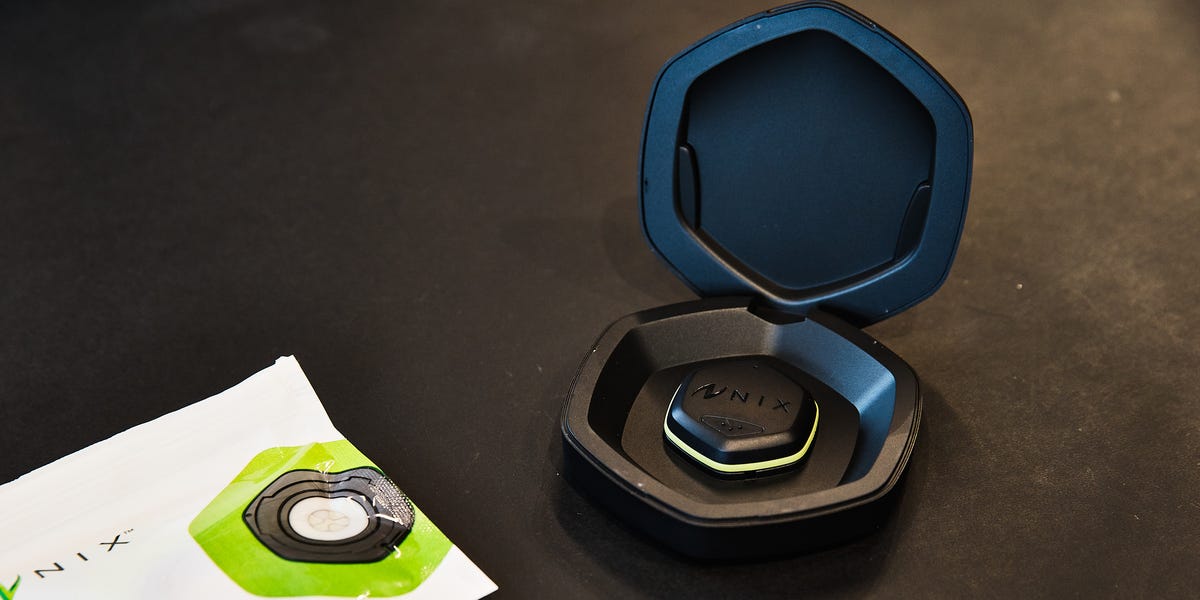
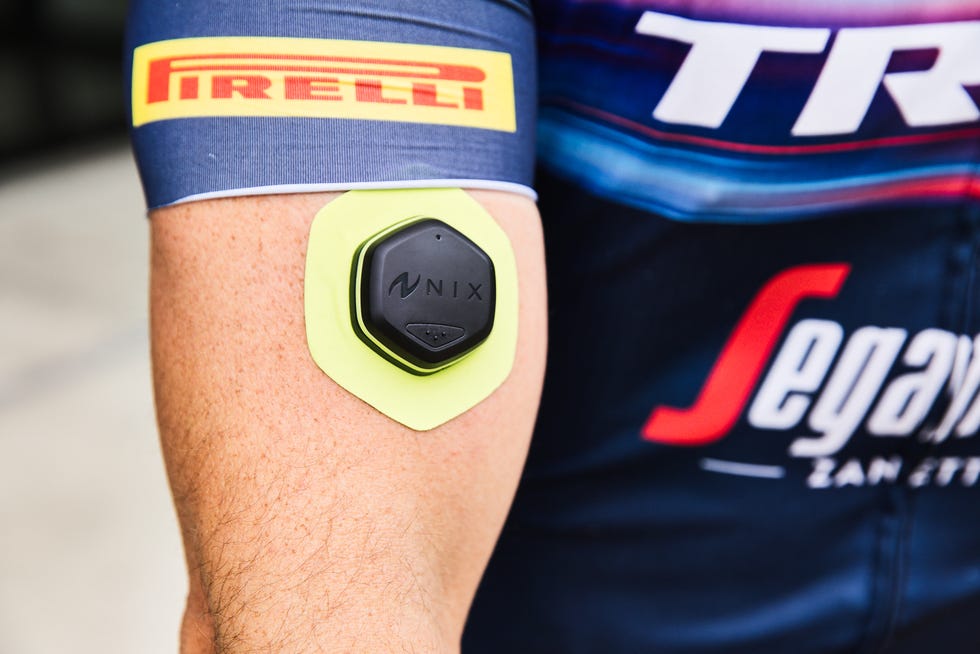
Nix is a small biosensor about the size of a half dollar that clicks into a patch that you place on your bicep while you ride. The patches are not reusable, but when you buy a refill there are four of them in the pack (and four patches come in the starter pack). There is a corresponding app that stores the data and tracks your sweat data in real time, and the app shows everything from what your cumulative sweat rate is to a post ride rehydration plan. It even will pair different drinks based off your sweat data after your ride. For example, on a recent heat session on the trainer, I used the Nix sensor while I was cruising in Zwift. For this heat session I was layered up like it was 10 degrees Fahrenheit—topped off with a painter’s suit. The app said I lost 64.3 ounces of fluid loss, 1,341 milligrams of sodium loss, and for this session said my sweat composition is a 98 percent composition match to Fastfood Hydrator mix.
By this point you might be asking yourself, “why do I need yet another sensor on my rides?” Remember, this isn’t a sensor you put on for every ride. This is a biosensor that allows you to gauge your hydration needs based on whatever conditions you’re in that day—that’s exactly how I’ve been incorporating it into my riding calendar. Gauge sweat rates, electrolyte losses, and hydration needs on a hot and humid six-hour zone two ride with a lot of climbing versus a short hard interval effort in mild conditions. Once I’ve gotten the data, I can better plan for my next ride in similar conditions.
Your own personal hydration plan
Under-hydrating does more than leave you thirsty. It has severe performance effects. “Rehydration during Endurance Exercise: Challenges, Research, Options, Methods” published in the peer-reviewed journal Nutrients in 2021 found, “virtually all researchers agree that moderate-to-severe dehydration results in greater physiologic strain and decreased aerobic exercise performance.”
This data is so important because it allows you to set up a proper fueling plan based on your individual rates and the conditions you’ll be in. The Nix app helps here by recommending individualized fluid and electrolyte intake based on the environmental conditions that it calls the Nix Index. It takes into account factors like temperature, humidity, solar load, and altitude.
The app is free, but the starter pack is listed for $189. To put it into cycling gear context—this one piece of gear is cheaper than most pairs of tubeless-compatible road tires. Unlike those new tires, this will help prevent you from cracking because you didn’t build the right hydration plan for how you sweat.

Jason Griffin is Bicycling’s Senior Health and Fitness Editor, bringing more than a decade of fitness experience and years in the cycling industry to every story. A former personal trainer and bike shop manager, he’s lined up for crits, tackled enduros, but prefers getting lost on multi-day bikepacking adventures. Lately though, his toughest balancing act has been fitting trainer rides between family life and the next adventure.