
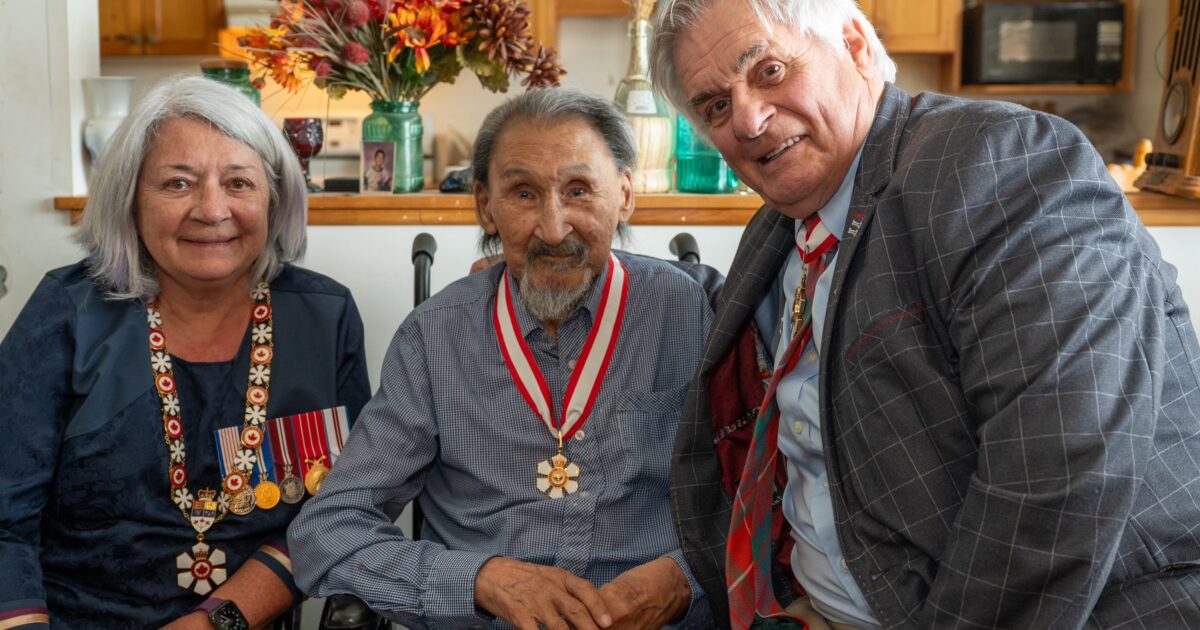
John Amagoalik wants to stay in Nunavut. So what’s the problem?
Before John Amagoalik returned to Nunavut this summer, he said the first things on his mind would be the taste of Arctic clams and the kiss he would place on his wife’s cheek.
His arrival at Iqaluit’s airport on June 12 was a significant moment. Nunavut is a territory thanks in part to Amagoalik.
The 78-year-old had been living at Embassy West, a long-term care centre located in Ottawa, for 16 months when his loved ones came together earlier this year to help him spend the final days of his life in Nunavut.
They raised money for his move, procured at-home medical support and negotiated subsidized housing. But they warned they would need help from the Department of Health to fund his care in the long term.
Now, the department is saying it can only fund a fraction of the support he needs, meaning that, after all that work to bring him home, the man revered by many as the Father of Nunavut might have to return to Ottawa.
The territorial government recognizes the importance of providing elder care closer to home. It’s written all over its elders strategy, released in 2024.
It’s unclear how much the government was paying Embassy West to look after Amagoalik, but his friends and family used publicly available numbers to estimate it could have been in the area of $32,000 per month. The cost to provide his housing and care in Iqaluit is about half that, they say.

It doesn’t matter if it’s cheaper to stay in Iqaluit, say the top brass at the Department of Health.
“Privately contracted care services and independent housing arrangements remain separate from department-funded Home Care Services. Consequently, they cannot be provided or funded through the department’s Home Care Program,” wrote Heather Hair, assistant deputy minister of health, to Amagoalik and his representatives on Aug. 14.
“The department is not responsible for housing and is unable to transfer funds allocated to existing elder facility contracts to pay for private housing for individuals.”
This issue isn’t just about Amagoalik, and I would never suggest he is owed preferential treatment because of his career.
It is about hamstrung bureaucrats, unable to meet an individual on his own terms because policies prevent ingenuity.
How many elders across the territory are in the same situation as Amagoalik, for whom there is a feasible and economic way to provide in-territory care if somebody approved a tailor-made plan? If there is even one, that’s too many.

Does the Department of Health employ staff to work with elders and their families, to explore options to provide support in the territory? Are they allowed to think outside policies if it’s financially feasible and possibly better for an elder? If not, why not?
Everybody agrees it’s better for elders to age at home. In Amagoalik’s case at least, it appears it could be cheaper, too.
Amagoalik grew up governed by federal policies. He saw they didn’t work for Nunavut, so he upended them.
His situation today is a challenge to the government he helped create. If a policy isn’t working, it can be changed.