
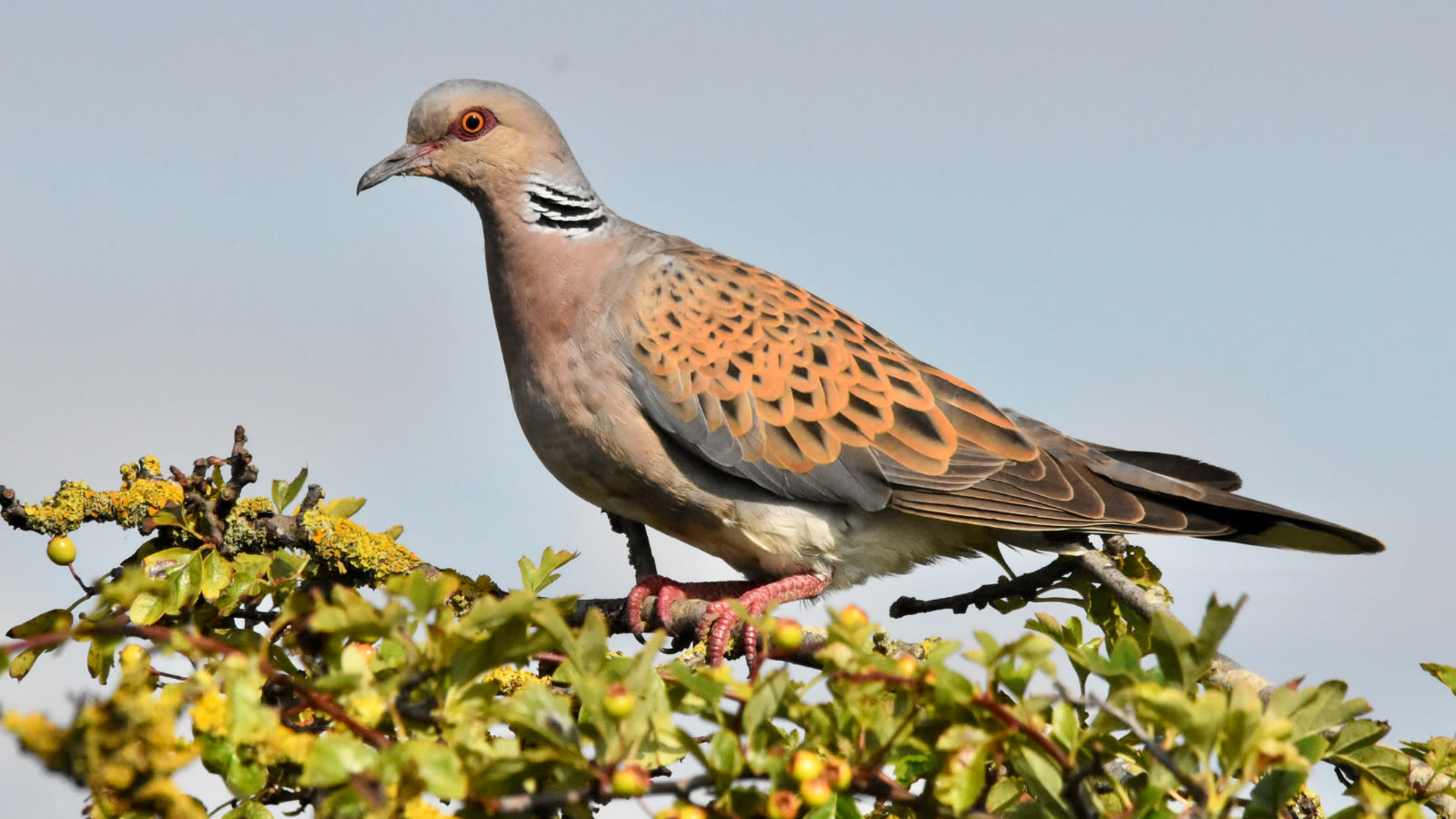
Conservationists have released 30 turtle doves in the South Downs National Park in a bid to help the species, which is on the brink of extinction in the UK, to recover.
The bird, famous for its place in the Twelve Days of Christmas Carol and which has inspired writers such as Shakespeare and Annie Lennox, is on the Birds of Conservation Concern’s red list and has been the country’s fastest declining bird species.
The national park authority released the birds in the Selborne area of Hampshire, the home of the naturalist Gilbert White, in the spring as part of “urgent efforts” to restore the species.
A further 100 doves are being prepared for another release next year.
A spokesman for the national park authority said the doves are “already making themselves at home, churring, laying eggs and flying around the area”.
They’re then expected this Autumn to migrate to overwintering grounds in sub-Saharan Africa, navigating a 3,000-mile journey.
“It’s hoped the turtle doves will return next year as landowners, farmers, national park rangers and other partners have created suitable conditions for the birds to flourish, including new ponds, managed hedgerows and scrubby areas for nesting and feeding,” the spokesperson added.
Ranger Paul Bushell said: “We all know the turtle dove from the festive carol, but the truth is they are now far too rare for such a Christmas gift.
“This stunning, colourful bird would once have been fairly common across the South Downs landscape.
“However, they are now one of the fastest-declining bird species in Europe due to habitat loss, predation and hunting, with numbers plummeting by 98% in the UK between their peak in the late 1960s and 2023.
“There are still small numbers of turtle doves living in the national park and we hope that careful releases like this can help create a new and much-needed South Downs stronghold for this red-listed bird.”
Some 30 doves have been released in the South Downs National Park. Credit: PA
In order to help provide suitable plants for the doves to feed on, “weedy” wildflowers have been planted in the area, including fumitory, birds foot trefoil, vetch, as well as red and white clover.
Seven ponds have been restored so far to provide shallow freshwater for drinking and bathing close to the nesting sites.
Mr Bushell added: “The turtle doves that have been released seem really happy.
“We’re monitoring their whereabouts with the help of the wider community, who are sending in sightings that we plot on a map.
“We will be anticipating that this may increase when the turtle doves return next spring on their flight from migration.
“Interestingly, one of the females has come back into the enclosure to lay some eggs, which is incredibly encouraging.”
Populations of turtle doves across Europe have increased after a sustainable hunting management system put in place from 2021, which led the European Union (EU) to lift its hunting ban last year.
Want a quick and expert briefing on the biggest news stories? Listen to our latest podcasts to find out What You Need To Know…