

As the Centre for Dyslexia is set to open its first dedicated facility in Vancouver next fall, education experts and advocates are raising concerns that the province isn’t doing enough to support students with dyslexia.
A classroom of 30 children could have as many as six students showing signs of dyslexia, according to estimates from numerous institutions.
The centre aims to raise awareness around the disability, support parents and kids and train teachers to better support students with dyslexia.
Cathy McMillan founded Dyslexia B.C. in 2014 and has two children with dyslexia.
Both received support outside the public school system. Her youngest has a more severe form of dyslexia, and McMillan said her education was expensive.
“There’s no way she could have stayed in the public system the entire way through. No way at all.”
Her daughter later graduated from university on the honour roll.
“It was very expensive to get her through. Very, very expensive,” McMillan said.
Her older child finished school in the public system, but McMillan said she paid out of pocket for tutoring and other help.
What’s not working
McMillan argued the expertise provided by the centre would be more effective if it existed inside B.C.’s public school system, rather than requiring families to seek it out themselves.
“It actually puts a shining light on the gap,” she said. “And the priority that the system has on servicing kids with dyslexia.”
Linda Siegel, UBC professor emeritus and author of Understanding Dyslexia and Other Learning Disabilities, said she supports the centre “only because it’s not happening in the schools.”
 The UBC sign is pictured at the University of British Columbia in Vancouver, B.C., on April 23, 2019. (The Canadian Press/Jonathan Hayward)
“The children and their parents suffer,” she said.
“If I ran the educational system, I would make sure that the children get the help that they need within the system without having a centre. But that isn’t happening.”
Siegel said most faculties of education do not teach enough about dyslexia, how to recognize it and “what to do about it.”
She also said psychoeducational assessments used to identify learning disabilities can be intensive and therefore prohibitive.
Addressing the gap
The effects of dyslexia can be “profound,” she explained, and can include depression, anxiety and other challenges that continue into adulthood.
Sterett Mercer, an associate professor in special education at UBC, said dyslexia can persist throughout life and interfere with workplace performance, accessing community resources and day-to-day tasks.
Mercer hopes the centre provides accessible support for families regardless of income, while giving teachers more specific tools to support students with dyslexia.
The centre will offer free screening for signs of dyslexia and educational support for students. Neil Johnston, CEO of the centre, said support services will cost about the same as tutoring.
The centre also works directly with schools and districts to build custom programs.
Mercer and Siegel both see value in its teacher-training programs. Johnston said a typical week-long educator program costs just over $1,000 and can cover reading, writing, math, executive functioning and social-emotional support.
Some teachers pay out of pocket, while others are supported by their schools, Johnston said.
McMillan said those experts should instead be available in each school district, meeting families where they are.
“The government needs to buck up,” she said. “Design and implement a plan of attack, making sure that new literacy policies include dyslexic learners.”
Province taking steps
In an email to CBC News, the Ministry of Education and Child Care said early-literacy screening is now mandatory from Kindergarten to Grade 3, part of a $30-million investment in literacy.
That investment, the ministry said, also includes professional learning opportunities for teachers and support staff around literacy instruction, screening and intervention.
Psychoeducational assessments are one piece of a broader picture used to understand a student’s needs, noted the ministry.
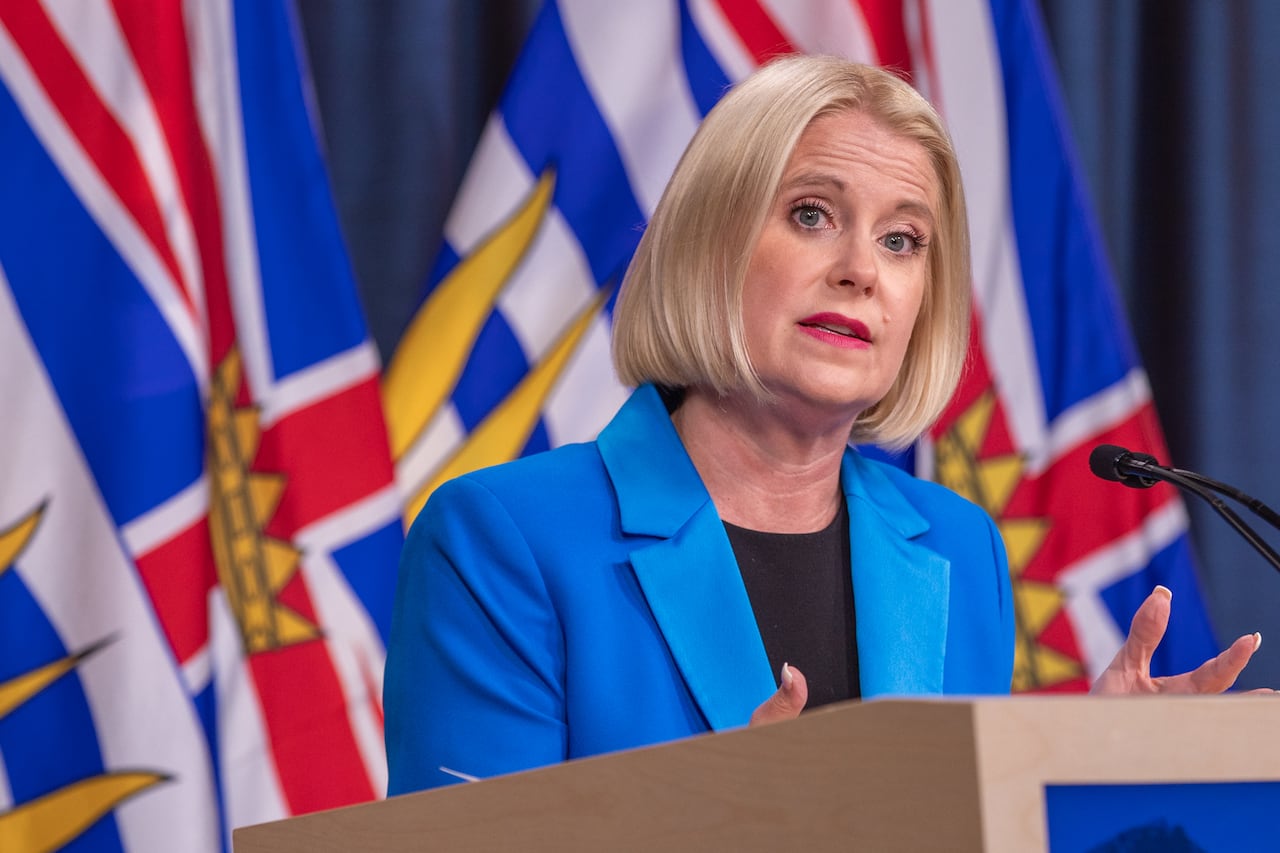 The ministry says the B.C. Teachers’ Council is responsible for setting the requirements for B.C. teacher education programs, including special training. (Mike McArthur/CBC)
School districts are expected to provide supports and services, according to the ministry, including literacy interventions, regardless of whether a student has completed a psychoeducational assessment or received a formal diagnosis.
It’s working with education partners to improve literacy instruction and intervention, and said professional learning grants have been provided to school districts to support that work.
A new K-12 Literacy Supports Community of Practice will also be established this fall through collaboration between the ministry and education partners.