
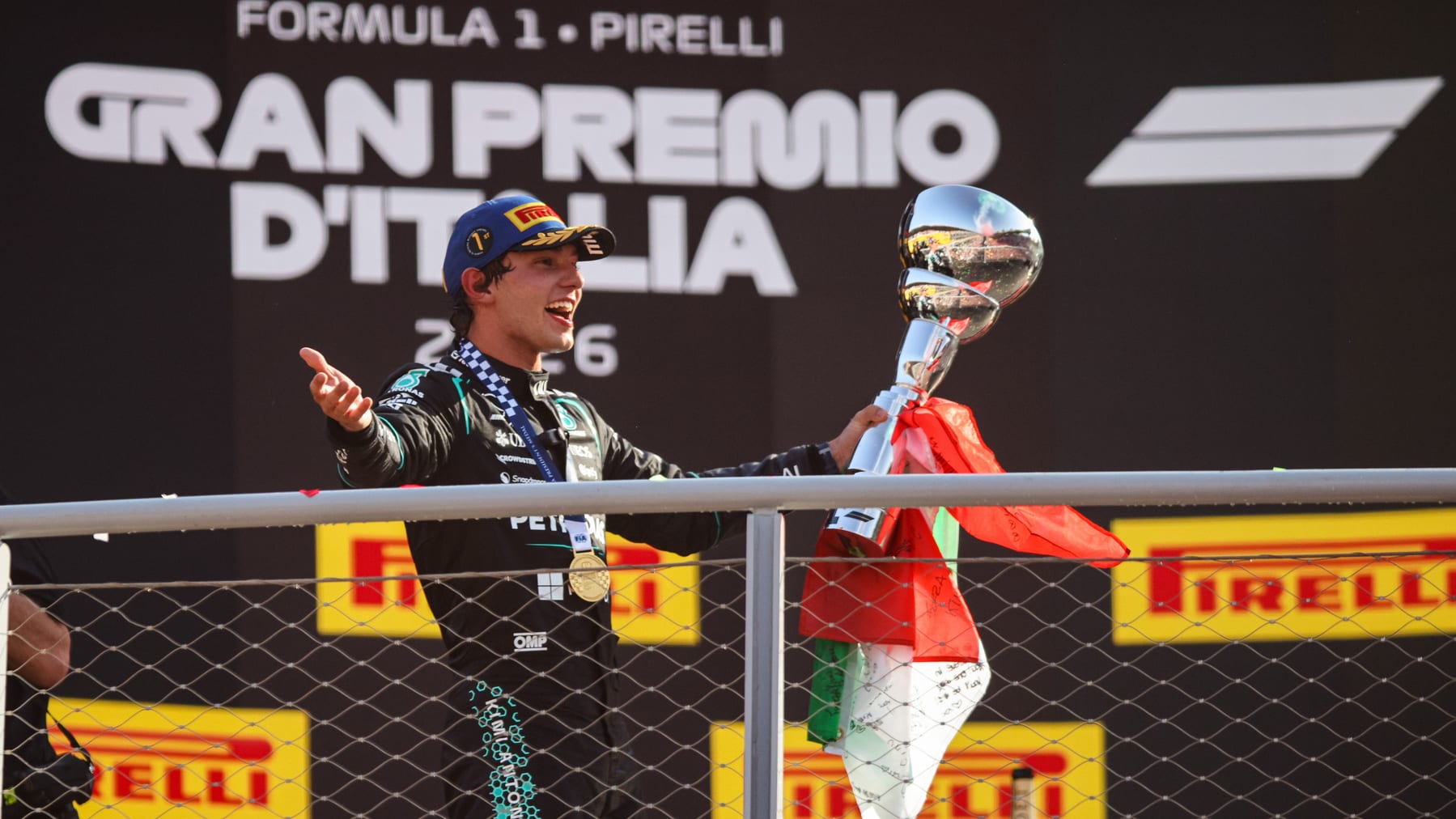
The size of Kimi Antonelli’s accomplishment in winning the Italian Grand Prix from 19th on the grid dwarfs any of the ‘yes, but’ counterpoints of what was in his favour. It was one of the all-time great performances from a driver who is already a great. The rest of the world is just beginning to catch up.
What we glimpsed in his disastrous but stunning first FP1 at this very track two years ago is now just playing out as the gods ordered. This was a performance for the ages, to be spoken of in the same breath as the past deeds of Nuvolari, Rosemeyer, Fangio, Clark, Senna, etc. We saw it at Monaco; we saw it even more convincingly here.
George Russell – leader for much of the race from the front row of the grid, beaten by a guy in the same car who started 17 places behind him – could be excused for feeling devastated and deeply shaken. But he’s being compared to a phenomenon.
But OK, let’s get the ‘yes, buts’ out of the way.
Mercedes PU advantage at Monza
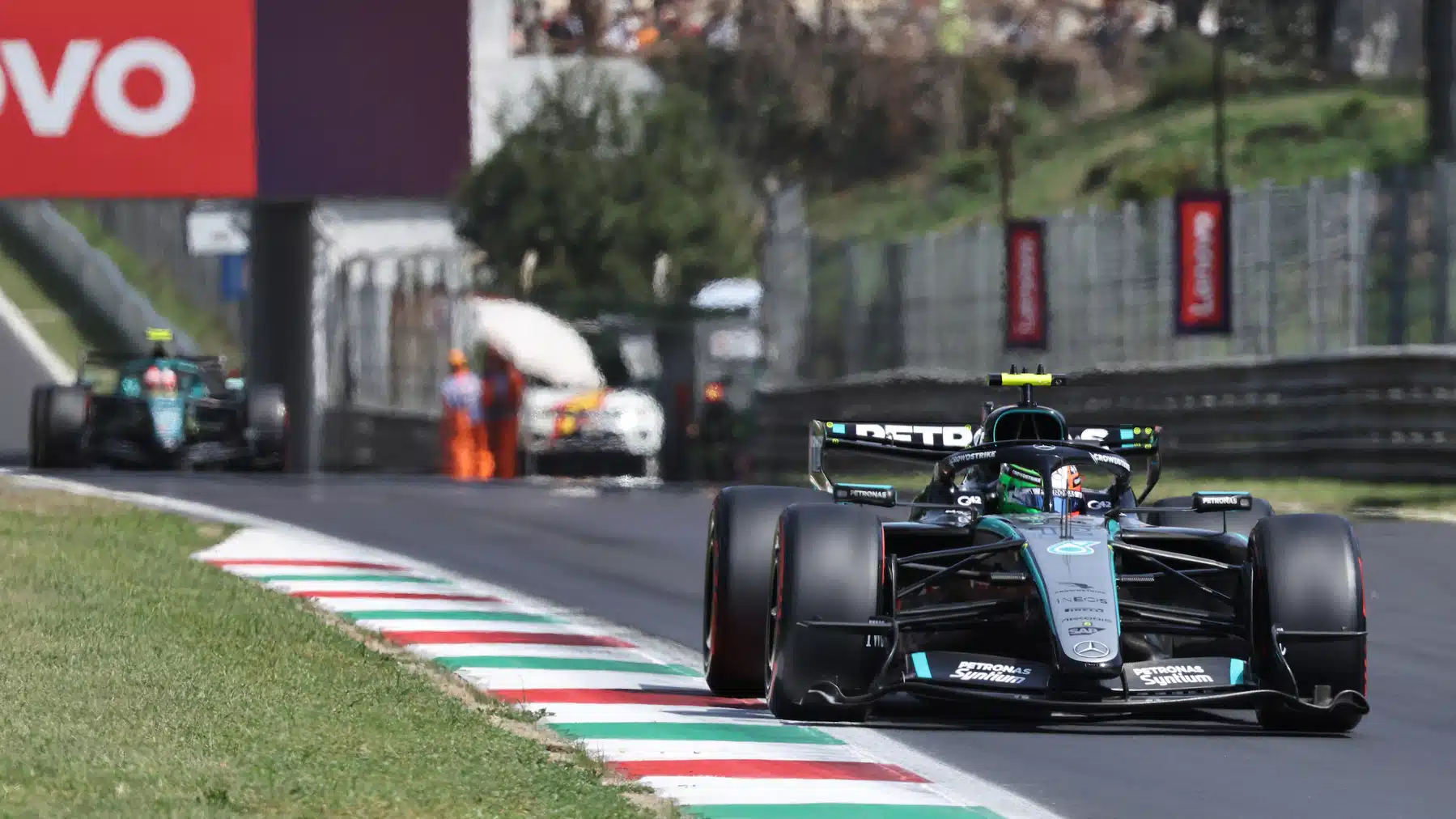
The Mercedes power unit was a step ahead of the rest at Monza
Grand Prix Photo
The margin by which the Mercedes power unit is the fastest was exaggerated at Monza by the track layout. An advantage of 10bhp at Monza will buy you a massive 0.35sec per lap. At Hungaroring and Zandvoort, those numbers are 0.185sec and 0.215sec respectively. It’s the most power-rewarding track of the season by a long way.
Neither the updated Ferrari nor Red Bull power units could hold a candle to it around a place with such extended flat-out running. Furthermore, the Mercedes W17 Antonelli and Russell drive had a big advantage around Monza over the identically powered McLaren because of their respective gearing.
Pierre Gasly scored a superb pole in the Mercedes-powered Alpine, but that was largely through that team’s much better exploitation of the power of the tow in exaggerating that Merc PU advantage – and the way the big teams all tripped themselves up in that regard. The Alpine quickly dropped down to its natural level in the race, with Gasly a respectable seventh at the flag. So, no contest, the Mercedes W17 was the fastest car in the field by a big margin.
Passing at Monza
The layout makes for one of the easiest tracks on the calendar on which to overtake. At most tracks, a lap time advantage of around 1.5sec will be needed to make an on-track pass. It’s less than half that here. Which of course is why Mercedes chose this race for Antonelli to take his PU grid penalties. At least it maximised his chances of taking points from the back of the grid.
Then, there’s the new era yo-yo racing style to consider and how that also helped. The regulation PU boost facility is very powerful.
Early red flag
Starting on the hard – 0.7sec slower than the soft, 0.2sec slower than the medium, but with race-long durability – and running long was a sound strategy from where Antonelli was starting; clear the slower cars when on the slower tyre, saving the faster tyre for when you’re up against faster cars later on. But when Charles Leclerc’s angry over-striving brought out the red flags at the end of the second lap and Antonelli was already up to 12th, a whole new strategic vista opened up.
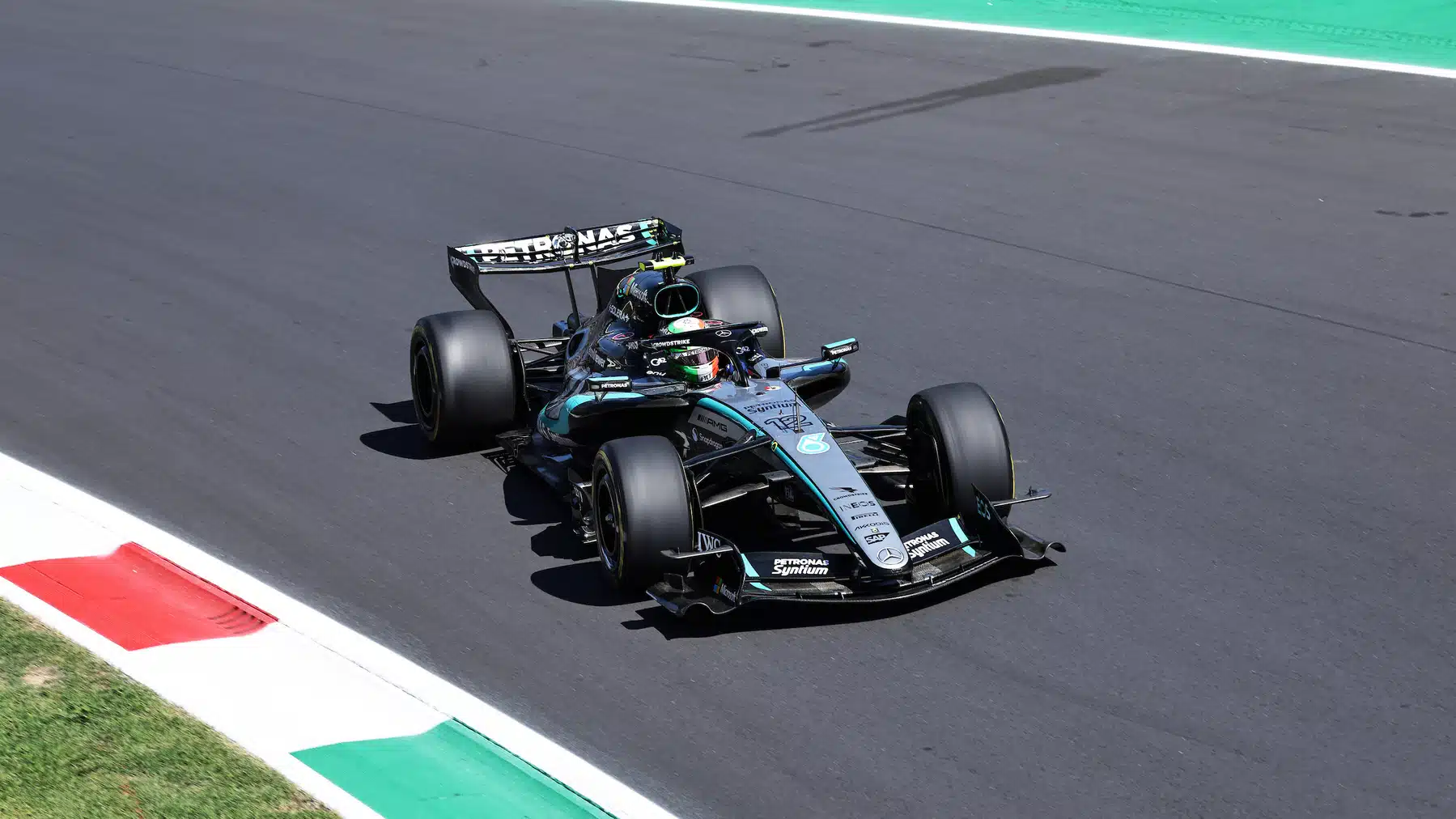
Antonelli was 12th by the time the red flag came out
Grand Prix Photo
With a free choice of tyres for the restart, he could get straight onto the faster medium, ready to pick off the quicker midfield cars in quick succession without the sort of delay he’d have endured had he still been on the hards. That put him straight onto the tail of the top team train. No longer destined to use up valuable tyre life on passing cars with a smaller performance deficit to him than now.
“I looked at the screens and as soon as I saw he was P4/P5, I knew he was going to be a factor,” said a resigned Russell. That was just two laps into the restart. The field spread of time – Russell to Antonelli – had of course also been minimised by the red flag and restart. That alone saved Antonelli around six seconds of time loss to the front.
Strategy divergence
So Antonelli on his mediums was up with Russell – who had swapped his original mediums for hards at the restart – just 11 laps into the restarted race. He’d passed Bortoleto, Ocon, Bearman, Lindblad, Norris, Piastri, Hamilton and Verstappen in quick succession to be there.
But at this point, Russell could conceivably be going through without stopping again while that was unfeasible for Antonelli on his mediums. That was going to be the price of that quick progress through the midfield to the front. At some point he was going to lose 24sec to Russell by pitting as George stayed out. It would then have been a question of whether he could’ve made up the 24sec on Russell in the remaining time. Logically, he would have fallen short. But logic can be shimmied and sidestepped when you’re dealing with genius, so it wasn’t a given that this was Russell’s race, but it was looking likely.
The influence of Max Verstappen’s brilliant performance here in a Red Bull with degrading dampers (again) upon the strategy choices made by Mercedes when there was a VSC (for Lance Stroll’s broken-down Aston Martin) cannot be overstated. Max on his mediums had even briefly managed to overtake the hard-tyred Russell for the lead just before Antonelli arrived on their tail.
“But we can’t keep up here with the Mercedes deployment,” explained Max of how driving into uncleared air heavily penalised the Red Bull. “I struggled even to clear the McLarens. We were good through Turn 5 [Roggia chicane entry] so I was able to overtake but as soon as I was in the lead I couldn’t defend as [Russell] had so much more deployment.” Verstappen led the 14th lap but two laps later was behind both Mercs and would fall ever further back from them.
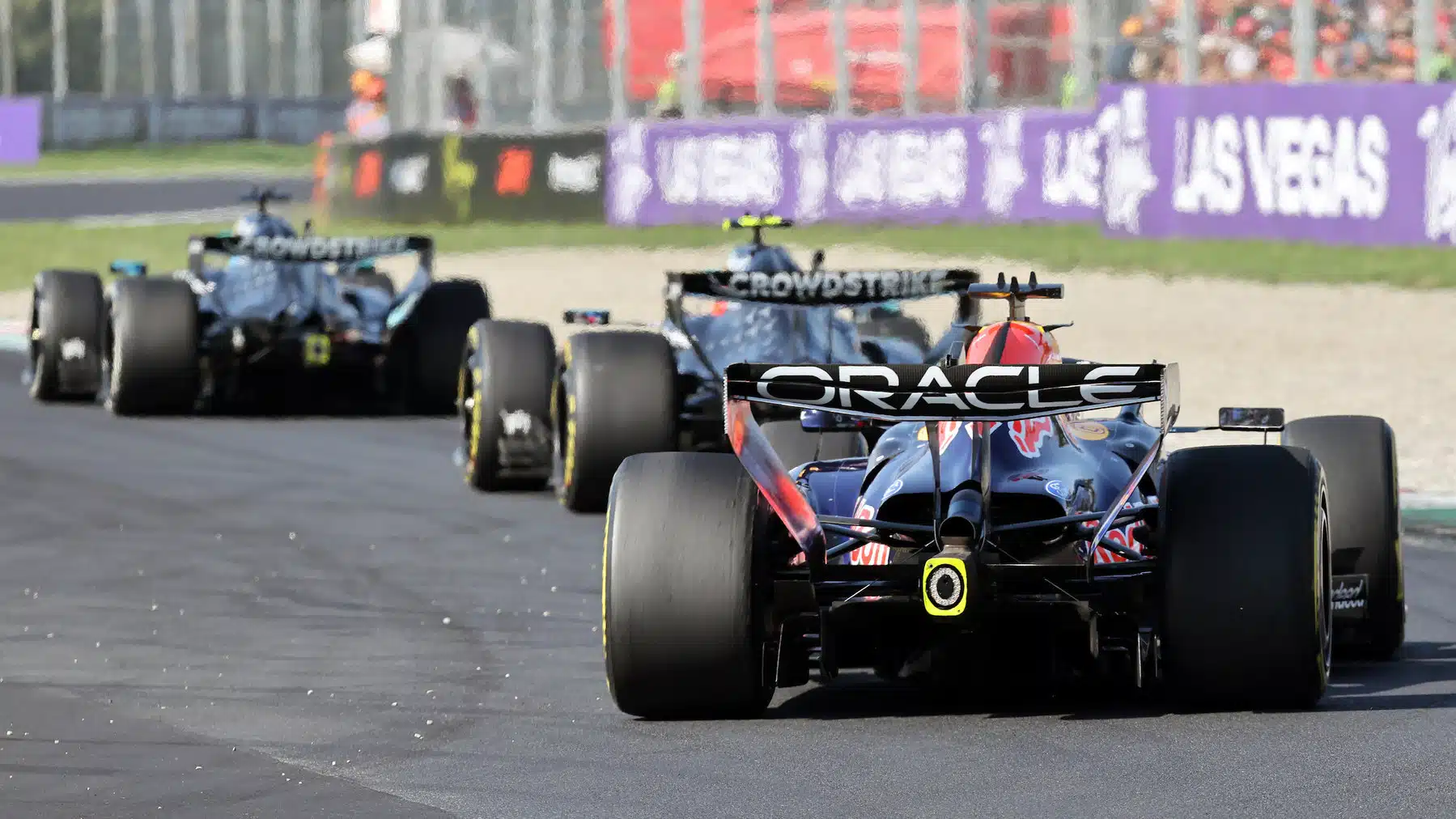
Verstappen could do nothing to stay in touch with the Mercedes
Grand Prix Photo
But when the VSC came on lap 28, he was still a factor. Russell and Antonelli had thrillingly diced, sometimes inches apart at 200mph until Antonelli was called off. “George is trying to build a gap over Verstappen. He can’t do that if he’s racing you,” Kimi was told. So for a few laps he just cruised in second place, but such was the power of the tow that Russell couldn’t build that gap to Verstappen with no-one in front of him.
The stalemate was broken by the VSC, which was the perfect opportunity for Antonelli to make the tyre change, which was inevitable anyway because the mediums were never going to go the distance. Russell could have been pitted at this point too, with Antonelli stacked. But he was on the hards and didn’t necessarily need another stop.
“The VSC came just at the moment where it wasn’t clear if stopping or continuing would be better,” said George afterwards. “So I guess it made sense for the team to split its strategy.” Complicating matters further, Perez – a lap down – came out of the pits directly in front of Russell on track and, with a damaged Cadillac took an age to get up to even the VSC delta speed. Which cost Russell four seconds.
So by the time the VSC was cleared, Antonelli (who’d dropped to sixth in his change to another set of mediums) was only 14sec behind Russell with 24 laps to go, with Verstappen – who’d also stopped – just behind him. Had Verstappen not been a threat, there’d have been no need for Mercedes to split its strategy and Russell could have had a precautionary tyre change too, calling pit stop priority as the lead car at the time of the VSC.
That’s the ‘yes, buts’ accounted for.
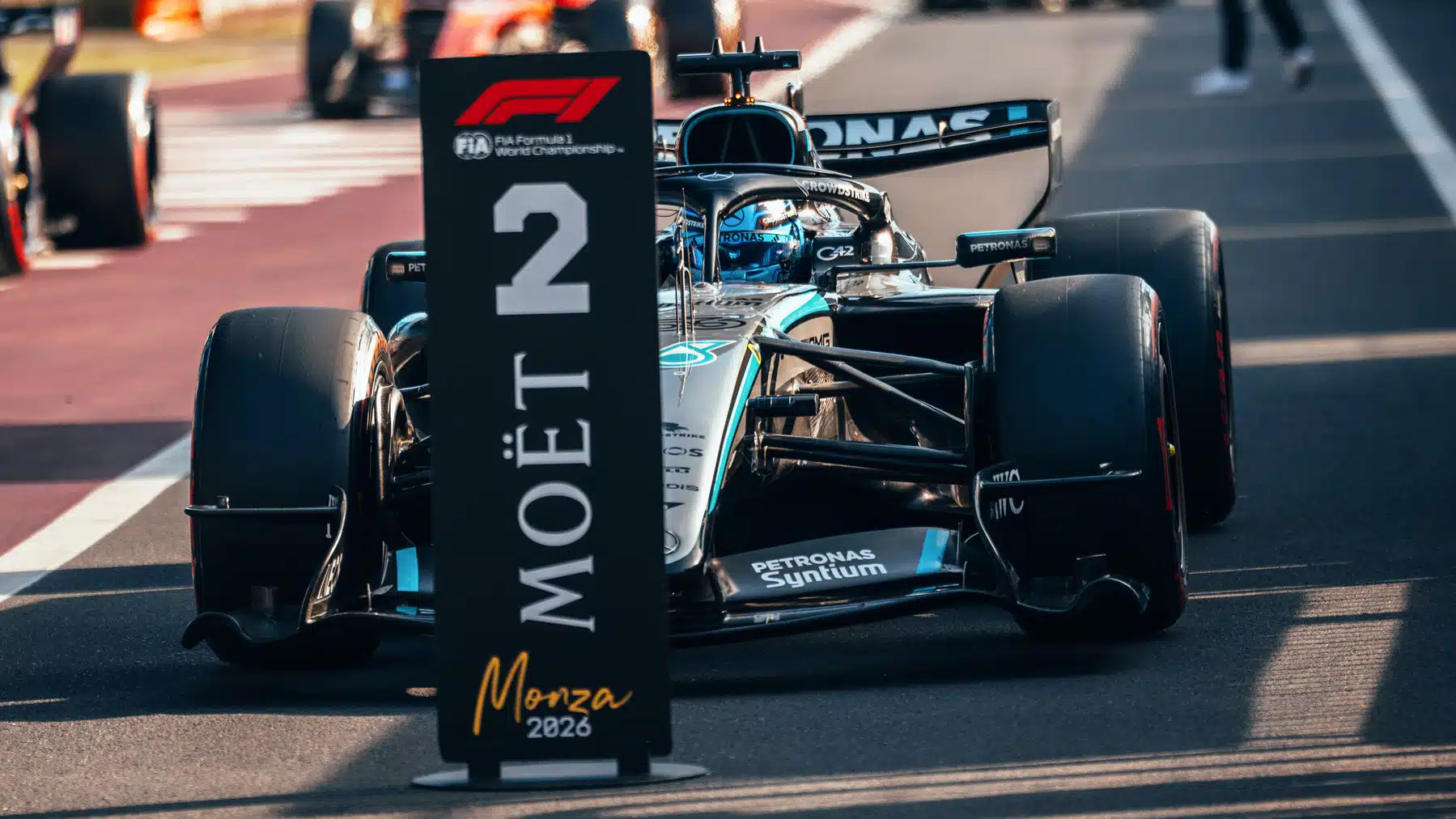
Russell had to concede Antonelli was the better driver
Mercedes
The way it turned out, Antonelli’s new mediums were sufficiently faster than Russell’s old hards for Antonelli to make the difference up. Now freed of having to drive to Russell’s concerns about Verstappen, Antonelli let rip and it was magnificent. Needing to make up 0.6sec per lap on his team-mate while also passing Gasly, Norris, Hamilton and Piastri and keeping his tyres in shape, his full-attack into and through the corners – tyre sidewalls hanging over the track limit lines through the fast corners every time, without deviation – was improbable and outrageous. That said, Verstappen in his wake was initially almost as fast before the Red Bull’s tyres cried enough. But he followed Antonelli past the Alpine, Ferrari and McLarens to put himself a distant third.
The Mercedes strategy divergence had allowed Antonelli to get Russell’s race out of his hair. But was Antonelli’s a better strategy? There’s no evidence of that either way. Switch strategies and does one-stopping Antonelli get beaten by two-stopping Russell? Doubtful. The virtuosity of Antonelli’s performance was the dominant factor here, not the strategy difference.