
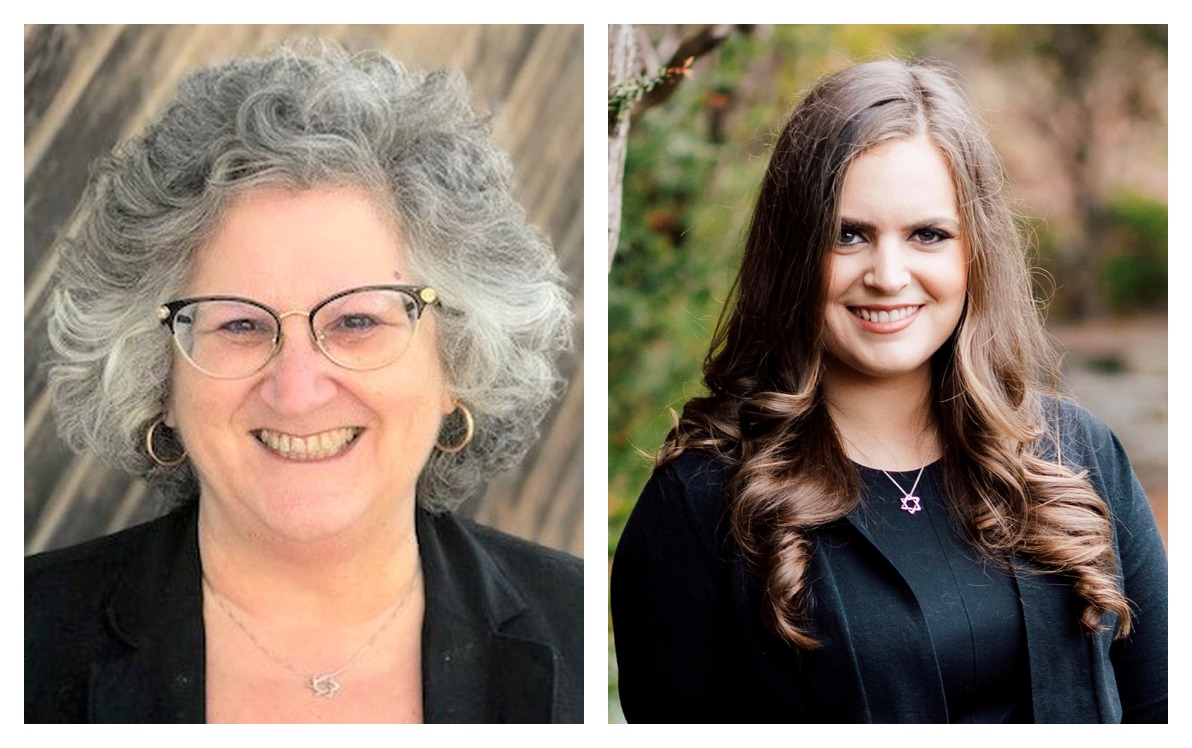
Only one of three Jewish trustees at the Toronto District School Board (TDSB) is running for re-election this year for a seat on a board that has been embroiled in heated meetings about antisemitism and is currently in the midst of a provincial takeover.
Shelley Laskin and Alexandra Lulka Rotman have decided not to run again. The only Jewish trustee seeking re-election is Stacey Cline, a TDSB elementary school and English second language teacher for 10 years, who was elected in Don Valley West in a March 2025 byelection.
The Oct. 26 election comes more than a year into the Ontario government’s takeover of the TDSB and three other school boards to address what the province has cited as financial mismanagement.
Cline is running in a reconfigured ward that covers York South-Weston and Eglinton-Lawrence. In April 2026, the province merged the TDSB’s 22 wards, reducing them to 12 to comply with a new trustee cap under Bill 101, which received royal assent in May.
Laskin and Lulka Rotman reflect on a combined three decades as trustees
Laskin was a TDSB trustee for six terms from 1997 to 2003 and from 2014 to 2026. She decided to run for trustee in the late 1990s when her son’s school randomly selected him to switch from a morning kindergarten class to one in the afternoon. She says the decision confused her because the school didn’t initially ask parents if they wanted to voluntarily move their children.
The TDSB trustee in Laskin’s ward encouraged her to contact the school’s council chair for help. Laskin eventually found out that under the Education Act, principals had the right to place children in classrooms at their discretion.
Her next best option was to make the process of these random switches smoother for parents in the future.
“Through the school chair who was very empathetic to the plight of parents whose kids were just switched, we created a little kindergarten committee and rewrote all the communications,” she says. “Now, communication is very standard about ‘reorganization day.’”
In the roughly two decades Laskin worked as a TDSB trustee, she consistently championed equity projects. These included restoring funds for post-secondary students who rely on the Ontario Student Assistance Program (OSAP), improving staff responses to incidents of racism and hate, and offering courses on Indigenous languages and texts.
“The goal is that every child who walks into their school can see themselves reflected either within the curriculum or on the walls of the school,” she says.
Her community building work was also a highlight of her career. She supported several motions that would allow local organizations to run programs and events on school property, facilitated the rebuilding and redevelopment of several schools, and urged the province to reinstate grants that help involve parents in student life.
Lulka Rotman has been a trustee since 2016. She already had political and educational experience ahead of her election: she advocated for Israel through Hillel and the Canadian Federation of Jewish Students as a Queen’s University student, and she volunteered to help with Canadian Jewish Political Affairs Committee campaigns.
She eventually moved on to teacher’s college and earned two Montessori degrees. At a friend’s suggestion, Lulka Rotman ran for trustee in a 2016 byelection to combine her passions in both education and politics.
“I, at the time, had no idea what a trustee was. I’d never heard of it,” she says, adding that once she realized what the job entailed, “the idea kind of took root.”
Many of Lulka Rotman’s biggest accomplishments involved helping the TDSB’s Jewish community. Through the Jewish Heritage Committee, created in 2015 to celebrate Jewish culture and improve Jewish education at the TDSB, she facilitated programming for various Toronto schools.
For one of these programs in May 2017, Toronto schools visited an Anne Frank exhibition at the John Polanyi Collegiate Institute.
“It was really cool to see these Polanyi students, most of whom were not Jewish, some of whom had never heard of the Holocaust, that were now giving tours of this Anne Frank exhibit to their peers from across the city,” she says.
Lulka Rotman faced public backlash for calling out antisemitism at the TDSB. In spring 2021, when a TDSB employee emailed teaching materials that described Hamas suicide bombings “martyrdom operations” to educators, Lulka Rotman criticized the emails publicly on X (formerly Twitter) and Facebook.
An independent investigation commissioned by the TDSB’s equity office found that some of the material was antisemitic. It also found that Lulka Rotman’s response was discriminatory.
Lulka Rotman “is no more an Islamophobe than the staff person is antisemitic,” the investigation said. “However, given the weight of her office, responding to the outrage of her constituents required her to measure her statements in a careful way to not feed into Islamophobic tropes.”
The TDSB voted against a motion to censure Lulka Rotman in December 2021, but the school board’s response, and the publicity around the investigation, had a lasting impact.
By weathering this incident, Lulka Rotman says she brought more attention to the issue of antisemitism at the TDSB.
“I felt like what I was doing really mattered to a lot of people, to take a stand and to be a voice,” she says.
She took just as much pride in the “quieter things” she did as trustee, such as taking phone calls from concerned parents and giving them advice.
When one of the schools in her area was looking to transfer principals, she knew the chosen candidate wouldn’t be a good fit because they had publicly supported the TDSB employee’s teaching materials in 2021. Trustees don’t have control over where principals are assigned, she says, but she advocated for the community by speaking with the superintendent. They were able to “make the switch before anybody found out.”
Laskin worked equally hard to strengthen the Jewish community at the TDSB. Around half a year after 9/11, she seconded a motion to distance the school board from a union newsletter about contemporary history in the Middle East, including Israel, that Jewish advocacy groups called propaganda.
A motion she introduced in 2020 to make genocide education mandatory was unanimously carried by the board. She says TDSB curriculum now covers genocide, though staff still aren’t required to receive training on how best to deliver those lessons.
“Different teachers cover it differently based upon their expertise,” Laskin says. “There should be professional learning for teachers that predates its implementation so that staff are comfortable in teaching these materials—they are supported in teaching these materials. That’s still, for me, a missing link.”
Fighting antisemitism at Toronto schools
The investigation into Lulka Rotman’s 2021 comments wasn’t the only time she or Laskin publicly fought antisemitism at the TDSB.
Lulka Rotman says she was advised not to talk about the 2021 investigation. Because she felt “intimidated by the whole integrity commissioner process,” she kept quiet until right before the censure vote.
“The fact that I had to bear it alone, from May to November, that was the hardest part. Feeling like I was suffering in silence, feeling like I had to carry this huge weight on my shoulders,” she says.
In February 2025, Laskin supported a report about antisemitism written in consultation with Toronto’s Jewish community members and advocacy organizations. It contained 32 recommendations about updating the curriculum to include education about Judaism beyond the Holocaust, improving Jewish representation among staff, and treating anti-Zionism as a form of antisemitism.
During a TDSB meeting, many speakers opposed the report, rejecting the recognition of anti-Zionism as a form of antisemitism, and saying it could stifle free speech about Palestine. One speaker described Israel as a “vile, depraved, white supremacist state.” Laskin called those comments forms of antisemitism.
“There was true harm spoken tonight,” Laskin said in the meeting. “This is not acceptable. No form of hate within deputations is acceptable.”
The board accepted the report, but Laskin and Lulka Rotman received formal complaints for their comments in the meeting. One complainant told the TDSB that Laskin broke several of the board’s rules in the code of conduct.
“This incident points to a clear bias and even hatred for Palestinians and Jewish folks who oppose a Jewish supremacist nation state,” the complainant said of Laskin.
Investigations by the TDSB’s integrity commissioner—who in January 2025 was given sole discretion over decisions in their investigations—found that neither trustee violated the code of conduct.
Given her previous experience with TDSB investigations, Lulka Rotman wasn’t as worried about the 2025 incident because she knew the Jewish community would support her.
“The second time around, it was kind of like, ‘I just don’t care what you think of me. I stand by it,’” she says. “It would say more about the ill health of the board than it would say about me and who I am if they had censured me for anything.”
The last motion Laskin supported encouraged the TDSB to appoint a full-time staff member to combat antisemitism. This staff member would provide training on Jewish topics and connect with community members to make schools more inclusive for Jewish students.
The motion was seconded by Cline and carried by the board, but the provincial takeover paused the initiative.
Provincial takeover, ward changes and passing the torch
The current takeover is the second Laskin has experienced in her six-term career. The last one took place in 2002, with the provincial government citing budgetary errors, lasted longer than a year, and involved two other boards beyond the TDSB.
Laskin says she was “a bit demoralized” during that takeover, though trustees retained advisory roles, held meetings, and continued to advocate for the community. Once her second term ended in 2003, she chose not to run for trustee again until 2014.
The conditions of the current takeover are stricter. Trustees have been locked out of their emails and heavily discouraged from speaking with media or parents. They had their board-issued phones and computers confiscated and had their contact information removed from the website, Laskin says.
“The thing about trustees as elected officials is you could speak truth to power. You would be able to have a conversation,” she says, adding that the province’s appointment of a TDSB supervisor made the board’s processes less transparent for parents seeking help.
In a letter Laskin sent to constituents, she says the TDSB’s budget deficit that led to the takeover is “because of the underfunding of public education.” Rather than improving funding, she says the province chose to increase its control on school boards’ governance while cutting programs, services and human resources.
“There is no question in my mind that provincial supervision imposed on the TDSB was purely political,” Laskin writes. “Healthy democracies do not respond to challenges by weakening representation. Instead of centralizing power, we should be strengthening accountability and raising the voices of the people who use the system every day.”
Laskin has also been through two other ward reconfigurations, one of which left her managing two wards by 2018. She believes the smaller number of trustees could be easier to manage in meetings by giving each trustee more opportunities to speak.
Lulka Rotman says the ward changes have doubled the number of schools a trustee is responsible for while cutting their pay “to almost nothing.”
In January 2025, trustees were paid around $25,000 annually. Lulka Rotman says the province reduced that to a maximum of $10,000 for a year.
“I had 20 schools in my ward, and I think that was the smallest number of schools in one ward. If you’re looking at at least 40 schools for one individual, it’s a lot, especially for something that (pays) less than a part-time job,” she says.
When the time came for re-election this year, Laskin felt she had accomplished most of her goals in the community. Many policies important to her “were on the books,” she says.
“I have good colleagues that will run in these wards, and I can support them,” she says, adding that she’s available to provide advice if they ever need help problem solving. “I have a lot more time to prepare dinner now and be with my family.”
Lulka Rotman, too, wants to spend more time with her children. Her youngest is 15 months old.
“I know that that time when they are little is fleeting,” she says. “I’ve carried the torch for 10 years really proudly, but right now my top priority is time with my kids.”
For future trustees addressing discrimination against Jews, Laskin recommends that the TDSB take the issue seriously by educating employees on what is and isn’t antisemitism. Laskin adds that the TDSB should hire staff who can support administrators responding to antisemitism.
Lulka Rotman says that antisemitism training needs to come “from the top down” because “many superintendents don’t understand it.”
In an email statement to The CJN, Stacey Cline said she will work on making sure Toronto’s schools are safe and inclusive for all students and families as a trustee. She was not available for an interview before publication.
“I hear from Jewish community members about incidents of antisemitism in our schools, and I’m alarmed. With such a large and vibrant Jewish community in the ward, I want people to know that I will be strong and responsive,” she wrote in the statement. “I will bring these issues directly to the board and press for meaningful action.”