
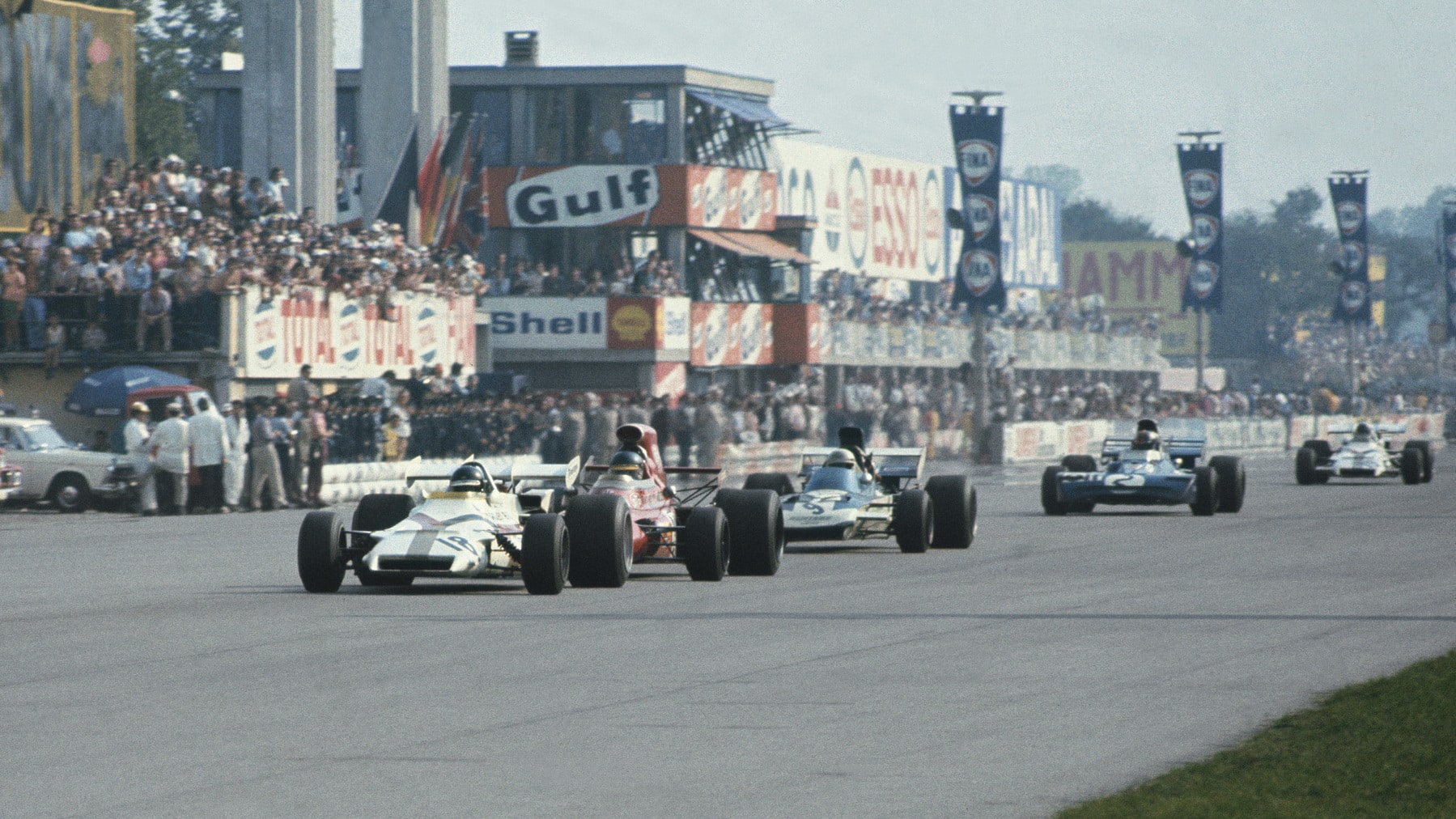
Gethin was the kind of driver whom you do not really see any more: a no-nonsense bloke, well liked, and possessed of a ribald sense of humour and an ability to drive just about anything quickly. He was quick in Formula 1, brilliant in Formula 5000, successful in Formula 3 and Formula 2, competitive in the Tasman Series, and effective in sports cars and touring cars. At Monza in 1971 he produced the performance for which he is remembered most vividly, emerging from an astonishingly intense slipstreaming mêlée to win by the very narrowest of margins. Peterson and Cevert were both F1 aces from the top drawer, men whose talents promised more than fate eventually allowed them to deliver, for both lost their lives as a result of horrible on-track accidents, Cevert at Watkins Glen in 1973 and Peterson at Monza in 1978. Hailwood, by 1971 already a figure of almost mythical stature on two wheels, was a very good car racer and a truly magnificent motorcycle racer, the sort of description that in itself makes the 1970s F1 scene seem utterly foreign to today’s fans.
Then there was Ganley. If you were to assemble a quiz team of F1 enthusiasts and ask them to name the five drivers who finished first-to-fifth in the 1971 Italian Grand Prix, Ganley would probably be the name left sitting on the tip of someone’s tongue. That is a shame, because his story is a truly engaging one. He is now 84, and I know him quite well, which means that I have had the privilege of discovering that beneath the chummy and unassuming exterior lies a wonderful store of memories, a formidable racing intellect, and a disarming absence of vanity.
He began his motor sport career in New Zealand not as a driver but as a teenage race reporter for the Waikato Times and later Sports Cars Illustrated, before voyaging in early 1962 to the UK where in 1963 he found work as a mechanic for Bruce McLaren Motor Racing. Incidentally, his journey was typical of the time: turboprop airliner from Auckland to Sydney, ocean liner from Sydney to Lisbon, motor coach from Lisbon to Dover. He had done a bit of racing in New Zealand, and he continued in England, making his F3 debut in a Brabham in 1967 while continuing to work as a mechanic for McLaren, and by 1970 he had closed his spannering chapter and had become a full-time racing driver – a career trajectory that would be totally impossible to replicate today.
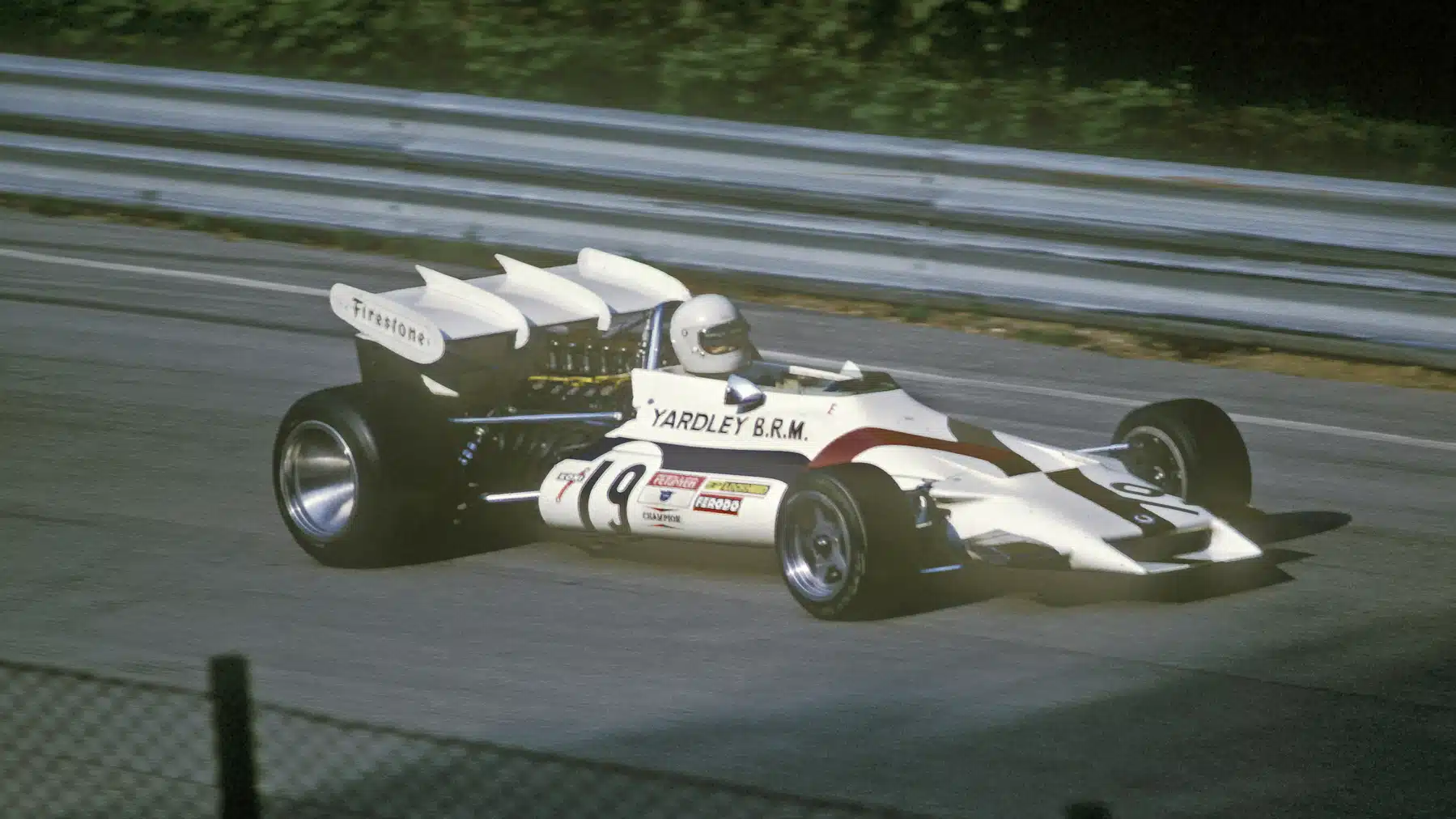
Ganley is the last surviving driver from the Monza top five
Grand Prix Photo
Ganley always held Bruce McLaren in the very highest regard – and, many years later, when I was working as McLaren’s communications and PR chief, he and I had lunch at the McLaren Technology Centre and he told me something about the team’s founder that has stayed with me ever since. “‘Men,’ Bruce used to say,” Howden recalled, “because he always addressed us that way, ‘Men, I want us to do this.’ And when Bruce said that, you simply did it, because he possessed that special, almost indefinable leadership charisma. If he’d said, ‘Men, I want us to walk across the Sahara Desert,’ we’d have done it. We’d have said, ‘Well, if Bruce says so, it’s got to be the right thing to do.’”
Ganley started 35 world championship-status F1 grands prix between 1971 and 1974, his best results in those races two fourth places, at Watkins Glen in 1971 and at Nürburgring in 1972 – unless, that is, you regard his fifth place at Monza in 1971 as a more remarkable achievement, which I think I do, for at F1’s original temple of speed he crossed the finish line just 0.61sec behind Gethin, the race winner, and he might have won had he timed the slipstreaming of the final lap differently. He stood on an F1 podium only once, in the less exalted setting of the non-championship 1971 International Gold Cup at Oulton Park, where he was second for BRM behind John Surtees in one of his eponymous F1 cars. Ganley was never a racing superstar, but he was intelligent, dogged, and capable, and his fifth place at Monza in 1971 won him the now-defunct Wolfgang von Trips Memorial Trophy for the best performance by an F1 rookie.
Two years later came another remarkable career footnote, in the 1973 Canadian Grand Prix, a race in which the official lap charters lost all track of the on-track reality. Ganley, driving an Iso-Marlboro for Frank Williams, was eventually classified sixth, although some observers believed that he had won, among them Judy Kondratieff, then his girlfriend and later his wife, who was doing the lap chart for Williams’ team. McLaren’s Peter Revson was eventually declared the winner. Not long ago I asked Ganley who he thought had actually won. “Emerson Fittipaldi,” he replied without embellishment.
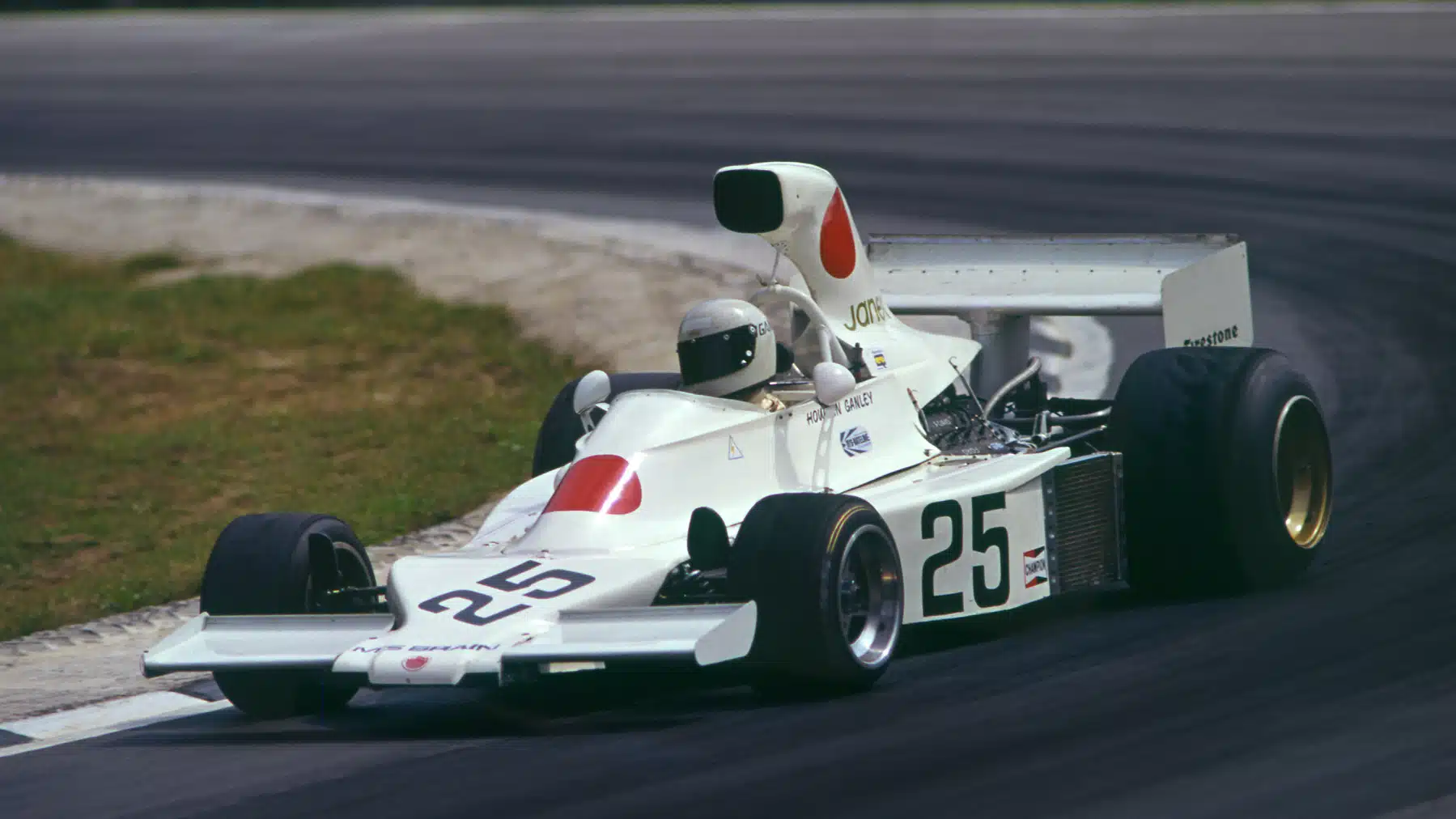
Ganley, here in a Maki-Ford in 1974, his last season in grand prix racing
Grand Prix Photo
That answer is Ganley in microcosm: no bitterness, no theatricality, no self-aggrandisement, no attempt to make a good story better, but simply an opinion delivered as plainly as a man might tell you that it is raining. He is similarly matter-of-fact about the dangers of his era. “You have to understand that I didn’t expect to survive my racing career,” he once told me. “I just didn’t. I mean: Jim Clark didn’t survive his; Bruce McLaren didn’t survive his; why would I be so presumptuous as to think that I’d survive mine?” To my mind those sentences contain more truth about old-school F1 than a library of nostalgic reminiscence. Men like Ganley drove fast because they loved driving fast, and they did it in an environment in which death was not an abstract possibility but part of the landscape.
Ganley raced at Le Mans four times, finishing second at his first attempt, in 1972, sharing a Matra with Cevert, before failing to reach the end of the great race in 1973, 1975, and 1976. He was also quick in Formula 5000, finishing second in the 1970 European championship in a McLaren-Chevrolet. Once again, the man who beat him was Gethin, champion that year in another McLaren-Chevy. In 1974 Ganley and fellow race driver (and fellow antipodean) Tim Schenken founded Tiga, a name formed from the first two letters of one founder’s first name and the first two letters of the other founder’s surname, and drivers of Tiga race cars won many races and numerous championships in all sorts of series before the company was wound up in 1989. In 1975, inspired by McLaren, his hero, Ganley tried to launch his own F1 project. He hand-built the Ganley 001 in his small workshop at Windsor, about 25 miles (40km) west of London, where he had two Cosworth DFV engines ready, but the project never reached a race.