
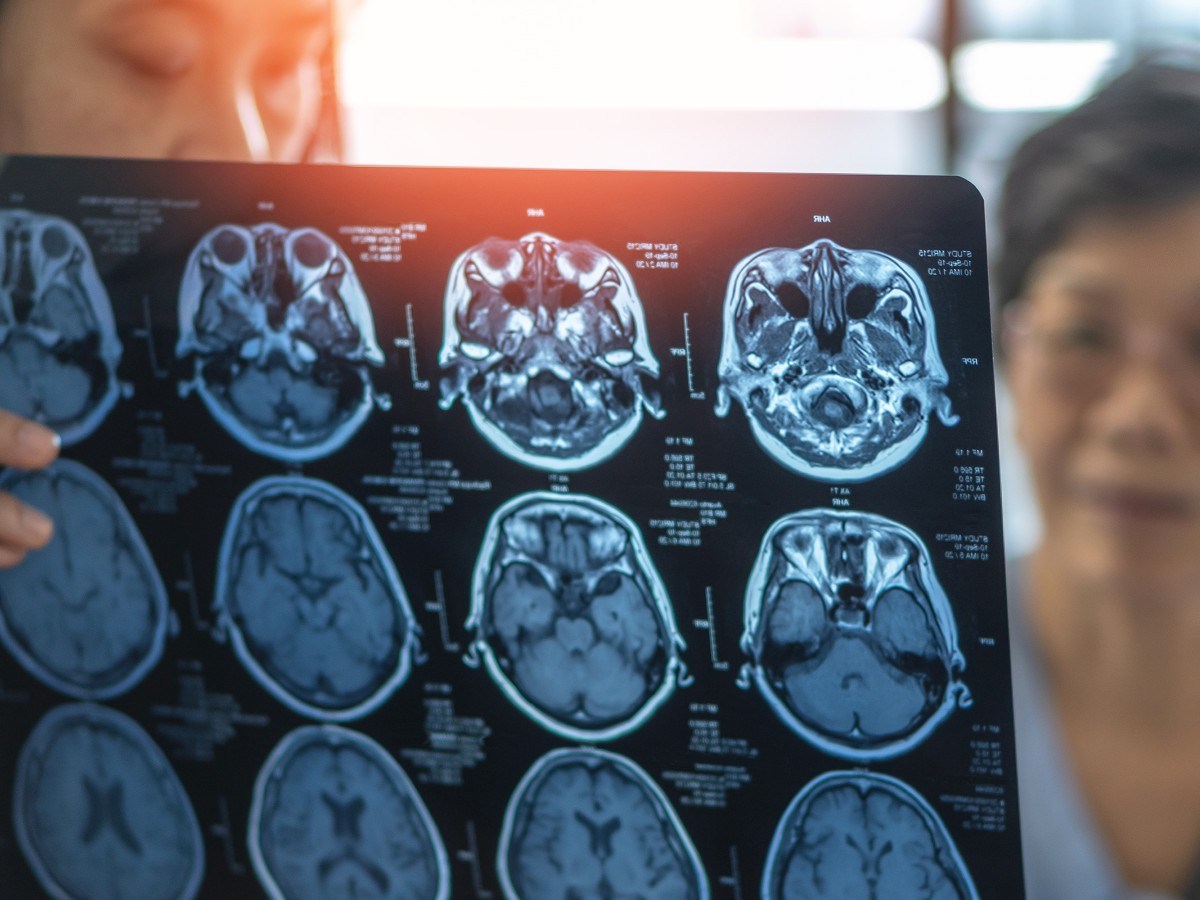
A recent study indicated that older Americans may either have dementia diagnoses without knowing or may not self-report having a diagnosis, and experts have called for more work to be done to improve early detection.
Researchers at Yale University found that 67 percent of older Americans underreported having a dementia diagnosis, which was more than double the rate for other conditions within the same sample group, such as arthritis (17 percent underreported having the condition), diabetes (39 percent) and depression (46 percent).
Other research has raised similar concerns about dementia screening as well. Dr. Malaz Boustani, a professor of aging at Indiana University, told Newsweek that his team’s 2005 primary-care study found “only 19 percent of patients whose dementia was confirmed through formal assessment had dementia documented in their medical record. Approximately 80 percent lacked a recorded diagnosis.”
Read More on Health
Dr. Soeren Mattke, director of the University of Southern California Brain Health Observatory, also told Newsweek he published a study in 2023 with a team of researchers which found only 8 percent of all expected cases of mild cognitive impairment in an older Medicare population were diagnosed.
In light of the findings, experts have now spoken to Newsweek about how to spot dementia in its early stages, why it can go missed in patients and what needs to be done.
What Are Early Signs Of Dementia?
“Early signs can be subtle and extend beyond simply forgetting things,” Dr. Joe Verghese, a professor of neurology at Stony Brook University, told Newsweek.
He said they may include “difficulty remembering recent events, finding words, managing medications or finances, navigating familiar places, solving problems, or completing tasks that were previously routine.”
“There may also be non-cognitive features such as changes in walking patterns, loss of smell or behavioral changes,” he added.
A new large study has also indicated that changes in the way a person speaks could be an early warning sign of cognitive decline. The research suggested that voice disorders may be more strongly linked to future dementia risk than hearing loss alone.
 Why Can Early Dementia Signs Be Missed?
Verghese said these early cognitive changes “can be difficult to distinguish from normal aging, and patients or families may normalize or compensate for them,” meaning it is possible that early dementia signs are missed.
He also said that primary care clinicians “have limited time and many competing priorities,” which could lead to signs being missed. For a clinician, he said it’s not just about “recognizing cognitive impairment—it is knowing what to do next when a patient screens positive.”
Given the findings of the study, there also seems to be a potential issue, not just with early signs being missed, but with patient awareness or acceptance of their diagnosis.
This could be because clinicians “may also use terms such as ‘memory problems’ or ‘cognitive impairment’ rather than dementia, especially early in the diagnostic process,” Verghese said, adding that, from the patient, there may also be a “reluctance to communicate or accept the diagnosis because of stigma, uncertainty, or concern about its implications.”
“The findings highlight an important distinction between a diagnosis appearing in a medical record and a patient understanding and retaining that diagnosis,” he said.
This lack of awareness can mean “missed opportunities for patients and families to plan while the patient can still participate meaningfully in decisions,” he added, noting that it can also “delay evaluation for potentially reversible contributors, treatment of associated medical problems,” as well as other support.
‘I Did Not Recognize Dementia In My Own Father’
“I am a geriatrician, a neuroscientist, and a physician who provides memory care, and I did not recognize dementia in my own father,” Boustani told Newsweek.
He said that his father was a dentist, and had been physically healthy and taking no medication when he developed shortness of breath and swelling in his legs.
“He was hospitalized with new-onset heart failure related to atrial fibrillation and myocarditis—an abnormal heart rhythm and inflammation of the heart muscle,” Boustani said. His father then went home with five new medications, including a blood thinner.
Boustani said that because of this father’s professional background, “we assumed he could manage those medications himself.” However, he said that his father “was not taking them correctly, particularly the blood thinner.”
“Medication errors contributed to bleeding in his digestive tract, and within 48 hours of discharge, he developed gastrointestinal bleeding, dehydration, and delirium (an acute episode of confusion) and had to be hospitalized again,” he said.
It was during the second hospitalization that Boustani said he “realized what we had missed.”
“Looking back beyond that episode of acute confusion, I recognized that he had likely been living with unrecognized dementia for three to five years,” he said.
“The problem is not simply that patients are inattentive or families do not care. My father had a healthcare background. His son specialized in dementia. We still missed it.
“My father’s experience taught me not to confuse someone’s education or professional background with their current ability to manage a demanding treatment plan,” he said. “We need to ask what a person can actually do safely, rather than assume.”
Could Earlier Detection Improve Outcomes?
Experts have called for improved detection and diagnosis of dementia in its earlier stages, saying this could improve outcomes for patients, not just in allowing them to prepare, but also because available treatments are more effective when started sooner.
Verghese said: “We need to make cognitive detection and the steps that follow it easier to incorporate into routine primary care where the overwhelming majority of older adults with cognitive concerns present.
“Screening alone is unlikely to solve the problem if clinicians are left without a clear pathway for what to do with the result.”
Mattke said that “as for any life-changing condition, patients and families need to know to prepare, like home safety, care arrangements, protection from fraud and scam, and with the emergence of amyloid-targeting treatments from Alzheimer’s disease, as the most common etiology of dementia, early detection has become a race against time.”
“Those treatments are only indicated for mild cognitive impairment and mild dementia, and there is increasing evidence that the treatments are more effective if started as early as possible,” he said.
Boustani said earlier detection may also improve patient safety. Missed recognition can leave symptoms “inadequately treated, increase healthcare use, and threaten a person’s ability to remain in their own community,” he said, adding that there are also “concerns about financial exploitation, driving injuries, and household hazards such as unsafe cooking and fires.”
Reference
Yuting Qian, Kyle A. Gavulic, Xi Chen, Dementia Diagnosis Underreporting and Care Engagement and Planning Among Older Adults, JAMA Network Open, 2026;9;(8):e2631167. doi:10.1001/jamanetworkopen.2026.31167
Contact Newsweek editors on this story: Kara Dolman and Emma Lee-Sang