

(James McKay via SWNS)
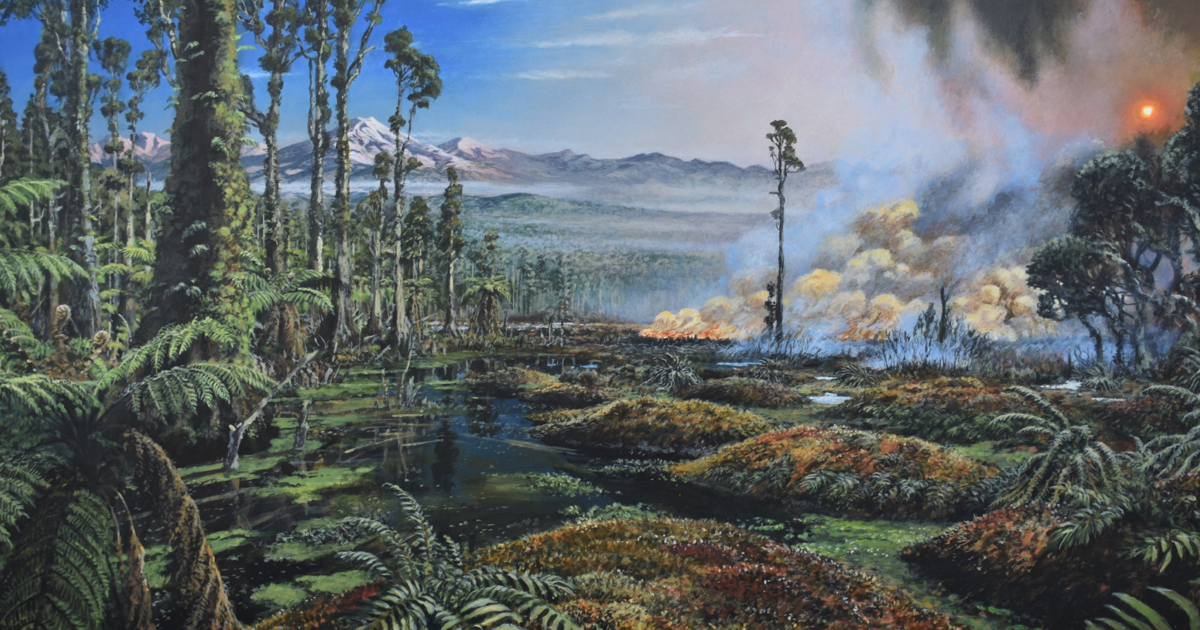
New research has uncovered ancient wildfires that raged through prehistoric rainforests in Antarctica – shaping our landscape.
The study, published in Communications Earth & Environment, found clear evidence of recurring wildfires in South Pole rainforests, the southernmost ever recorded on Earth.
As the nearest volcanic activity at the time was at least 400 kilometers away, the study shows that lightning strikes, rather than lava or ash, were the likely ignition source for these ancient fires.
Ninety million years ago, during the Late Cretaceous period, average annual temperatures near the South Pole reached around 53°F (12°C), warm enough for rainforests to grow despite four months of continuous winter darkness each year.
In this new study, the team re-examined the same sediment core and found clear signs of fires.
Photo by Vladyslav Dukhin via Pexels
By Talker
Microscopic charcoal particles, specifically in the younger layers of the core, showed that mostly soft conifer wood had burned at relatively low temperatures.
This indicates that they were likely surface fires rather than fires that consumed the whole forest canopy.
Fire-damaged tree trunks appear to have produced amber as a protective seal, while abundant peat moss spores pointed to the formation of the earliest known raised bog of its kind, closely tied to the recurring fires.
Salzmann, co-first author of the study, said: “Ninety million years ago, just 900 kilometers from the South Pole, a temperate and very swampy Antarctic rainforest with pronounced dry and monsoon seasons gradually silted up and developed into a peatland dominated by peat mosses.
“Wildfires, which became increasingly frequent, clearly played a decisive role in this process.
“They kept the vegetation open and enabled the development of a peat bog where ground-level smoldering fires then occurred repeatedly, similar to those that have become increasingly common in modern peatlands in recent years.”
The researchers say these findings can improve our understanding of how fire and peatland ecosystems interact under warm, high-CO2 conditions, insight that is increasingly relevant as modern peatlands face growing wildfire risk under climate change.