
NEED TO KNOW
The 2014 Ebola outbreak in West Africa was the deadliest, with over 28,000 cases and 11,000 deaths
The disease spreads through contact with bodily fluids and is infectious but not considered highly contagious
A new outbreak in the Democratic Republic of Congo is the fastest-growing on record, with over 6,800 cases so far
A massive outbreak of Ebola sent the world into a panic 12 years ago as cases skyrocketed in Guinea, Liberia and Sierra Leone.
By Sept. 10, 2014, the death toll had risen to 2,296, per The Washington Post, in what would become the worst-ever outbreak of the virulent disease, with a total of 28,610 sickened, and 11,308 people dying, per the U.S. Centers for Disease Control and Prevention.
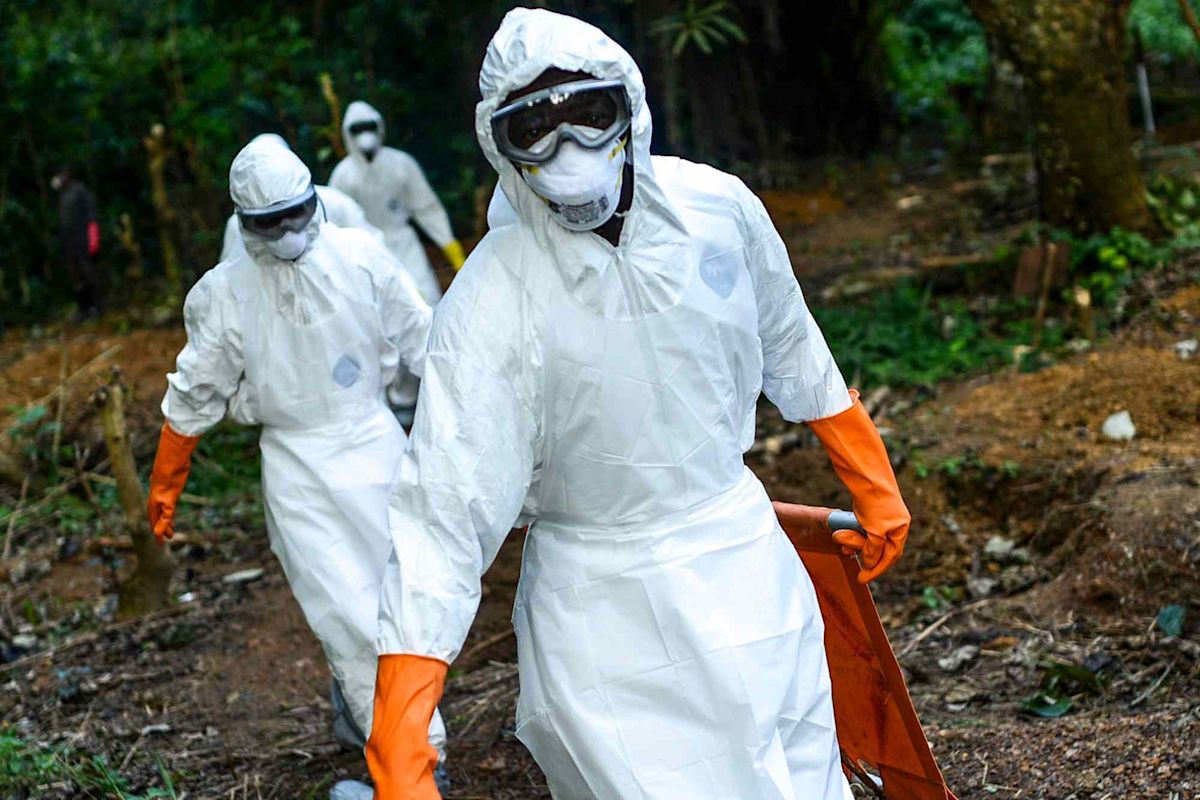
As gruesome images circulated of health workers in protective equipment tending to bloody patients, headlines fueled a global panic. Dr. Thomas Frieden, the then-director of the CDC, said the outbreak was “spiraling out of control.” President Barack Obama called it a “potential threat to global security.” Children were pulled from schools in Queensland, Australia, after a man was thought to have Ebola, but then tested negative for the disease.

Workers carry a stretcher during the Ebola outbreak in 2014
Credit: Mohammed Elshamy/Anadolu Agency/Getty
The virus spreads through contact with bodily fluids of an infected person — alive or dead. But as Johns Hopkins Medicine explains, it can also spread by touching items, like clothing or bedsheets, that have been in contact with body fluids.
The disease is not considered to be airborne, and is not thought to be particularly contagious; however, it is infectious — meaning, it takes a small amount of contact with the virus to contract Ebola. According to the CDC, someone infected with Ebola doesn’t spread the disease until they’re symptomatic.
Symptoms can appear as late as 21 days after contact with an infected person, and begin with what are called “dry” symptoms of Ebola, like fever, joint and muscle pain, headaches and fatigue. The disease then progresses to the “wet” symptoms, which, along with vomiting and diarrhea, include bleeding from the eyes, mouth, nose and rectum.
Pictures of bloody patients contributed to the he panic. As Eric S. Halsey wrote in the American Journal of Tropical Medicine and Hygiene, “the word “Fearbola” was popularized as a description of the public’s reaction to the intensity and nature of the initial press coverage.”

Ebola crews clean a house in 2014
Credit: FLORIAN PLAUCHEUR/AFP via Getty
Take PEOPLE with you! Subscribe to PEOPLE magazine to get the latest details on celebrity news, exclusive royal updates, how-it-happened true crime stories and more — right to your mailbox.
The World Health Organization declared the outbreak over on Jan. 9, 2016, after the final patient tested negative for the disease.
The current outbreak of Ebola in the Democratic Republic of Congo has already surpassed the September 2014 milestone, with 6,843 confirmed cases and 3,310 related deaths, according to the European Centre for Disease Prevention and Control.
The DRC outbreak is now the fastest-growing outbreak of Ebola on record. Per CDC data, it took just 40 days to surpass 1,000 cases.
Read the original article on People