

Listen to this article
Estimated 3 minutes
The audio version of this article is generated by AI-based technology. Mispronunciations can occur. We are working with our partners to continually review and improve the results.
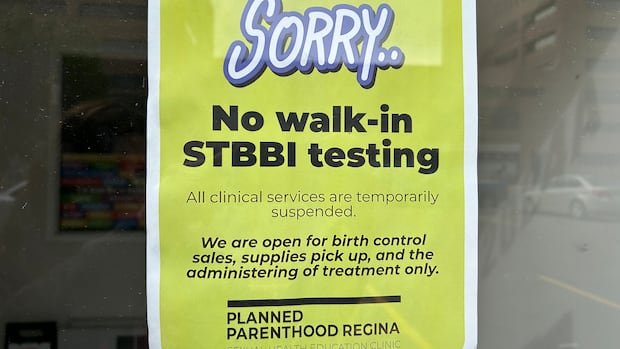
Without a nurse practitioner, Planned Parenthood in Regina has been offering reduced clinical services since August.
Without that position filled, the non-profit can’t provide pregnancy tests, gender-affirming care, testing for sexually transmitted and blood-borne infections, pelvic exams, IUD placement and other forms of implanted and injected birth control.
Since the service reduction started, they’ve already turned 250 people away, said board chair Brit Sippola-Kotylak.
“People are upset. People feel like they don’t know where to go for stigma-free sexual health. People are worried about us closing permanently. People want to see us back open.”
The situation is concerning, said Cecilia Rands, a trained sexual health educator and advocate.
“Planned Parenthood Regina is one of the only places folks can access STI testing, pregnancy testing, support for counseling and things like that,” Rands said. “So without those services, there’s even fewer options for people in Regina looking for reproductive and sexual health services.”
 Brit Sippola-Kotylak is the chair of the Planned Parenthood Regina board. (Randi LaRocque/CBC)
She’s especially concerned about the youth who need access, she said.
“Here they get support that they know is going to be non-judgmental and comprehensive and supportive for their needs as young people.”
A doctor or a walk-in clinic will not offer that same thing, and young people who need gender-affirming care are especially vulnerable, she said.
“I worry about young people that don’t have that care because the risk of suicide, self-harm, mental health issues for queer folks that aren’t getting the support and health care that they need is, it’s serious. This is a serious concern.”
The sexually transmitted infection statistics in the province are already high, Rands noted.
“I know that at one point Saskatchewan had the highest rate of teen pregnancies. We definitely have some of the highest rates of HIV and AIDS, highest rates of syphilis across Canada per capita for such a small province.”
That’s a result of poor services and lack of education about sexual and reproductive care, she said.
 Cecilia Rands is concerned that the suspension of services could have long-term consequences. (Will Draper/CBC)
The way to bring those numbers down and help break the stigma is for the government to step up, Rands said.
“[They need to] recognize that this is health care, that these services are important.”
If Planned Parenthood doesn’t find a new nurse practitioner soon, the consequences for some people may be undoable, she said.
“Somebody can get pregnant in six months and not be able to access the care they need to make a supported choice. Somebody can contract an STI in those six months, not get tested … Things like testing are really important to get that early detection, and in those six months those can go undetected. That can lead to long-term health consequences.”
Planned Parenthood remains open to provide free safer sex supplies and birth control with a valid prescription, and will continue to provide updates on the status of its clinical services over the coming months.