
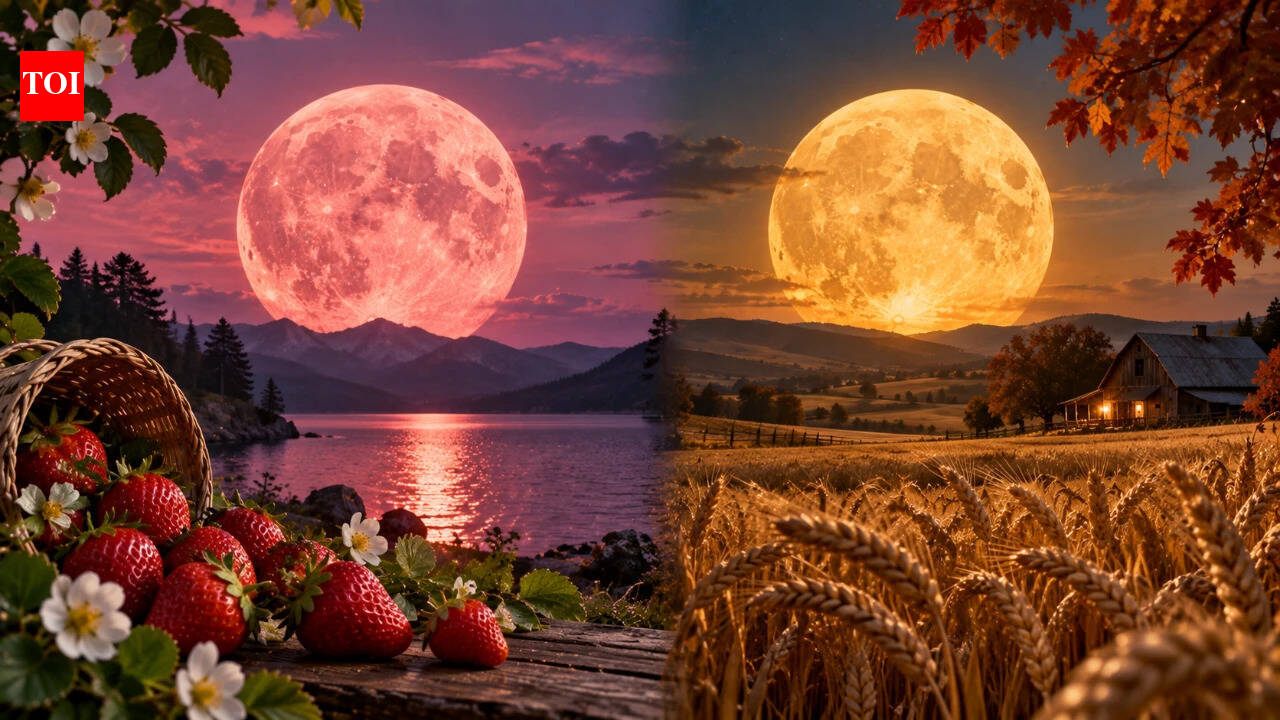
 The full moon names, such as Strawberry and Harvest Moon, serve as rich cultural symbols, highlighting the interplay between nature and human life. The Strawberry Moon graces the June skies, symbolizing the time for berry picking, while the Harvest Moon appears around the autumnal equinox, marking the period for gathering crops. These names beautifully intertwine celestial phenomena with seasonal practices. A Strawberry Moon does not taste like strawberries, and a Harvest Moon is not a different kind of Moon. But these names do come up every year, and many times people are left wondering if something weird is going on in the night sky.The explanation is far more interesting.Seasonal markers were created, like the Strawberry Moon, Harvest Moon, Pink Moon, Wolf Moon, and Hunter’s Moon. Various cultures used the lunar cycle to mark changes in the weather, farming, plants, animals and daily life. Many of these traditional names remain popular today, particularly in the United States.The Strawberry Moon was on June 29, 2026, and the Harvest Moon is coming on September 26.
Why is June’s full moon called the Strawberry Moon?
The Strawberry Moon is not named for its colour, but for the time of year.The name is associated with the Indigenous peoples of North America, including Algonquian traditions, and refers to the time when certain strawberries were ripe for harvesting. Other tribes had their names related to berries, flowers, or the changing of seasons.So the Strawberry Moon doesn’t normally turn pink or red, despite its colourful name.It can look yellow, orange or reddish, like any moon close to the horizon, when its light passes through more of Earth’s atmosphere. That visual effect has nothing to do with the name.In 2026, the Strawberry Moon was fully illuminated on June 29.
What’s Special about the Harvest Moon?
The Harvest Moon is special because its name derives from its proximity to the autumnal equinox, rather than from a calendar month.It is the Full Moon nearest to the September equinox.This makes it the September Full Moon in most years. Sometimes, though, the Harvest Moon comes in October.The date of the 2026 autumnal equinox is September 22, and the Full Moon on September 26 is the Harvest Moon of the year. In the United States, it will reach its maximum brightness at 12:49 p.m. EDT.September’s Moon is also called the Corn Moon in some naming systems.
Why was the Harvest Moon so important?
The Harvest Moon was especially useful before modern lighting changed farming.In the days around the autumn equinox, the Moon can be seen relatively soon after sunset for a few days in a row. Historically, this meant that farmers had extra moonlight available during a critical harvesting time.This is the reason why the Harvest Moon is so closely tied to agriculture.Its name refers to what people were doing under the Moon, not to anything physically different happening on the Moon’s surface.
Why are all the full moons named?
For thousands of years, humans have used the Moon as a natural calendar.Before phones, printed calendars or weather apps, the recurring lunar cycle was an easy way to recognise the passing of time.One name may be given by a Moon that falls in a time of snow. Another might be named when the flowers came out, or the animals changed their ways, or the crops came in.Familiar names include the Snow Moon, the Pink Moon, the Flower Moon, the Buck Moon, the Sturgeon Moon, the Beaver Moon and the Cold Moon.But there’s one important thing that’s often overlooked. There isn’t a comprehensive list of Full Moon names used by all cultures.Many of the popular names you see today come from a variety of traditions, including Native American, Colonial American and European. Different groups often call the same month by different names.
Strawberry Moon vs Harvest Moon: What’s The Actual Difference?
The easiest difference is seasonal.The Strawberry Moon aligns with June and early summer, and particularly the seasonal ripening of strawberries.The Harvest Moon occurs at the autumn equinox, the time of harvest for farmers.Neither name refers to a distinct class of Moon in astronomy. Both are just regular Full Moons, where the Sun is between the Earth and the Moon, and the lunar side we see from Earth is fully illuminated.The human story behind each of them is what changes.And maybe that is why these Moon names are still so popular. They connect an occurrence hundreds of thousands of kilometres away to something very local — berries ripening, crops being harvested, winter coming on, or flowers starting to show.And in September 2026, the name to remember isn’t the Strawberry Moon. It is the Harvest Moon of September 26, continuing one of the oldest ties between the lunar calendar, changing seasons and human life.