
While there are plenty of fancy protein-fortified snacks on the market, it is possible to increase your intake with whole foods and pantry staples.
Spreads are an easy way to add flavor and nutrients to any meal. And if you love bread — which is not very high in protein — they’re a no-brainer to help meet your goals.
When imagining a high-protein spread to make toast or sandwiches more filling, peanut butter may come to mind.
In the United States, peanut butter and other nut butters are incredibly popular options for breakfast, lunch and dessert.
They can be healthy when consumed in moderation as part of a balanced diet, TODAY.com reported previously. Nuts are known for their protein, healthy fats and dietary fiber, which can help keep you feeling full.
However, many popular varieties of nut butter sold in the U.S. are high in added sugars and other additives.
Nut butters are also calorie-dense, and can drastically up your intake if you eat more than the recommended serving size (two tablespoons), according to dietitian and TODAY.com nutrition editor Natalie Rizzo — and most Americans are eating way too much of it already, per the Cleveland Clinic.
While nut butters do offer a modest 7 grams of protein per serving, they aren’t the only spreadable source of this muscle-building nutrient.
Healthy High-Protein Spreads
Spreads can be added to bread, sandwiches, wraps, rice cakes and other foods. In addition to texture and flavor, these can provide high-quality protein, vitamins and minerals.
The extra protein helps with satiety and provides lasting energy. It’s also crucial for muscles to rebuild and repair after exercise.
The average healthy adult needs about 1.2–1.6 grams of protein per kilogram of body weight per day, per the 2026-2030 Dietary Guidelines.
For a 150-pound person, that’s about 81–109 grams of protein per day — all that protein math boils down to about 20-40 grams per meal, says Rizzo.
Here are some dietitian-approved creative, high-protein spreads that offer at least 9 grams per serving.
Greek Yogurt
Greek yogurt isn’t just a breakfast bowl staple. It can be used as the base of high-protein, savory and sweet spreads.
One-quarter cup (about 100 grams) of plain, non-fat Greek yogurt provides about 10 grams of protein for about 60 calories. It’s also a good source of minerals and gut-healthy probiotics.
Greek yogurt makes an excellent base for a healthier ranch dip, for example, Julia Zumpano, a registered dietitian with the Cleveland Clinic’s Center for Human Nutrition, tells TODAY.com. Mix in seasonings and herbs, and you’ll have a spread that’s full of flavor but lower in calories than the typical store-bought dressing.
One of Rizzo’s favorite hacks is to blend Greek yogurt with avocado, lime juice and seasonings for a high-protein guacamole-inspired spread.
If you have a sweet tooth, you can blend or top the yogurt with mashed berries, fresh fruit or preserves.
Whipped Tofu
Whipped tofu is a dairy-free spread that’s versatile and packed with protein.
One half-cup serving of firm, raw tofu (whipped into a spread) is packed with 21 grams of complete protein to support muscle growth and repair.
Tofu is also one of the best plant-based proteins to support bone health, Rizzo previously told TODAY.com. Tofu is made from soy milk, which is often coagulated using calcium compounds.
On its own, tofu doesn’t taste like much. Whipping the tofu in a food processor with water, olive oil and seasonings turns a humble flavorless block into a rich, high-protein spread.
Blended Cottage Cheese
Cottage cheese is a favorite among dietitians for breakfast. It also makes a versatile high-protein base for spreads and dips.
One half-cup serving of 2% cottage cheese packs about 12 grams of protein, along with calcium to support strong bones and B vitamins for energy metabolism, according to registered dietitian and author Frances Largeman-Roth.
Cottage cheese is known for its clumpy texture and firm curds, but it can also be made into a creamy spread. Largeman-Roth’s favorite hack is to blend the cottage cheese — adding water or milk to adjust the thickness — until it’s smooth.
“It’s a favorite toast topper of mine,” says Largeman-Roth.
Mix in your favorite savory seasonings or top the cottage cheese spread with fresh fruit. You can also use blended cottage cheese in place of cream cheese or mayonnaise.
Chickpea Mash
If you’re looking for a plant-based spread that’s rich in protein, chickpea mash is quick and budget-friendly option. Simply mash cooked chickpeas into a chunky spread with lemon juice and spices of your choice.
One serving (about a half-cup) of canned, drained chickpeas, mashed, offers over 9 grams of plant protein.
Chickpeas are considered a complete protein because they provide all nine essential amino acids. They also offer some dietary fiber to support healthy digestion, as well as vitamin B6 to support healthy nerve and immune function.
Mashed whole chickpeas typically offer a bit more protein than store-bought hummus, and it’s easy to make at home.
Ricotta
Ricotta cheese is another protein-rich dietitian favorite to add to toast, sandwiches, pasta and more. Next to cottage cheese, it’s one of the highest-protein cheeses you can eat.
One half-cup of part-skim ricotta provides about 14 grams of protein to keep you feeling full and support muscle growth.
The fresh, soft Italian cheese is packed with whey protein, the same type you’ll find in many popular protein powders.
“For those who prefer lighter toppings, ricotta cheese with an all-fruit preserve offers a delicious mix of protein and fruit,” says Zumpano.
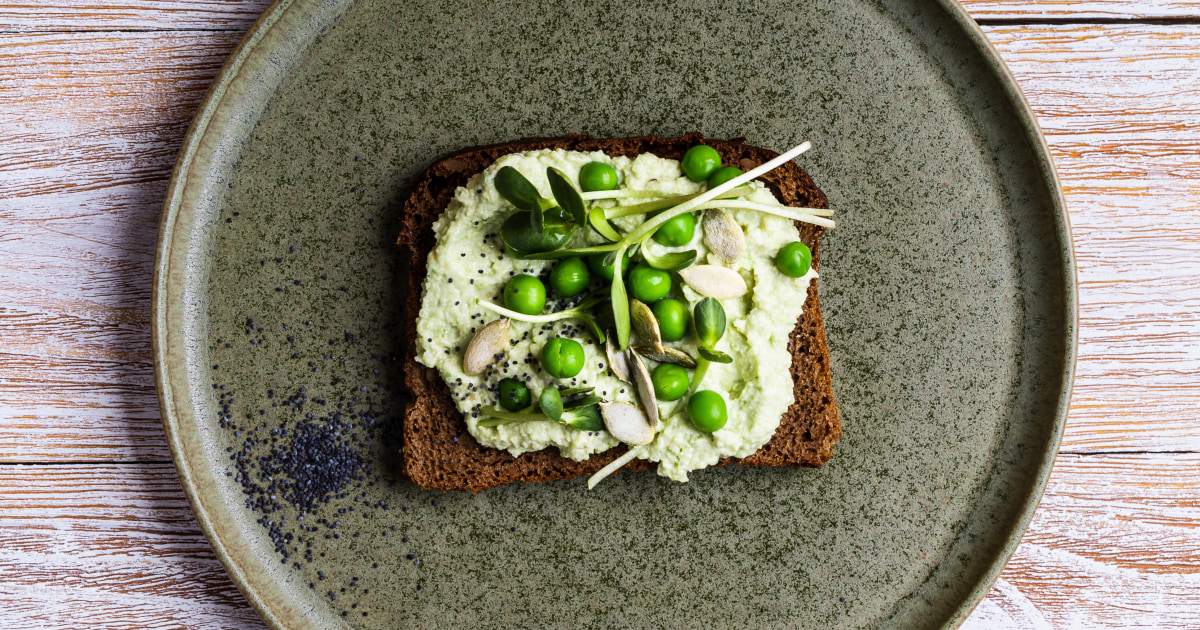
Edamame Dip
Edamame dip is bursting with color, flavor and protein. The immature soybeans, which are harvested when green and tender, top the list of beans with the most protein per serving, per Rizzo.
When blended into a dip with olive oil, miso, lemon juice and spices, edamame becomes a delicious high-protein spread.
One half-cup of boiled, shelled edamame provides over 9 grams of protein and 4 grams of dietary fiber.
The protein and fiber in edamame can help support healthy muscles and bones, and the fiber aids with blood sugar control.
Edamame also provides vitamin C, vitamin K, along with essential minerals, according to Rizzo.