
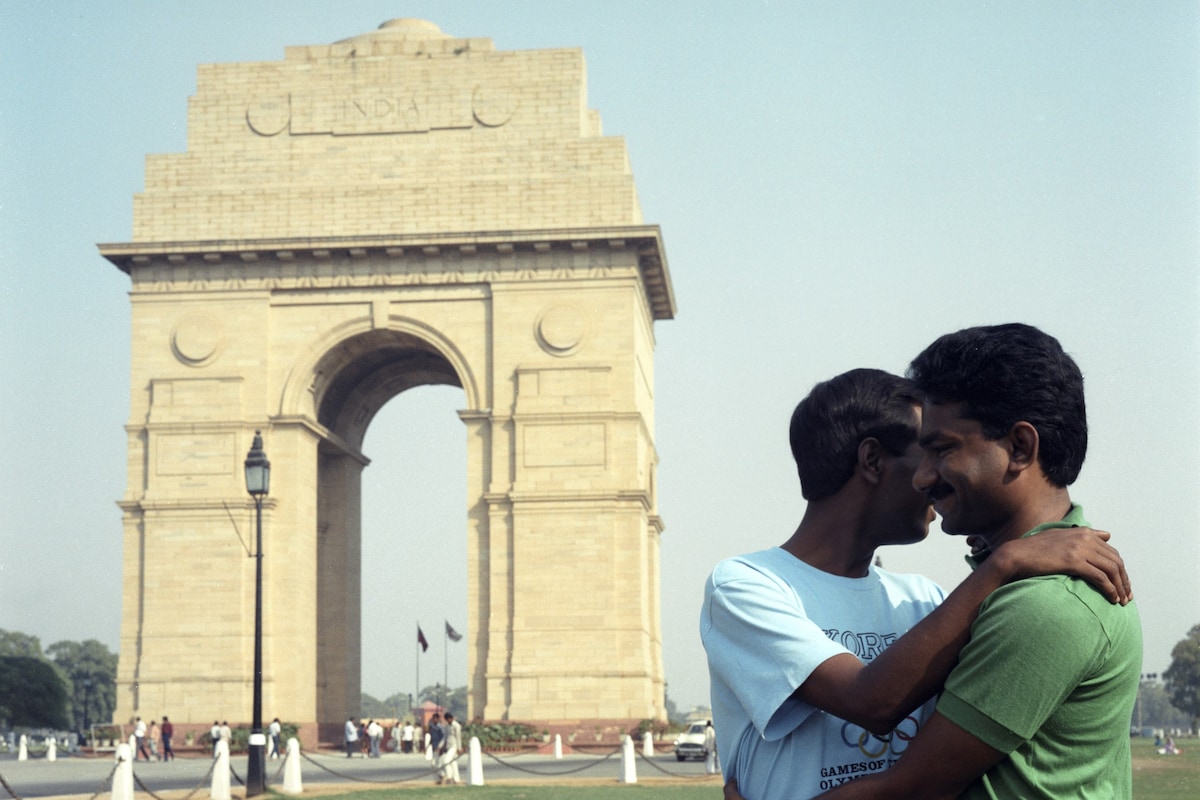
Sunil Gupta: Life with a Camera, 1970 to Now
Gallery / 11 images
Visibility in art – and in life – is complicated. Sometimes it can be as simple as capturing a moment in time and being able to say, “We were here.” At other times, it’s more fraught, forced to exist on the fringes or slip into spaces where it might not always be welcome. A major new retrospective of photographer Sunil Gupta’s work, Life with a Camera 1970 – Now, grapples with that tension, tracing more than five decades of queer life, migration and social change through the act of looking and being seen.
For Gupta, there was a particular importance to the queer community he photographed for his Christopher Street series, named after the New York street synonymous with Stonewall and the city’s first Pride march. The area was animated by what he calls “this massive amount of visibility in the day. People were essentially promenading. They were cruising, but they were also showing themselves off”. That openness, captured in Gupta’s photographs of easy, public intimacy, stood in stark contrast to what awaited him when he returned to the UK. There was no equivalent to Christopher Street, he says, and no “daytime visibility”, with everybody “back in the closet.”
For decades, Gupta’s work has explored the uneasy relationship between legislation and visibility. “At each place, in each decade, there’s a different issue or set of laws. There’s a sensibility around what you are allowed to show, or what curators deem acceptable to be shown,” he says. While working with Tessa Boffin on the landmark exhibition Ecstatic Antibodies: Resisting the AIDS Mythology (1990), he recalls sensing curators backing away, “not interested in even starting a discussion”.
.)
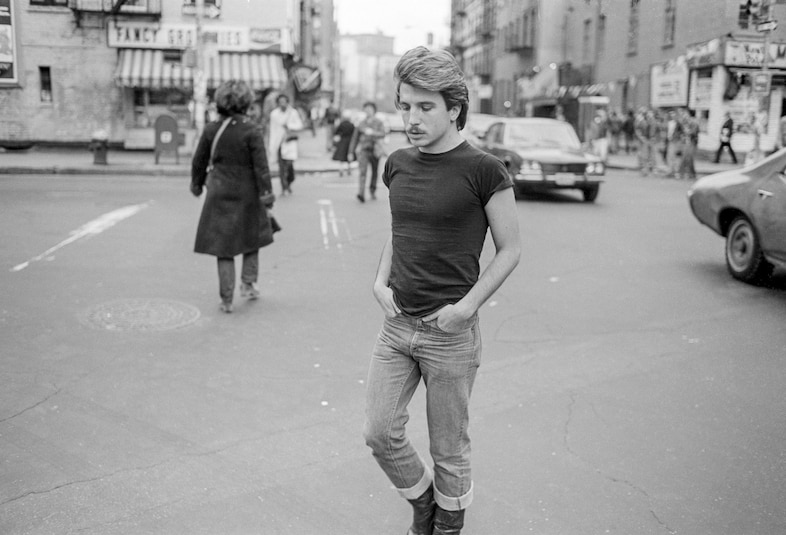 Sunil Gupta, Untitled #22 from Christopher Street
(1976).Image courtesy the artist and Hales Gallery, Materià Gallery, SepiaEye, Stephen Bulger Gallery and Vadehra Art Gallery. © Sunil Gupta. All Rights Reserved, DACS 2025.
While this has changed in the UK, it remains contested elsewhere in Gupta’s practice. Speaking about the lack of queer visibility in India in the 00s, for example, he describes feeling “provoked and challenged to change the situation”, making work that could push at the boundaries of what galleries were willing to show.
The changing nature of art across Gupta’s life and career isn’t only visible in what galleries were willing to show, but in the kinds of work artists felt able to make. Reflecting on how his HIV diagnosis changed his own approach, Gupta explains, “I think the 80s were quite separatist in a way. If you’re Black, you made Black work; if you’re a woman, you made women’s work. And I was gay, and I made gay, Black, South Asian work. And I was kind of painting myself into a corner, and I thought that if I added Aids to it, then there’d be few people left that I could speak to.”
Falling ill led to what Gupta describes as a “post-diagnosis slump” – something he had already witnessed through Ecstatic Antibodies and his work volunteering as a ‘buddy’, supporting people who were newly diagnosed. He eventually returned to the darkroom as a form of “photo-therapy”, a process he describes as empowering and one that changed his relationship to his body in the wake of his diagnosis.
.)
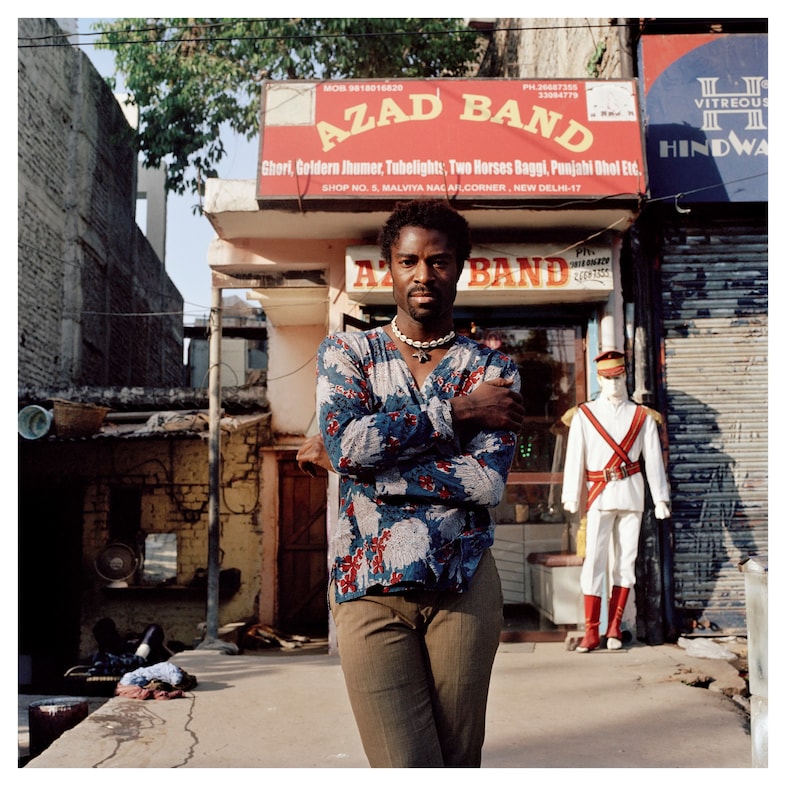 Sunil Gupta, Diepiriye from Mr Malhotra’s Party
(2007).Image courtesy the artist and Hales Gallery Materià Gallery, SepiaEye, Stephen Bulger Gallery and Vadehra Art Gallery. © Sunil Gupta. All Rights Reserved, DACS 2025.
For Gupta, this sense of empowerment – and of pushing up against the institutions of law and the art world – remains fundamental to his practice and to the relationships he builds with his subjects. “I do try and put them in the centre, and to look out at viewers, because I’m imagining they’re often looking out at people who are not exactly approving. And it’s very important that they feel big and empowered, and [are] not looking away.”
This refusal to look away sits at the heart of Gupta’s photography, and helps explain the close relationship between his art and decades of activism. His work has repeatedly responded to attempts to marginalise or erase queer lives, from his response to Section 28 in ‘Pretended’ Family Relationships to his photographs of queer life in India. In series such as Exiles and Mr Malhotra’s Party, visibility itself becomes part of the point: his subjects occupy the centre of the frame, named and looking directly back at the viewer.
Throughout our conversation, Gupta stresses the endurance of queer life and identity. “We’re here, we’re queer, and we are definitely not going anywhere,” he says. His attention also remains fixed on whose queer lives are afforded visibility. He tells me that he attended Trans Pride this year, rejecting the idea that “there was gay and then there was trans” – a distinction he says is particularly pervasive in Western contexts. “Trans folk have been here for ages,” he adds, “and they’re the ones who are most vulnerable.” That understanding of queer history and solidarity continues to shape both his activism and his art.
Sunil Gupta: Life with a Camera 1970 – Today is running at Kettle’s Yard from 19 September 2026 to 31 January 2027.