
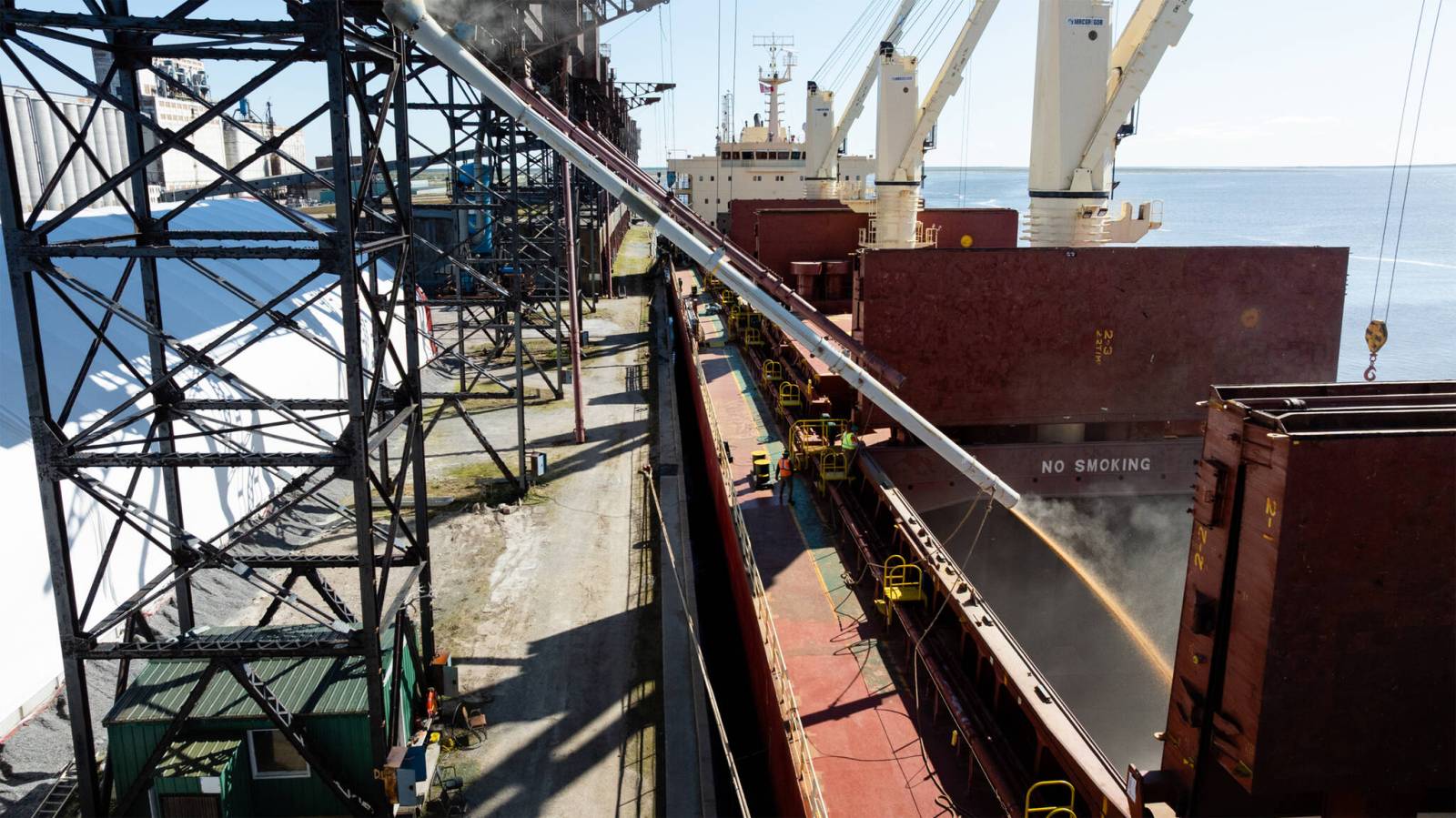
Premier Wab Kinew announced Monday that major capital investments in the Port of Churchill Plus project will receive an exemption from Manitoba’s seven per cent retail sales tax.
Kinew made the announcement at the start of the two-day Canada investment summit in Toronto. The premier made the pitch to a room of 250 Canadian and global investors representing more than US$13 trillion in assets.
“We are here in Toronto to tell global investors that the Port of Churchill is open and ready to expand,” Kinew told the Canadian Global Growth Forum, a provincial government news release said.
SUPPLIED
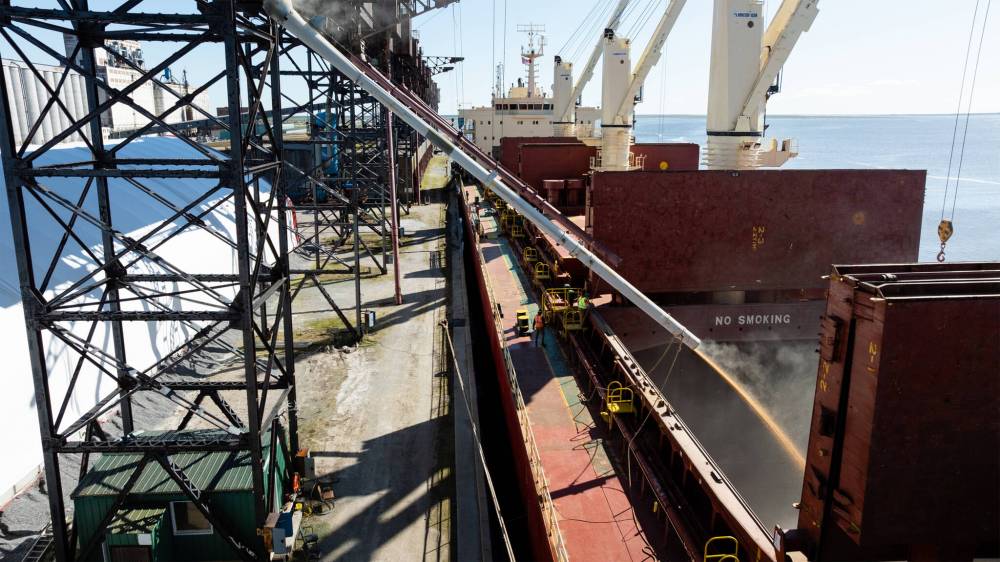
A grain shipment is loaded at the Port of Churchill. Investments in the Port of Churchill project will receive a provincial sales-tax exemption, Manitoba Premier Wab Kinew announced Monday.
“These new capital incentives make it easier for investors to get in on the ground floor of the largest project featured at the Canada investment summit. The grain and critical minerals we are already shipping out of the port are reaching Europe faster than the Port of Vancouver. With the right investments we can ship commodities year-round, strengthening trade between reliable partners and creating good jobs,” the premier, who was not made available for an interview, said in the release.
The new tax measure would apply to a new energy corridor and liquefied natural gas facilities, upgrades to the Hudson Bay Railway to support a Class 1 rail line, and marine icebreaking capacity or ice-class ships to support year-round shipping, which new studies estimate would cost $100 million to $130 million. It would also apply to other upgrades that are part of the Port of Churchill Plus project, the release said.
“That was a good message to deliver — ‘Here’s an incentive if you’re looking to make an investment in Manitoba in a specific project,’” Chuck Davidson, president and CEO of Winnipeg Economic Development and Tourism, said from the summit in Toronto. “I think it’s important for (potential) investors, that may have no knowledge of Manitoba, may have no knowledge of Churchill, to understand it and get their attention,” Davidson said. He’s part of the province’s delegation meeting with proponents and investors at the summit that includes Finance Minister Adrien Sala and Mining, Trade and Job Creation Minister Jamie Moses.
The premier will hold bilateral meetings with multiple global investment firms at the two-day summit, pitching the Port of Churchill to investors, as well as mining, infrastructure and agriculture projects totalling more than $85 billion.
“This is really the first time that there’s been an event like this that Canada has hosted,” Davidson said.
“It’s a big deal. And so it’s important that we have a profile from Manitoba — to fly the flag for the province and talk about the projects that we do have,” said the former head of the Manitoba Chambers of Commerce who just stepped into his new role five days ago.
Manitoba Métis Federation President David Chartrand said at the start of the two-day gathering that they hope to woo some of the trillions in investment to expand both a Manitoba potash mine that the federation has an interest in, and the Port of Churchill.
“It’s a flagship … if it doesn’t get caught this round, it’s probably going to be finished — that dream will never come again — probably not till 100 years from now,” Chartrand said of the favourable political and economic climate for expanding the northern port.
Strengthening Manitoba’s trade routes by tapping into Canada’s $35-billion defence fund to fortify Arctic defense, expand northern sovereignty and invest in dual-use infrastructure such as roads and rail over the next 12 years, could pave the way for economic growth and jobs in Manitoba, Chartrand said.
“If all those things can align, Manitoba is going to be a hell of a player.”
Nathan Denette / The Canadian Press
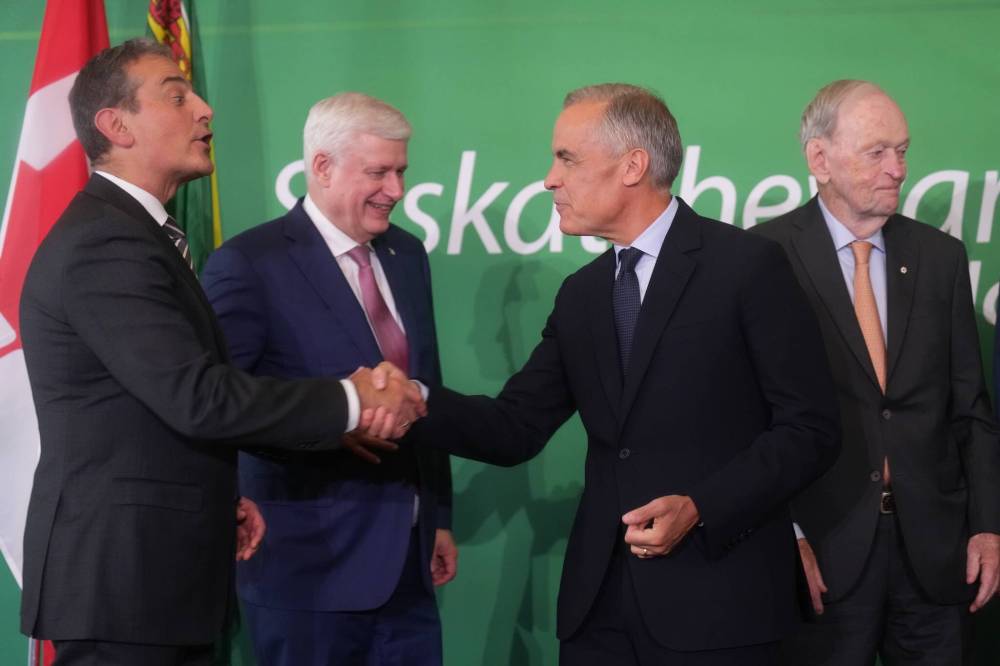
Bell Canada CEO Mirko Bibic, left, shakes hands with Prime Minister Mark Carney. Former prime ministers Stephen Harper, second from left, and Jean Chrétien, also attended the investment summit.
Last year, the MMF signed a royalty agreement with the developer behind Manitoba’s first potash mine. The Potash and Agri Development Corporation of Manitoba (PADCOM) is on site in Harrowby, approximately 16 kms west of Russell, extracting and shipping the product. Chartrand said he had a meeting with Export Development Canada Monday to discuss expanding it.
“PADCOM is, right now, a small player. But one thing we do know is that there’s enough potash there for the next 50 to 100 years. We also know that the world cannot live without potash to nourish the land. There’s only so much land in the world and people need to grasp that,” Chartrand said at the summit.
Winnipeg Free Press | Newsletter

It’s taking place at several locations in downtown Toronto at the same time as the Toronto International Film Festival, Davidson said.
“There’s events everywhere and you’re trying to figure out, where do I need to be next?” he said. “It’s great excitement.”
The delegation also includes Assembly of Manitoba Chiefs Grand Chief Kyra Wilson, Anisininew Okimawin Grand Chief Alex McDougall, Southern Chiefs’ Organization Grand Chief Jerry Daniels and representatives from Manitoba Keewatinowi Okimakanak.
The premier’s business and jobs committee representatives, including Gustavo Zentner, Ash Modha and Stacy Kennedy are there, as well as business community representative Bram Strain, president and CEO of the Business Council of Manitoba, and Elisabeth Saftiuk, acting president and CEO at the Manitoba Chambers of Commerce.
carol.sanders@freepress.mb.ca

Carol Sanders
Legislature reporter
Carol Sanders is a reporter at the Free Press legislature bureau. The former general assignment reporter and copy editor joined the paper in 1997. Read more about Carol.
Every piece of reporting Carol produces is reviewed by an editing team before it is posted online or published in print — part of the Free Press‘s tradition, since 1872, of producing reliable independent journalism. Read more about Free Press’s history and mandate, and learn how our newsroom operates.
Our newsroom depends on a growing audience of readers to power our journalism. If you are not a paid reader, please consider becoming a subscriber.
Our newsroom depends on its audience of readers to power our journalism. Thank you for your support.