
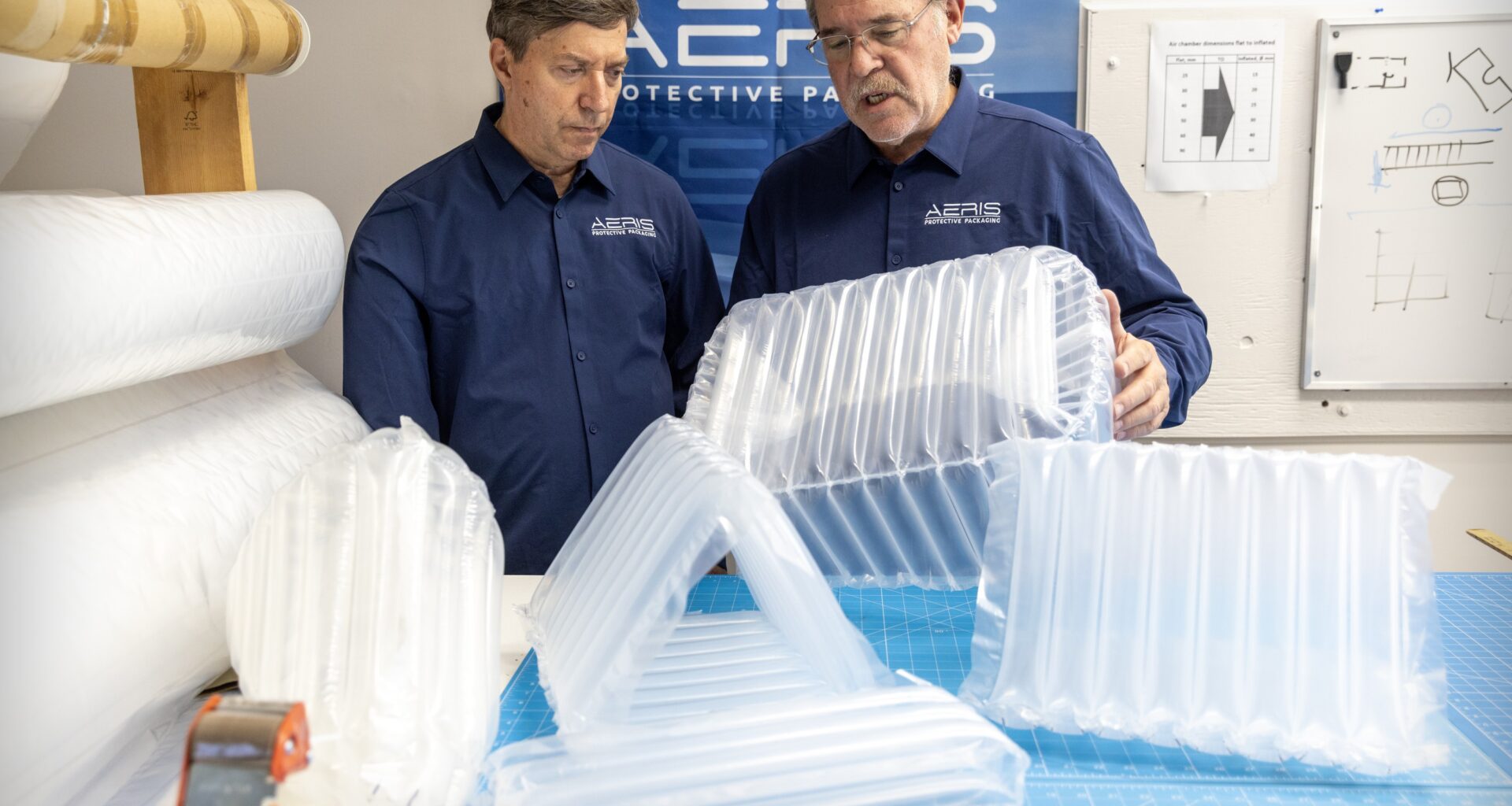
Canada’s retaliatory tariffs were the tipping point for Aeris Protective Packaging Inc. Founder and president Michael Leiberman, a born-and-raised Montrealer, is opening a manufacturing plant south of the border to keep his business alive.
The local company’s move highlights a growing exodus of Canadian manufacturers driven across the border by escalating trade crossfire and uncompetitive domestic business costs. As cross-border tariffs continue to hurt small and medium-sized businesses, industry experts warn that Canada’s economy is ill-equipped to sustain a prolonged trade war with its largest partner.
For Aeris, which operates out of Montreal and has 14 employees, the decision comes down to survival: Leiberman says 70 per cent of the company’s clients are in the U.S., and he can’t afford to lose them.
When the White House imposed 50 per cent tariffs late last month on a range of products, including paper and packing containers, Leiberman says the consumer price jumped up 50 per cent practically overnight. Where U.S. customers once paid $1 for a box, “now going into the United States, I’ve got to charge $1.50 for the product because of the extra tariffs,” he said, simply because it was manufactured at one of the company’s outsourced factories in Montreal, Drummondville, Victoriaville and Toronto.
Paper and packing containers are also on the list of products targeted by Prime Minister Mark Carney’s counter-tariffs on $27.6 billion worth of imports from the U.S.
A KPMG survey published in July found four in 10 Canadian manufacturers had either moved production to the U.S. or were considering it, citing tariffs and Canada’s business climate as key factors.
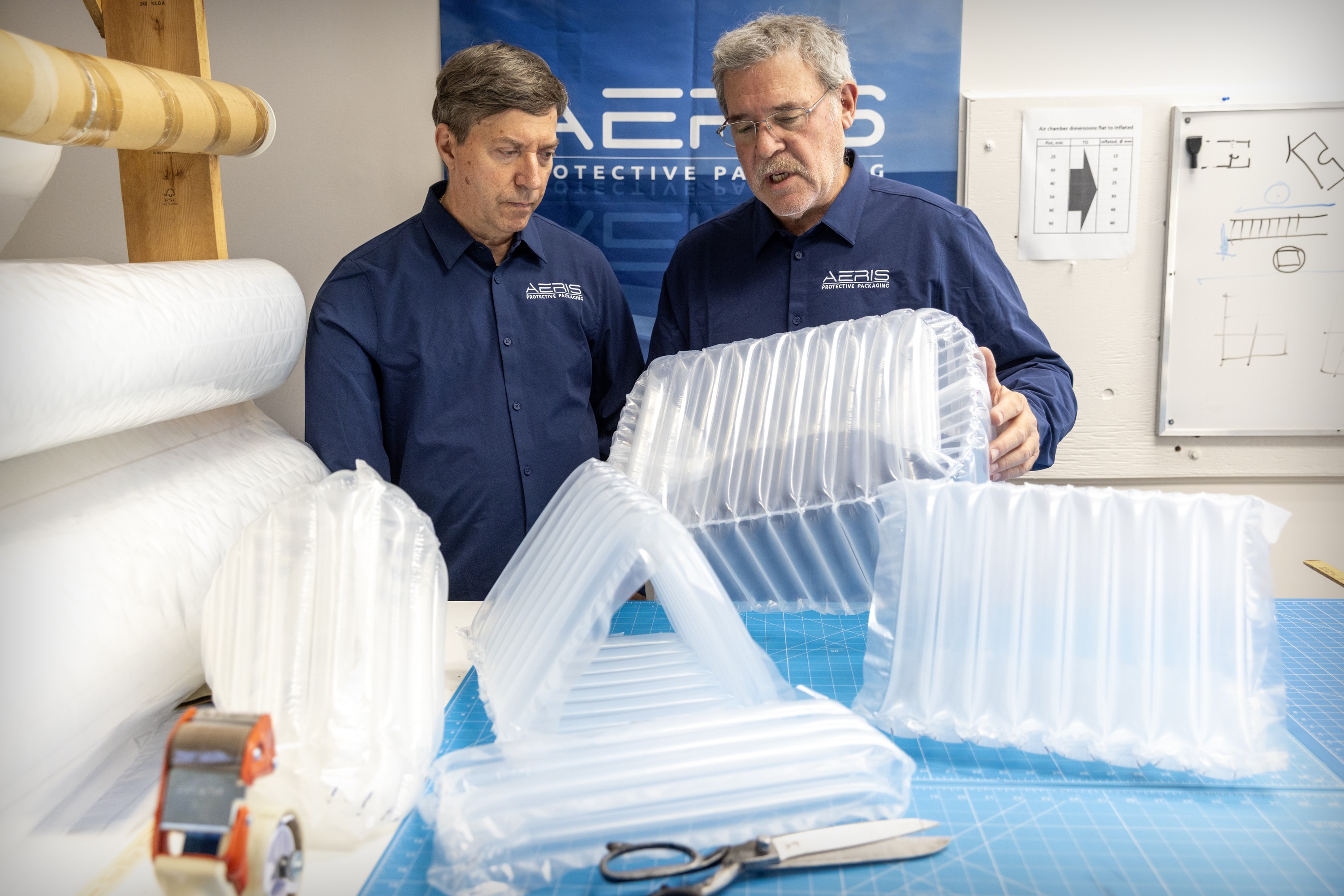 Aeris Protective Packaging president Michael Leiberman, right, and vice-president Steve Rothstein with some of the specialty products at their warehouse in Lachine on Friday, September 11, 2026. Leiberman says the trade war between the U.S. and Canada is forcing them to move some of their manufacturing to the States. John Mahoney / Montreal Gazette
“It hurts, but it’s business. I need to protect our business. I need to protect our employees. We have multiple customers in the U.S. We need to respect them,” Leiberman said in an interview.
Jeep producer Stellantis has signed a memorandum with an Ontario-based armoured vehicle manufacturer regarding the possible sale of its idled plant in Brampton, Ont., after unveiling plans last year to move some production from the plant to Illinois. Crown Royal, which is distilled in Manitoba, made the move southward in April, opening a bottling facility in Montgomery, Ala. And Sapporo beer is considering moving some Canadian operations to the U.S. early next year amid trade uncertainty.
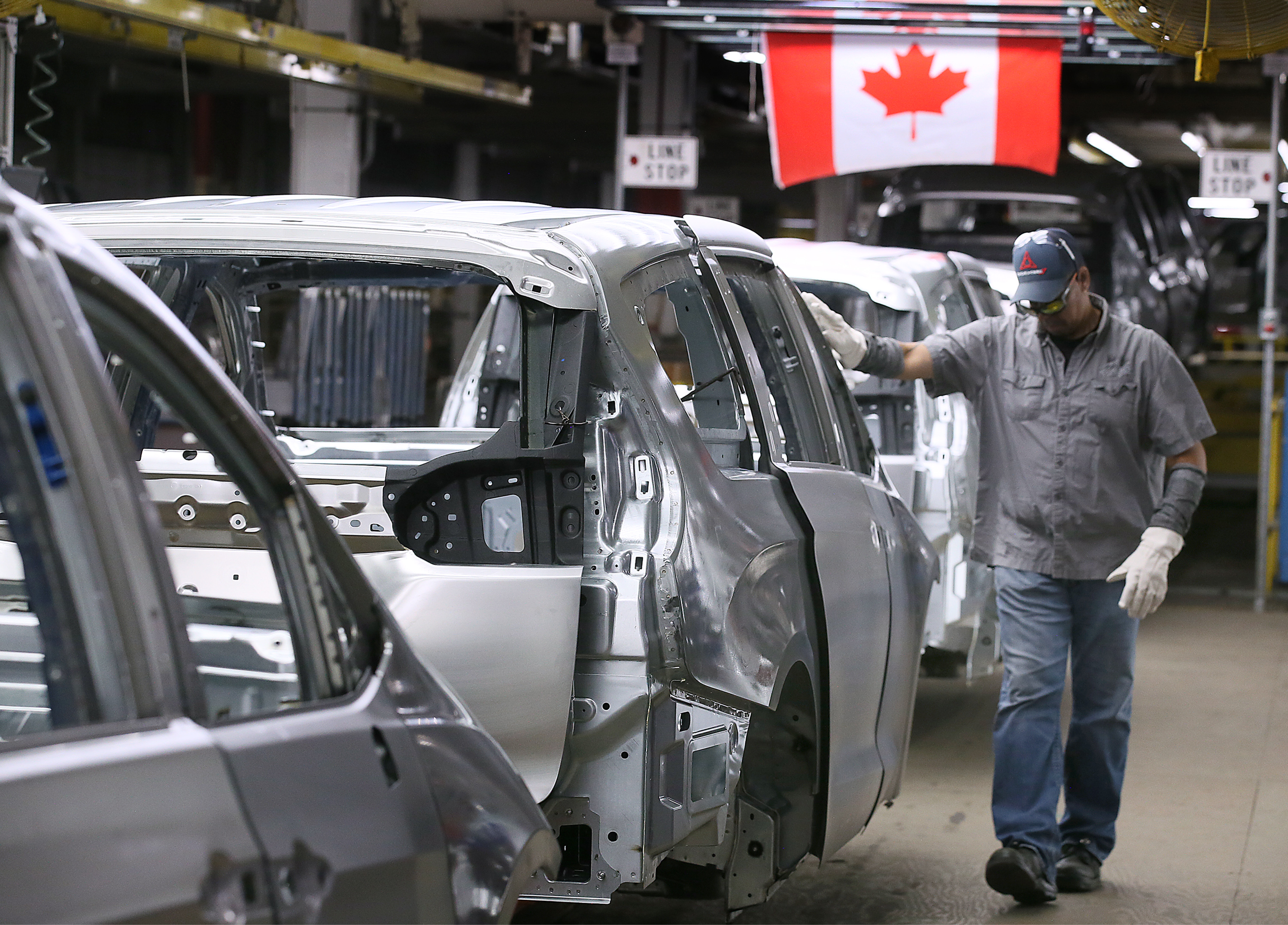 A worker is shown on the assembly line at Stellantis’s Windsor plant on Thursday, May 28, 2026. Dan Janisse / Windsor Star
“It’s the mass confusion that is the biggest problem of all,” Leiberman said.
“Especially if you’re a really small business, you don’t have decent revenue coming in, and let’s say you’re importing all your product from the U.S. and you happen to be hit by the tariffs. You’re kind of out of business,” he said, giving a general example unrelated to his own company.
Anamika Gadia, an industrial manufacturing expert for KPMG, said the trade climate is forcing many companies’ hands.
“One would expect that the ongoing trade uncertainty and the announcement of new tariffs may increase the pace at which companies make these decisions,” Gadia said in an interview.
“One thing that’s important to note from our survey is the sentiment around moving to the U.S.: While trade and tariffs are certainly a huge, significant driver of the trend, it’s not the sole driver of the trend,” she added, pointing to corporate tax rates in Canada as another major factor cited in the survey.
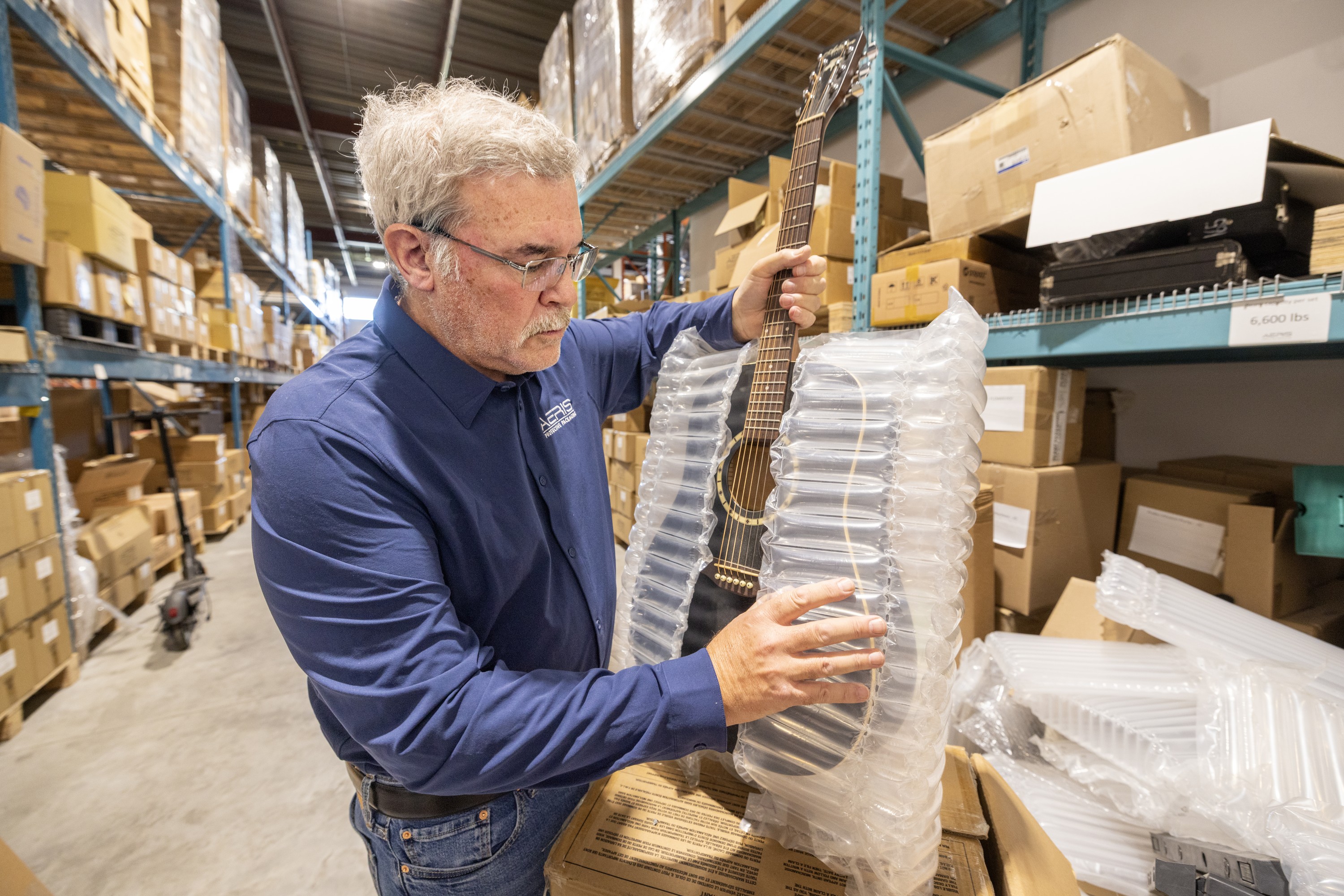 Aeris Protective Packaging president Michael Leiberman wraps a guitar at his company’s warehouse in Lachine on Friday, September 11, 2026. “It’s the mass confusion that is the biggest problem of all” in the trade war between Canada and the U.S., he says. John Mahoney / Montreal Gazette
Barry Sawyer, union president at United Food and Commercial Workers, said he is concerned about the impact on workers of Canadian companies moving operations to the U.S.
“When businesses respond to tariffs by moving production or operations out of Canada, workers and their families can be among the first to feel the consequences,” he said in a statement to The Gazette. “We need to make sure that workers are not forced to bear the cost of a trade dispute, or corporate decisions made in response to it.”
Leiberman says his strategy in the face of tariffs is to partner with existing manufacturers in the U.S., and eventually open a sales office and a warehouse down the road from a U.S. plant. Rather than slow down operations in Canada and shift his focus exclusively southward, he says he hopes to grow the business in both countries and continue the current Quebec production as he expands to the U.S.
According to Saibal Ray, a professor of supply chain management at McGill University, Canada cannot sustain a trade war with the United States for long.
“We should not accept a bad trade deal, but we need a good trade relationship with the United States. Europe or Asia cannot replace it. It still has to be our biggest trading partner,” Ray said in an interview.
“Canada has a very built-in big structural advantage when it is doing business with the U.S. compared to whether it is Asia, whether it is Europe,” he said, noting Canada cannot be sufficiently competitive in those markets because of the shipping distance.
“The U.S. economy is roughly 10 — or slightly more — times bigger than Canada,” Ray added.
Editor’s Picks
Leiberman says Aeris has proudly manufactured its packaging in Quebec and Toronto for 15 years, and will continue manufacturing here for Canadian, European and Mexican customers to avoid paying duties that come with exporting from the U.S.
For U.S. clients, he says Aeris has no choice but to move the bulk of its manufacturing to the States in order to survive in the current climate. He noted it’s not yet decided which state Aeris will move production to.
Leiberman says “if and when this situation ever clears up and it becomes back to a normal free trade situation,” he thinks new business relationships between Canada and the U.S. started by companies like his will be durable.
“If I set up an office and I set up manufacturing in the U.S. and all of a sudden it becomes back to zero tariffs again, I mean, I’ve already got investments in tooling and sales and shipping customers using my American-made product,” he said.
“It might not go back to the same way as it was before.”

Leora Schertzer is a reporter at the Montreal Gazette who thrives on the chase. Whether it’s producing a documentary about sewage or investigating a Nazi gold scandal, it’s the novelty and adrenaline that keep her in this challenging industry. Send her tips at lschertzer@postmedia.com.
lschertzer@postmedia.com