
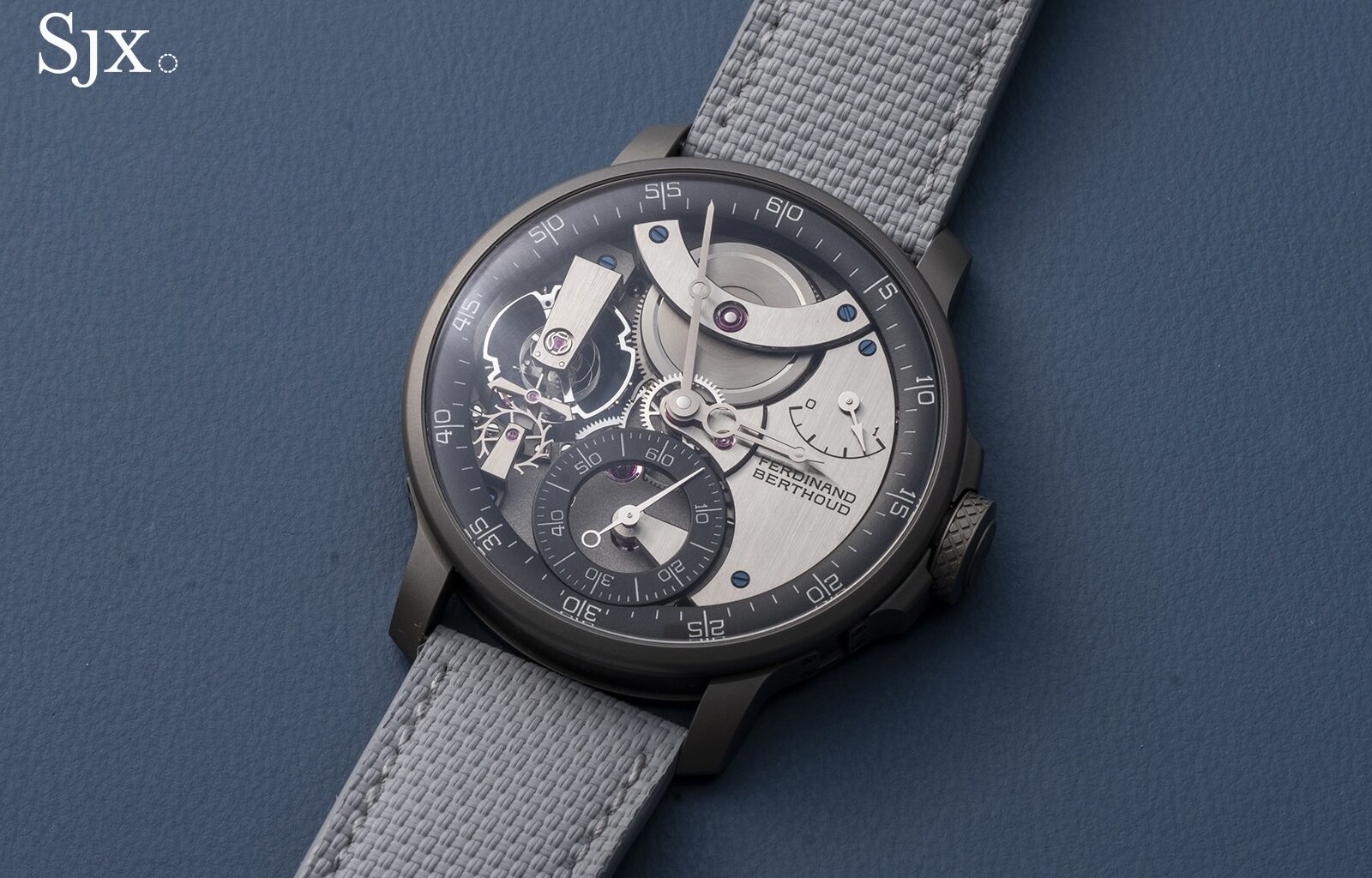
The slate of truly new releases from Geneva Watch Days was fairly limited, but among the many new variants of existing models, the Ferdinand Berthoud FB 3SPC.4-1 stood out for its lightweight and richly tactile ceramised titanium case and casual, almost sporty look.
Initial thoughts
Ferdinand Berthoud (FB) is no stranger to exotic case materials, having used ceramised titanium before (for the FB 1RES.4) as well as carburised stainless steel and bronze. But the FB 3SPC.4-1 is just the second FB 3SPC to come dressed in a non-precious metal case, and the first with a ceramised coating.
The FB 3SPC arguably gives up some ground in the looks department, though this is subjective; many collectors find the exposed movement preferable to a conventional dial, since it makes it easier to appreciate the finishing without taking off the watch. That said, the design impacts legibility and some aspects of the layout seem counterintuitive, such as the upside-down orientation of the dial-side balance wheel.
The FB 3SPC debuted in 2022 and remains the high-end brand’s entry level model, though with a retail price approaching US$200,000, it’s priced in line with complicated models from established brands. The value proposition of this time-only watch hinges on the appeal of the cylindrical hairspring — which while not unique in contemporary watchmaking is executed superbly — and the no-expense-spared approach to finishing that FB is known for.
The pricing also reflects the low-volume nature of FB. The manufacture in Fleurier produces no more than 35 FB 3SPCs per year, accounting for roughly half the brand’s total output.
Firing on all cylinders
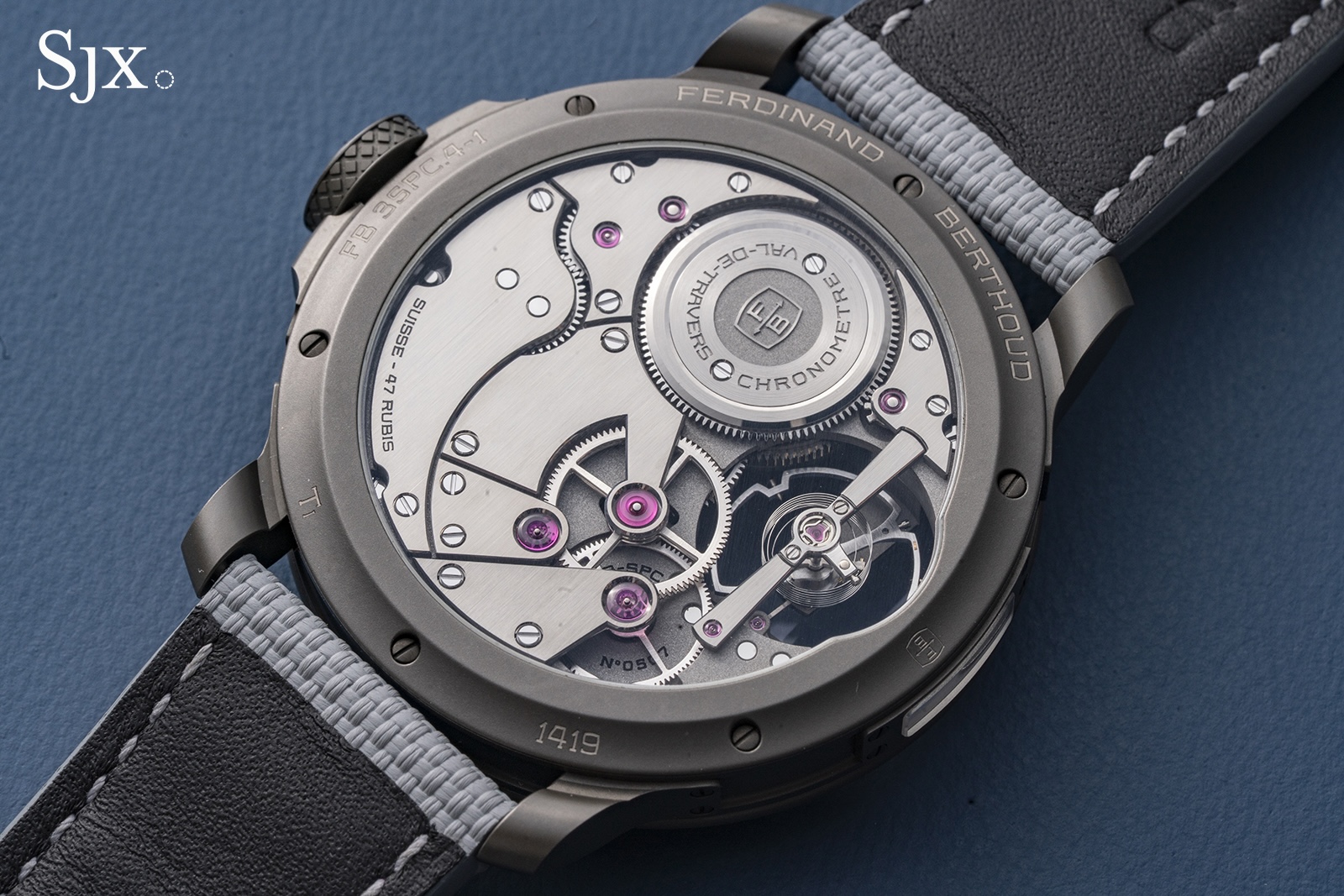
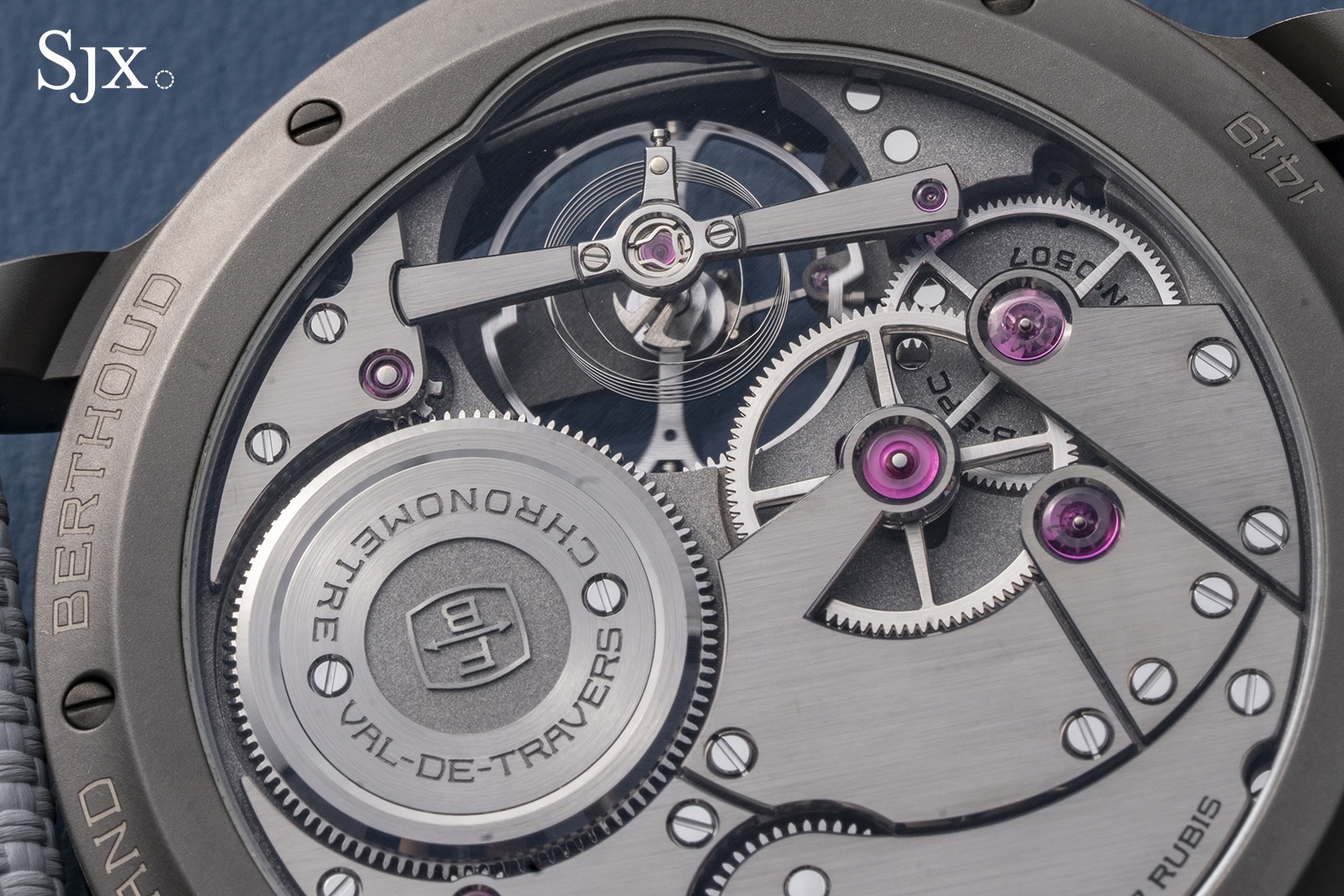
Central to the appeal of the FB-SPC movement is its cylindrical hairspring. This detail is an uncommon anachronism that tangibly links the FB 3SPC to the work of Berthoud and his heir, his nephew Louis Berthoud, who used such hairsprings in select watches, like this example sold by Sotheby’s last year.
Cylindrical hairsprings were originally developed across the Channel by English watchmaker John Arnold, who arrived at the shape through trial and error in a quest to improve isochronism.
Though inherently functional, cylindrical hairsprings were (and still are) tedious to shape and take up a lot of volume inside a watch, and it wasn’t long before Abraham-Louis Breguet realised the same benefit — concentric breathing of the spring — could be achieved with a standard spiral spring with a specially formed “overcoil” terminal curve.
Given the space-saving advantages of what we now call the Breguet overcoil, cylindrical hairsprings fell out of favour in watches, though they could still be found in marine chronometers until the dawn of electronic timekeeping around 1970.
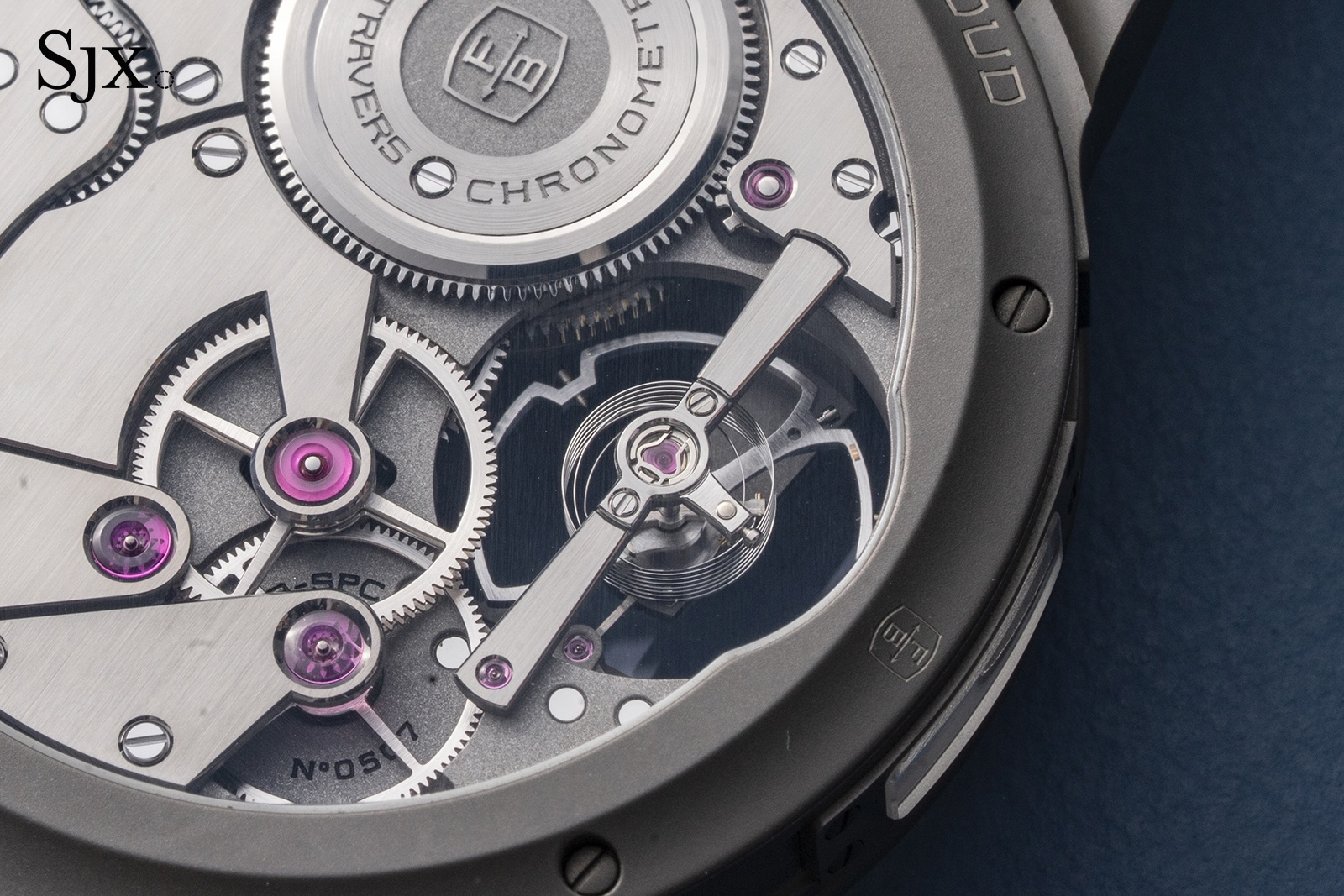
But haute horlogerie is awash in anachronistic mechanisms, and the cylindrical hairspring has an especially dynamic look in operation that warrants its renaissance. While FB is not the first contemporary brand to use such a spring — Jaeger-LeCoultre, Montblanc, H. Moser & Cie., and MB&F have also done so — it is the first to submit movements with cylindrical hairsprings for chronometer certification from COSC. This extra effort speaks to the thoughtfulness of the concept and amount of adjustment that goes into each unit.
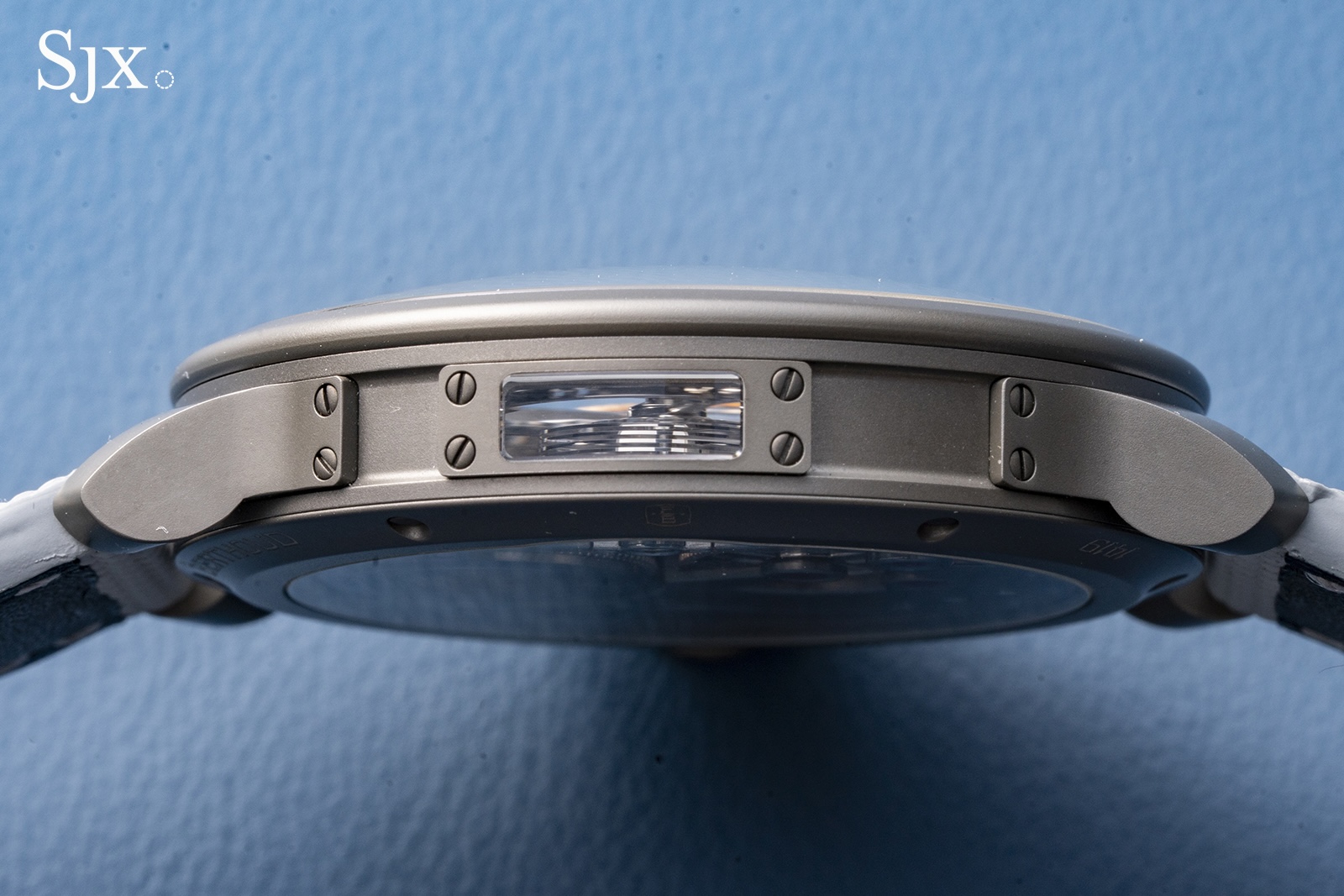
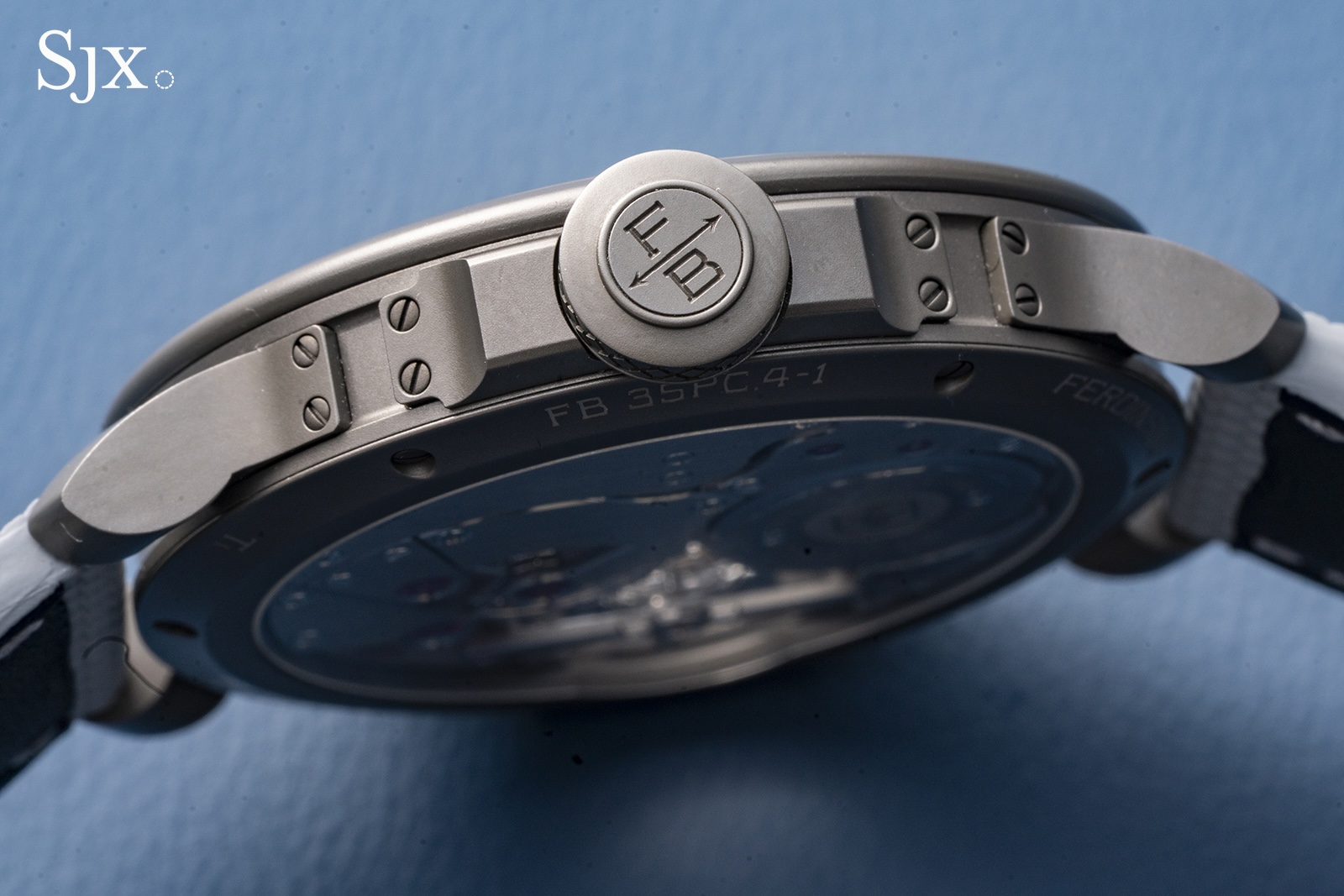
The FB-SPC’s cylindrical hairspring is impressively large and can be admired from all sides — not just the front and back, but also from the side, through an additional sapphire crystal porthole in the side of the case. Such features tend to feel gimmicky, but it works well for the FB 3SPC. Not only does it have historical precedent — Ferdinand Berthoud himself used such windows to monitor his chronometers — but the beating cylindrical hairspring is a genuinely worthwhile spectacle.
The movement is the design
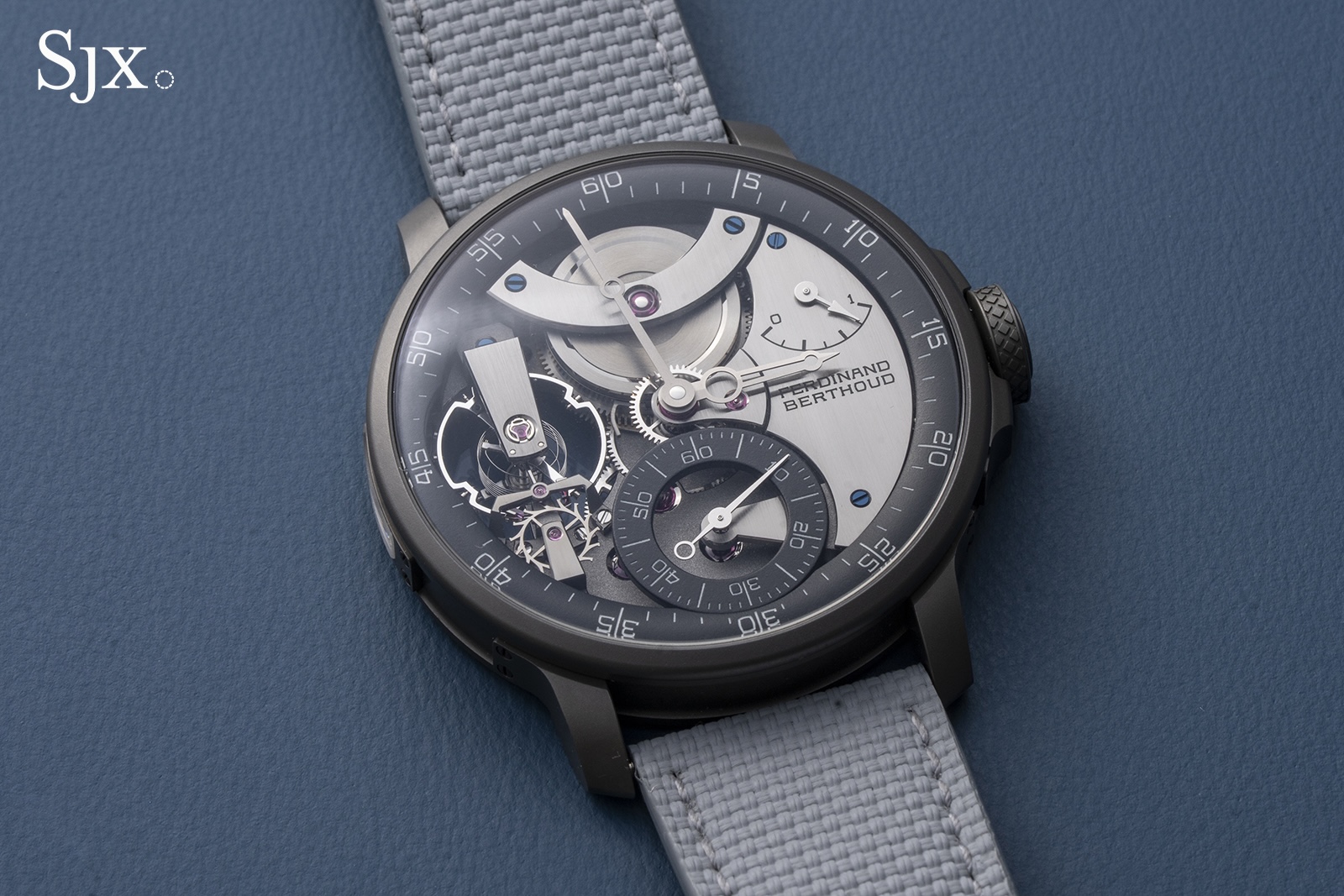
The FB 3SPC.4-1 is cased in ceramised titanium, giving the watch a robust, almost tactical feel. It’s effortlessly light on the wrist, especially with the optional titanium folding clasp that includes micro-adjustment. This format makes it feel quite casual, verging on sporty.
The case itself is a highlight, with a fine matte texture that mostly hides finger prints and smudges. Even the tiny screws for the crown guards, lugs, and nine o’clock porthole are finely detailed.
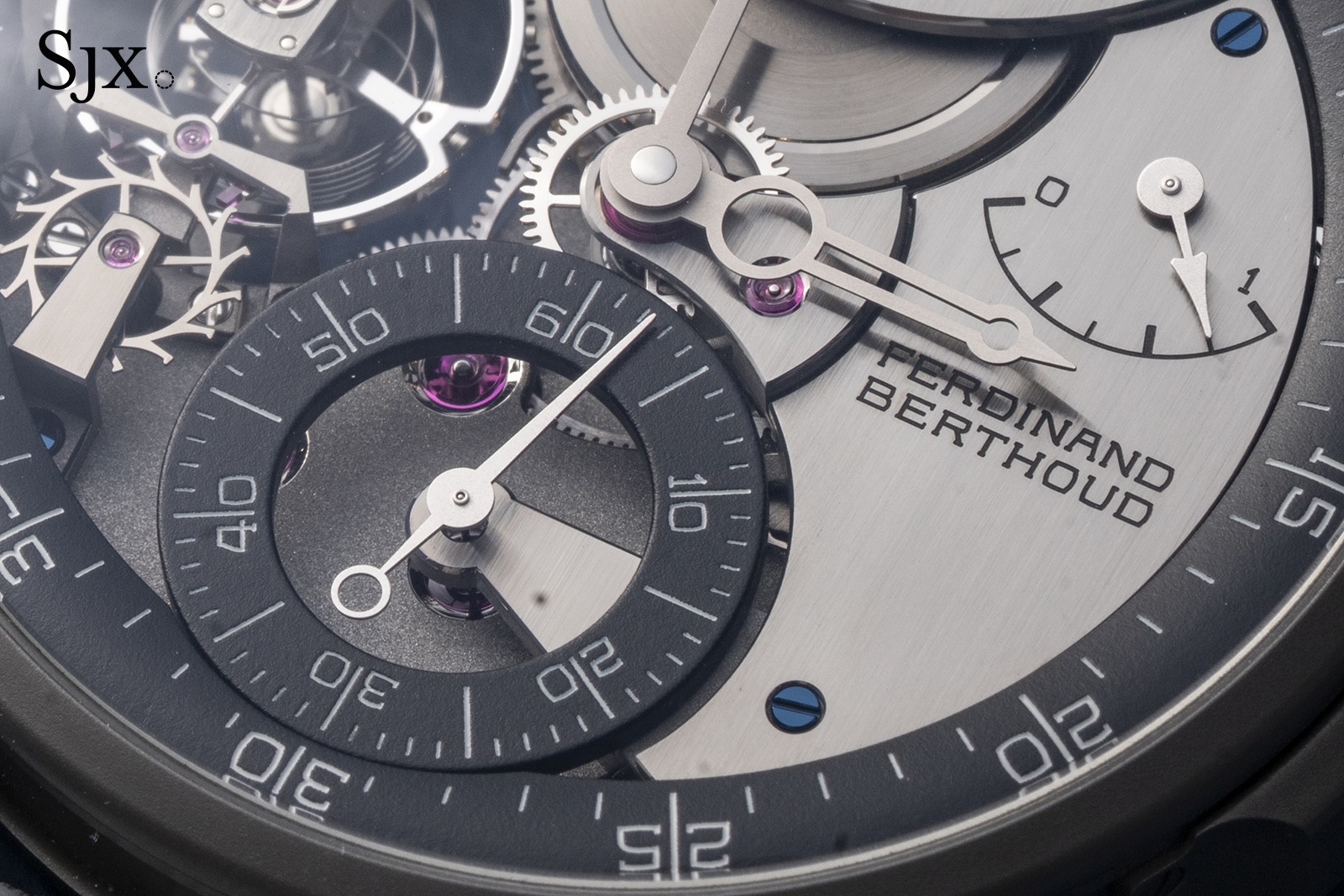
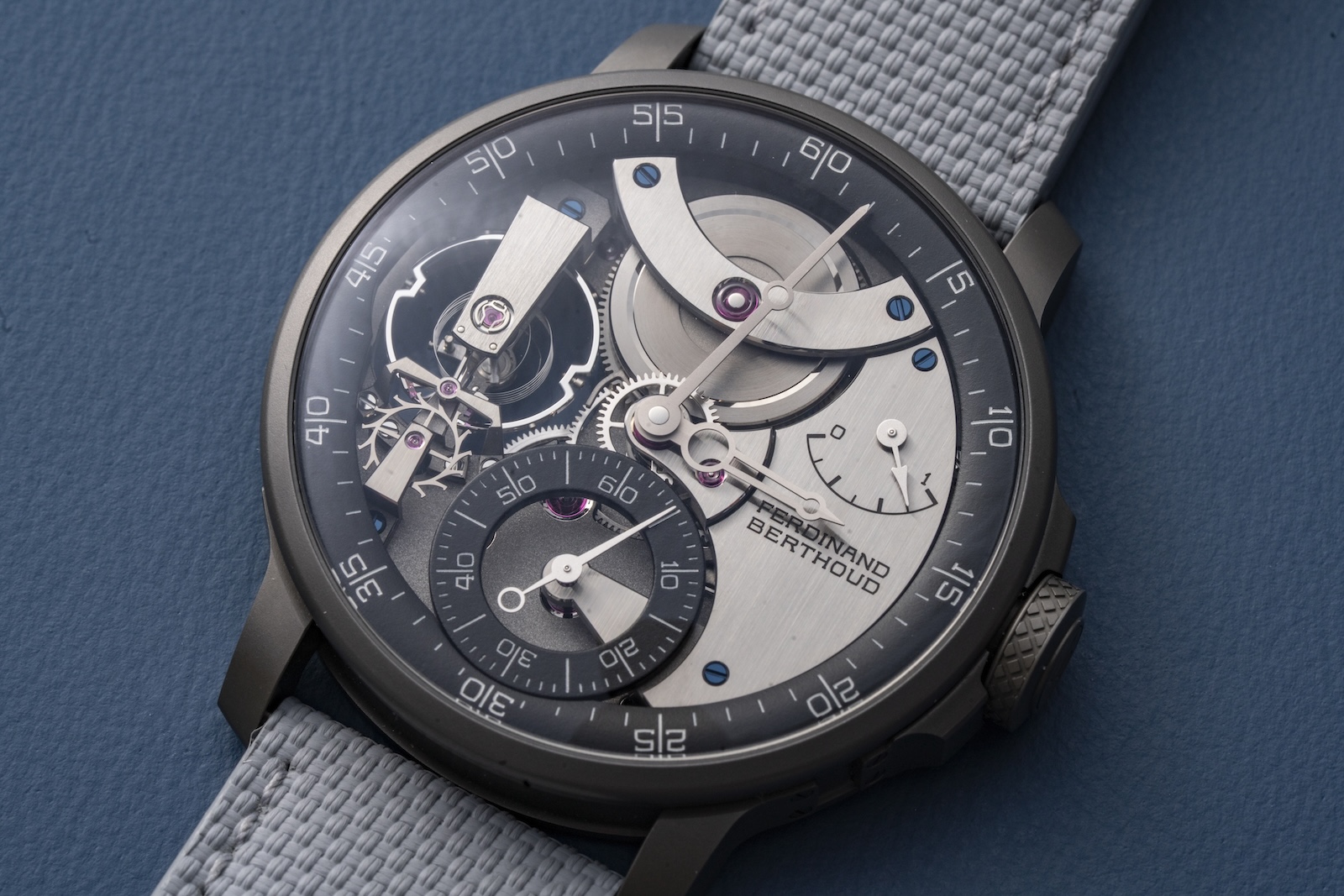
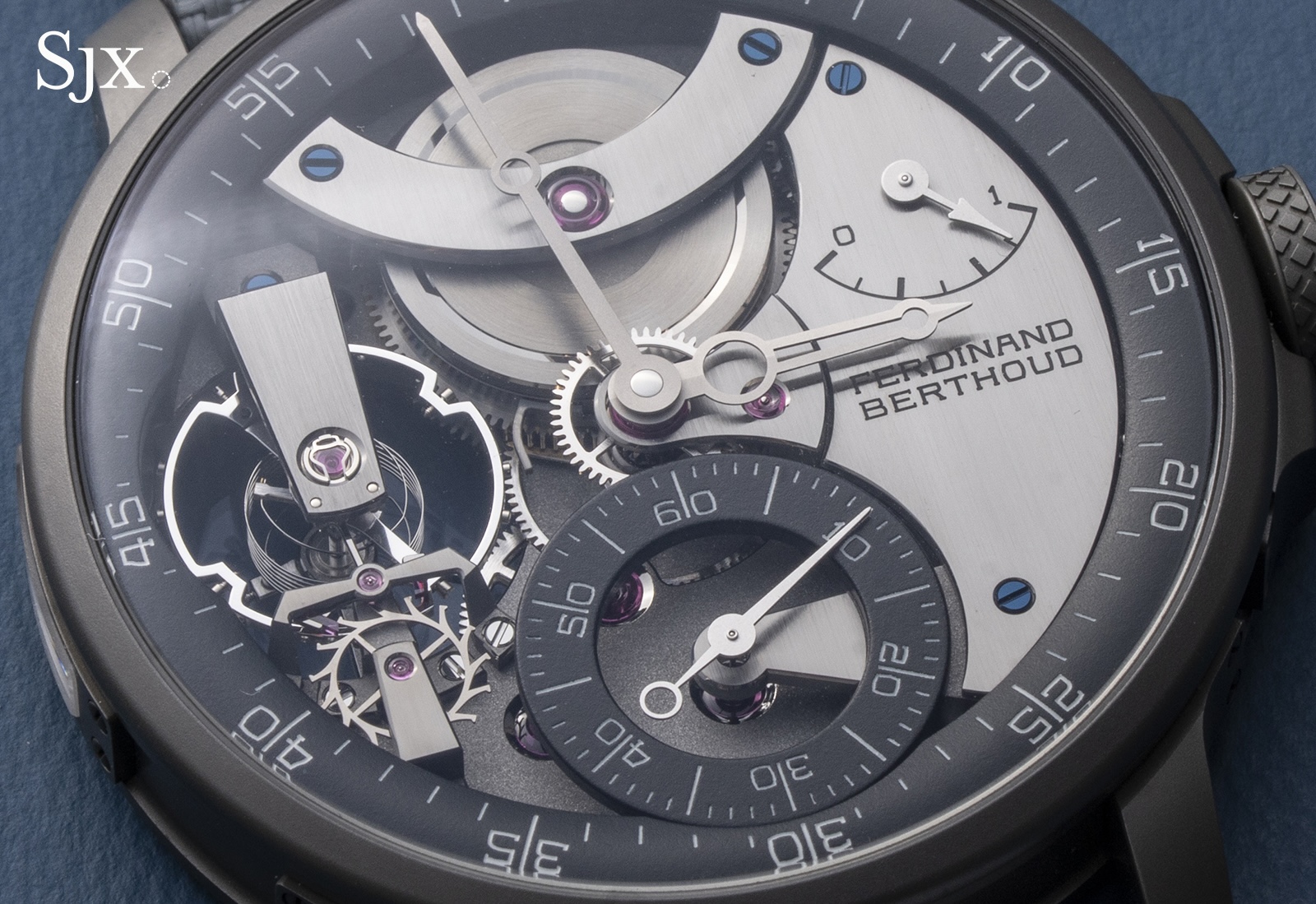
Beyond the case, the design of the FB 3SPC is somewhat simplistic — the FB-SPC movement does most of the heavy lifting in terms of design. The dial, such as it is, is reduced to a printed flange for the minutes and a matching open-worked sub-dial for the running seconds.
For this ceramised titanium variant, the overall look is muted and monochromatic, with minimal contrast between matte black and brushed grey. This colour combination reduces legibility — the plated gold hands nearly match the movement bridges — but helps avoid what might otherwise be a chaotic look with so many exposed elements, from the oscillator at nine o’clock to the barrel bridge at twelve.
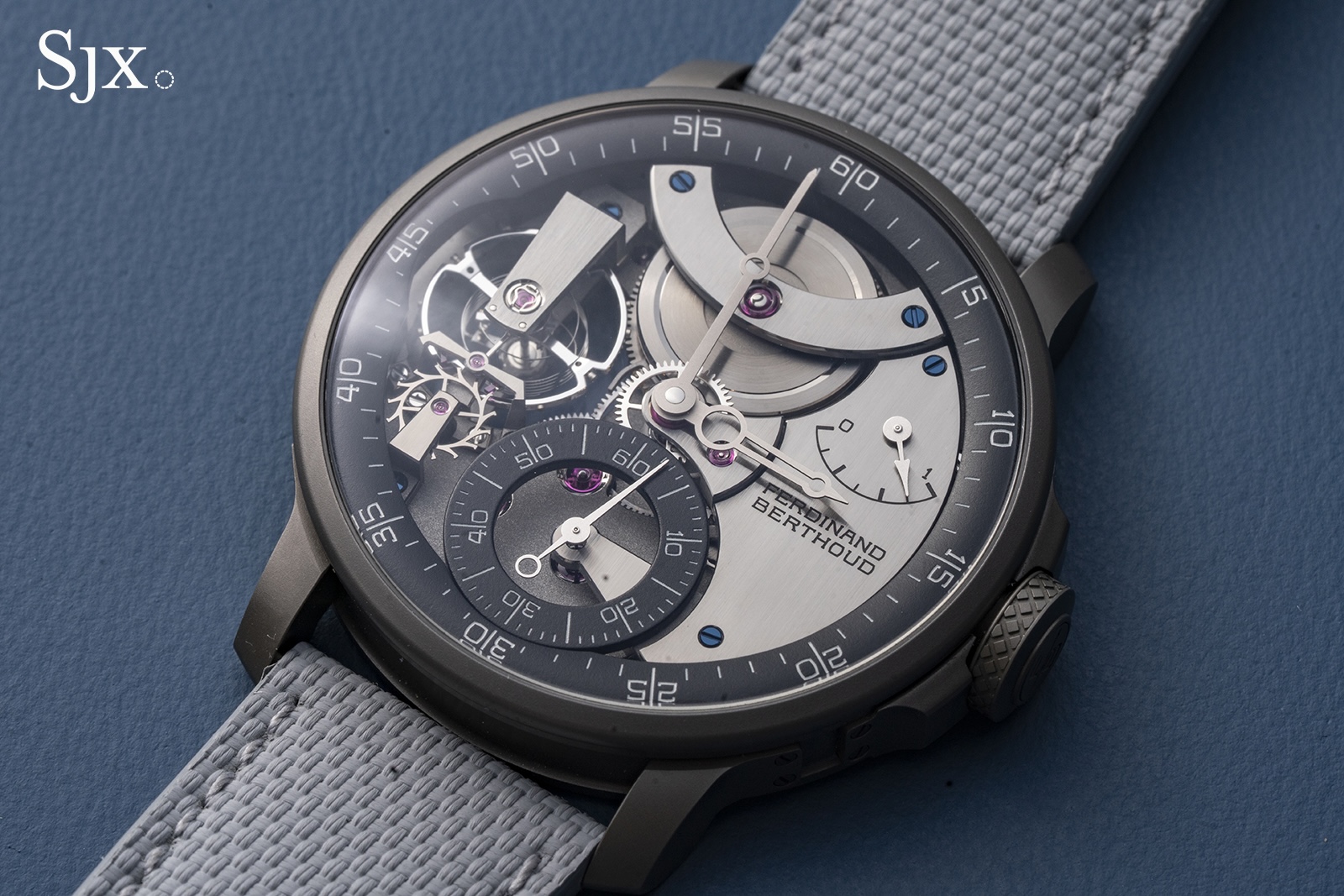
The predominance of vertical brushing differentiates the finishing of the FB 3SPC.4-1 from prior FB 3SPC models, which featured sandblasted textures inspired by the gilded movements of Ferdinand and Louis Berthoud. This is one aspect of the design I’d change, as the shimmering look of the vertical brushing feels at odds with the muted textures of the case. That said, vertical brushing is a popular dial texture and I can understand the designer’s instinct to seek contrast with the sandblasted main plate.
The construction of the escapement appears to be inverted to the dial side, supported by a prominent stepped finger bridge. But a close look reveals a more traditional construction — the impulse roller is facing up, meaning the oscillator is upside-down compared with similar designs from Greubel Forsey. This layout provides a great view of the escapement itself, even if it’s a little unusual to see the lever positioned on what feels like the “top” of the oscillator.
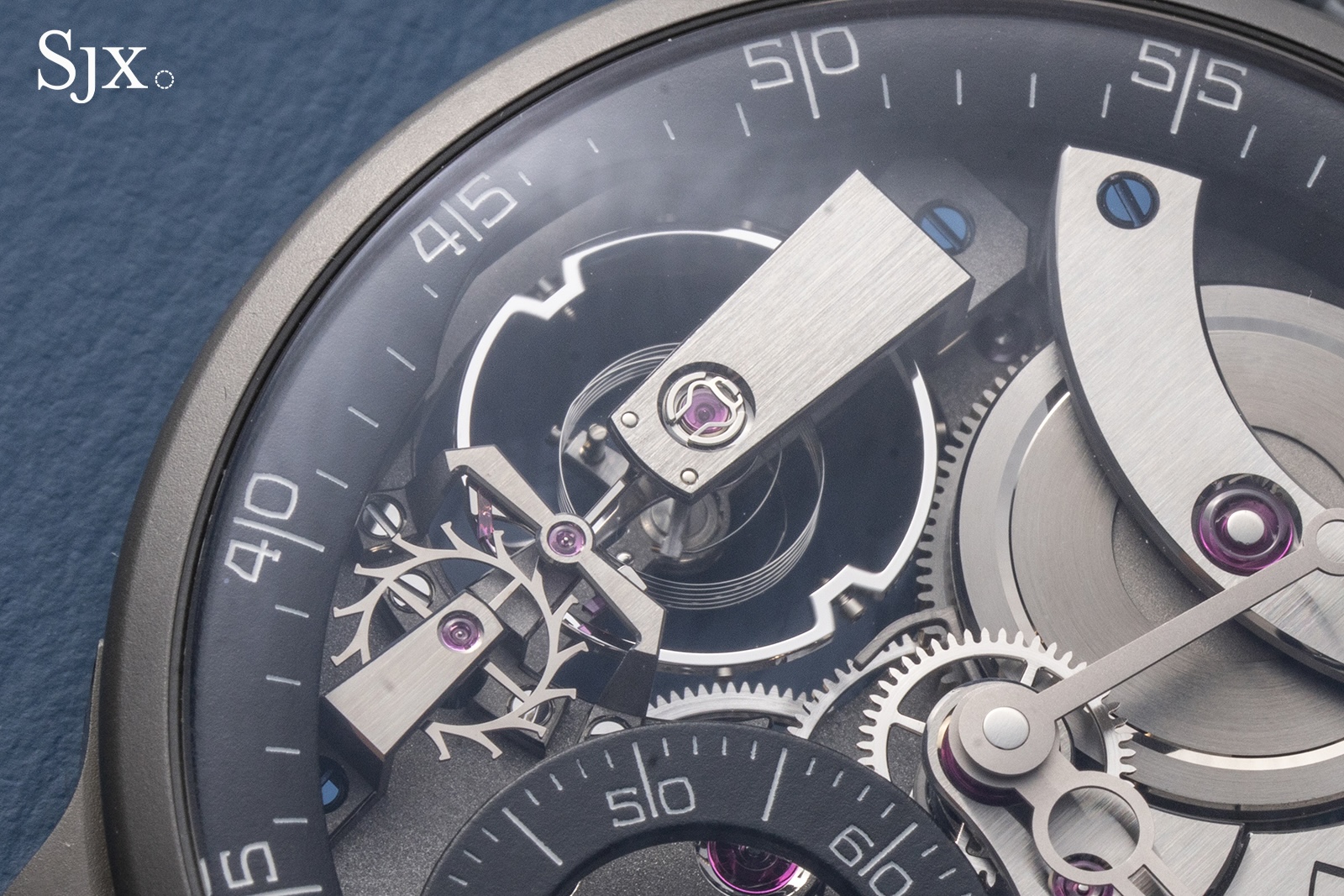
Naturally, all aspects of the finissage are handled with care. Some might quibble with certain aesthetic choices, but the quality of execution is top class. Even though the movement is not architected to maximise the number of inward angles, as is increasingly common, the anglage appears effortless, with impressively neat corners and perfectly even circular borders around each jewel in the train.
Key Facts and Price
Ferdinand Berthoud Chronometre FB 3SPC.4-1
Ref. FB 3SPC.4-1
Diameter: 42.3 mm
Thickness: 9.43 mm
Material: Ceramised titanium
Crystal: Sapphire
Water resistance: 30 m
Movement: FB-SPC
Functions: Hours, minutes, seconds, and power reserve indicator
Winding: Hand-wind
Frequency: 21,600 beats per hour (3 Hz)
Power reserve: 72 hours
Strap: Textile strap with titanium pin buckle or optional titanium folding clasp
Limited edition: No
Availability: At boutiques and retailers
Price: Upon request
For more, visit Ferdinandberthoud.ch.