On Aug. 26 two years ago, Natalie Sabourin was hit with sudden, cold-like sickness.
She said a numbness crept into her toes and rose up her legs. Within a day, Sabourin, an avid paddler who’d gone kayaking in Ottawa area with family only a week earlier, struggled to stand upright.
“My legs started feeling very wobbly, like a toddler’s legs,” Sabourin said.
That’s when she went to the hospital, where the attending doctor, a neurologist, gave her both good and bad news.
“I’m pretty sure I know what you have, and I can help you,” she recalled him saying. “The bad news is it’s going to get worse before it gets better.”
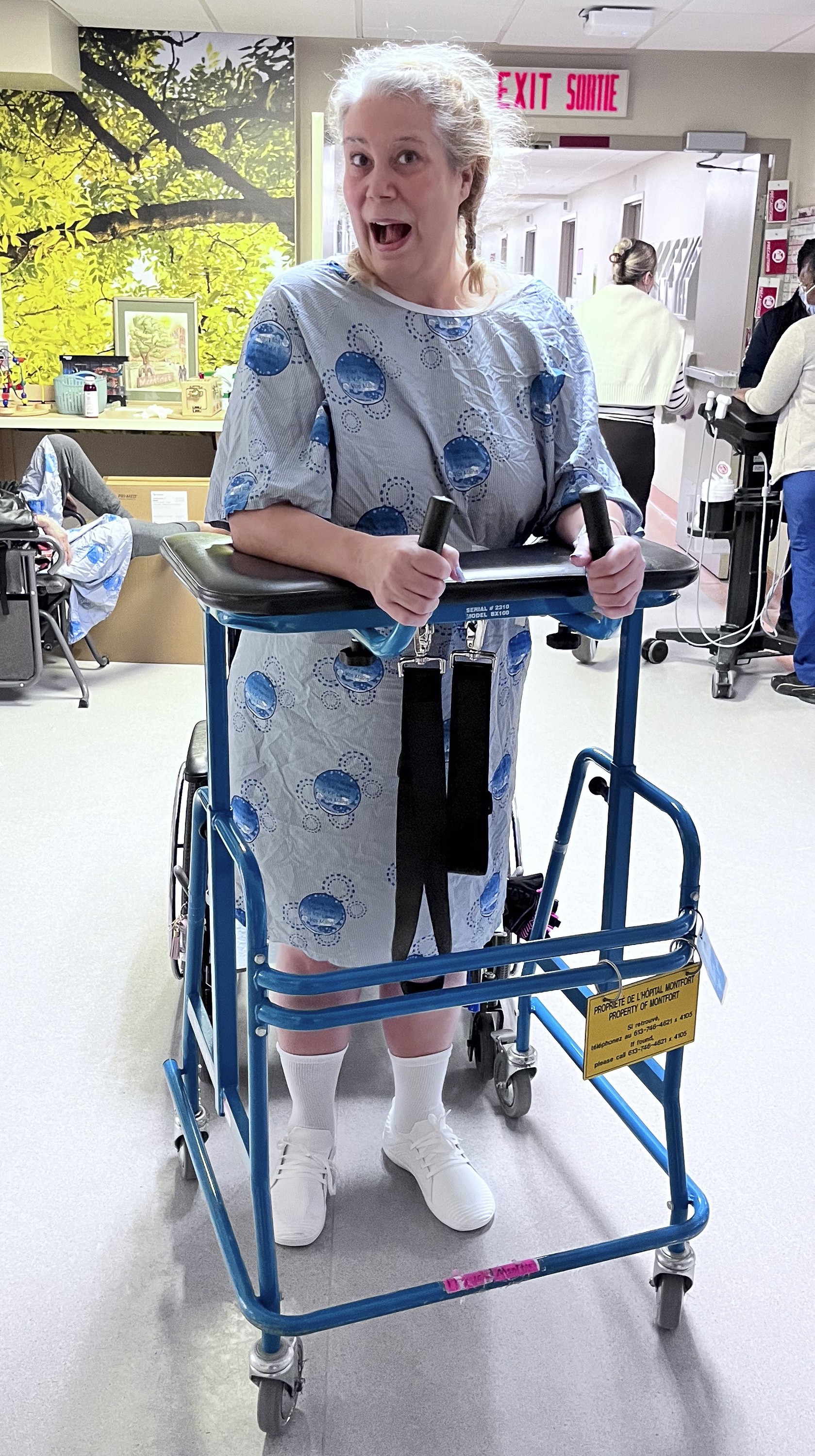 Natalie Sabourin, seen during the months she was learning how to walk again during her rehabilitation from Guillain-Barré syndrome. Natalie Sabourin / Supplied
By Aug. 28, 2024, she was in the intensive-care unit (ICU). Two days later, she was intubated after her whole body shut down, leaving her numb, paralyzed and unable to breathe on her own.
“It was surreal,” said Sabourin, a public servant in Ottawa who grew up in Cornwall. “It was absolutely surreal.”
The diagnosis
This was the start of Sabourin’s journey of recovery from Guillain-Barré syndrome (GBS), a rare, acute inflammatory condition that attacks the body’s nerves. After an arduous process of rehabilitation over many months, she has gradually gained her mobility.
Now, she and her brother, Eric Sabourin, are raising funds and awareness for the condition by launching the GBS Hope in Motion bike ride, where Eric will venture out on a 160-kilometre trek from Ottawa to their hometown in Cornwall on Sept. 26.
GBS is an inflammatory condition of the peripheral nerves, according to Donna Hartlen, executive director of the GBS/CIDP Foundation of Canada.
“At some point in time the body gets confused,” Hartlen explained, attacking the outer coating of the body’s nerves.
It is a rare condition, affecting one to two people per 100,000. The loss of sensation begins and the hands or feet and quickly progresses up the body.
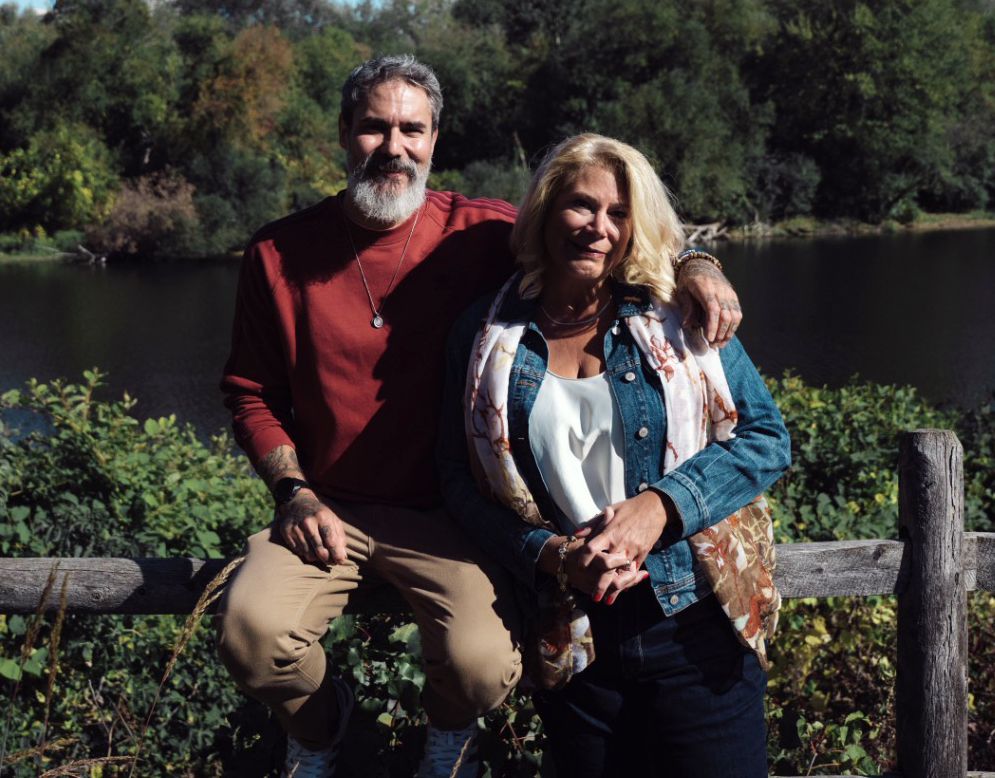 Natalie Sabourin, right, recovered from Guillain-Barré syndrome with the help of her brother Eric. Natalie Sabourin / Supplied
“It can impair breathing. You can be completely paralyzed from head to toe within 48 hours if it’s an aggressive case,” said Hartlen.
It has suspected triggers, appearing after flus, pneumonia, and food poisoning, but there are no predictors for who can get it. While treatments are available, recovery can take months, even years. A full cure is unknown.
After a month in the ICU, staff members had concerns Sabourin might never be able to breathe on her own. At its worst, she couldn’t smile or make facial expressions of any kind, communicating by moving her eyes as family and friends held up a sheet of paper and went through the letters of the alphabet one at a time. She couldn’t even clear her own throat.
“It was machines and a team of people literally keeping me alive,” she said.
The first steps to recovery
To ween her off the respiratory machine, doctors slowly turned it down, forcing her lungs to work harder in the hopes she’d learn to breathe again.
“It was the hardest thing,” said Sabourin.
Every ounce of her focus was trained on expanding and contracting her lungs — so much so that she couldn’t have the TV or radio on in her room.
“I needed to concentrate on every breath and get to the next one,” she said.
With only her thoughts to occupy her, Sabourin gave herself three rules to get through the experience: always listen to the experts and do what they say — even if she didn’t want to; take your time; and, focus on what matters.
Caregiver burnout’s a real thing, and none of us even saw it happening until we were in it
Eric Sabourin
With the support of her partner, Chris, brother Eric, and cousin Danielle, along with the support of many in Ottawa and Cornwall, she persevered. In November, a breakthrough came: she could clear her own throat.
She was cleared from the ICU and transferred to a main unit. Then came more months of physiotherapy: staff moving her toes, feet, and legs. When she first moved her finger on her own, Eric said he called the nurses in.
“We were off to the races now,” he said.
Then came her hand, and the rest of her arm.
“The first time she was able to bring her hand up to her face, it was just it was it was one it was the best day of our lives. It was just utter pure joy,” said Eric.
As her nerves woke up, they came back raw.
“It basically goes from not feeling anything to kind of feeling — a bit of numbness and tingly-ness — and then pain,” she said.
Over the following months, Sabourin worked through the pain until it settled. Nearly seven months later, on March 19, she left the hospital on her own two feet.
Two years later, Sabourin said she’s still “learning how to adapt my lifestyle to my new realities.”
She said she struggles with her balance. She needs breaks after physical activity. There’s still nerve pain, shooting down her foot or hand.
“You get used to it as time goes,” she said.
Being inspired
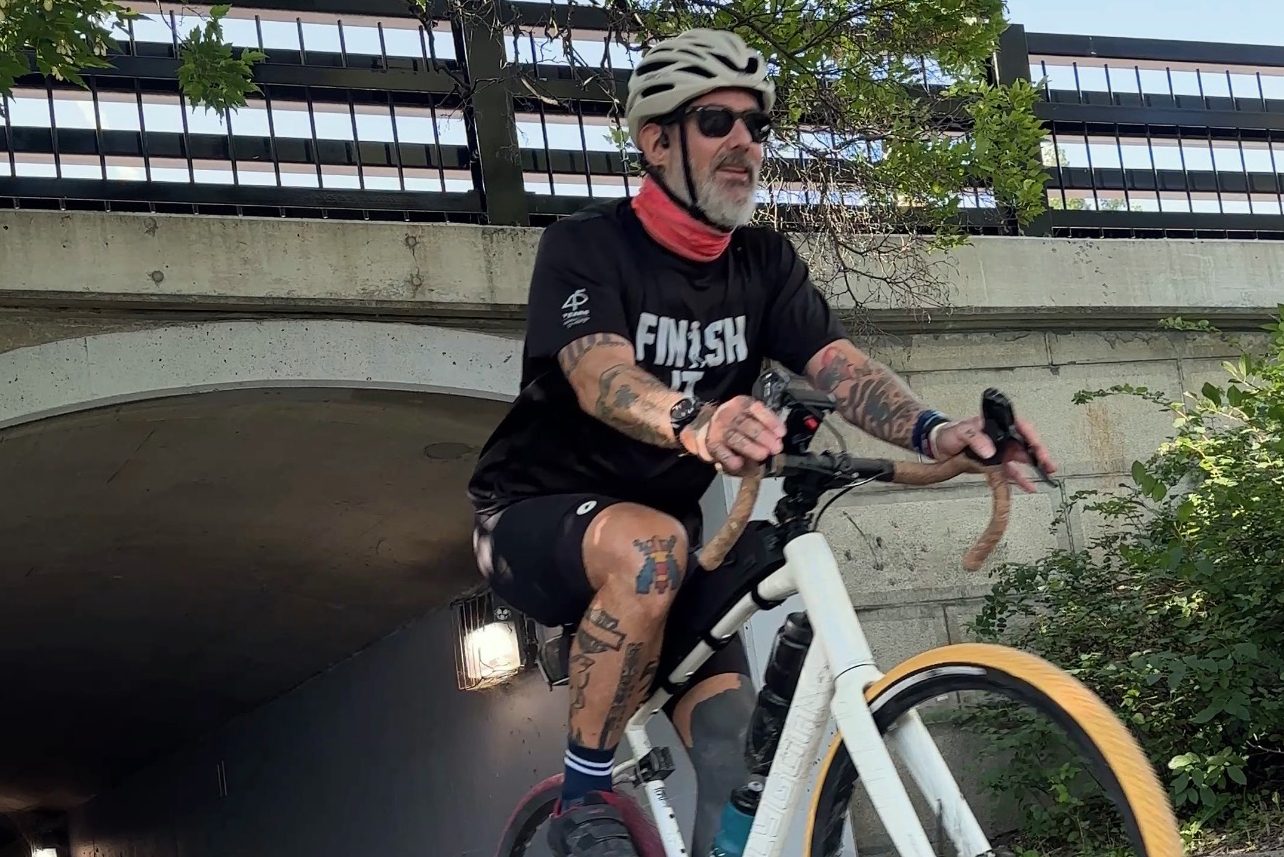
 Eric Sabourin has been training since July to ride 160 kilometres from Ottawa to Cornwall on Sept. 26, 2026, to raise funds and awareness for Guillain-Barré syndrome. His sister Natalie has recovered from the disease. Natalie Sabourin / Supplied
The experience of caregiving and advocating for Natalie without outside support has motivated Eric to raise awareness for GBS and the GBS/CIDP Foundation of Canada.
“Caregiver burnout’s a real thing, and none of us even saw it happening until we were in it,” he said.
He’d only heard of the foundation after Natalie’s ordeal in the hospital. Raising awareness about both the condition and the supports available “is going to help a lot of families not have to feel so frustrated by the lack of help or information,” he said.
The foundation has four pillars, according to Hartlen: support, education, research, and advocacy. In addition to funding research, it provides information to professionals, as early detection helps with treating the condition. The foundation facilitates peer support groups for families, and in severe cases work directly with families to help them advocate for patients.
“It’s super important, especially in the rare-disease space, to connect patients with a supporting organization,” Hartlen said. “It’s super important not to be alone.”
Eric Sabourin has been training for his ride since the end of July, motivated by Natalie’s determination as she worked through her rehabilitation.
It could happen to anyone, he said, so he wants to “make use of the body” he has “and maybe try to push my limits, like I saw Natalie put her limits.”
He said the 160-kilometre ride isn’t “anywhere near the limits that she had to go through.”
As of Sept. 15, $6,705 has been raised, smashing their $5,000 goal.
Eric said has no goal for how long the ride will take.
“As long as I get my wheels get over that finish line, I’ll be happy.”
A homecoming
Natalie Sabourin is thrilled the ride will end back home in Cornwall. Her father, Andrew Sabourin, was the owner of SDG cleaning and had close ties to the community.
“I wanted to continue that tradition,” Natalie said. “A lot of my memories and experiences are linked to the river, being on the water.”
After rowing on an Ottawa dragon boat team for 15 years, she’s had to miss the past three. Her goal is to get back to paddling for 2027. Sabourin said she considers herself lucky for the team of friends and family around her, drawing on their hope and prayers to “just keep breathing, one breath at a time, push through.”
In addition to funds and awareness, Natalie encourages people to donate plasma. A single course of treatment of one type of medication for GBS can require up to 1,000 donors.
To donate and learn more, you can visit gbshopeinmotionride.com.