
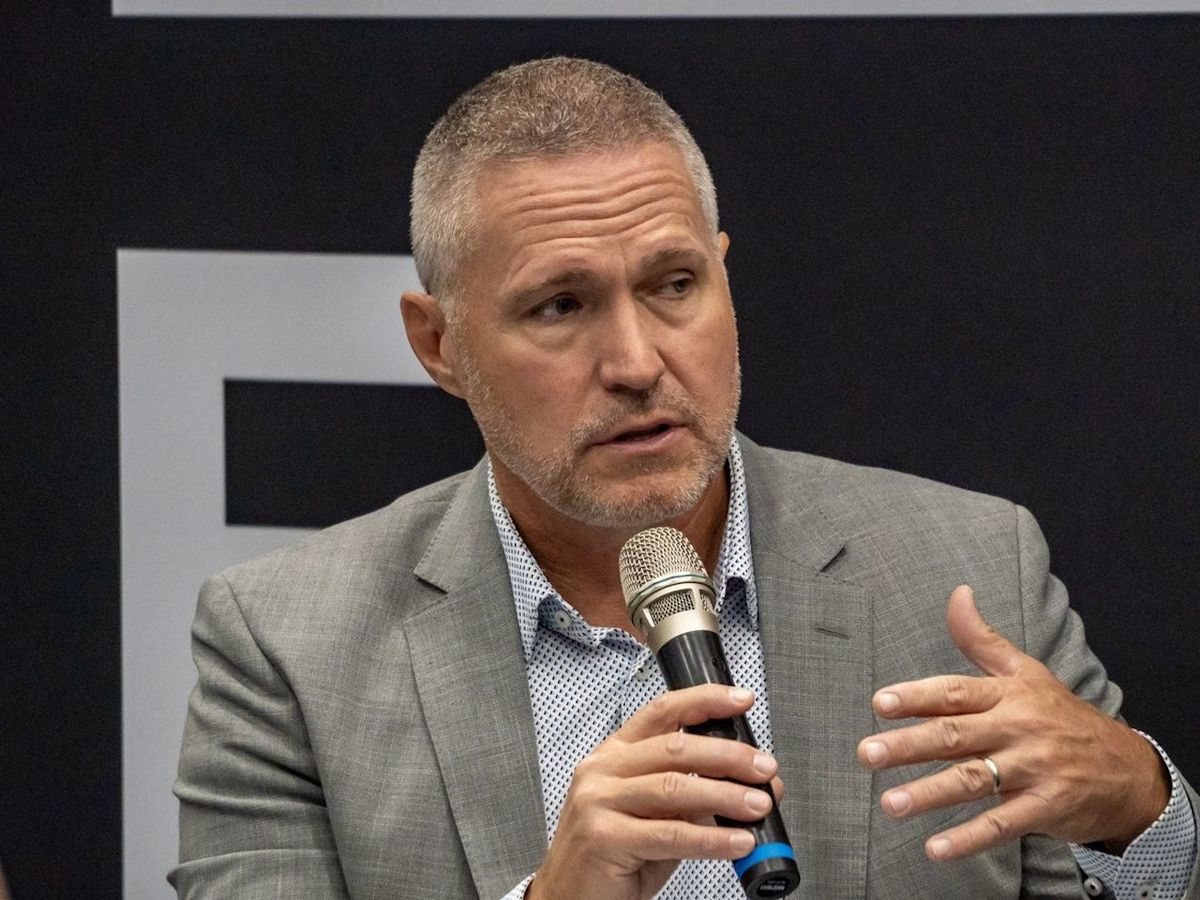
The president of the Oil Sands Alliance says the hardest investor to find in his industry is the first one, because the capital needed to get a project started is so large.
Once a project is running, Kendall Dilling said, the oil is there to last for generations.
“Once you get through that valley of death, as we call it — the oilsands are incredibly resilient resources,” Dilling said at an Edmonton industry conference focused on capturing and storing carbon underground.
Getting more of that oil to market now hinges on Pathways, the alliance’s carbon capture and storage project, which takes a decade or more to go from investment to operation. That is a hard wait to sell, he said.
“It is just a non-starter,” said Dilling, who added that investors will take their dividend, thank you very much, and invest elsewhere.
Ottawa offered them a faster way to get their money back on Tuesday. Dilling told the Carbon Capture Canada conference in Edmonton that the move delivers one of the key pillars his members have sought for the project.
Prime Minister Mark Carney unveiled what he called a productivity mega deduction at the Canada Investment Summit in Toronto. Under the proposal, businesses could deduct the full cost of most new equipment and other long-term assets in the first year they use them, starting with assets acquired on or after Tuesday.
Dilling said the deduction would help investors get their upfront capital back sooner on carbon storage projects that can take a decade or more to start producing.
“Our value proposition is not a standalone (carbon capture and storage) proposition,” Dilling said. The project comes bundled with government support to grow the sector, build new pipelines and reach new markets, a package he called the grand bargain.
The alliance’s five producers spent about five years working with governments before signing a memorandum of understanding with Alberta and Ottawa in July. It sets Nov. 15 as the target for binding agreements that will fix each company’s share of the project, and every commitment in the memorandum depends on signing them.
Under its terms, Ottawa said it would advance proposals for operating cost support, and Alberta committed to finalize its carbon capture incentive program and extend it to 2035.
Carbon pricing is no longer a sticking point in those talks, Dilling said in an interview. “We’ve kind of moved beyond that now,” he said, adding that some implementation details still need to be worked through.
If the agreements are signed, he said, about two years of construction would put the start of work on the pipeline around 2030, in time for the 2032 target, with some early activity before then. The exact timing is hard to pin down and depends on regulatory approvals and final investment decisions.
Operating costs have been the complicated part, Dilling said, because Canada leans on carbon markets rather than a U.S.-style production tax credit to cover them, and no developer can predict where those prices will go.
Frank Des Rosiers, an assistant deputy minister at Natural Resources Canada, said the International Energy Agency reports 90 per cent of announced carbon capture projects have yet to reach a final investment decision.
Candice Paton, vice-president of corporate affairs at Enhance Energy Inc., said investors in long-term projects need to know how Alberta’s industrial carbon pricing system and federal clean fuel credits will behave over time.
“The durability of these systems is, I think, as important as incentivization,” she said.
Brian Jean, Alberta’s energy and minerals minister, told the same conference the parties aim to reach a final agreement by mid-November. He said the province’s incentive is designed to complement Ottawa’s investment tax credit.
Paton said developers cannot count on a program that is not yet final. “If it’s still a live conversation, we can’t use that,” she said. She has not yet done the math on Ottawa’s write-off, she added.
The July memorandum puts Pathways at about six million tonnes a year in emissions cuts, which Dilling compared to taking half the vehicles in Alberta off the road. The project, he said, could show the world that Canada is back.
Dilling said carbon dioxide captured from an industrial stack stays out of the atmosphere the same as emissions avoided with solar power. “A molecule is a molecule,” he said.
“We are going to stop getting in our way, and we are going to develop our resources, and we’re going to do it responsibly,” he said.
Related
Bookmark our website and support our journalism: Don’t miss the news you need to know — add EdmontonJournal.com and EdmontonSun.com to your bookmarks and sign up for our newsletters.
You can also support our journalism by becoming a digital subscriber. Subscribers gain unlimited access to The Edmonton Journal, Edmonton Sun, National Post and 13 other Canadian news sites. The Edmonton Journal | The Edmonton Sun