
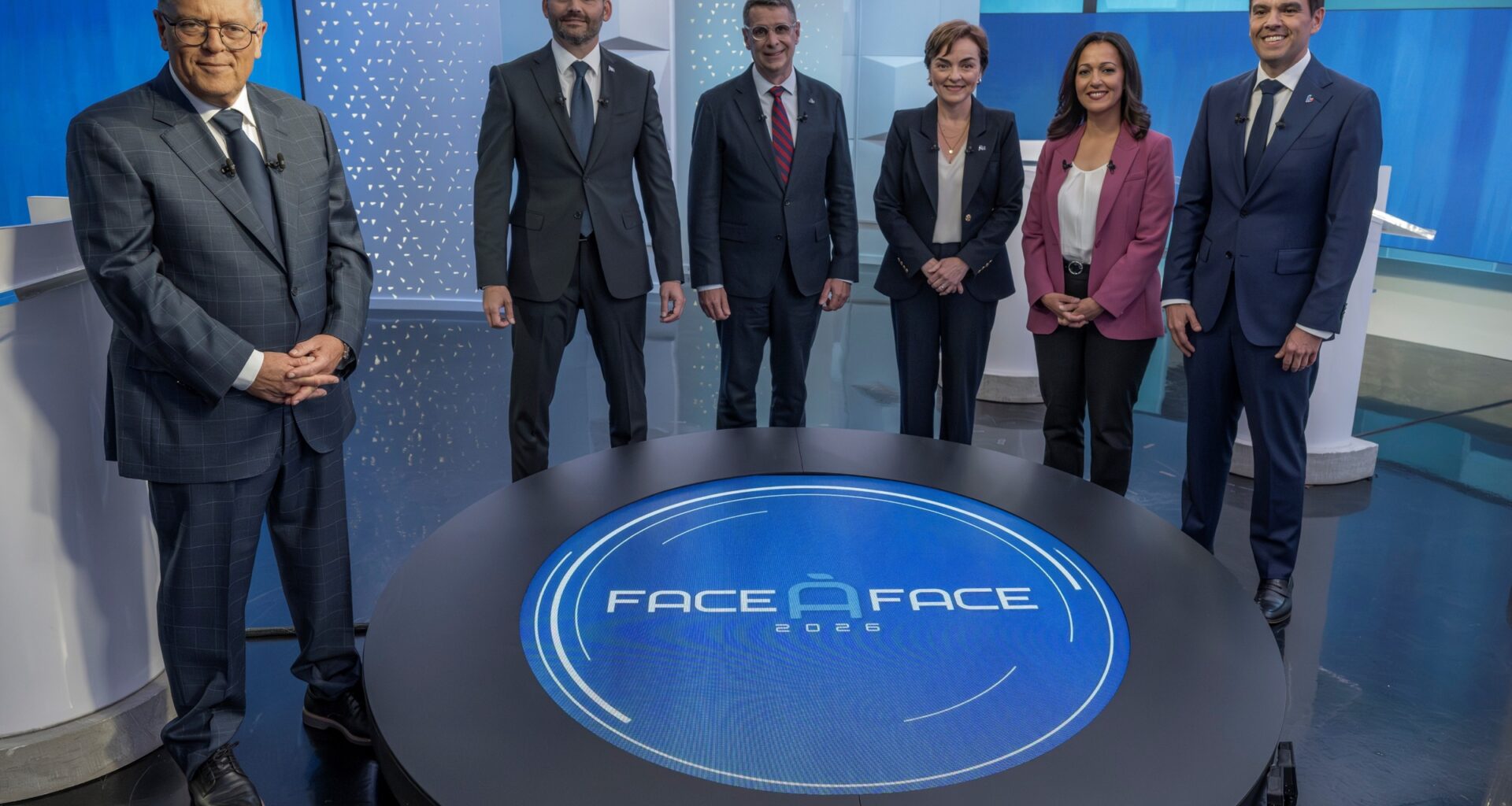
For the first time in the Oct. 5 general election campaign, the five main party candidates squared off for a live television debate Tuesday. The debate, the Face-à-face TVA, ran about two hours with two commercial breaks.
Three of the leaders, Christine Fréchette for the Coalition Avenir Québec, Charles Milliard with the Liberals and Ruba Ghazal of Québec solidaire, were first timers to the debates.
Parti Québécois Leader Paul St-Pierre Plamondon and Quebec Conservative Party Leader Éric Duhaime, participated in the 2022 debates.
The debate arrived mid-way into the campaign. While polls indicated the PQ has a narrow lead, about 40 per cent of Quebecers are still undecided on how to vote.
The debate focused on three themes: an economy under pressure, our taxes and services and Quebec’s future.
Here are a few takeaways. There are two more debates to come; one at Noovo Wednesday evening and the final debate sponsored by Radio-Canada Sept. 23.
The leaders
Each leader arrived with own particular objectives and it was clear Fréchette tried to use the debate to put plenty of distance between herself and the eight years of CAQ government.
She said off the top that she wanted to speak “directly” to Quebecers seeking change.
“I am not François Legault,” she said. “I am Christine Fréchette and I arrive with my own way of doing things.”
But she rapidly found herself on the defensive when debate host Paul Larocque asked if she had an estimate on the number of potential jobs that could be lost in the roaring tariff war with the United States.
While Legault at one point said the trade war could cost Quebec as many as 100,000 jobs, Fréchette was unable to give a number. At the end of the section she conceded the government had 60 companies under surveillance.
Leading in the polls, St-Pierre Plamondon was supposed to be the main target of attacks in the debate, but the fact there were five leaders on the TVA set made it harder for his opponents to gang up on him.
He managed to land a few key jabs, mainly at Fréchette, and keep his cool despite his reputation of having a short fuse under questioning.
“Do we really want 12 years of the CAQ,” St-Pierre Plamondon said at one point? “The real camp of change is the PQ.”
Milliard faced a dual challenge: getting himself better known to Quebecers at the same time as showing he has what it takes to fill the premier’s shoes.
He insisted he was the only true federalist among the candidates, a statement designed to woo wayward Liberals tempted to vote for the CAQ back over to the Liberals.
“Yes Quebecers need stability, but the CAQ in no way represents the change Quebecers need,” Milliard said. “What we need more of is to work more with the rest of the Canadian federation.”
He said the CAQ’s management of the economy has been a disaster.
“I can tell you the Liberals are the party of the economy,” he said, landing a key line for his party.
Bolstered by his experience in the 2022 election debate, Duhaime came across as cool, delivering some of the best lines of the debate. He said if elected Oct. 5 he would be the “guard dog” of Quebec’s taxpayers.
He honed in on the QS plan to create state-run grocery stories to reduce the cost of living.
“Frankly, I don’t see bureaucrats putting out tomatoes in the grocery store,” Duhaime said, saying the last thing Quebec needs is Cuban style stores.
Ghazal, however, stuck to her policy of staying upbeat and promising to do more for regular Quebecers.
“While the others want to weaken the state, I want to reinforce it,” Ghazal said.
The future of Quebec
Always a hot topic in any Quebec leaders debate, sparks flew on the theme of the future of Quebec, with Fréchette on the defensive off the top when host Larocque asked, if there was another referendum in Quebec, whether would she lead the No side.
As she has in the campaign, Fréchette sidestepped the question, insisting the CAQ is a coalition of people who have voted Yes and those who vote no. What they have in common today is “no interest” in a referendum.
That prompted St-Pierre Plamondon to fire back that what he’s hearing sounds like former Prime Minister Jean Chrétien or former Quebec leader Philippe Couillard talking.
“The eight years of CAQ their autonomist doctrine rhymes with one thing, the decline of Quebec,” St-Pierre Plamondon said.
Seizing the opening, Milliard fired back at Fréchette that Quebecers deserve an answer.
“Are you in favour or not of the sovereignty of Quebec? he asked Fréchette point blank. “It’s been weeks that you have been trying to change the subject.
“Mr. St-Pierre Plamondon was very clear. He said even says if he forms a minority (government) he will seek support to hold a referendum. Why can’t you answer this question? It’s disgraceful.”
Duhaime waded in, saying there is noting the two old parties (Liberal or PQ) would like better than to get the Yes and No referendum campaign buses rolling like the old days.
“If I have the balance of power, I will lock the doors and the buses will stay in the garage,” Duhaime said.
“I am not hiding anything,” St-Pierre Plamondon answered. “It’s clear I am for independence. I don’t accept that our people experience the decline Canada imposes on us.”
Milliard later, however, noted that St-Pierre Plamondon did not once use the word referendum during the debate.
St-Pierre Plamondon did, however, say in the debate that if the PQ takes power Oct. 5 he will “cooperate” with the federal government.
But Fréchette had another line of attack up her sleeve: reminding Quebecers of the existence of the PQ’s big playbook for independence.
“We see their priority is to create a new Quebec money, to create a Quebec army and, get this, a Quebec space agency. I would like to say to Mr. St-Pierre Plamondon, return to earth.
“While he works on rockets, I will work on health. We will work full time for Quebecers.”
Language
When the question of language came up towards the end of the debate, Fréchette repeated her leadership race and campaign promise to extend the Charter of the French Language to adult and vocational education, a move that will result in 27,000 students migrating to the francophone system.
She repeated that Quebecers can count on a CAQ government to make use of the Constitution’s notwithstanding clause to protect the Charter of the French Language.
She then went on the attack, challenging Milliard to say whether he would invoke the clause. He responded saying the Liberals have a better and more ambitious language policy than the CAQ has, with plans to invest $380 million in shorting up French.
“I am the son of a French teacher,” Milliard told Fréchette. “Do you sincerely think there is one person in this room who does not want to protect French?”
He challenged Fréchette to show how all the CAQ’s language laws had improved the status of French in Quebec.
“I will use the notwithstanding clause if I need to use it, after consultation. The notwithstanding clause is not the magic solution to everything; it’s how we save French, how do we improve the mastery of French.
“All you have proposed is coercive and negative.”
Philip Authier joined The Gazette in 1989 and has spent most of his career covering Quebec politics and government. From Sherbrooke, he is the Gazette reporter covering the National Assembly in Quebec City.
pauthier@postmedia.com
Editor’s Picks