
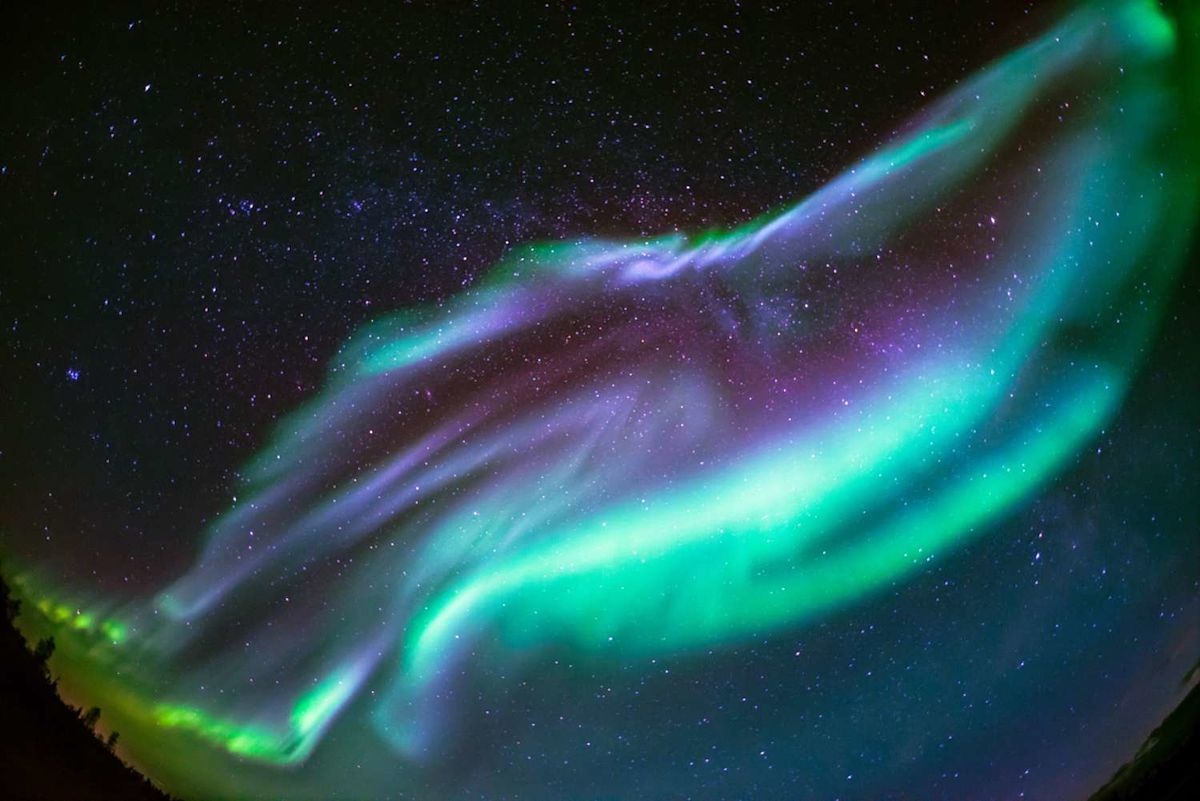
NEED TO KNOW
A pair of solar events may create northern lights visible across northern U.S. states tonight
NOAA predicts a G1-class geomagnetic storm, with potential to intensify to G2 or G3 levels
For best viewing, find a dark location with a clear northern sky and check real-time aurora forecasts
After this week’s round of auroras, the Sun is sending Earth a little extra energy tonight!
A pair of coronal mass ejections — giant bubbles of magnetized plasma flung off of the solar surface — are racing towards us alongside gusty streams of solar wind.
When they collide with our planet’s magnetic field late Wednesday, Sept. 16 into Thursday, Sept. 17, the result could be a shimmering round of northern lights across the sky.
For reference, the northern lights (aurora borealis) are a result of geomagnetic storms, which occur when charged particles from the sun collide with gases in the Earth’s atmosphere, creating brilliant waves of light in the sky. Still, their visibility depends on several factors, including intensity and location.
Forecasters at NOAA’s Space Weather Prediction Center are calling for a G1-class geomagnetic storm, though there’s a chance it could intensify to G2 or even G3.
Adding to the magic of it all, we just had a new moon, so a thin crescent will hang in the sky before sinking early in the evening, setting the stage for dark skies in case auroras decide to show up.
Here’s how, when and where to watch this stellar event.
When will the northern lights be visible?
The Northern Lights
Credit: Metin Aktas/Anadolu via Getty
Your best window is after dark on Wednesday, Sept. 16, into the pre-dawn hours Thursday, Sept. 17.
According to NOAA forecasters, geomagnetic activity is expected to climb to active G1 (minor) storm levels on Tuesday, Sept. 15 and Wednesday, Sept. 16, with a chance of lingering G1 conditions into Thursday, Sept. 17.
Remember, there is no specific time for auroras as solar-wind conditions are known to change quickly, so be sure to keep an eye on NOAA’s live aurora forecast.
Where will the northern lights be visible?
Aurora borealis display near Fairbanks
Credit: Gallo Images ROOTS Collection/Getty
If the storm remains at G1 levels, the aurora could peek out of dark, northern U.S. states including Alaska, North Dakota, Maine, Minnesota, Vermont, Montana and New Hampshire, with a fainter glow possible in Washington, Idaho, South Dakota, Wisconsin and Michigan.
Should things ramp up to G2, the aurora show could creep further south, giving skywatchers in Oregon, Wyoming, Nebraska, Iowa, Illinois, Indiana, Ohio, Colorado, Pennsylvania and New York a shot at catching a display.
Visibility always depends on luck and timing, but it doesn’t hurt to try!
How to watch the northern lights?
The Aurora Borealis
Credit: Ross Harried/NurPhoto via Getty
When it comes to the fickle northern lights, having patience goes a long way.
However, for the best viewing chances, find a dark location away from city lights, ideally with a clear view of the northern sky.
The darker your surroundings, the more vivid the aurora colors will appear. Remember to also keep tabs on real-time conditions using NOAA’s 30-minute aurora forecast and space-weather apps that track solar wind and magnetic field changes.
How to photograph the northern lights?
You can’t catch a rare glimpse of the northern lights without taking a photo to prove it.
Fortunately, all you need is your smartphone! Just switch on “Night Mode” in your settings and aim your lens at the sky.
For those with more advanced gear, like a DSLR or mirrorless camera, it’s best to use a tripod and shoot in manual mode for the best results.
Read the original article on People