
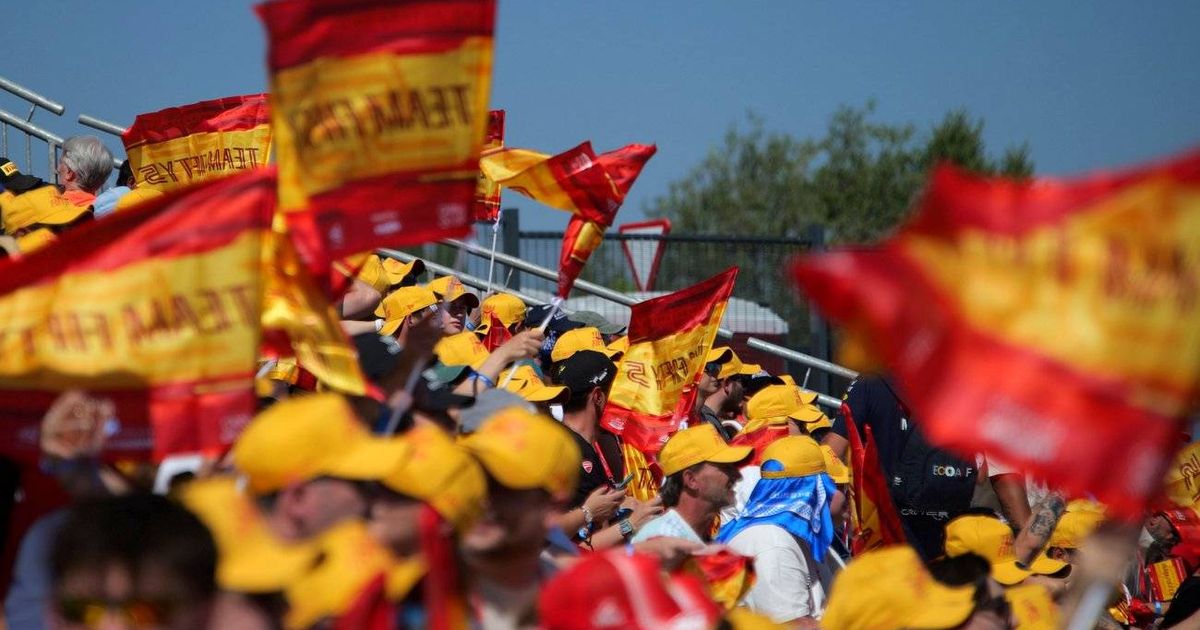
On paper and after Qualifying on Saturday, the first Spanish Grand Prix at Madring looked spectacular as Formula 1 returned to Madrid for the first time since 1981, when the series visited Jarama. Qualifying on Saturday, when overtaking or lack thereof is not a thing, was a thriller, but then Sunday arrived and different story. The weaknesses of the latest pop-up city circuit became difficult to ignore. Kimi Antonelli won after the Virtual Safety Car reshaped the race, but the bigger story was how hard it was to actually race.
Lando Norris could close on Max Verstappen, yet passing was another matter. Qualifying had been challenging and entertaining. The Grand Prix became largely processional.
That is a problem Formula 1 cannot ignore. Madring is a flagship new venue backed by enormous investment and a long-term commitment. If the racing does not improve, La Monumental, the architecture and Madrid marketing will not be enough.
Johnny Herbert believes the starting point is simple: “The lack of overtaking opportunities in Madrid has been brought up by the drivers, but they are never involved in the conversations when new tracks are being designed.
“They have got to insist through the GPDA that they become a proper part of the decision-making process,” insisted Herbert, echoing what drivers said throughout the weekend. They praised Madring’s challenge over one lap but questioned why obvious overtaking concerns were not addressed earlier.
Carlos Sainz the Madring ambassador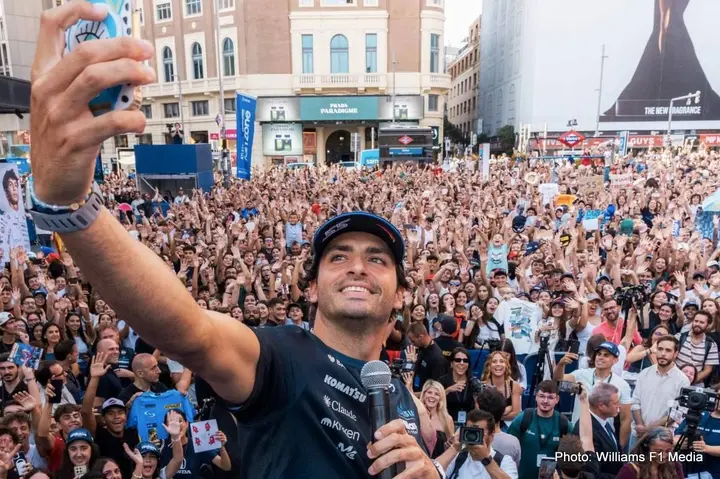
Although current driver Carlos Sainz played an ambassadorial role in promoting the venue, the current Formula 1 grid was effectively presented with the finished product rather than invited to shape it.
The central racing problem is not especially complicated. Too many Madring braking zones require drivers to slow while already turning.
That makes a late move down the inside harder and increases the risk of contact when attempting to run side-by-side. Herbert identified that geometry as a major reason Sunday produced so little passing.
He explained: “If it’s straight, you have a much, much better chance of overtaking. When it’s turning, left or right, it’s way, way less, and as we saw in Madrid, it is impossible.”
His Austin comparison is useful. Turn 1 at Circuit of the Americas widens dramatically under braking, giving drivers several possible lines and creating opportunities for attack and defence.
Herbert adamant that Madring needs more of that thinking. The 2027 priority should be changing corner entries, width and approach geometry rather than trying to reinvent the whole circuit.
Very long pitlane and other issues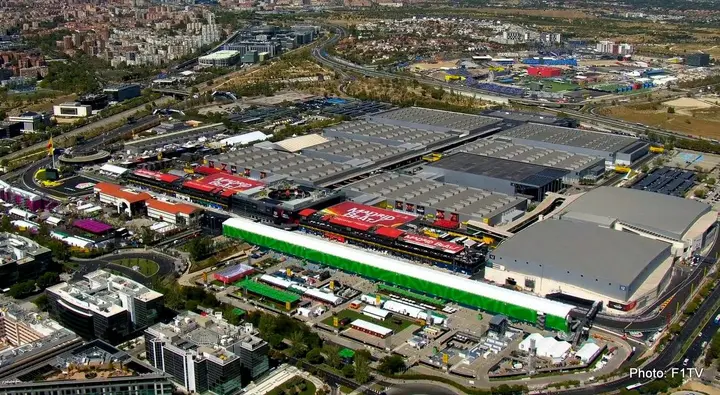 The Valdebebas section offers more freedom for modification than the IFEMA half, where existing halls and roads restrict what can realistically move. Norris has also questioned Turns 18 and 19, while several drivers suggested individual corners could be opened or reshaped.
Madring also arrived with an unusually long pit lane and one of the biggest pit-loss penalties of the season. That discourages alternative strategies because every extra stop becomes expensive.
At a circuit where overtaking is already difficult, reducing strategic flexibility compounds the problem. Herbert said: “It is long. I don’t know how you’re going be able to shorten it. Maybe you can make them come in a little bit later into the pit lane itself, so shorten it on the entry.”
Even a partial reduction would help. Formula 1 should encourage different tyre strategies rather than effectively penalising teams for using the pit lane.
There is also a wider question hanging over Madring: value. There is no single agreed figure for what the project will ultimately cost. The track construction contract has been put at €83.2m, with wider IFEMA, paddock, urbanisation and temporary infrastructure packages pushing reported totals considerably higher.
Formula 1 rights add another major commitment, while Match Hospitality has outlined €400m of private spending over 10 years. Madrid and IFEMA have promoted around €450m in annual economic impact, roughly 8,000 jobs and “zero public subsidy”.
Herbert: Negativity that Madrid is getting is very unfair
Opposition groups reject that final claim because IFEMA is a majority-public consortium. Their broader calculations put the decade cost between roughly €480m and €700m once rights, infrastructure, promotion and related works are bundled together.
Residents have also complained about noise, access and months of construction disruption, while some spectators felt neglected during the inaugural weekend. The unresolved Dromo, Tilke and IFEMA design dispute adds another complication.
Yet Herbert cautioned against dismissing the whole project: “The negativity that Madrid is getting is very unfair because they put a lot of effort into it and it looked spectacular. That is the important distinction. Madring does not need demolishing. It needs refining.”
The first weekend showed the circuit can create atmosphere and offer drivers a distinctive qualifying challenge. La Monumental is a genuine signature corner, and Madrid clearly has the scale to host Formula 1. But Sunday exposed the weakness that matters most. A Grand Prix circuit must allow Grand Prix cars to race.
For 2027, Formula 1 should widen key braking zones, straighten approaches where possible, simplify unnecessary corner sequences, reduce pit-lane time loss and formally involve drivers in the redesign.
Do that and Madring can become more than a spectacular backdrop. Leave it largely unchanged, and Formula 1 risks returning to Madrid with the same expensive problem.
(Johnny Herbert quotes supplies by Casino Hawks)