

Listen to this article
Estimated 4 minutes
The audio version of this article is generated by AI-based technology. Mispronunciations can occur. We are working with our partners to continually review and improve the results.
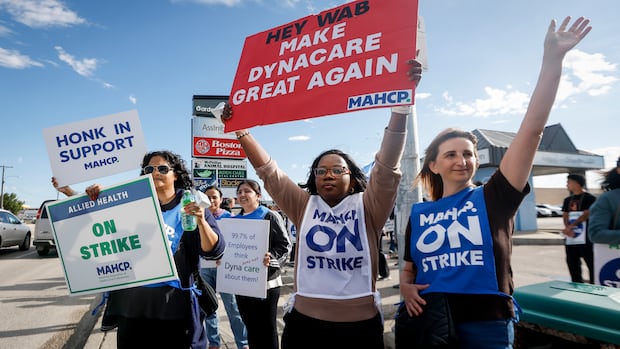
Dynacare workers do the same job as hospital lab staff who are considered essential, a labour relations officer with a health-care workers’ union told a Manitoba Labour Board hearing on Wednesday.
Garrett Finck, an officer with the Manitoba Association of Health Care Professionals, agreed the workers at the private company “do the same thing” as their public sector peers, as a hearing on whether Dynacare services are essential that began last week continued.
He agreed during cross-examination that the work is critical “in the definition of a layperson.”
But Finck said he disagreed with figures put forward by Shared Health to show the health-care system could not handle a strike, even if he had no evidence showing otherwise.
“Shared Health has never been put to test before,” he said. “It’s untested.”
The labour board proceedings began last week, after it agreed with the province’s request to halt a strike by lab workers with Dynacare, a private company contracted by the province to provide blood testing services.
Workers went on strike on Sept. 8 and were ordered back to work later that day.
Keith LaBossiere, counsel for the province, questioned Finck on Wednesday about an email the union sent to Shared Health ahead of the strike, saying it would consider some contingency plans a violation of anti-scab legislation.
“You’re coming to the board here saying, ‘Don’t worry, board, Shared Health [has these plans],'” LaBossiere said. “But you’re telling Shared Health they can’t do it.”
Possible ‘unfair labour practice’: union
The union said in the Sept. 3 email it had raised concerns about Shared Health lab workers — also represented by the health-care professionals’ association — being expected to do extra work during a strike. That might fall under their statutory right to refuse work, the union said.
“The circumstances here warrant serious consideration of an unfair labour practice,” the email said.
Finck told the board that members employed by Shared Health weren’t necessarily being instructed to take the work during a Dynacare strike.
He said the Shared Health collective agreement gives the employer the ability to introduce new shifts and the ability to call an emergency.
“Those are options that are available,” Finck said.
He said that as far as he knew, the union had not been consulted on the contingency plans.
LaBossiere said the Manitoba Association of Health Care Professionals was arguing one thing in front of the board and another thing outside the hearing.
“This email doesn’t say, ‘We’re just asking you to follow the collective agreement,'” he said.
LaBossiere said the union seemed to be suggesting the previous email was only advising Shared Health to follow the collective agreement.
The lawyer added that any emergency clause in the Shared Health agreement wouldn’t supersede the Labour Relations Act.
Get back to table: minister
Health Minister Uzoma Asagwara said Wednesday Dynacare and the union need to return to the bargaining table.
The company has an obligation to pay workers fairly, the minister said during an unrelated announcement.
“We’re unapologetically a government that supports labour,” Asagwara said.
“We respect and revere [workers’] rights. We also know that it is fundamentally important to make sure that Manitobans have access to the health services that they need.”
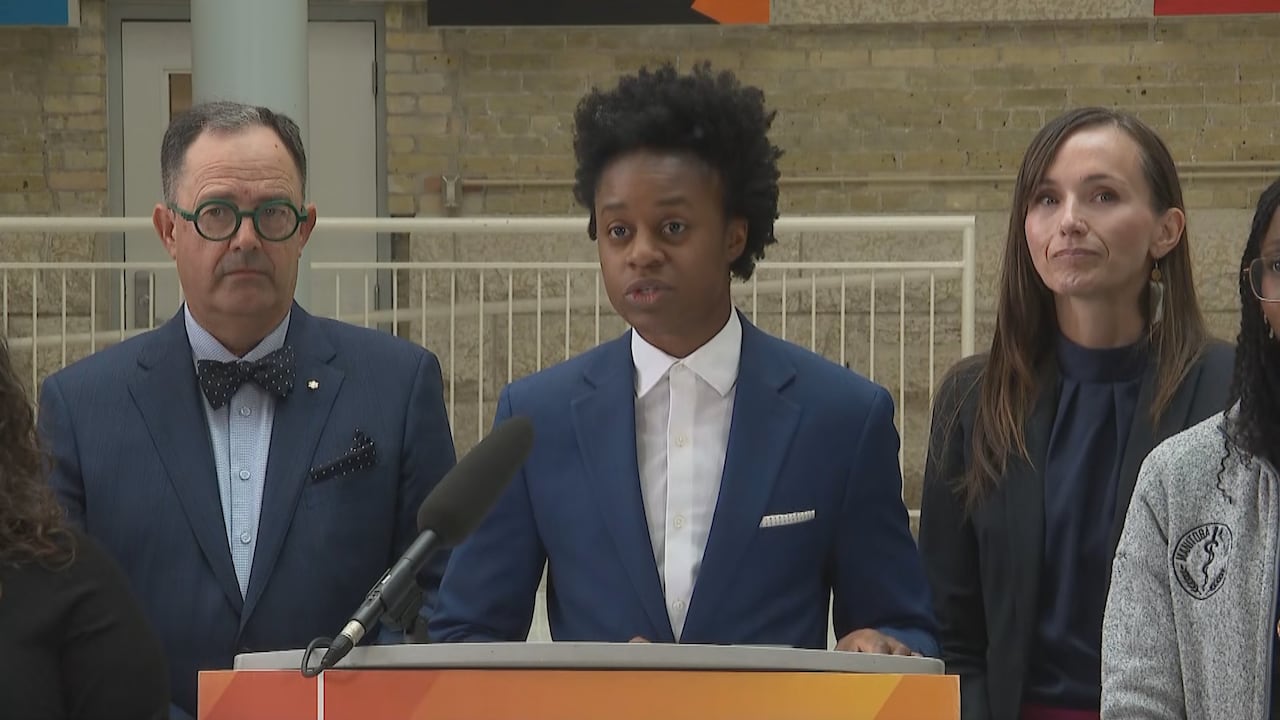 Manitoba Health Minister Uzoma Asagwara says Dynacare and the union need to go back to the bargaining table. (Gilbert Rowan/Radio-Canada)
The strike followed a breakdown in contract negotiations, primarily over wages, with the union saying Dynacare workers earn less than public-sector lab workers.
According to the union, reaching wage parity with public-sector labs would costs about $6 million in 2026-27, based on calculations from a chartered professional accountant.
Dynacare’s last offer would have funded less than 15 per cent of the cost wage parity, the union said in a Tuesday news release.
Union president Jason Linklater said the Manitoba government could step in “to make it right.”
The release pointed to a portion of the province’s contract with Dynacare, obtained through a freedom of information request, that says the American-owned company “must comply with all reasonable directions and requests of Manitoba.”
Asagwara said the NDP government’s expectation is for employers to ensure they’re taking “the most responsible approach in delivering services.”
The labour board hearing is set to resume next week.