

Listen to this article
Estimated 4 minutes
The audio version of this article is generated by AI-based technology. Mispronunciations can occur. We are working with our partners to continually review and improve the results.
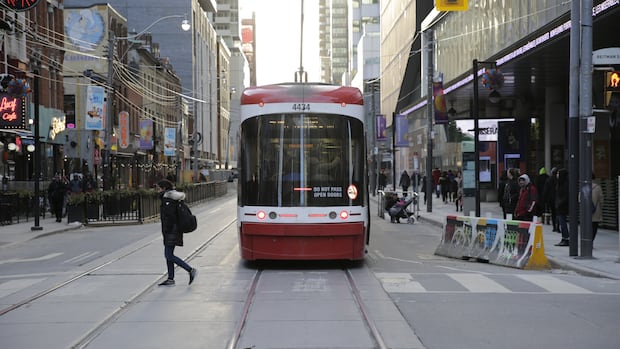
Major infrastructure work on a stretch of King Street W. will mean several changes to TTC streetcar service for 10 months starting this fall.
The TTC and the city plan to replace streetcar tracks and water mains in four areas on King Street W. from November this year to August next year. It’s the second time in two years that construction will affect transit service in the area.
Commuters are already expressing concern about streetcar diversions and replacement buses, but TTC spokesperson Stuart Green said the work needs to be done as the track has reached its lifespan of around 15 years.
“We understand that it’s frustrating for people that have to take this route, but this work is essential,” Green said Wednesday.
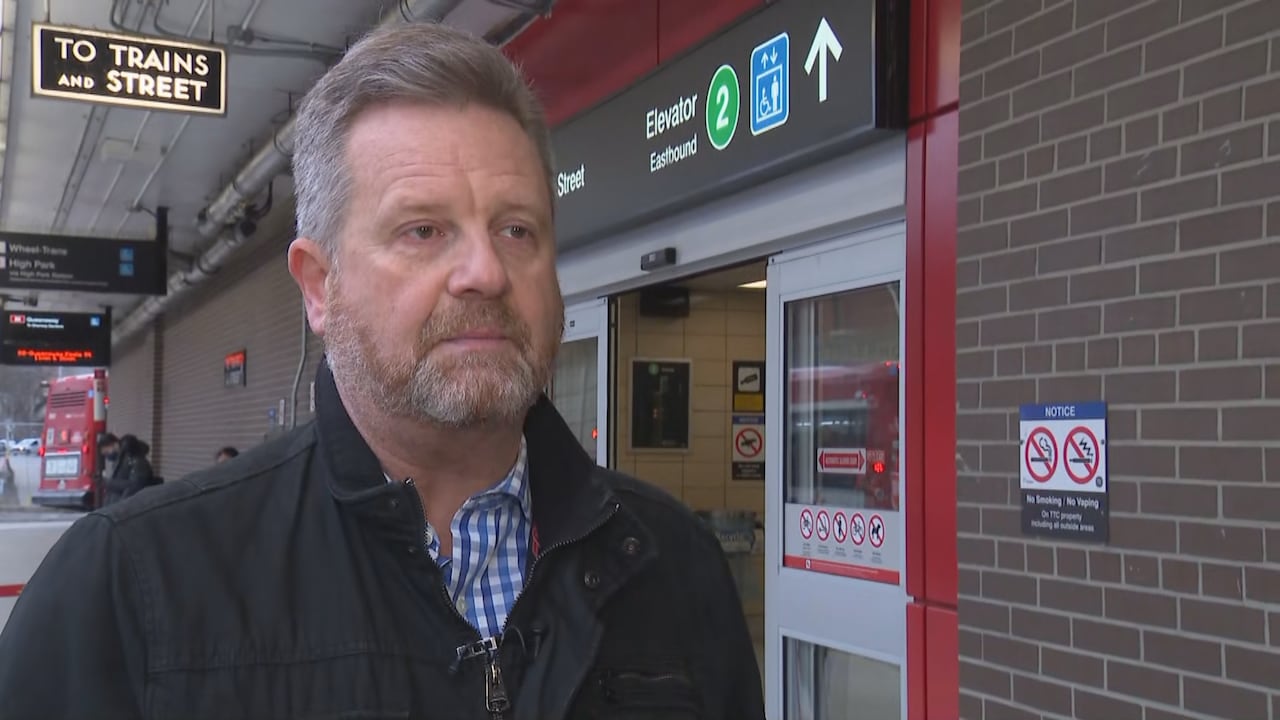 TTC spokesperson Stuart Green says: ‘We understand that it’s frustrating for people that have to take this route, but this work is essential.’ (CBC)
In 2025, the TTC repaired and replaced streetcar tracks in the intersection of King Street W. and Dufferin Street ahead of the World Cup. Green said the work will continue further west this fall, between Dufferin Street and Close Avenue and between Portland Street and Spadina Avenue.
“We can get this work done in a few months and then we will have long-term good service along there, with the exception being when diversions happen,” Green said.
Green said the track work is being “piggybacked” with the city’s water main replacement work to ensure it’s all being done as “one big chunk,” as opposed to separately, which would be even more frustrating for commuters.
Service changes to plan ahead for
According to the TTC, the four areas and their timelines are:
Dufferin Avenue to Close Avenue: November 2026 to August 2027.Shaw Street to Bathurst Street: March 2027 to late 2027.Portland Street to Spadina Avenue: November 2026 to August 2027.King Street W. and York Street intersection: June to August 2027.
The following service changes begin Sunday, Nov. 1:
504/304 King streetcars will be consolidated into one branch that will run between Broadview station and Dundas West Station.504/304 King streetcars, west of Spadina Avenue, will divert via Queen Street W. between Spadina Avenue and Roncesvalles Avenue.504C/304C King replacement buses will run between Sunnyside Loop at Roncesvalles Avenue and the Distillery District at Front Street E. and Cherry Street.503 Kingston Road buses will be extended west to Dufferin Gate Loop.508 Lake Shore streetcars will be suspended altogether while the infrastructure work is being done.
Commuters told CBC Toronto on Wednesday that they are frustrated at the thought of more construction.
‘It’s been an absolute nightmare,’ commuter says
Yvonne MacInnis, who just moved back to Toronto from New York City, said the TTC makes her feel like it’s 1945, compared to New York’s system. She said the TTC needs “get it together” because it’s “rough out here” for commuters.
“It’s been an absolute nightmare,” MacInnis said. “It literally makes me want to move because it’s so inconvenient.”
MacInnis said the area is “constantly being disrupted” and that adds a layer of frustration.
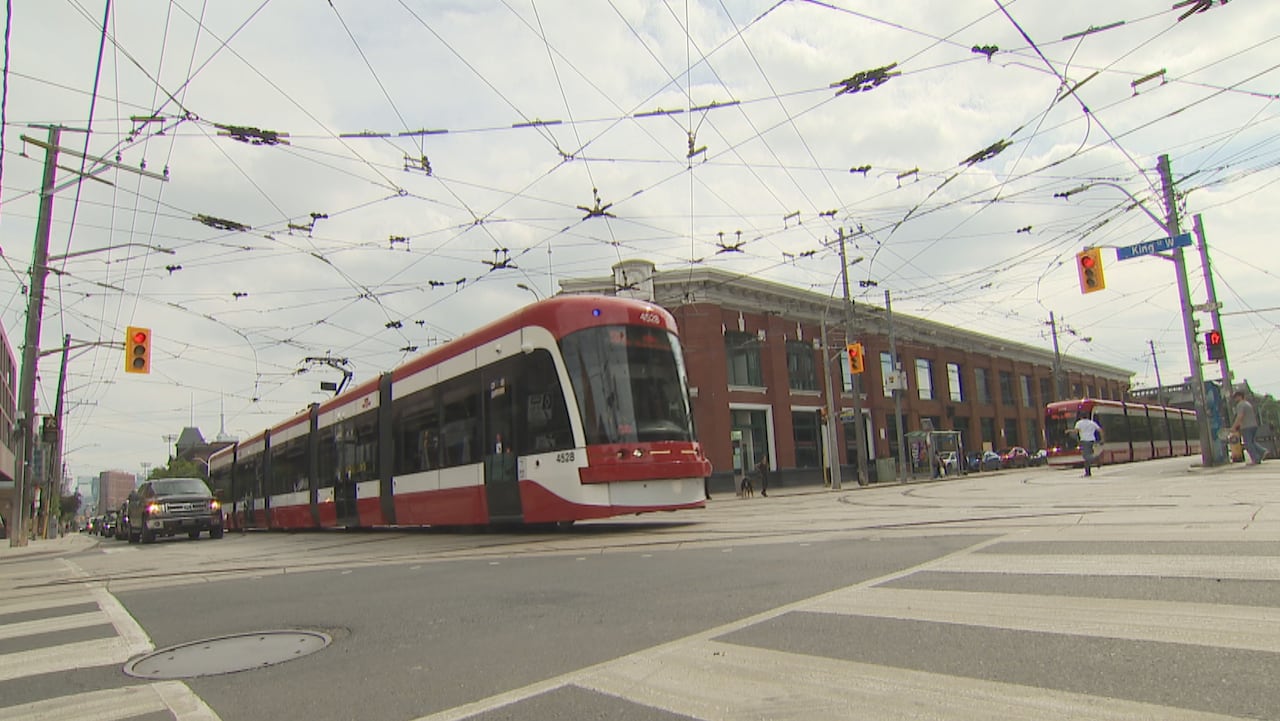 A 504 TTC streetcar is shown here on King Street W. The TTC and the city are planning to replace streetcar tracks and water mains over four project areas on King Street W. from November this year to August next year. (Peter Turek/CBC)
Resident Sage Patterson said she doesn’t take the King streetcar because it takes too long to arrive and it’s faster to walk.
“Everything is under construction all the time,” Patterson said.
“Obviously, I pay for the TTC, but I feel like I shouldn’t because it’s so inconsistent … At least there’s the subway.”
Work ‘both frustrating and hugely important’: expert
Surrounding streets will have to absorb traffic from the King Street W. streetcar work, according to Matti Siemiatycki, director of the infrastructure institute and professor of geography and planning at the University of Toronto.
Siemiatycki said the work is “both frustrating and hugely important” to boost the reliability and speed of the transit system and to prevent emergency breakdowns later, but there will be nearby impacts.
“It’s like a ripple effect that cascades outwards. The bottleneck will shift people onto different streets. Those streets have their own traffic, their own congestion, their own construction that might be going on,” he said.
“There will be groans and sighs. But we have to keep coming back to the idea that the alternative is worse. We do have to do these projects. The key now is that they’re done efficiently and quickly.”