
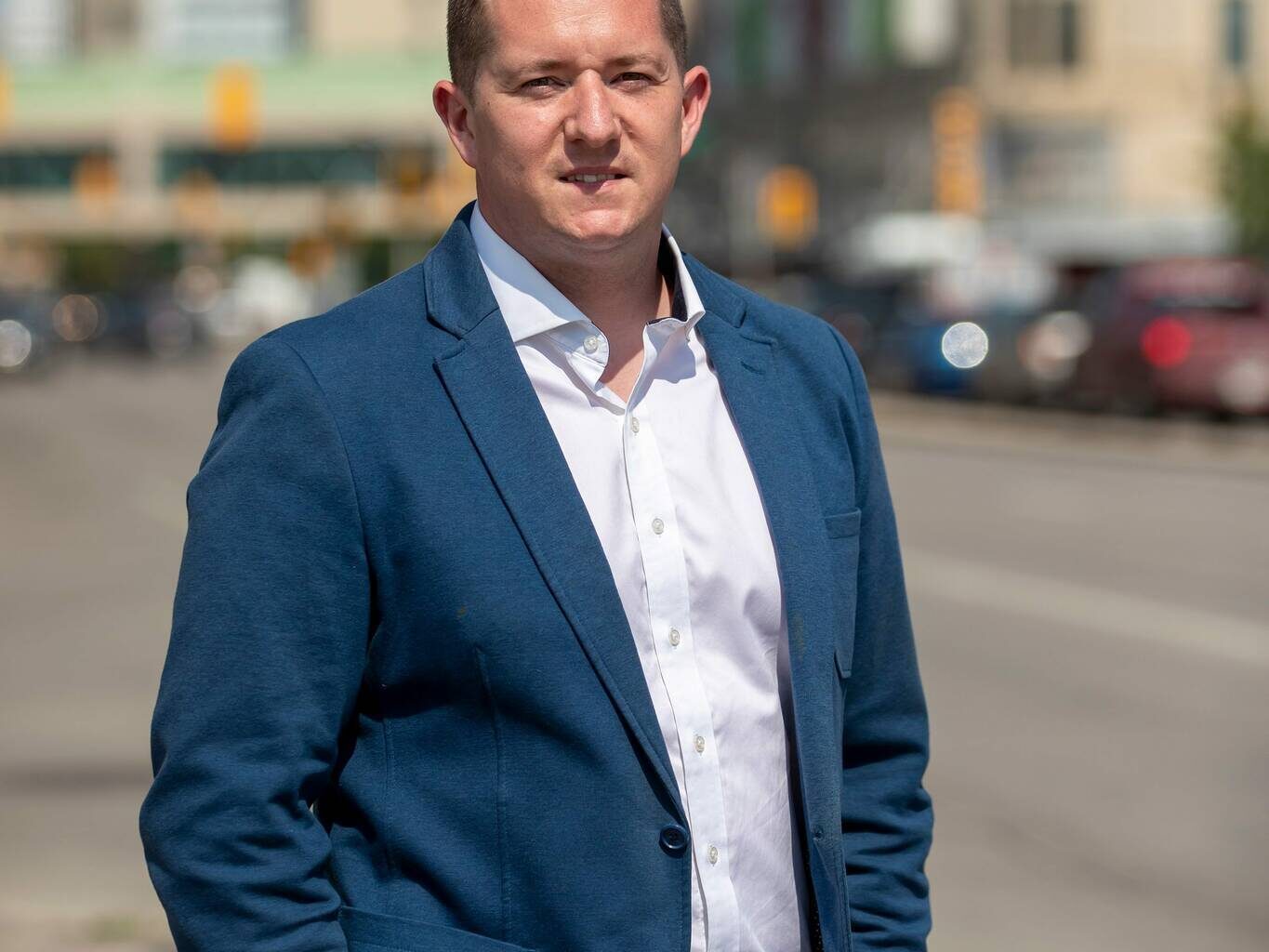
Winnipeg’s charitable sector is being squeezed from both sides: demand for help is growing while the pool of donors to meet that need is shrinking.
The imbalance is increasingly being carried by a relatively small group of deep-pocketed donors. Last year, 600 people — about three per cent of United Way Winnipeg’s individual donors — accounted for roughly $8 million, or 55 per cent of individual donations.
The fundraising pitch isn’t getting any easier.
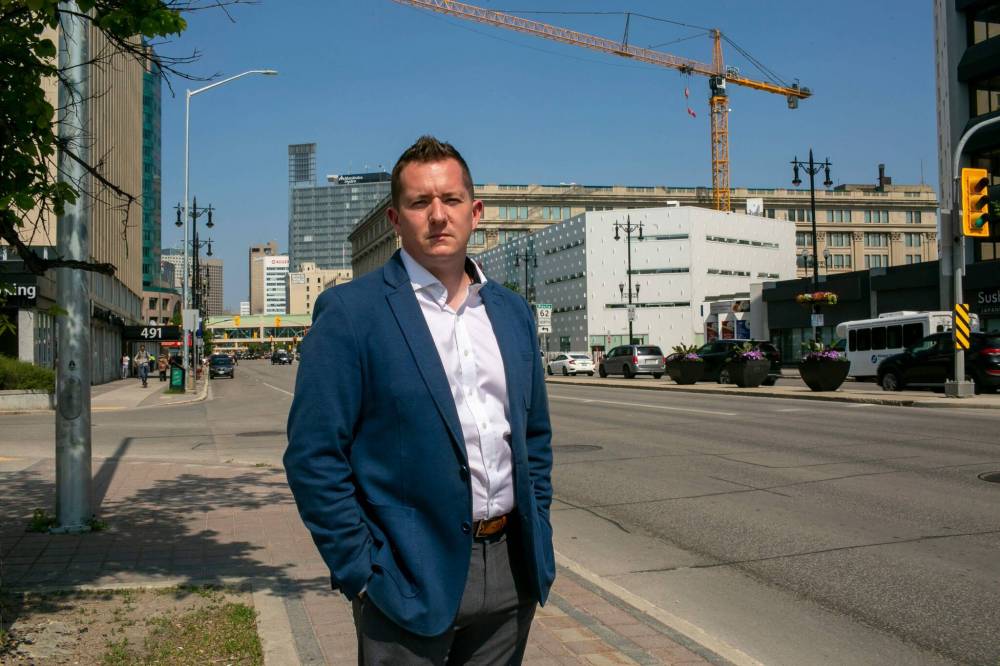
BROOK JONES / FREE PRESS FILES
United Way Winnipeg president and CEO Matthew Cutler says the charity’s donor base has shrunk significantly over several decades.
Homelessness and public drug use have become increasingly visible, household budgets remain strained and the problems charities are trying to address can seem so entrenched that donors may reasonably wonder what difference another contribution can make.
As United Way Winnipeg launches its 105th annual campaign Friday, those leading the non-profit don’t believe the city’s willingness to help has disappeared.
“Winnipeggers already care,” campaign co-chair Anne Mahon said. “Because they see. It’s evident.”
The challenge, she said, is giving people a sense of agency — moving them from seeing the problems around them to believing they can play some role in addressing them.
That has become more difficult as United Way’s donor base has shrunk substantially over the decades. President and CEO Matthew Cutler said about 100,000 people contributed annually several generations ago, when Winnipeg was considerably smaller. Today, that number is about 24,000.
Cutler and campaign co-chairs Anne and Paul Mahon don’t believe Winnipeggers have become less generous.
There are more charities competing for donations, household finances are tighter and workplace connections that historically drove United Way campaigns were disrupted during the COVID-19 pandemic. Wealth has also become increasingly concentrated.
“If you think about wealth, there’s more of a disparity in wealth today than there was when your parents were growing up and starting out… It was very much more a middle class city and a middle class country, we’ll say, if you go back into the ’60s,” Paul Mahon said.
“Now we’ve really got a bit of a bifurcation of wealth, with a lot more wealth amongst fewer, and a lot more people struggling.”
Major donors now account for about 36 per cent of funds United Way Winnipeg raises and about 56 per cent of non-corporate donations, Paul said.
The organization can’t rely on that group alone, it says. Many small individual gifts add up, and first-time donors today are seen as potential major donors of the future, making broader participation critical to sustaining the organization through generational change.
There is another challenge: persuading people their contribution matters when the problems around them may appear to be getting worse.
Cutler believes society has become better at recognizing the complexity behind homelessness, addiction and poverty, including the roles of housing, economics, mental health, racism and colonization.
“And that’s a huge win,” Cutler said. “It is important that our starting point now is an understanding that it’s complex.”
But complexity can also breed hopelessness.
“When you see the complexity of the problem, it is daunting and exhausting, and it is easy to check out,” he said.
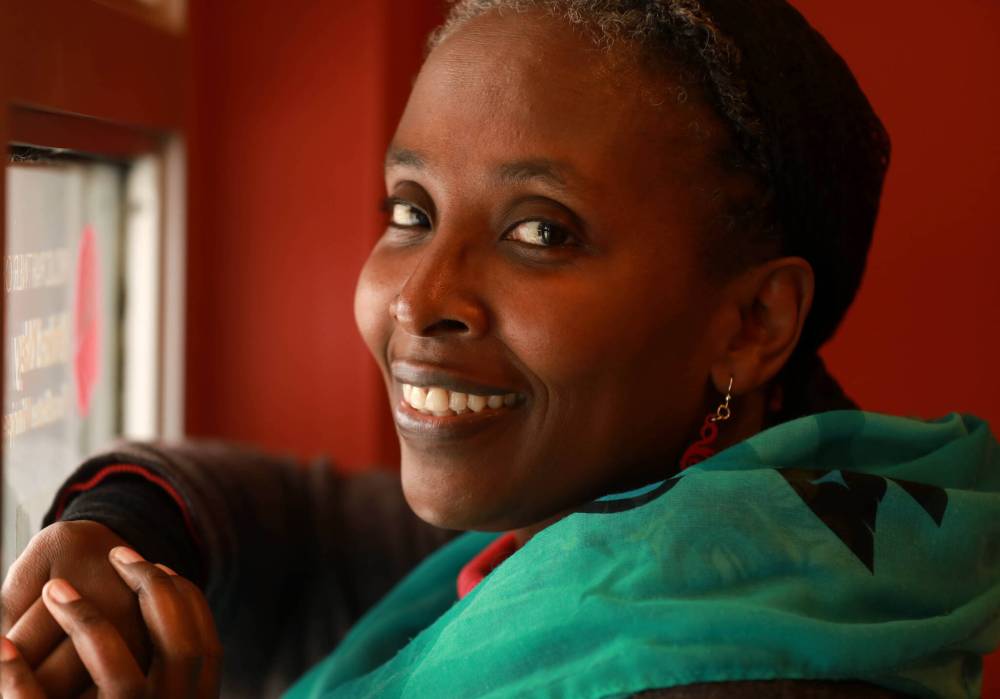
RUTH BONNEVILLE / FREE PRESS FILES
Louise Simbandumwe, co-director of SEED Winnipeg, an organization that helps low income Manitobans build skills, says the organization turns hundreds of people away.
The answer, Cutler argues, isn’t finding one organization, program or large investment capable of fixing everything.
“There was no one thing that’s led to a person who’s out on the street right now in front of me, living the life that they do,” he says. “There were thousands of little things by individuals and by systems that led there. And it will be thousands of little things by individuals and systems that will get us out of that.”
Part of convincing donors their contribution matters, however, means showing them what happens to their money.
Paul Mahon said United Way can appear to some as a “black box” — unlike other charities, the money raised for the community fund doesn’t stay with the organization. Donations are instead doled out to support more than 125 agencies that are not necessarily visible to every Winnipegger.
“There is a risk that not enough people really understand the positive impact the community fund makes each day in our city,” he said. “If every Winnipegger could have the opportunity to visit a United Way agency and see the impact, we would really grow our base. When you see the work first-hand, you can’t help but want to be involved.”
United Way says one in three Winnipeggers receives support through its network of funded agencies, with someone reaching out for help, on average, every 12 seconds.
For the agencies receiving that money, however, stable funding doesn’t mean demand is being met.
SEED Winnipeg, a non-profit that helps low-income Manitobans build skills, served more than 18,000 people last year, helping generate more than $46 million in income and benefits through tax filing and benefits navigation.
Still, the organization turns away between 100 and 200 people every week because SEED simply doesn’t have enough staff or appointments to accommodate everyone.
“It’s heartbreaking,” said SEED co- director Louise Simbandumwe. “And winter is coming. We have people that start lining up, in front of our doors, an hour early. They walked here. They bus here. And to actually have to turn them away is really challenging.”
Appointments open Monday mornings and can be completely booked within 15 or 20 minutes, she said.
Yet there are also signs of what “absolutely critical” sustained investment can accomplish.
Simbandumwe said 42 per cent of SEED’s staff and 57 per cent of its board members are former program participants, while others have gone on to lead community organizations or work for the funders that support them.
Much of United Way’s contribution to those organizations happens behind the scenes. Unlike grants restricted to a particular project, much of its support is flexible core funding, generally committed for three to five years.
Cutler said that stability allows organizations to keep operating when government or foundation grants fall through while giving them flexibility to respond to changing needs.
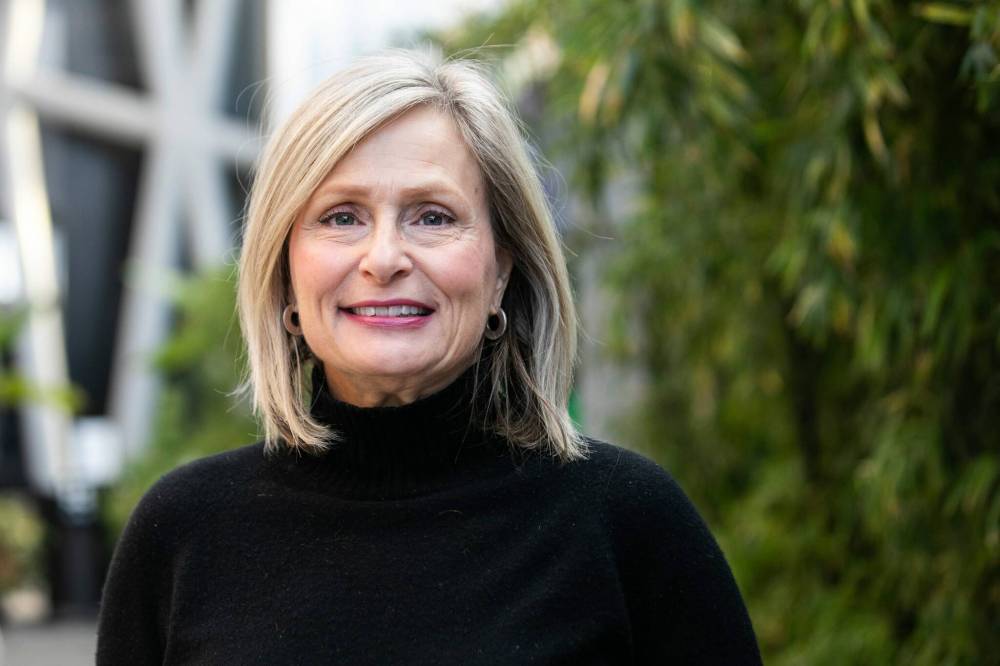
MIKAELA MACKENZIE / FREE PRESS FILES
Anne Mahon does not believe people’s willingness to help others has diminished.
“A lot of executive directors have shared that this means they can sleep well at night knowing that if the three applications they have in for funding from a government or a foundation don’t come through, they know that they can at least keep the doors open tomorrow because of United Way funding,” he says.
At Teen Stop Jeunesse, executive director Kelly-Anne Reyes knows what that stability can accomplish over the longer term.
United Way’s funding is a “game changer,” she said, allowing the Winnipeg youth drop-in centre to direct money where it is most needed, retain staff and build relationships with young people. About 90 per cent of its employees are former participants in its programs.
Reyes said the impact is ultimately measured in the people who walk through the agency’s doors.
“We’re only as strong as the person that’s struggling the most, in my opinion,” Reyes said. “And so if we invest in those that need that support, we make a stronger community for all of us.”
Despite the difficult fundraising environment, Cutler and the Mahons say there are reasons for optimism.
Winnipeg continues to lead other United Way chapters across Canada in giving relative to the size of its economy, Cutler said. Hundreds of volunteers are involved in workplace campaigns, while dozens of others are helping solicit donations and organize this year’s campaign.
Winnipeg Free Press | Newsletter

“Part of compassion fatigue, and part of apathy is just feeling isolated, and what can really be done?” Anne Mahon said. “But there’s a whole lot of great things being done.”
Cutler sees the campaign as an opportunity to rebuild some of the community connections that have weakened over time.
That can mean giving what someone can afford, volunteering or simply becoming more engaged with the community.
“We just all need to do a little bit more, and if all of us do a little bit more, our city will get a whole lot better.”
scott.billeck@freepress.mb.ca

Scott Billeck is a general assignment reporter for the Free Press. A Creative Communications graduate from Red River College, Scott has more than a decade’s worth of experience covering hockey, football and global pandemics. He joined the Free Press in 2024. Read more about Scott.
Every piece of reporting Scott produces is reviewed by an editing team before it is posted online or published in print — part of the Free Press‘s tradition, since 1872, of producing reliable independent journalism. Read more about Free Press’s history and mandate, and learn how our newsroom operates.
Our newsroom depends on a growing audience of readers to power our journalism. If you are not a paid reader, please consider becoming a subscriber.
Our newsroom depends on its audience of readers to power our journalism. Thank you for your support.