
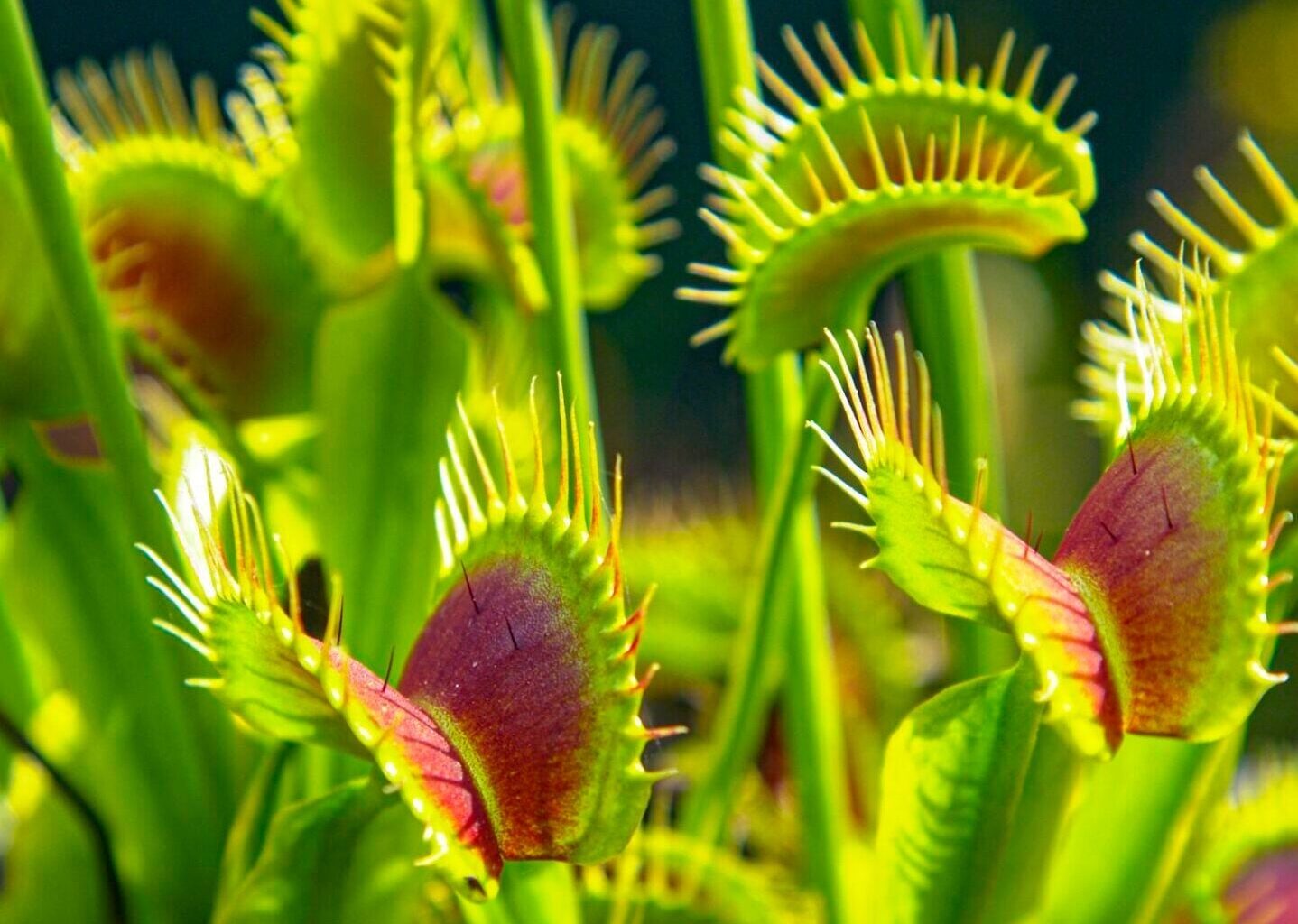
How to Grow a Venus Flytrap
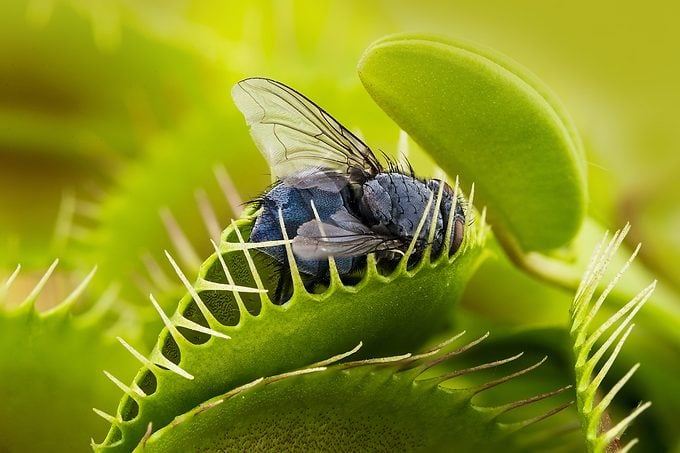 Kuttelvaserova Stuchelova/Shutterstock
Closeup of a carnivorous Venus flytrap plant
“I received a Venus flytrap for Valentine’s Day. Do you have any tips on how to take care of this carnivorous plant?” asks Birds & Blooms reader Kara Bean of Green Bay, Wisconsin.
Horticultural expert Melinda Myers says, “Grow your plant in a sunny draft-free location with temperatures of 65 to 70 degrees. Plant it in a 4- to-5-inch plastic pot filled with two parts sphagnum moss and one part coarse sand mix. Set the pot in a pan of distilled water or rainwater and maintain at least a 1-inch water level. Otherwise, water plants often enough to keep the planting mix damp but not soaking wet.
No fertilizer is needed as carnivorous plants get needed nutrients from the insects they trap or live mealworms, crickets and rehydrated blood worms that you can purchase at the pet store. My Venus flytrap helped manage my fungus gnats. Do not feed them meat or insects larger than 1/3 the size of the trap as these cannot be easily digested, and raw meat can harm the plant.
As day length and the light intensity decrease in winter, your plant may go dormant for about three months. Move the plant to a cooler location, with temperatures of around 45 to 50 degrees, stop feeding and water sparingly. Remove black leaves as they appear and resume normal care in spring. You may be able to avoid dormancy by supplementing natural sunlight with artificial lights.
Feeding Venus Flytraps in Winter
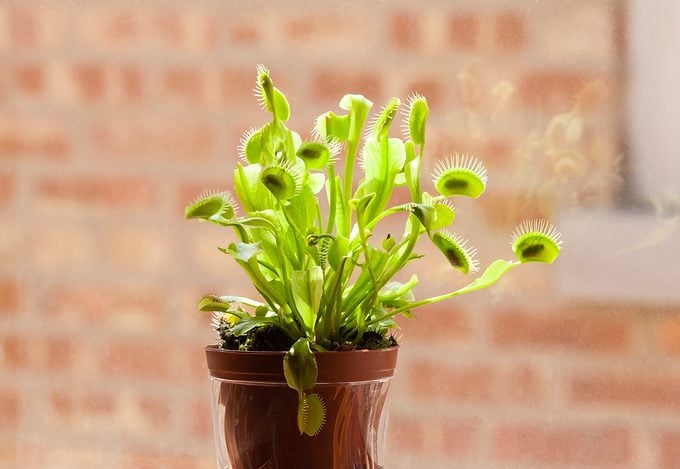 Deanna Kelly/Getty Images
Venus flytrap plant with captured flies
“How do I feed my Venus flytrap in winter when there are fewer flies? asks Birds & Blooms reader Nohemy Browand of Athens, Alabama.
Melinda says, “Venus flytraps normally go dormant as the days shorten and temperatures cool. The taller stems often die, leaving only a few small leaves or the bulb. Don’t throw the plant away. Remove the dead growth and move the plant to a cooler location such as a basement. The soil should be moist year-round but not soaked.
Feed actively growing Venus flytraps live insects that are small enough to allow the trap to fully close so it can digest the prey. Centipedes, fruit flies or beetles might be creatures that you can find in your home, even in winter. You can also purchase crickets and mealworms of the appropriate size at a pet store.”
READ ON: How to Grow a Carnivorous Pitcher Plant
About the Expert
Melinda Myers is the official gardening expert for Birds & Blooms. She is a TV/radio host, author and columnist who has written more than 20 gardening books. Melinda earned a master’s degree in horticulture from the University of Wisconsin-Madison.