
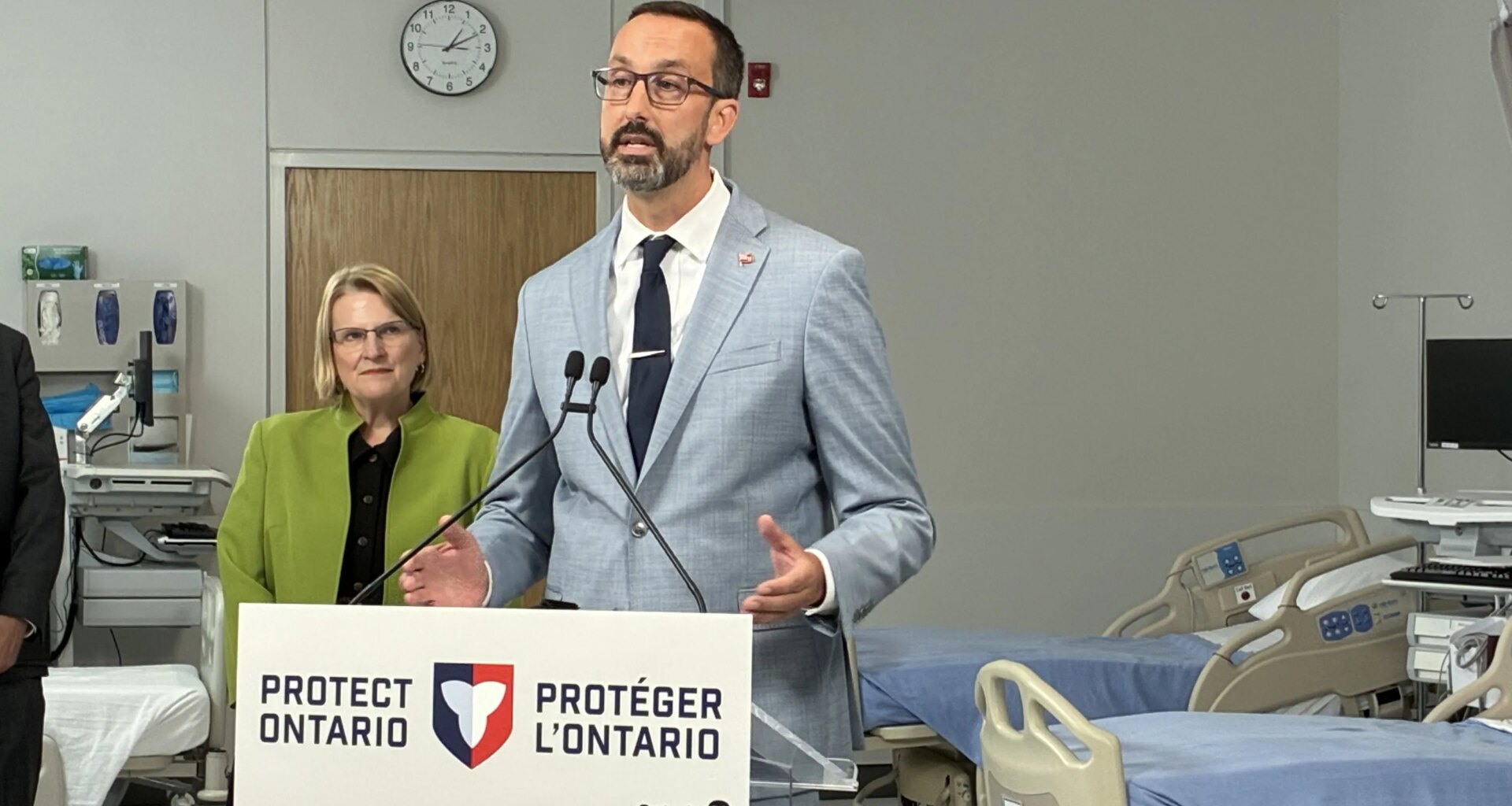
More than 2,000 Ontario medical students will have their education costs covered by the province if they commit to working as family doctors anywhere in the province for five years, two members of Doug Ford’s cabinet announced at a news conference in London.
Sylvia Jones, deputy premier and minister of health, and Nolan Quinn, colleges and universities minister, announced an additional $220 million in funding to expand the Ontario Learn and Stay Grant, launched in 2023, at a news conference Thursday at Western University. To apply, students must enrol in a postgraduate family medicine residency program at an Ontario medical school.
The funding will support four cohorts of students beginning residencies between July 1, 2026, and June 30, 2030. Eligible students will receive funding that can retroactively cover undergraduate medical-school tuition, books and other direct education costs. In return, they must commit to practising family medicine in Ontario for at least five years after completing their training.
The province estimates the program could help up to two million people become or remain connected to primary care.
“This expansion of the (Ontario Learn and Stay Grant) program is a critical part of our government’s plan to connect everyone in the province to high-quality, connected primary care,” Quinn said.
“By breaking down barriers to this rewarding profession we’re attracting the best and brightest to our health-care networks, allowing our medical students to focus on their education and bring more highly skilled, dedicated care providers to communities across the province.”
Quinn said he believes doctors who spend five years in a community will be more likely to stay as they establish families and relationships in the area. The province has seen similar results among recipients of the existing grant, he said.
“We do see that with the Ontario Learn and Stay Grant, the first version through the rural area, that they do commit to staying in that area because you create friendships, relationships, and you’re part of the community. As a family physician, they are the cornerstone of the community, so ultimately their commitment to the community will make it easy to stay in that region.”
John Yoo, dean of the Schulich school of medicine and dentistry, said the university’s history in family medicine dates to 1967, when Ian McWhinney became the founding chair of Canada’s first university department of family medicine.
“That legacy continues to shape who we are. Family medicine remains central to our mission in the belief that where and how we educate physicians should reflect the needs of the communities we serve,” Yoo said.
Western students and residents train in more than 60 communities and at more than 110 health-care partner sites across Southwestern Ontario, he said.
“When learners spend real time in a community, when they come to know its people and develop meaningful connections, they begin to see that community is not simply a place to train, but a place to belong, a place to build a life, a place where they can make a difference,” Yoo said.

Allison Young grew up just outside London and joined The London Free Press as a reporter in 2026. She is a graduate of Carleton University’s journalism and humanities program.
ayoung@postmedia.com
Editor’s Picks