
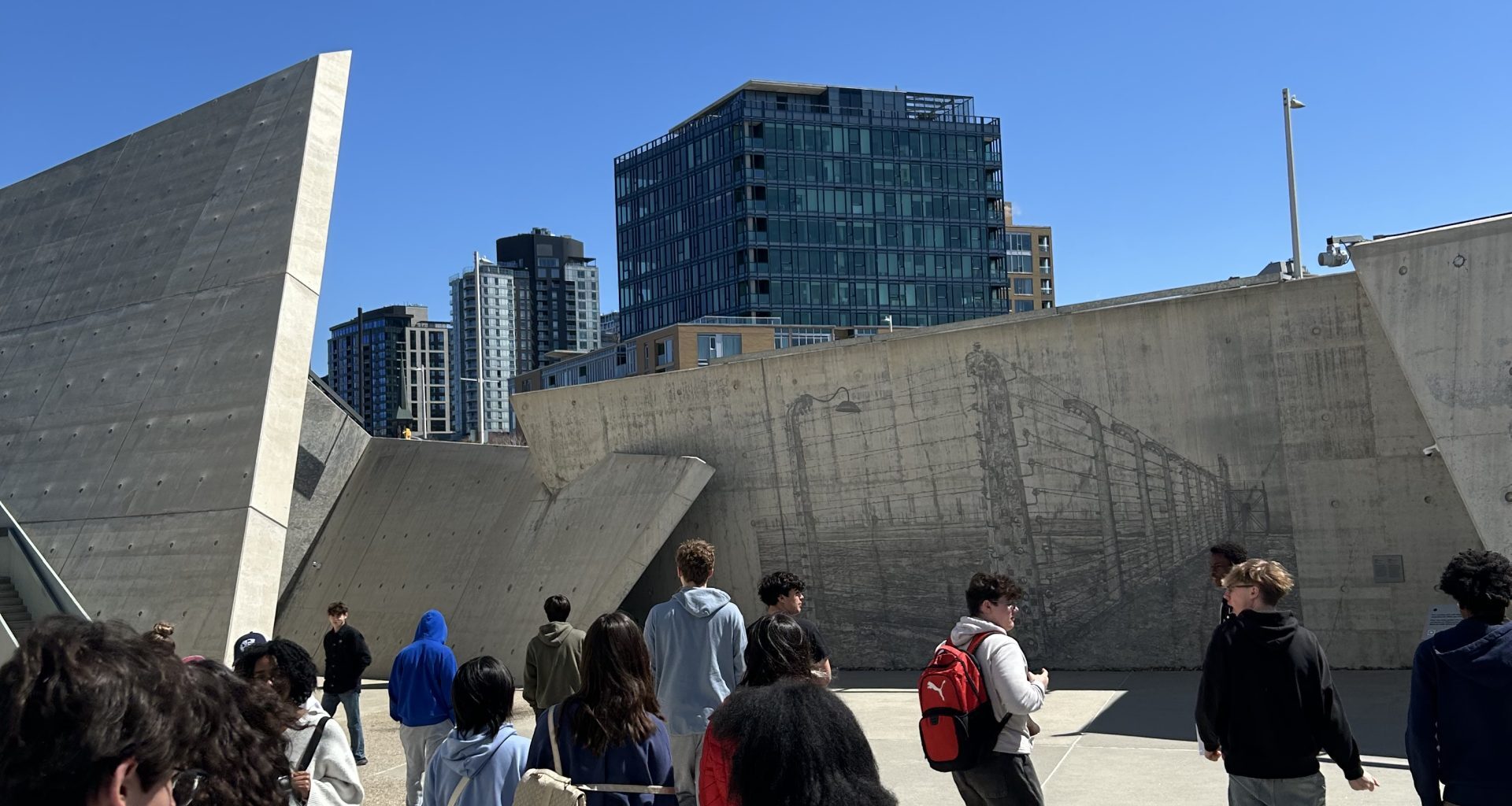
Starting this year, students across Ontario taking Grade 10 Canadian history will be required to learn about the impact of antisemitism on Canadian Jews and extreme political ideologies such as Nazism as part of their study of the Holocaust.
The province announced in November 2023 that it would enhance mandatory Holocaust education in high schools by the 2025-26 school year. Ontario delayed the curriculum change to the current school year. It also committed $650,000 to Jewish organizations to create resources and workshops that would support the new curriculum.
Ontario wasn’t the only province to announce curriculum changes related to the Holocaust. In 2023. B.C. was second to say it would make the subject mandatory by 2025, followed by Alberta, Saskatchewan and Manitoba.
Of the four, only Saskatchewan hasn’t updated its high school course. Saskatchewan’s Ministry of Education told The CJN in a statement that the added content around Holocaust education is “forthcoming” for Grade 10 social studies.
Educators and advocates for Holocaust education say the changes promote broader classroom discussions on the history of Jewish communities and antisemitism in Canada, and how European Jews were treated before concentration camps. They add that the new provincially recommended resources make the topic relatable to students and help combat misinformation.
How educators are adapting to Grade 10 history changes
The 2026-27 Ontario curriculum for the Canadian History since World War I course says educators must help students analyze the Holocaust’s impact on European Jewish communities, how Canadian people and governments responded, and the impacts of antisemitism on past and present Canadian Jewish communities. Educators must explain how the Holocaust impacted Canada’s attitudes towards human rights.
“They focus a bit more on antisemitism, on the Jewish community at large, and on the ‘-isms’: fascism, Nazism,” Shimon Krupnik, education manager at the Toronto Holocaust Museum, says of the enhanced parts of the curriculum.
“These are intended, I think, to round out a bit more of what it is that we should be teaching surrounding the Holocaust,” he continues. “In some ways, this helps to identify that the Jewish community is not a community that only exists in the context of the Holocaust.”
The new curriculum also requires educators to discuss how Black people in Canada have resisted anti-Black racism and fought systemic issues, as well as the impacts of the Holodomor, a man-made famine which killed millions of Ukrainians in the early 20th century.
Daniel Maillet is a Grade 10 history teacher at the Ottawa Catholic School Board who has included Holocaust education in his lessons for years. He leads Holocaust education initiatives at St. Peter Catholic High School, including visits to the National Holocaust Monument in Ottawa.
When most students hear about the Holocaust in the course overview, Maillet says they assume it’s only about concentration camps. Instead, he’s taught students that the Holocaust is part of a “reoccurring pattern of behaviour” that continued long after the camps were shut down.
He hopes this year’s curriculum changes will bring that broader context to more Ontario classrooms.
“I’ve always explicitly taught the Holocaust as a standalone unit to make sure it doesn’t get overwhelmed by any other topic that we’re covering,” he says. “(Students) have to understand what the consequences of inaction are.”
Before the curriculum change, he says teachers tended to focus on the story of the MS St. Louis, a boat carrying around 900 Jewish refugees who were all refused entry to Canada in 1939.
The curriculum now includes a heavier focus on the roots of antisemitism, Maillet says. It encourages educators to explain how Canada’s perspective on human rights evolved after the Holocaust through events such as the “boat people” refugee crisis.
After North Vietnam captured Saigon, the capital of South Vietnam, in 1975, Canada welcomed around 60,000 Vietnamese immigrants. Maillet says showing students this change in perspective is crucial.
“In Grade 10, they’re only really being introduced to levels of government with the civics and careers course,” he says. “A lot of students don’t understand the concept that government gets things wrong.”
The new curriculum doesn’t require educators to undergo training or professional development sessions before teaching students about the Holocaust. Mina Cohn, chair of the Centre for Holocaust Education and Scholarship, says teachers unfamiliar with the topic risk missing antisemitism, Holocaust denial, or distortion during class discussions.
“A student could come to class and present a quote that he found on social media, and if the teacher is not aware where it’s coming from… it could cause a lot of harm,” Cohn says.
Maillet agrees with Cohn that more professional development could be offered to educators, especially because the changes are so recent.
“They were only announced mid-last year, and we didn’t see the full document until almost the end of the school year,” he says. “We’re still looking at how we can properly implement them in the classroom.”
Ontario’s Ministry of Education wasn’t available for an interview before publication.
Province mandates new subjects but leaves resources optional
The province recommends that educators use resources developed in partnership with the Toronto Holocaust Museum, Liberation75, and the Friends of Simon Wiesenthal Center (FSWC).
The museum’s 20-minute documentary Unpacking Canadian Antisemitism pulls together interviews with Holocaust survivors and Canadians who have seen or experienced antisemitism, including Jewish students at the Toronto District School Board. It’s accompanied by a lesson plan and a teacher’s guide.
Krupnik says they chose the documentary format because it communicates that survivors’ experiences were real. Interviewing students shows that discrimination against Jews isn’t only in the past.
“We are in a time with far less access to Holocaust survivors, of course. The ones who are still with us are in advanced age,” he says. “Putting a face (to events) is really important to history.”
Liberation75 founder Marilyn Sinclair says their organization was one of many Holocaust education groups called on to advise Ontario’s Ministry of Education as it updated the curriculum. She says the province handled feedback well.
“They heard us when we had issues with what was written initially, and they really were extremely open about changes that we requested,” she says.
One of those major changes involved how the curriculum covers events before the Holocaust. She says the initial examples and sample questions provided in the curriculum jumped from early 1930s propaganda and Nazi policies straight to genocide.
“There were no ghettos, there was no process. It kind of missed some of the details that really mattered,” Sinclair says.
Liberation75 designed its resources around By Chance Alone: A Remarkable True Story of Courage and Survival at Auschwitz, a memoir by the late Holocaust survivor Max Eisen. After liberation, Eisen moved to Canada where he taught tens of thousands of students about his experiences.
His memoir makes the topic approachable for a Grade 10 audience, Sinclair says, because Eisen was a teenager when he was deported to Auschwitz. She adds that being saved by a Righteous Gentile and liberated by the 761st Tank Battalion, which included mostly Black soldiers, invites a range of cultures into discussions.
“It hits a lot of the buttons that the school groups are looking for,” she says. “His story is one of resilience, and not just surviving, but thriving and contributing back.”
The organization printed around 15,000 English copies and 5,000 French translations to give to educators this school year.
Maillet plans to use the FSWC’s Testimony for Tomorrow resource to teach this year’s course. The website combines 18 video testimonies from Holocaust survivors with historical context, discussion questions and suggested activities.
“They are good resources, especially for a new teacher,” Maillet says.
These resources are optional for the new curriculum. Sinclair says educators could find great materials on their own online, but she’s concerned they might instead use “dangerous” materials in class. She adds that educators may rely on non-Canadian resources that don’t show how Canada relates to the Holocaust.
Krupnik isn’t as worried. He says it’s important to trust that educators can explore and vet resources on their own. Following the prolonged court case in the 1980s against James Keegstra, an Alberta high school teacher who was fired after teaching students that the Holocaust was a hoax, Krupnik says Canada has “made it past” intentionally harmful Holocaust education.
To Maillet, a “one-size-fits-all” curriculum with mandatory resources could make it difficult for educators to teach lessons that fit students’ unique needs. Some resources may be tough to use if they aren’t compatible with classroom technology issued by the school board, he adds.
“Every year, we have to adjust and adapt the content that we use to the students who are in front of us,” he says. “If it’s too set in stone the exact resources we have to use, I think it can also take away from the impact some very creative teachers have in this province on how it can be taught in a more meaningful way.”
Mandatory Holocaust education already in Ontario’s Grade 6 classes
At the start of the 2023-24 school year, the Ontario government updated the Grade 6 social studies curriculum to teach students about “the responses of the Canadian government to human rights violations during the Holocaust.”
Jessica Sutherland is a Grade 6 teacher at the Ottawa Carleton District School Board (OCDSB) and chair of the board’s unofficial Holocaust Educators Working Group. She says Holocaust education in her grade is different from high school because she avoids giving more explicit details about the Nazis’ crimes.
“You can teach the Holocaust without actually saying the word ‘concentration camp’ because it really is about the immigration piece—how Canadian Jews came to Canada as a reaction to World War II,” she says.
When she discusses the Holocaust in class, Sutherland explains that her paternal grandparents were survivors to bring the story closer to students’ lives.
She says many of her students can describe the need for universal human rights around education and equality using the example of Nazis’ discrimination against Jews, the LGBTQ+ community, people with disabilities, and political prisoners.
“I can only imagine within that Grade 10 level, it just continues to increase their moral compass,” Sutherland says of mandatory Holocaust education.
In a 2021 survey conducted by Liberation75, around 33 per cent of 3,600 North American youth said they weren’t sure if the Holocaust happened, or they said it was fabricated or exaggerated.
The organization then surveyed Grade 6 students in 2024 after sending 26,000 free copies of Kathy Kacer’s book about the MS St. Louis, To Hope and Back: The Journey of the St. Louis, to educators across Ontario.
Around 81 per cent of students who studied the book in class and responded to the 2024 survey agreed that the Holocaust happened, Sinclair says.
“We found that students believed antisemitism was a big problem that needed to be addressed, especially by governments, and 92 per cent of students said they wanted other students to learn about the Holocaust in Grade 6 using the book we provided,” she says.
Liberation75 continued sending the books to Grade 6 educators, reaching around 56,000 distributed copies by the end of the 2024-25 school year. The organization also translated the book to French. On average, Sinclair says educators spent six to 12 weeks teaching students about the book.
She adds that the Grade 6 curriculum offers more flexibility because educators stay with the same students all day.
“Grade 10’s a different animal. Most schools are in semester system. The teachers have very fixed time periods with their kids,” she says.
B.C. and other provinces already one year into mandatory Holocaust education
The updated Grade 10 social studies curriculum in B.C. says educators must at least cover “the Holocaust and the concept of genocide.” It offers “sample topics” educators can choose to explore with students.
Lise Kirchner, director of education at the Vancouver Holocaust Education Centre (VHEC), calls the sample topics robust. She says they’re close to the themes VHEC suggested when the B.C. Ministry of Education and Child Care consulted Holocaust education organizations in spring and summer 2024.
Making the topic mandatory for Grade 10 will ensure it remains relevant as the events become more distant, Kirchner says.
“With the loss of the eyewitnesses, the danger, of course, is that it fades into the background,” she says.
Kirchner says the province didn’t create or recommend teaching materials because B.C. high school educators are meant to have autonomy around teaching the curriculum.
VHEC filled this gap by creating the website Fragments in Focus, which connects the province’s history to the Holocaust by pulling together 160 pre- and postwar primary sources from VHEC’s collection. Testimonies from survivors who moved to B.C., certificates, books and photos join objects from the Holocaust such as clothing and handmade toys.
Kirchner says students quickly recognize the toys, which makes it easy to connect with them and use critical thinking skills.
“It’s not intimidating, and it arouses their curiosity,” she says.
Kirchner says educators were grateful for the website, but many of them were moving away from teaching with screens at the time, so they asked for physical materials. VHEC printed around 2,400 booklets based on the website. This year, Kirchner hopes to ship more than 5,000 booklets to B.C. schools.
Alongside the booklets, VHEC hosted almost 30 training sessions at schools across the province to improve educators’ knowledge of the Holocaust. Around 75 per cent of participants were surprised by what they learned, Kirchner says, even though most social studies educators in B.C. had already been teaching the Holocaust for years.
She adds that the process for teaching students about the Holocaust has changed as online misinformation has increased.
“It is less content oriented than skills oriented. We want students to learn historical thinking skills, critical thinking skills,” she says. “Rather than just having students memorize dates and names and places, we want students to understand how historical knowledge is constructed.”
Manitoba’s updated Grade 11 social studies curriculum requires students to learn about “pre-war restrictions on Asian and Jewish immigration” and the Holocaust as part of its section on how the Second World War impacted Canada.
Belle Jarniewski, executive director of the Jewish Heritage Centre of Western Canada, was a consultant for Manitoba’s Ministry of Education while it was updating the curriculum. She says the ministry accepted her suggestion to base its 40-page Holocaust education guide on a guide made by the International Holocaust Remembrance Alliance (IHRA).
When Manitoba’s guide was published online in November 2025, Jarniewski noticed that IHRA and its document were never mentioned. According to Jarniewski, the Minister of Education and Early Childhood Learning, Tracy Schmidt, said she was advised to remove all references to IHRA. Jarniewski says Schmidt admitted she hadn’t read IHRA’s guidelines.
“It’s just mind-boggling that a province that adopted the IHRA definition (of antisemitism) somehow has a problem with a pedagogical document. This has nothing to do with the definition, even,” Jarniewski says. “I’ve been fighting this since then trying to get them to update it and include that document as a resource.”
Manitoba’s Ministry of Education declined a request for an interview.
Since the curriculum was updated, Jarniewski has organized professional development seminars to teach more than 400 Manitoba educators how to use the ministry’s guide. She also covers the history of Manitoba’s Jewish communities and recommends IHRA’s resources. Two sessions were held in Winnipeg and Brandon.
“With all of the Holocaust distortion and antisemitism that we’re seeing, it’s gratifying to see that there are so many teachers out there that still see the real importance of teaching about this, and also about learning about who we are,” she says.
One attendee later asked if Jarniewski could bring the professional development session to educators in Killarney. So, Jarniewski’s team made the nearly three-hour drive southwest of Winnipeg for a third session on Sept. 9.
“It would be very difficult to get even a fraction of those teachers all the way to a (professional development) session in Winnipeg,” she says. “We’ll be inviting other divisions to reach out to us if they would like us to come to them.”
Advocates for Holocaust education have lobbied the Quebec government for years to include the topic in its own high school curriculums. In 2021, more than 600 schools in Quebec agreed to make a teaching module on genocide available to educators, but Holocaust education is still not mandatory in the province.