
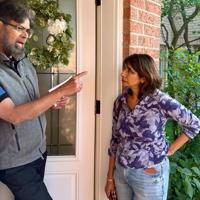
Dipika Damerla wants to be the next mayor of Mississauga, Ontario’s third largest city and the second most populous area of Greater Toronto (GTA).
More than half of Mississauga’s population — 53.2 per cent — was born outside Canada, according to the 2021 census, and the largest number of immigrants settled there in the past 30 years.
Mayors and councillors in the GTA have weighed in on international issues, including the Israel-Gaza conflict and Canada-India relations. In November 2023, then-councillor Carolyn Parrish introduced a motion calling for a ceasefire in the Israel-Hamas war.
Damerla says she would take a different approach.
“I will not be weighing in on international issues,” she said. “That is not the job of the mayor. My job is keeping residents safe, making sure there are economic opportunities, buses run on time, potholes are filled and property taxes are low.
Damerla said foreign affairs is the responsibility of Mississauga’s five federal MPs.
That doesn’t mean she wants city hall to avoid culture and religion. In 2025, Damerla introduced a motion recognizing and condemning anti-Hindu hate in Mississauga.
The motion cited temple vandalism, misinformation and online harassment surrounding local Hindu events, and harassment of Hindu students.
For Damerla, the challenge is finding common ground among communities with different cultural and religious expectations. More than half of the region identified themselves as a visible minority in the 2021 census and the majority speak languages other than Canada’s two official languages.
She recalled a request for a week of noise exemptions for Ganesh Chaturthi celebrations. She encouraged organizers to seek one day — preferably on a weekend — and to invite neighbours.
“We routinely give noise exemptions for weddings in neighbourhoods,” she said. “You ask for seven days, that is a lot on a working day.”
In an interview with New Canadian Media , Damerla said if she wins the vote for mayor on Oct. 26, she will make it easier for homeowners to build secondary units or additions by allowing an engineer to certify that the work meets required standards.
“Letting the homeowner get the engineer to put their seal on it,” she said, would ensure the engineer takes responsibility for compliance.
She also wants to make it easier for businesses to operate by simplifying the tax structure, reducing permits and speeding up approvals. Damerla wants to streamline city processes, and she supports setting term limits for the mayor and councillors.
“As mayor, if you can’t get your agenda done in three terms — 12 years — then something is off, right?” she said.
“Term one you set the change, term two you’re executing and term three you’re hopefully harvesting and looking forward to what comes next. It’s time for fresh ideas and letting somebody else come in.”
Damerla believes term limits would encourage succession planning and give sitting councillors “more ambition to do things.”
Her proposal would challenge a long tradition of incumbency in Mississauga. Three current councillors — Sue McFadden, Chris Fonseca and Matt Mahoney — have served at least three terms.
Hazel McCallion served 36 years and 12 consecutive terms as mayor, while Nando Iannicca represented GTA’s Ward 7 — Humber River-Black Creek — for three decades.
Recent councils also show the strength of incumbency: In 2018, nine of 11 councillors sworn in were incumbents. In 2022, seven of 11 were returning councillors.
Damerla says a three-term ceiling could open the door to new candidates and fresh ideas, but she said a change like that would have to fit Ontario’s legislative framework.
On policing, Damerla says Mississauga taxpayers carry a disproportionate share of the Peel Regional Police bill. Mississauga pays 62 per cent of the regional police budget, compared with 38 per cent for Brampton.
For Damerla, that means a Mississauga-first agenda: Fewer bureaucratic hurdles, tighter costs, limits on political longevity and a focus on streets, businesses and residents.