
We’ve known for years that riders are at risk of hearing loss. Most would rather avoid looking ‘stupid’.

Dr Michael Seidman was out riding with his brother Steve one day in the 2010s when he came to a startling realisation. They were riding on a quiet stretch of road and yet, Seidman realised, the pair were having to yell to each other just to be heard over the wind noise. As an otolaryngologist (ear, nose, and throat specialist), it got him thinking: could it be that cyclists have been putting themselves at risk of hearing loss by constant exposure to loud noise?
The result of that revelation was a landmark research paper published in 2017. In it, Seidman and his colleagues found that riders can be subjected to sound pressure levels reaching as high as 120 dB on the bike – the equivalent of a jet engine taking off nearby. But even riding at 10 miles per hour (16.1 km/h) can generate wind noise of up to 85 dB – enough that it could start doing damage after a prolonged period.
“Riding at 10 miles an hour for an hour is technically causing some potential hearing loss,” Dr Seidman told your present author in 2017. “My analogy is if you smoke one cigarette you’re probably not going to get lung cancer; if you smoke three packs of cigarettes a day for 30 years you probably are, right?”
Seidman’s recommendation at the time was that cyclists should consider wearing ear protection during “prolonged rides” to “avoid potential noise trauma”.
Seidman completed his research in a lab, but at the time he suggested that a logical follow-up would be to do similar research out on the road, potentially using dosimeters to check a rider’s accumulated noise exposure over time. But almost a decade on from Seidman’s paper, there’s been almost nothing in the way of follow-up research when it comes to cyclists.
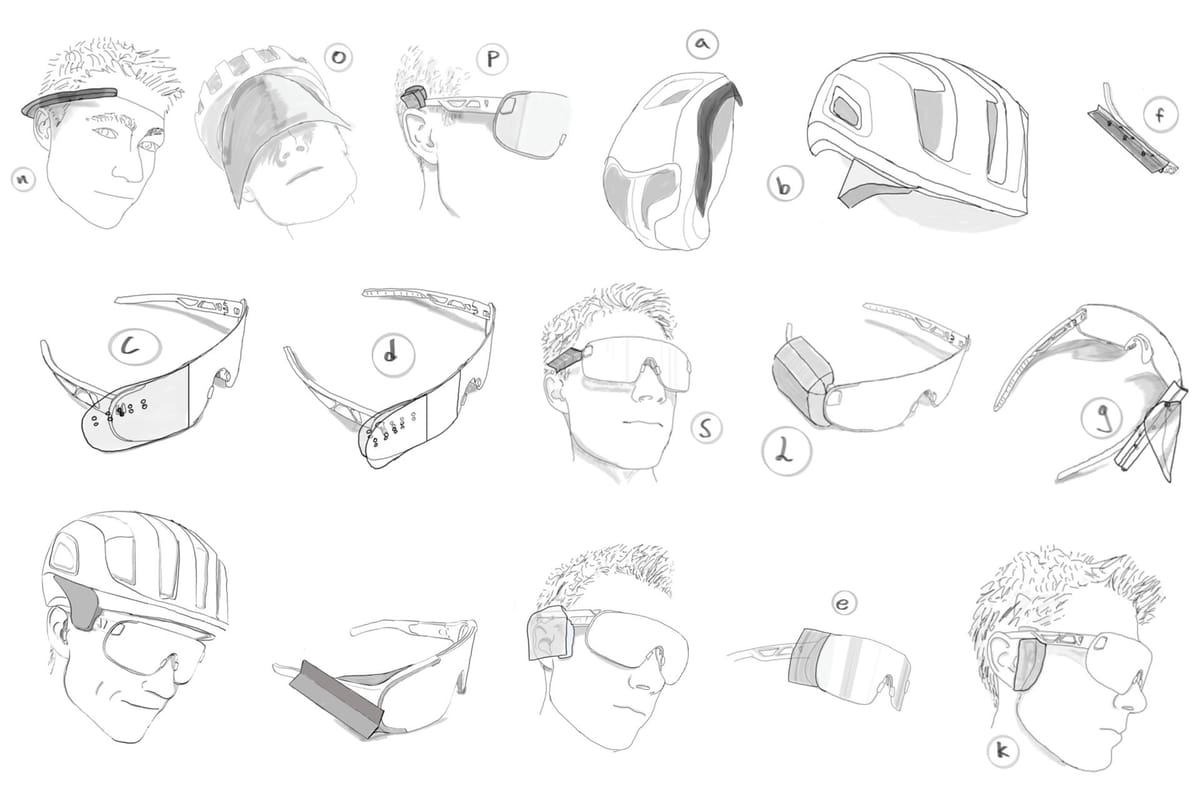
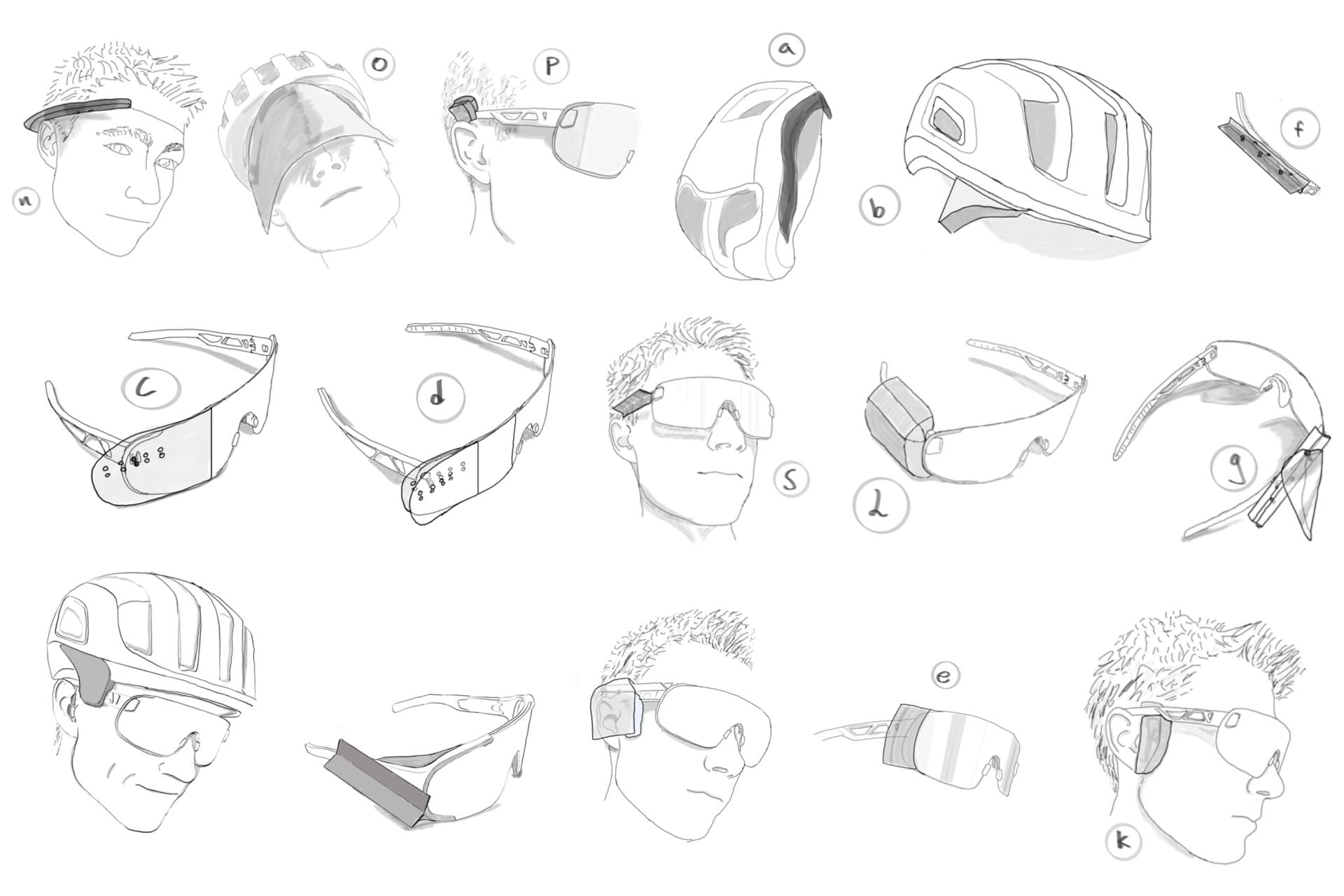
In that context, a recent master’s thesis out of Sweden is particularly interesting. Written by Linköping University student Oskar Norlén as part of a collaboration with accessories brand POC, the paper focuses on developing new technological solutions to reduce wind noise for cyclists.
Effective, but ugly
Solutions to cycling’s wind-noise exposure problem have existed for decades now, with Cat-Ears being the most well-known brand in this space. Since 2012 the American company has offered a range of products that attach to a rider’s helmet straps to reduce turbulence around the ear, and therefore reduce wind noise. Various other brands exist, including Wind-Blox, which employs a similar method of disrupting otherwise-problematic air flow.
Most of these solutions are demonstrably effective. Cat-Ears claims that its offerings can reduce wind noise by as much as 75% while Wind-Blox claims reductions beyond 80%. You need only place a finger or two in front of your ears while riding to see how effective such designs can be.
 Both Cat-Ears and Wind-Blox (pictured) attach to a rider’s helmet straps. (Image: Wind-Blox)
But while effective technology has existed for a long time, Cat-Ears, Wind-Blox, and comparable brands continue to run into one significant problem: many riders don’t feel that furry bands of foam attached to their helmets fit with the sleek aesthetic they associate with road cycling.
When Escape Collective co-founder Wade Wallace posted a thread in the Escape community forums about looking for new on-bike ear protection, the responses told the story. “I tried the CatEars,” wrote Charles Wiley. “They definitely helped, but I couldn’t get past how stupid I looked.” Reddit user WanderMyLove shared a similar sentiment in a discussion a few years ago. “I got the [CatEars] AirStreamz and they work well for blocking out wind noise,” they wrote. “Downside is that there’s no way to ‘look good’ while wearing them.”
So when Norlén began working on his master’s thesis, he knew, as a cyclist himself, that aesthetics needed to be a significant focus. “I found the wind noise in cycling way too loud, and the cycling-specific solutions way too ugly,” he wrote. “Existing solutions can reduce wind noise but are limited by poor aesthetics and integration. A successful concept should combine effective noise reduction with discreet design, comfort, and maintained situational awareness.”
This post is for paying subscribers only
Subscribe now
Already have an account? Sign in
Did we do a good job with this story?
👍Yep
👎Nope