
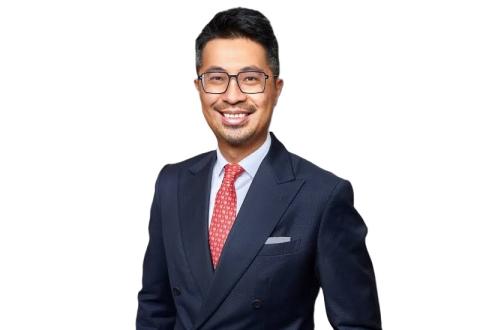
As Asian private wealth becomes more international and multi-generational, families are looking beyond near-term investment performance when selecting a private bank. Financial strength, continuity of ownership, investment discipline and the ability to support succession are increasingly important parts of the assessment.
For Alfred Low, Chief Executive Officer of Hong Kong and Head of North Asia Markets at Lombard Odier, these priorities align closely with the firm’s proposition. He positions the independent Swiss wealth and asset management group around institutional stability, discretionary portfolio management (DPM), long-term relationships and the transfer of wealth between generations.
Key Takeaways
Lombard Odier combines independent ownership and Swiss heritage with a specialist focus on wealth and asset management.
DPM remains a central differentiator, supported by a disciplined investment process and long-term approach to risk.
Low sees Greater China clients placing more emphasis on succession, legacy and next-generation preparedness.
The North Asia strategy centres on selective hiring, stronger wealth planning capabilities and technology that enhances rather than replaces personal advice.
A Specialist Swiss Model for Asian Wealth
Founded in Geneva in 1796, Lombard Odier remains solely owned by its Managing Partners. Its specialist model is focused on wealth and asset management, reflecting its longstanding focus on serving private and institutional clients. The group reported a record CHF239 billion in assets under management as of 30 June 2026.
For Low, the ownership structure is not a historical curiosity but the foundation of the client proposition. “We are owned and managed by our Partners, so we are able to take decisions for the next generation rather than the next quarter,” he says. “In a period of geopolitical uncertainty and volatile markets, clients feel that difference.”
He believes this model has particular relevance now, as wealthy families increasingly reassess not only their portfolios but also the institutions at the centre of their financial arrangements. In that environment, he sees ownership stability, financial resilience and the ability to take decisions without short-term shareholder pressure as meaningful advantages.
The proposition is also designed to support relationships that extend beyond one market cycle or one generation. Rather than framing private banking principally around transactions, Low presents Lombard Odier as an investment and advisory partner for families seeking to preserve, manage and eventually transfer substantial wealth.
Investment Discipline Through DPM
Discretionary portfolio management is one of the clearest pillars of Lombard Odier’s offering in Asia. Under this model, investment decisions are delegated within an agreed mandate reflecting the client’s objectives, time horizon, liquidity needs and tolerance for risk. The firm’s approach combines strategic asset allocation, tactical investment decisions, ongoing monitoring and institutional risk management.
“The purpose of DPM is not to eliminate volatility – no one can promise that,” Low explains. “It is to give clients a structured process that stops them making the wrong decision at the worst moment. The value of that discipline becomes most visible when markets are difficult.”
He links this proposition to Lombard Odier’s experience across numerous financial and geopolitical crises over more than two centuries. The strength of the DPM franchise has also received external recognition including Asia’s Best for Discretionary Portfolio Management at the Euromoney Private Banking Awards 2026, Best Discretionary Portfolio Management at the 2026 WealthBriefing Asia Awards for both Asia and Greater China, and Best Pure Play Private Bank – Discretionary Portfolio Management at the 15th Asian Private Banker Awards for Distinction 2025 in March this year.
Low nevertheless sees DPM as more than an investment product. “A mandate with clearly documented objectives gives a family continuity,” he says. “When responsibility passes from the wealth creator to the next generation, the framework is already in place – the discipline does not depend on any one individual.”
From Wealth Creation to Family Continuity
Low sees client priorities in Greater China evolving. “In the past, the first conversation was almost always about returns – where is the next opportunity,” he reflects. “Those questions have not gone away, but today families are just as likely to ask about succession, legacy and whether the next generation is ready. That is a significant shift.”
This changes the role expected of a private bank. Portfolio management remains essential, but families may also require support around governance, communication, ownership transition and the preparation of younger family members. Lombard Odier draws on its own history as a partnership that has transferred leadership across successive generations – a credible basis, Low believes, for discussing long-term stewardship with entrepreneurial families, although each family’s circumstances and internal dynamics remain different.
The next generation is a particular focus. Lombard Odier already brings younger clients together through educational and networking programmes, and is developing more personalised formats that can introduce individual family members to investment frameworks, portfolio construction and the responsibilities associated with managing substantial capital.
“Succession is not only a legal exercise,” says Low. “You can have the best structures in place, but the real question is whether the future decision-makers understand the assets they will inherit, whether the family can communicate, and whether the next generation is prepared to take responsibility. That is where we spend a lot of our time.”
Selective Growth in North Asia
Low joined Lombard Odier in September 2025 as Chief Executive Officer of Hong Kong and Head of North Asia Markets. He previously led North Asia markets and strategic partnerships at Indosuez Wealth Management, following senior Greater China and private banking roles at HSBC, Credit Suisse, UBS and Citi.
The North Asia team is continuing to expand, but Low places more emphasis on the quality and suitability of new bankers than on headline recruitment targets. “I am not chasing a number,” he says. “I am looking for experienced bankers whose clients trust them, and who can adapt to a more institutional, asset allocationmodel. The two qualities I value most are resilience and curiosity – and curiosity matters because it signals the humility to keep learning.”
Relationship continuity is an additional strength. The median tenure of the banking team is more than ten years, while most bankers have over 20 years of private banking experience. Low sees that stability as valuable in a business where clients expect advisers to understand complex personal, financial and family circumstances over long periods.
Technology Supporting the Adviser
Technology is another important part of the strategy, with artificial intelligence (AI) being integrated across the organisation and into the information available to advisers.
“There is a difference between adopting AI tools and using them to achieve real transformation,” Low argues. “Our objective is that technology makes the adviser faster, better informed and more personal – able to reach clients through the channels they prefer. It will not replace the banker. Complex family decisions and difficult markets will always require judgement, context and reassurance.”
In Low’s assessment, the future model will combine stronger digital capabilities with highly personalised human advice. Technology will change how information is produced and delivered, but trusted relationships will remain central to high-end private banking.
Key Priorities
Adding the Right Talent
Lombard Odier intends to continue expanding its North Asia team selectively. Low is prioritising experienced bankers with strong client relationships, resilience, curiosity and the ability to operate within a long-term advisory model.
Strengthening Wealth Planning
The firm plans to bring wealth planning and next-generation preparation further to the forefront. This includes helping families improve communication, prepare future decision-makers and develop a more structured approach to intergenerational wealth.
Translating Technology Into Client Value
Low wants the firm’s investment in AI and digital capabilities to produce practical improvements in adviser productivity, personalisation and the delivery of information to clients.
Into the Future
Looking five to ten years ahead, Low expects AI to reshape the mechanics of private banking without removing the need for experienced advisers. Technology should automate more administrative work, improve access to information and support increasingly personalised analysis. At the same time, clients will have greater access to investment research and digital advice independently of their banks.
“Clients will arrive better informed than ever before,” Low predicts. “That raises the bar for the relationship manager. Bankers will have to demonstrate value through judgement, experience and a real understanding of the family – not through access to information, because everyone will have that.”
Low believes advisers who combine trusted relationships with the effective use of technology will remain highly valuable. The human element will be particularly important when clients are navigating market stress, succession or difficult family decisions.
Getting Personal With Alfred Low
Born and educated in Singapore, Low graduated from Nanyang Technological University with a Bachelor of Business Studies (Honours). He began his career at Singapore’s Ministry of Trade and Industry before moving into private banking.
Education has remained important throughout his career. Low has lectured at Nanyang Business School across two separate periods and sees teaching as a practical way to share his experience and contribute to the development of younger professionals.
Outside work, he values time with his wife and son and has taken up pickleball since moving to Hong Kong. He has also been struck by the city’s pace, resilience and proximity to mountains and open spaces beyond its commercial centre.