
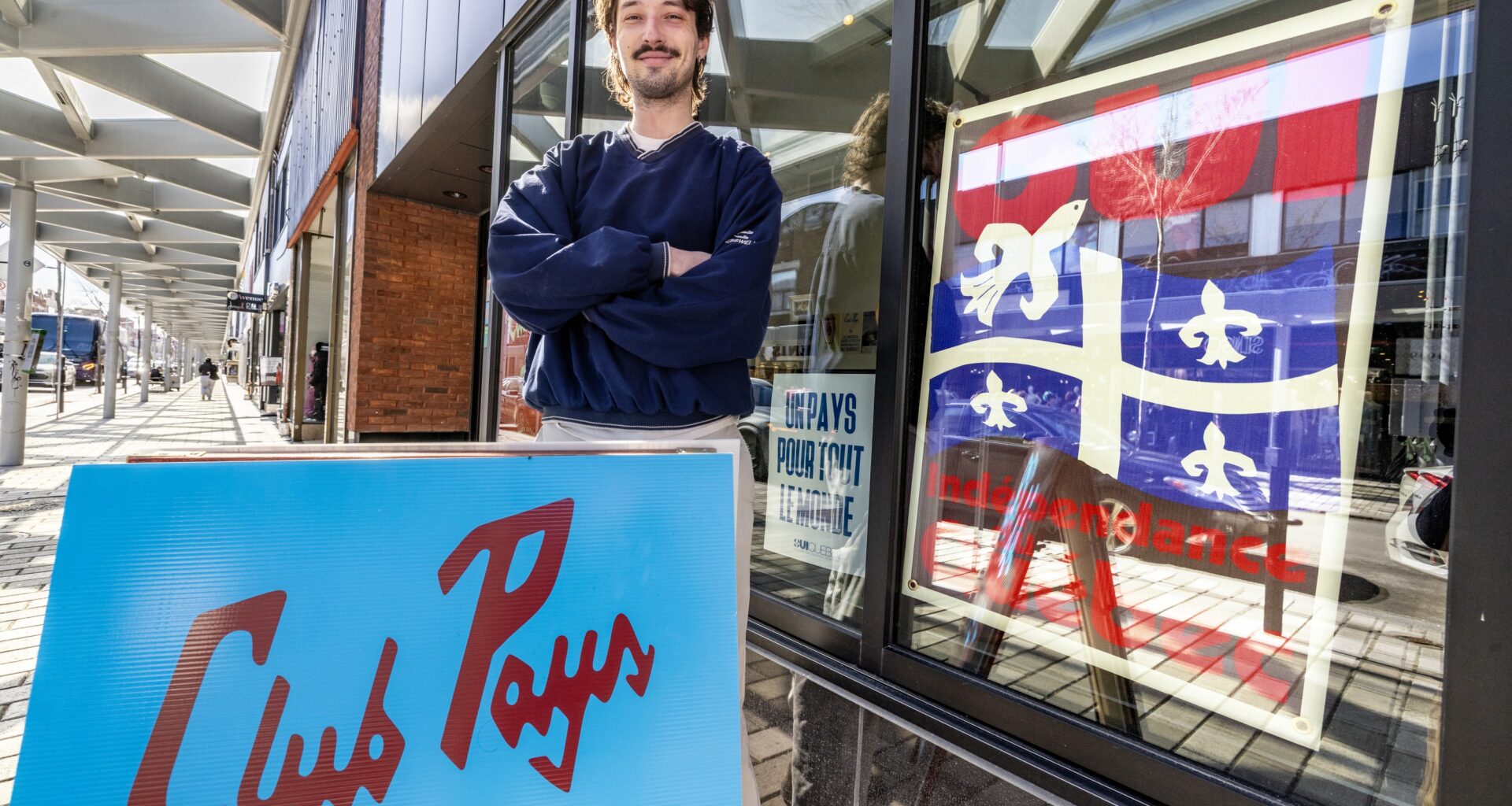
Something more than just coffee is brewing at the Club Pays café on Montreal’s Plaza St-Hubert: Quebec’s sovereignty movement.
Up and running for nearly a year, the café was opened by community group OUI Québec, whose mission is to rally civil society around the independence movement in the province. The goal? To start friendly conversations about sovereignty among patrons and passersby while raising funds to support the independence project. The target audience? Anyone who is interested.
“Nobody has to pass a test before coming in to prove they’re a sovereignist or not,” Alex Valiquette of OUI Québec said in an interview in April, sitting at the back of the café, where the walls were adorned with “OUI” signage.
“On the contrary, we’re happy when people who aren’t pro-independence come in, because it creates room for really meaningful conversations — something genuinely human. I think that’s why we need places like this: to break down some of the ideas associated with independence.”
Club Pays is just one of the ways the latest wave of young sovereignists is promoting the idea of Quebec’s independence outside of traditional politics. In music, online and over coffee, these Quebecers are simultaneously celebrating their identity and seeing independence as a means to build a better future amid growing global uncertainty — for everyone who lives in Quebec and identifies as a Quebecer.
“For me, that’s what Quebec independence is,” Valiquette said. “It’s the idea of a people taking charge of its future and deciding, together with everyone who lives in Quebec: What do we want to do together?”
Quebecers will be electing a new provincial government on Oct. 5. While the Parti Québécois — which is leading in the polls — promises to hold a referendum during a first mandate, some young sovereignists say they aren’t necessarily in a hurry and that they don’t see independence as a project stemming from one party specifically. Rather, they see it as a project that should involve all of civil society, pointing to the independence movement in Catalonia in Spain, where political parties followed the momentum rather than driving it.
Independence would be “a collective project that people can get involved in,” Valiquette said, pointing out that OUI Québec is a non-partisan, citizen-led group. “Meet other people, feel heard, say … ‘If we were to achieve independence, well, I would like this to change, that to change. This, we can improve.’”
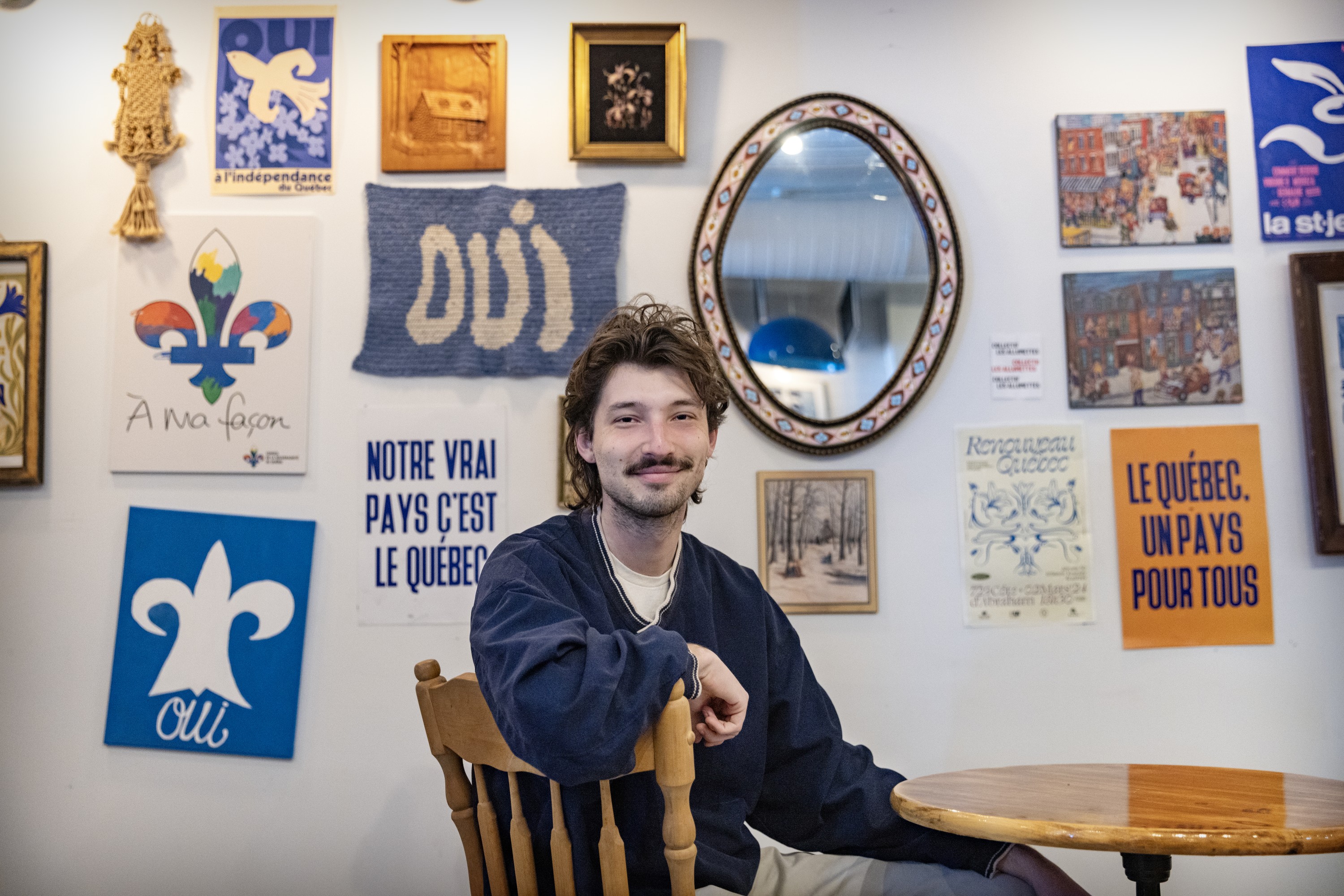 “Young people are finding their place in the world here in Quebec, creating culture, recognizing themselves in that culture and in the people who represent it,” says Alex Valiquette, shown sitting in Club Pays. John Mahoney / Montreal Gazette
That idea is shared by the Mouvement étudiant independantiste (MEI), which promotes the independence project in colleges and universities. Co-spokesperson Catherine Lamoureux-Schmidt said there has been “a great deal of momentum” on campuses in Quebec since the MEI launched in 2024.
Lamoureux-Schmidt described independence as “a bit of an umbrella cause that encompasses … many other issues that affect us, especially as young people.”
“Even if it is frightening, the future we see ahead of us is so uncertain right now that we believe it is more worthwhile to try this project than to remain in the status quo,” she said.
Often asked about polls on independence, Lamoureux-Schmidt said she wants Quebec youth to be able to speak for themselves. And that’s exactly what they’re doing: Rallying around the cause, displaying a renewed sense of pride in being Québécois both online and off.
The satirical meme page @memesfruiter, with its 120,000-plus followers, pokes fun at Quebec while simultaneously promoting its culture and the sovereignty movement on Instagram, one of the main online spaces youth occupy. Vincent Houde, who created the page a decade ago, said he feels like it serves as a bridge for younger people.
“I always say (memes are) a very effective … tool for conveying an idea in a single image and eight words,” he said. “It’s also often compared to editorial cartoons in newspapers — it’s a good way of getting a message across.”
Asked if he has noticed any changes among his audience since 2016, Houde said he felt like there was a slump when it came to the love of Quebec culture, particularly where music is concerned, but that it’s reversing.
“There are lots of young artists with more current sounds who are also promoting French-language music and Quebec culture,” said Houde, using the example of 18-year-old sovereignist rapper Kinji00 — born in Portugal but raised in Quebec — who calls himself the CEO of the new wave of sovereignty in his song Cayo Perico.
“On TikTok, we see young people who are 16, 17, 18 years old posting videos of their outfits to songs by Marie-Mai, Les Trois Accords and so on,” Houde said. “We wouldn’t have seen that in 2019. It’s as if that has also given people a certain uniqueness — feeling like they’re promoting their culture, that they love Quebec.”
I also think there’s an important inclusive discourse among young people that we carry naturally.
Alex Valiquette
OUI Québec
At a show in St-Hyacinthe on Sept. 11, Kinji00’s set opened with a string of audio clips including Jacques Parizeau’s “Nous voulons un pays et nous l’aurons” and René Lévesque’s “À la prochaine fois,” before he and his brother, LB66, came out under blue lights to a modest but unfailingly enthusiastic crowd of youth.
A testament to the uniqueness of the new wave, their songs include the occasional line in English. In the show opener Révolution pas tranquille, they rapped: “Connecté au Québec, c’est mon réseau / Encore trop jeune, jamais payé d’impôts / Mon élément, tu sais que c’est l’hydro / Oui je go up, et je keep ça on the low.”
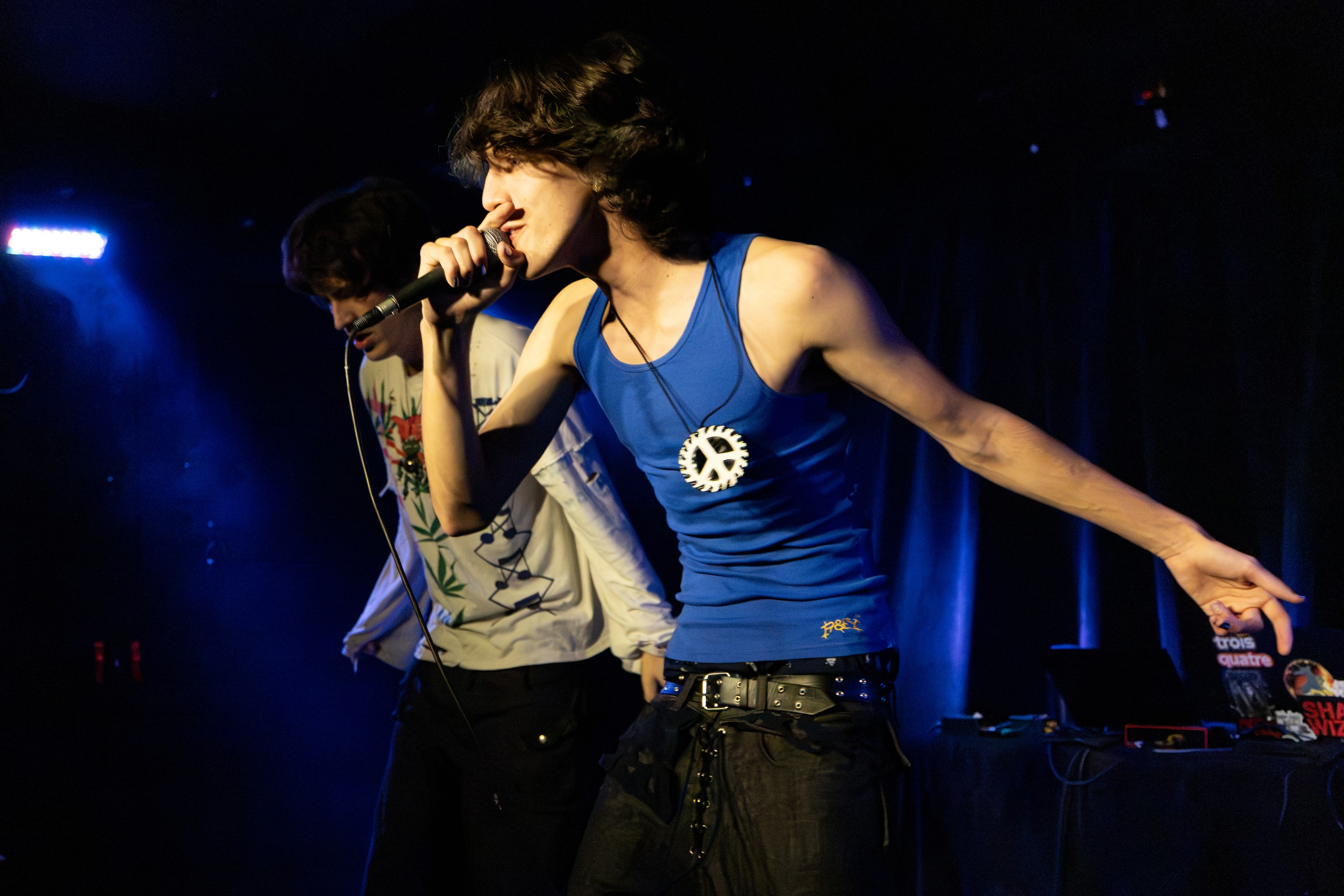 Sovereignist rapper Kinji00, right, and his brother, LB66, perform at Le Zaricot in St-Hyacinthe on Sept. 11, 2026. Tim Snow / Montreal Gazette
In the music video for the song Faded à mon show, Kinji00 designs a $20 bill, choosing longtime Québec solidaire MNA and former party co-spokesperson Manon Massé as the face. Massé took the stage with Kinji00 at his Francos show in Montreal over the summer, sporting a baseball cap on backward, shouting “Vive le Québec libre!” to a cheering crowd of thousands.
“What struck me that evening was seeing the diversity of the young people in the crowd, people from all backgrounds,” Massé, who is not running for re-election, said in an interview with The Gazette. “I think Kinji has that particular quality himself, being an immigrant. It sends the message that sovereignty can and must be achieved with young Quebecers of all origins.”
She called young sovereignists an “extremely enthusiastic group who have Quebec tattooed on their hearts.”
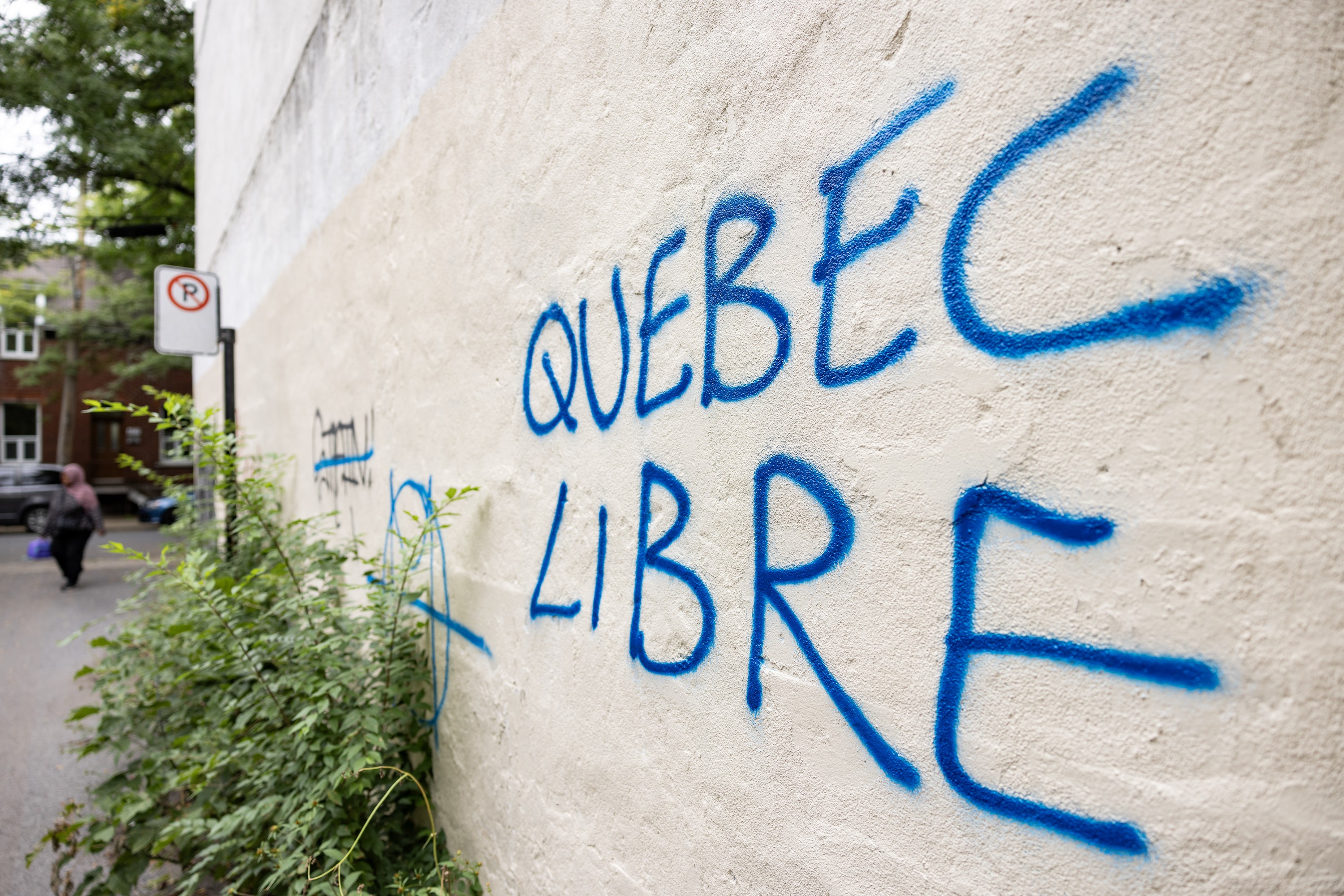 Some young sovereignists say they aren’t necessarily in a hurry and that they don’t see independence as a project stemming from one party specifically. Tim Snow / Montreal Gazette
While polls may suggest support for Quebec’s independence is at a low, Valiquette of OUI Québec pointed out earlier this year that they typically revolve around whether one would vote yes or no if a referendum were called immediately.
But “there is no project right now,” he said. “There is not something clear. People are not informed. Before a referendum, there will be citizen information sessions across Quebec; there will be debates. We will be able to debate these issues. Not just ‘referendum or not.’ The referendum is the culmination. It is a process.”
Like Houde, Valiquette feels young people are rediscovering a sense of pride in being Québécois.
“Young people are finding their place in the world here in Quebec, creating culture, recognizing themselves in that culture and in the people who represent it,” he said.
“I also think there’s an important inclusive discourse among young people that we carry naturally, because we grew up in a very diverse environment. For us, that’s the Quebec we’ve always known. I think there’s something powerful in that, and I think it’s only going to grow stronger as this generation increasingly takes its place — alongside the generations that came before it.”
Editor’s Picks