
Mehdi Badaoui
© UNIGE – Mehdi Badaoui
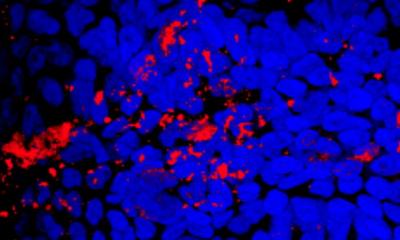
“Using 3D models of cells derived from human lungs, we discovered that prolonged connexin 43 activity alters cell communication, disrupts cell orientation, and progressively disorganises tissue integrity,” says Mehdi Badaoui, senior lecturer in the Department of Cell Physiology and Metabolism at the UNIGE Faculty of Medicine and first author of the study. “It then promotes the formation of the anchor points to which the bacteria responsible for respiratory infections attach.”
By blocking connexin 43 activity in their 3D models, the research team was able to restore cell orientation, re-establish the spatial organisation of cells, and prevent the formation of anchor points. “Mimetic peptides — short synthetic molecules already used to promote wound healing — drastically reduced the ability of bacteria to colonise respiratory cells,” explains Mehdi Badaoui.
“These findings demonstrate that the regulation of cell communication by connexin 43 is a fundamental element in maintaining pulmonary defence,” concludes Marc Chanson. “By targeting the deep mechanisms underlying airway dysfunction, our results could offer an additional treatment approach.”
Source: University of Geneva