
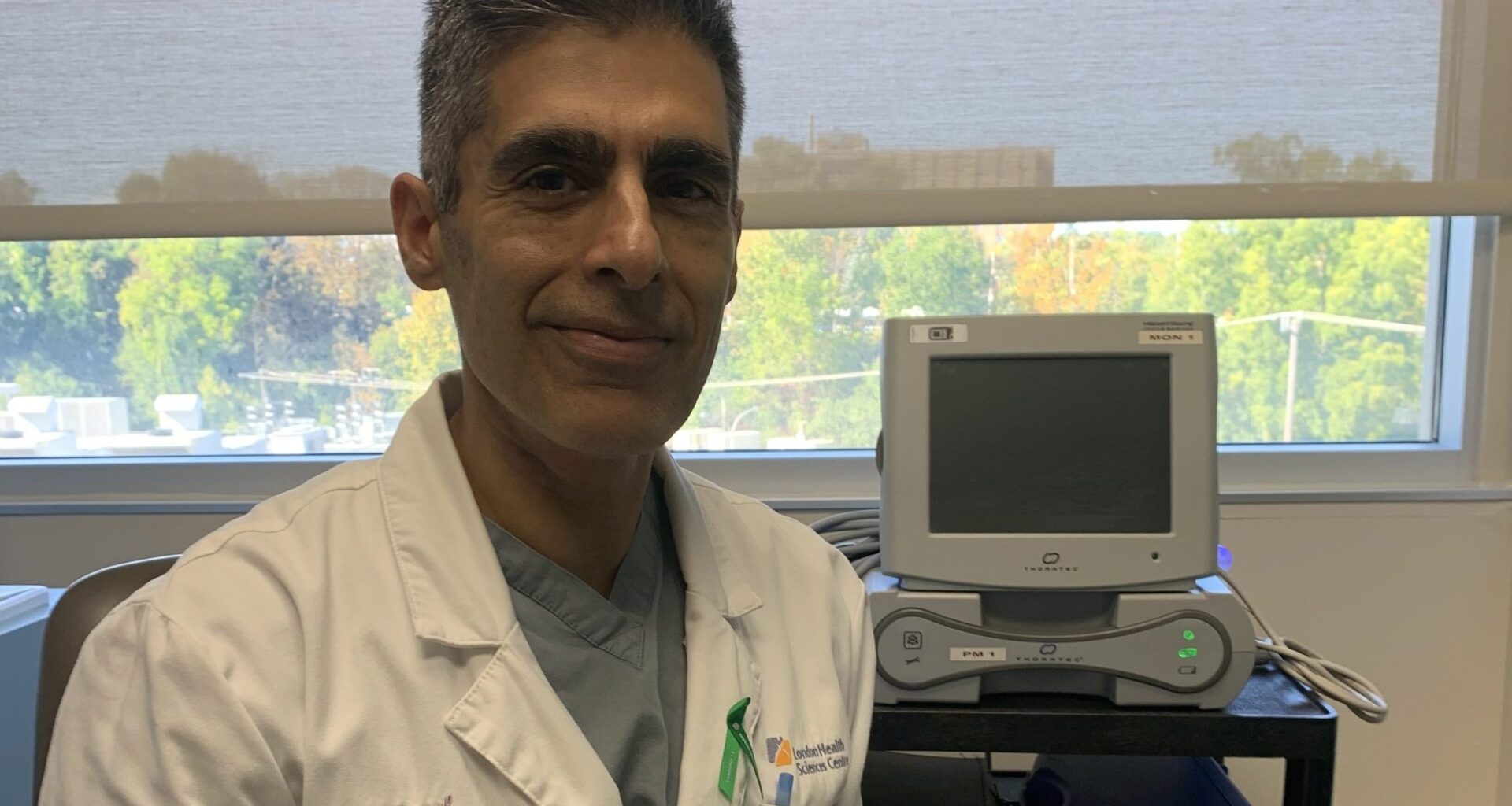
In a Canadian first, London Health Sciences Centre doctors used a portable medical device to keep a donor heart beating outside the body during a heart transplant.
In what LHSC officials are calling a “milestone procedure” that took place in February, the hospital’s transplant team used the provincially shared TransMedics Organ Care System, also known as the “heart in a box,” to transplant a donor heart into a patient.
“It’s a technology that allows us to take a heart that comes from a dead donor, literally dead, and attach it to this machine with some donor blood and restart the heart,” said Dave Nagpal, medical co-director of LHSC’s multi-organ transplant program and director of cardiac transplantation at LHSC.
Nagpal said one benefit of the organ care system is that it gives doctors real-time insight into whether a donor heart is working well and suitable for transplant.
Doctors expect the device to increase donor heart availability by about 40 per cent for people “badly needing them” on the transplant waitlist, Nagpal said. Similar technology has been used for years in other transplant procedures, including kidney transplants.
more health stories
Traditional cold storage preserves an organ on ice in a standard cooler while it is transported from one hospital to another. The heart-in-a-box system revives a donor heart that has stopped beating after circulatory death, keeping it warm, beating and perfused with oxygenated blood.
“This is the first approved technology that allows us to take that heart, put it on the machine, make sure it’s good enough for our recipient, and then go ahead and put it in,” Nagpal said.
“The standard way of doing things, if a donor wants to donate their heart, is we recover that organ, we put it literally in a bucket of ice . . . and you can only have it on a bucket of ice for about four to six hours. If you have much more than six hours, that heart won’t work well. This technology allows you to double the amount of time (to about 12 hours) that you can transport.”
The additional time allows a donor heart to travel farther to reach a recipient who might otherwise not receive a viable organ.
Heart transplantation is a highly coordinated and time-sensitive procedure requiring one team to recover and assess the donor heart while another prepares the recipient for surgery, a Thursday LHSC news release said.
The surgical team examines the donor heart, trims the major vessels to fit the recipient’s anatomy and carefully sews the new heart into place, the release said. Once complete, the team warms the patient, restores blood chemistry and gradually transfers circulation from the heart-lung machine to the new heart.
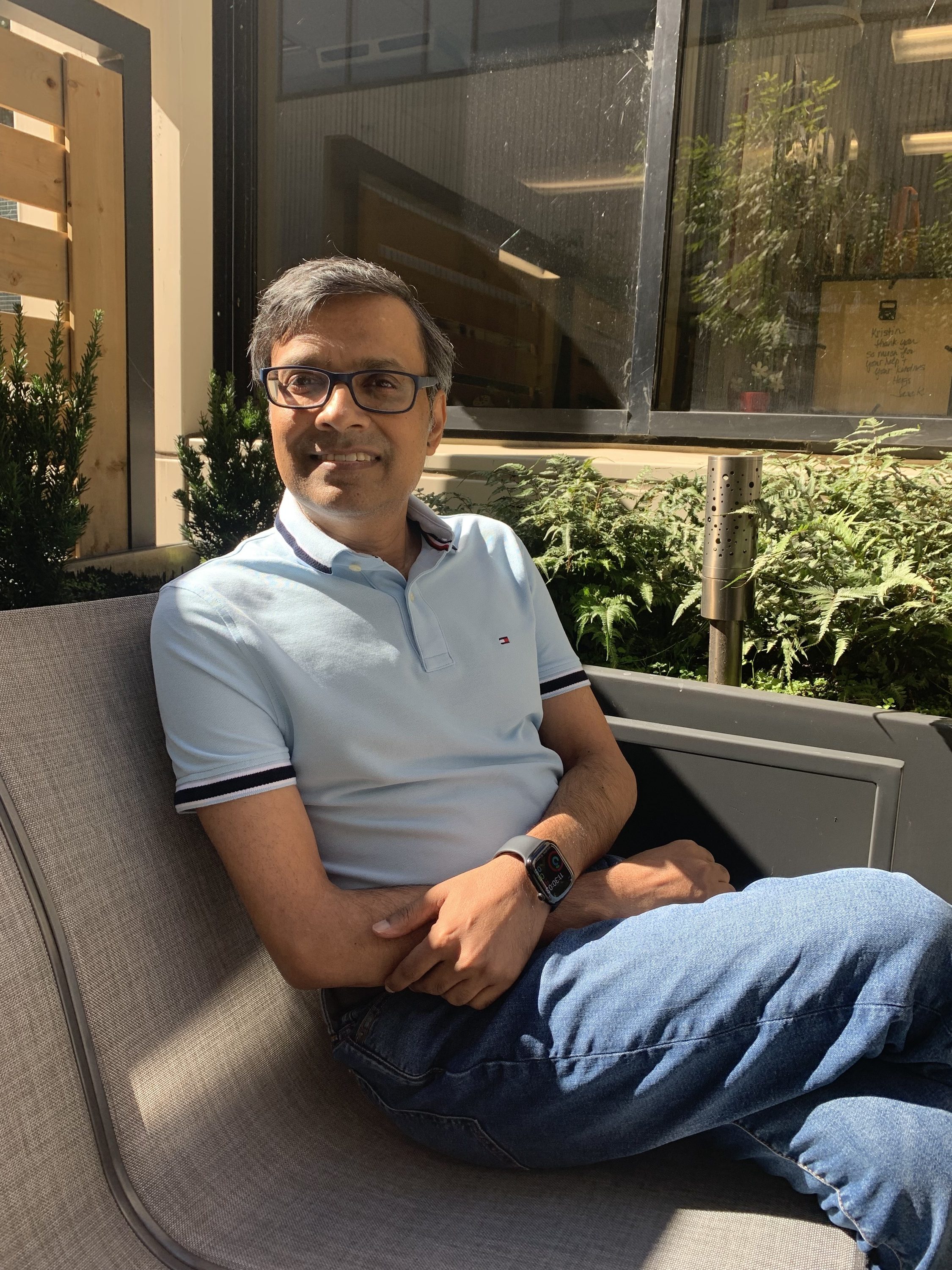 Raj Mittal, 50, was the first patient in Canada to receive a heart transplant using the TransMedics Organ Care System, also known as a “heart in a box,” which keeps a donor heart beating outside the body. (Brian Williams/The London Free Press)
Londoner Raj Mittal, 50, was the patient who received the heart transported using the heart-in-a-box system.
The father of two was working in his backyard in June 2025 when he began feeling chest pains, he said. His wife called 9-1-1 and he was taken to hospital.
“I was unconscious, and they sedated me for one and a half months,” he said.
Mittal learned after he awoke from the medically induced coma that he had suffered a cardiac arrest and all three arteries were blocked.
After undergoing triple bypass surgery, Mittal had complications, including pneumonia and kidney problems, and spent time in intensive care before being discharged in early September.
He was readmitted to hospital in early January with pneumonia and because his heart function was affecting his other organs, he said. He was presented with the option of receiving a left ventricular assist device – a medical instrument surgically implanted in the heart that helps a weakened heart pump blood to the body – or a heart transplant. He chose the transplant.
After recovering from pneumonia, he was placed on the heart transplant waitlist.
“Because of this technology, I would say within two weeks I got the new heart,” he said.
The recovery team was led by LHSC cardiac surgeon Rashma Nedadur. She travelled to the donor site, which Nagpal said was a few hours away, where the heart had been placed on the organ care system and deemed viable for transplant.
“The quality and function of the heart looked great when we arrived,” Nedadur said in a statement. “When we implanted the heart, it took off immediately.”
“I’m feeling much better,” Mittal said, noting there are some lows, but “consistently, I’m improving.”
Mittal said he hopes to be back on a bicycle by next year and return to his “normal life” before the cardiac arrest.
Nagpal, who was Mittal’s implanting surgeon, said the technology has since been used in a total of three operations, calling it “emerging.”
“I would call this technology an iterative improvement within the heart transplant system,” he said.
“This is the start of a new wave in transplantation.”

Born and raised in London, Brian Williams joined The Free Press in 2023 and has reported extensively on London and the region. His primary focuses are health care and Elgin County.
bwilliams@postmedia.com