
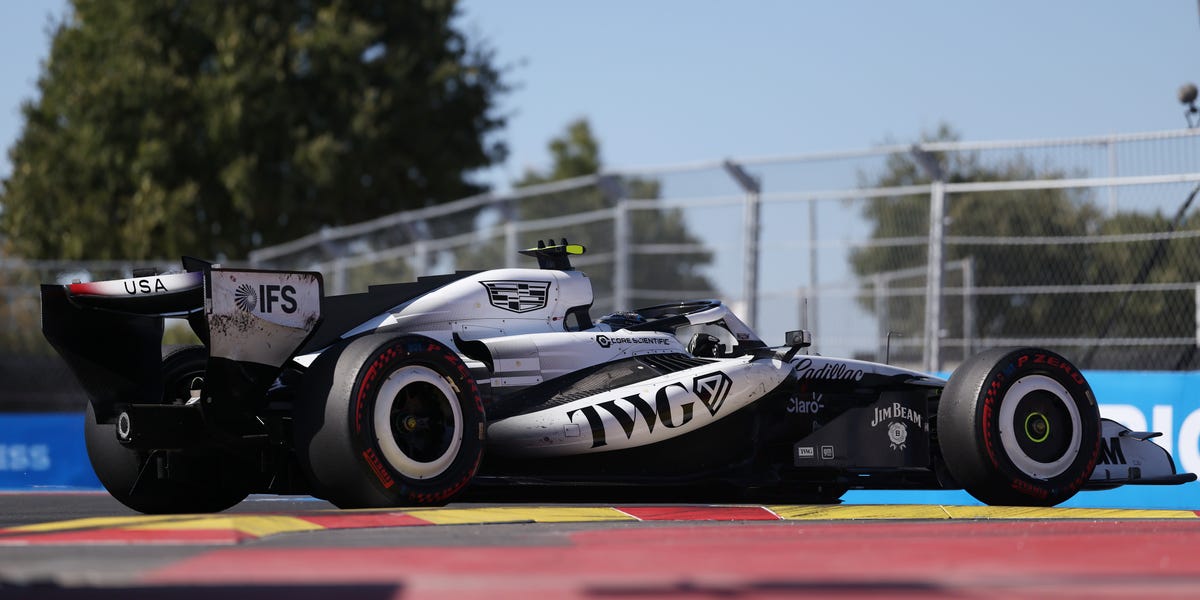
The debate over the next generation of Formula 1 engines continues to tick away in the background of the current season—and in the words of Audi boss Mattia Binotto, there is still “no clarity” on where things are going.
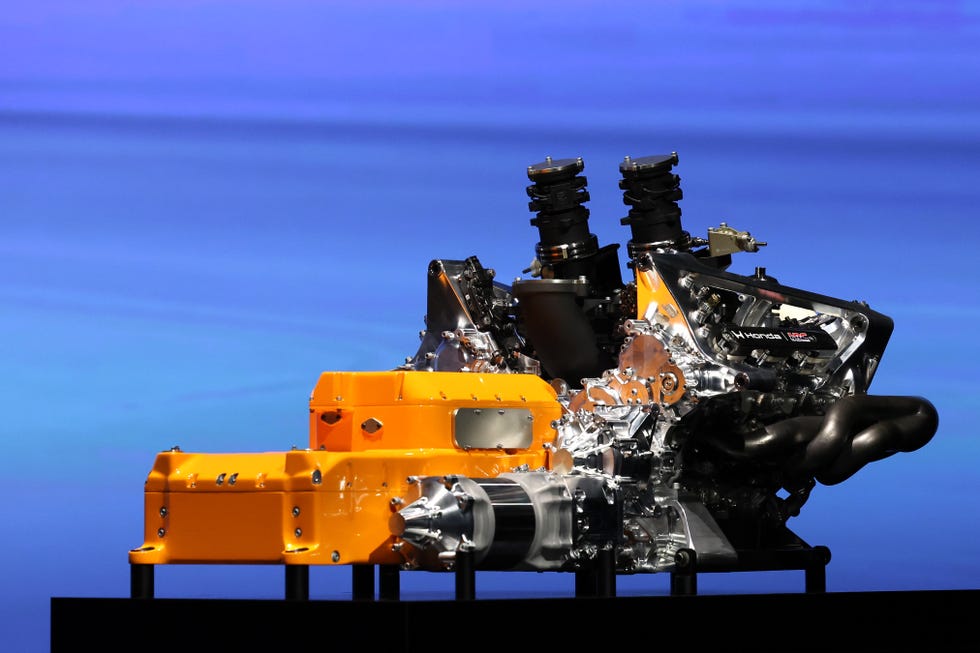
One thing is clear, and that is that F1 will return to a V-8. That means getting away from the controversial and unpopular battery-dominated technology that the sport currently finds itself stuck with. Both the FIA and F1 have made it clear that V-8s are the way forward, and the teams and manufacturers have agreed in principle.
The question marks are over the details of the new regulations, and specifically, the timing. In theory, the current format runs until 2030; after that, the FIA can pretty much write the rules it wants for 2031. However, there is a lot of momentum behind fast-tracking the change to 2030, dumping the current formula a year early.
Takashi Aoyama//Getty Images
The difficulty with that is two-fold. First, an early change needs support from all stakeholders. Secondly, while 2030 seems like it’s far away, it’s anything but when it comes to power unit design. We are fast approaching a point where the manufacturers simply would not be able to be ready for 2030. It’s a particularly big call for Cadillac; the teams intends to switch from a Ferrari supply to its own GM power unit—but does it do so under the current rules, or hold out for the V-8 era and a clean-sheet start for everyone?
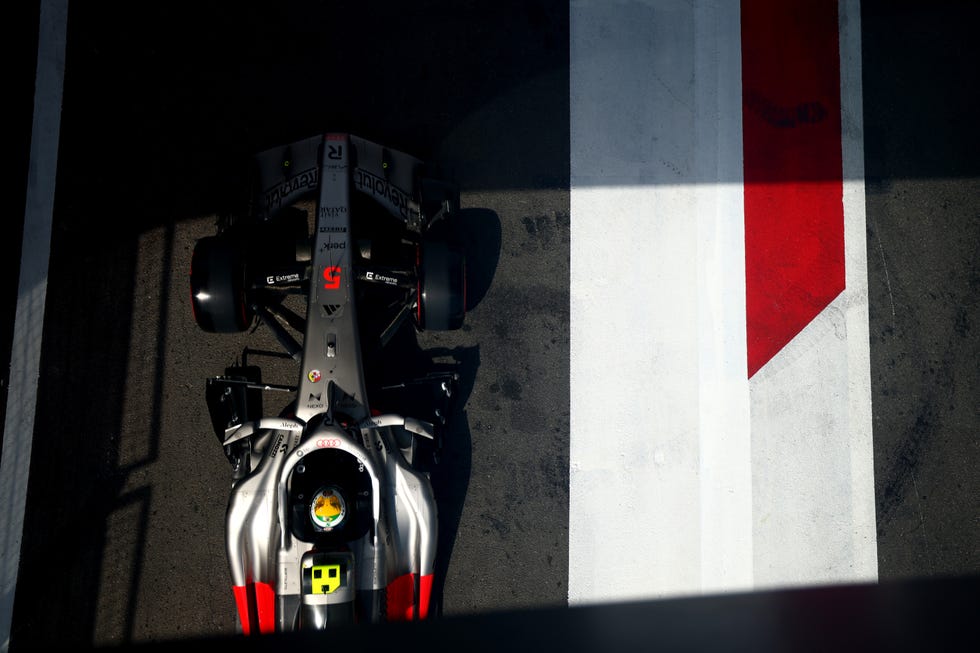
“There is no clarity yet,” Binotto said in Baku on Thursday. “So, we know that FIA is still elaborating what may be the concepts they would like to propose. We know it’s a V-8 for certain, 2030 the earliest introduction. On the timing, if it would be 2030, what does it mean in terms of starting the development? It has to be very soon. It has to be before the end of the year. I think the regulation needs to be agreed and voted before the end of the year to have certain clarities, by 2027, to start really the design and concept phase.”
The obvious aim of the change is to improve the racing, while also keeping a lid on spending—something that all the manufacturers are keen to see. “What’s the main objective we are looking at?,” Binotto noted. “I think we all agree, first will be a significant cost saving required. The current power unit is still very expensive, and we believe that having a clear target on cost would be important. When considering the format of the V-8 itself, we believe that we still need to retain some advanced technologies.”
Bryn Lennon – Formula 1//Getty Images
And that is a big part of the debate—how much tech will be part of the package, with some manufacturers wanting more than others. “I think that F1 has always been the edge of the platform for innovation, and we believe whatever will be the overall format, it has to remain a platform for innovation for all the manufacturers,” said Binotto. “So yes, welcome the V-8, welcome a better sound, welcome a cost saving. And when it comes into the details of hybrid, I would say yes, turbo, possibly yes. But all the details, I think, need to be discussed with the FIA. That’s why I think that discussion will start very soon.”
Red Bull boss Laurent Mekies, who is fighting Ford’s corner with the in-house PU project, is confident that agreement will be reached. “I think we are at the point where all the manufacturers … I don’t think we have very different ideas or very opposite ideas about what we all want from it,” said the Frenchman. “I think we want flat-out racing, flat-out qualifying. That will probably dictate the next architecture. And as Mattia said, you want flat-out racing, flat-out qualifying and retaining the technological challenge and the technological laboratories. And of course, we would like to do that also by ticking a few of the boxes.”
Mekies is confident that a consensus will be found. “I think in terms of these high level objectives, with the FIA, with F1, with the teams, I think we are all pretty aligned,” he said. “And how do you do it in the details, with the various options we have, it will be the discussion over the next few months. But in terms of what we want to achieve as stakeholders of the sport, I think we are all quite aligned.”
In the meantime, the sport has to make the best of the current regulations, which have at least three further years to run. There are already changes coming, with a greater internal combustion focus relative to the battery from 2027 courtesy of higher fuel flow. This week, it was formally agreed that races will be two or three laps shorter to create the scope to use that fuel without creating having to create bigger tank capacity, thus allowing teams to carry over their 2026 chassis designs.
Mark Sutton – Formula 1//Getty Images
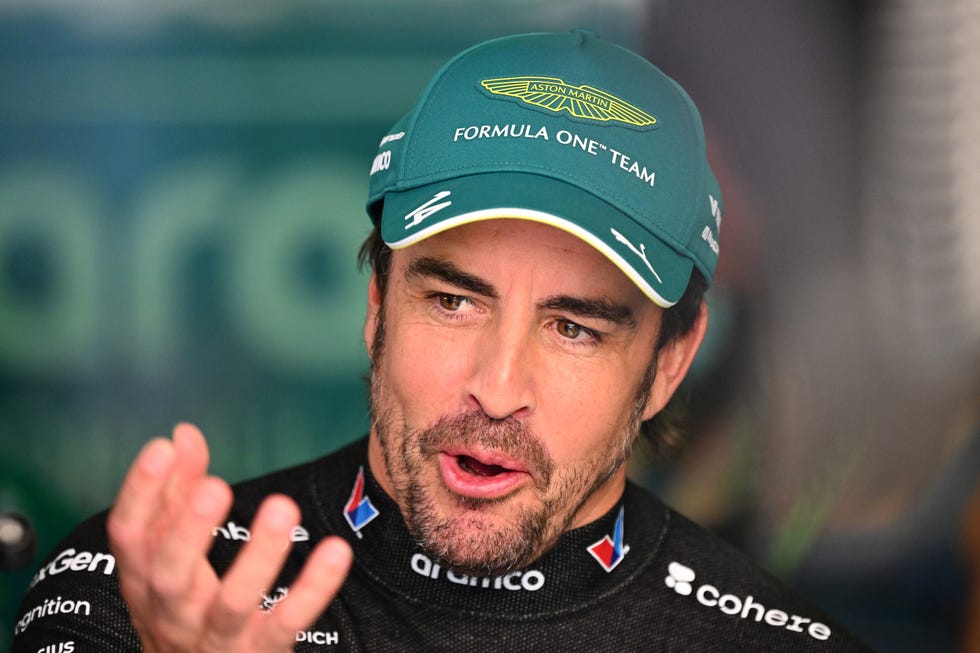
In the meantime, fierce critics of the current rules want to see even more change. Champions Max Verstappen and Fernando Alonso are among the most vocal in that group. “Next year there is a change already with the 60-40 ratio, and that I think will improve things,” Alonso said in Baku. “But maybe there are more things that we need to think about, to keep improving things. That’s the way I see it, and that’s part of my responsibility as well. I drove long enough here, and I think we all come from junior formulas, from karting, F3, F2, that we drive within this driver instinct to go fast, attacking the corners and taking some risk. And then you get to F1 and you need to rewind a little bit what you learn in the last 20 years of your career, and then you need to drive a different method. That is only happening in F1. There is no other series in motorsport that you need to drive slow to go fast…”
“The road map is a clear step forward compared to where we are here, with a rather small step next year and a significant step for 2028,” said Mekies. “As Oracle Red Bull Racing, we will support further tweaks if there is an agreement to further tweaks in the directions of flat-out qualifying, flat-out racing, which I think is what Fernando and Max were probably mentioning. Yes, we will support.”
“Obviously, what Fernando or Max said, I don’t know, needs to be evaluated,” said Binotto. “I think the concept certainly is to try always to improve the regulation. For ’27, already a significant change will happen, and I think first we need to go through that change, and see what will be the result of the changes we’ve made in terms of flat out racing, et cetera. So, I would be patient. I would wait to see first how much the changes we have, which are somehow significant, how much those changes will improve the situation, to furthermore, let me say, modify. And again, as Laurent said, we are always open for constructive discussions if further tuning would be required.”