

Listen to this article
Estimated 4 minutes
The audio version of this article is generated by AI-based technology. Mispronunciations can occur. We are working with our partners to continually review and improve the results.
The four Atlantic provinces need to work more closely together, increase investment, and shift toward exploiting the region’s natural resources if they want to reach their full economic potential.
That was the message Friday from the Atlantic Economic Panel, a group of seven CEOs and regional leaders asked to find ways to boost the regional economy.
Panel chair Don Mills laid out the group’s plan in Riverview to a who’s who of business and political leaders from the region.
One of the seven main recommendations in the panel’s report is the creation of a $1 billion Atlantic prosperity fund, which Mills said is needed to help companies grow while remaining based in Atlantic Canada.
“We have problems growing companies to scale,” Mills said.
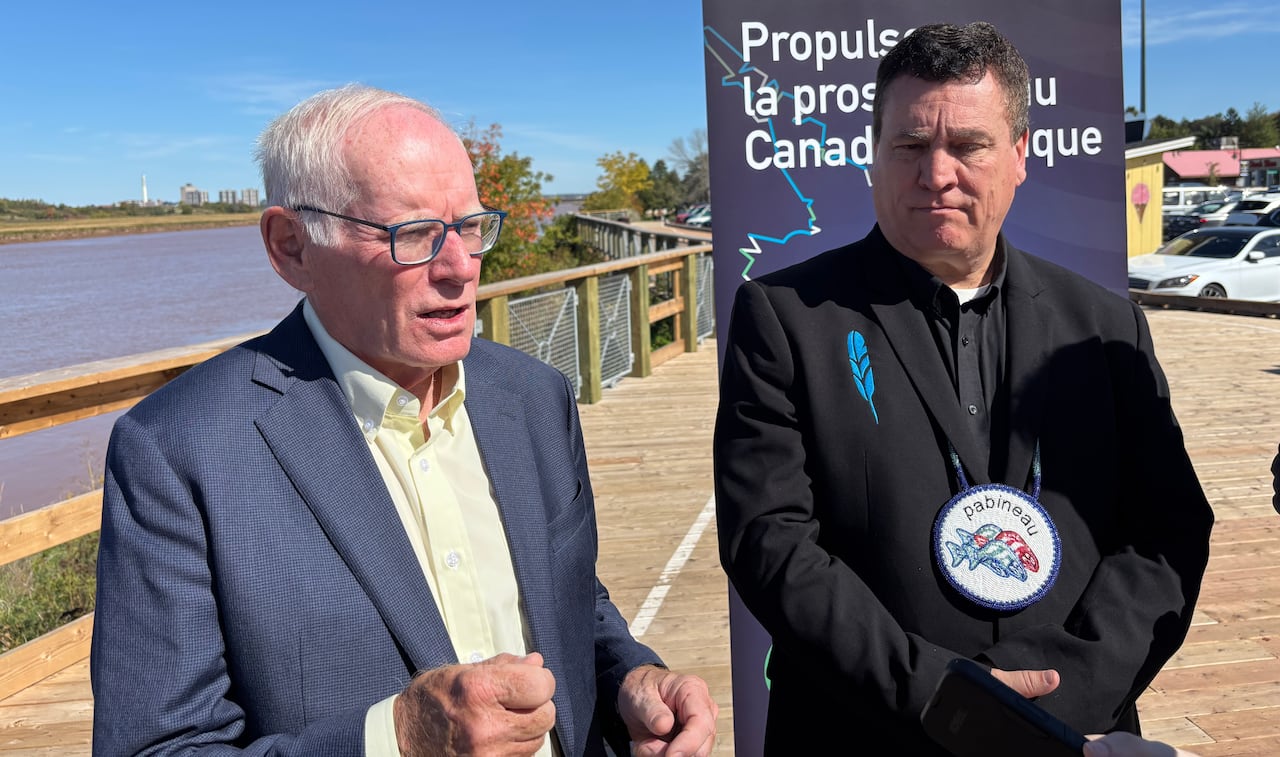 Atlantic Economic Council chair Don Mills, alongside panel member Chief Terry Richardson. (Erica Butler/CBC)
Companies looking “to get to the next level” with investments in the range of $2 million to $10 million “can’t get it here,” he said.
“And that leads them to sometimes go elsewhere.”
Sean Fraser, the federal minister for the Atlantic Canada Opportunities Agency and the instigator of the Atlantic Economic Panel, said ACOA investment programs tend to focus on smaller scale initiatives.
The fund program has drawn attention to “a shortcoming with the suite of [ACOA] programs that I’ve become painfully aware of in dealing with businesses,” Fraser said.
“Particularly those facing enormous uncertainty as a result of the changed trade posture with the United States, at a time they’re seeking to scale their business and reach into new markets.”
The plan also calls for greater regional integration, including the creation of an independent electricity system operator that would serve all four provinces.
This past summer, the three Maritime premiers signed a memorandum of understanding to create a regional transmission plan and consider creating a single operator to manage power delivery in the Maritimes.
“We already got the first three,” Mills said, “let’s make it four.”
Mills said an integrated electricity supply was “foundational.”
“Every other opportunity in this report depends on getting electricity right.”
Mills also named regional co-operation on immigration, the elimination of all interprovincial trade barriers, and the streamlining of regulatory processes for major projects as areas the four provincial governments need to co-operate on.
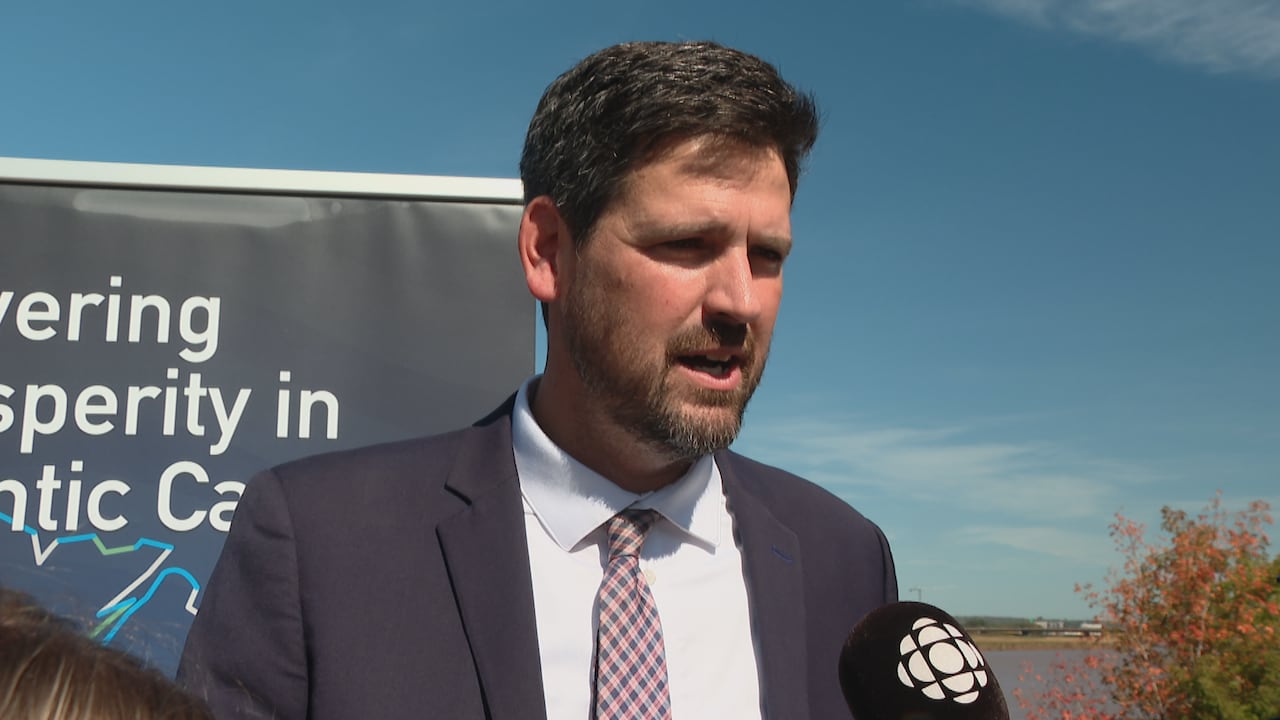 Sean Fraser, the federal minister responsible for ACOA, commissioned the Atlantic Economic Panel 10 months ago. (CBC)
“It is in the self-interest of each Atlantic Canadian province to collaborate and position themselves as part of the Atlantic Canadian region,” said Fraser.
“We’re not asking them to give up sovereignty, to give up freedom, to give up autonomy. We’re asking them to realize the enormity of the opportunity that will come … if they work together.”
Another key plank in the plan is to fully develop the region’s natural resources — to grow the size of the sector by 50 per cent.
Nova Scotia Premier Tim Houston reminded the crowd that his province recently lifted bans on fracking and uranium mining.
“We’ve approved five mines in the past year: two gold, two gypsum, one zinc,” he said.
“We’ll continue to see that momentum in mining.”
New Brunswick Premier Susan Holt did not mention fracking but said her province’s focus on natural resources “means minerals, and it means food and fish and forestry.”
Holt said the recent Canada Investment Summit “saw New Brunswick walk away with $400 million of investment in just two projects alone, and many more” in the negotiation phase.
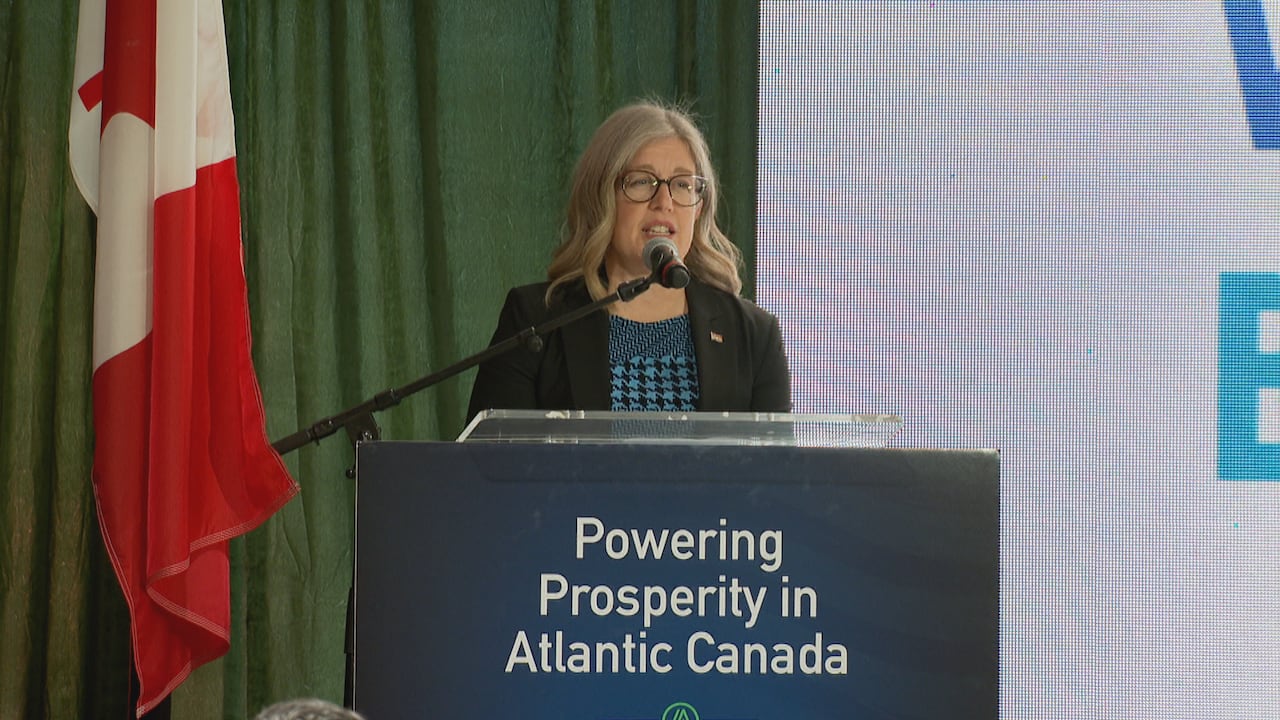 New Brunswick Premier Susan Holt addressed business leaders Friday and said New Brunswick was working to develop its natural resources. (CBC)
Holt drew chuckles from the crowd as she ended her remarks with a reference to the shift in focus of Canada’s exports away from the United States.
After she gave a heartfelt pitch for what might happen if the provinces “tighten our bonds to each other,” Holt shifted to a nautical analogy.
“We wrap those sailors’ knots more tightly, and we face the wind,” Holt said.
“And we sail off towards … Europe.”