
This Thursday, on October 1, a new ban on card surcharges will come into effect for businesses across the country. It means vendors will have no choice but to wear the card processing costs themselves, or push up prices.
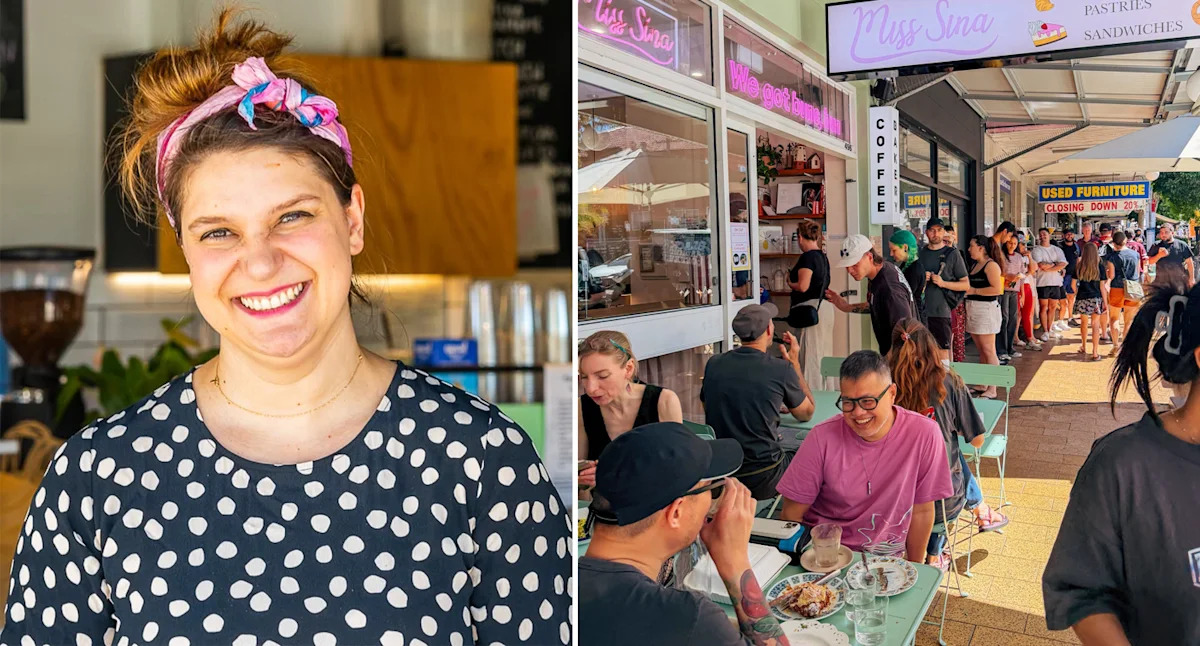
A Sydney small business owner who runs a beloved vegan bakery and cafe in the inner west says she doesn’t quite know what to do about the major change. Just days before it comes into effect, she turned to her customers to ask what is the best way forward.
“Card surcharges are changing, and while 1.5% here and there doesn’t sound like much when you’re standing at the till buying a coffee and a croissant… across thousands and thousands of transactions, it adds up to a pretty scary number,” she said.
RELATED
Posting to the Miss Sina Facebook page, she wondered whether people would be interested in cash discounts as a way to navigate the surcharge ban.
“We really want to hear from you,” she told customers on Thursday.
“Would you rather pay a small surcharge when you choose to use your card? Or would you prefer businesses to build those fees into their pricing, meaning everyone pays a little more regardless?
“And the big question… would you actually start carrying cash again if it meant saving a little bit each time? Cash discounts here we come?”
Many Aussies who responded said they were happy to oblige.
“I’m happy to go back to using cash,” one customer said.
“I’ve been trying to carry cash on me these days as I learn more about the impact of bank fees on small businesses,” another said.
Meanwhile one fellow business owner said they have already implemented a cash discount at her store.
“I’ve put up a 5% discount for cash sign and programmed the 5% discount into the till so the staff just have to press the button to work it out,” she commented.
Cash discounts ‘more of a thing’
Because card users will now no longer be slugged with hidden processing fees when they tap or swipe, it does remove an incentive for consumers to use cash. But if cash discounts become common, it would maintain a strong incentive.
Speaking to Yahoo Finance, pro-cash campaigner Jason Bryce said he believes the ban will give physical currency renewed life in Australia, saying a preference for accepting cash “is going to become more of a thing”.
He points to RBA data showing a recent uptick in the amount of cash in the economy, as it hits nearly $109 billion.
The all-time record high of the total value of Australian cash notes happened during Christmas week in 2025, when it reached $109.25 billion according to the RBA’s Balance Sheet.
It’s now $108.64 billion and is still trending up as many businesses prepare to prioritise or switch to cash payments when the surcharge ban comes into effect.
Simone Douglas has asked customers on her pub’s Facebook page whether they would support the move to cash only.
That’s equal to about $3,890 worth of cash in the community for every Australian.
Ahead of the surcharge ban, many businesses are already letting their customers know that cash is preferred or that discounts will be offered for those paying with cash.
 A Sydney burger store has informed customers it will only be accepting cash and pay ID. · Facebook
In addition to the cash switch, many small businesses are considering raising their prices to cover the new costs of surcharges.
Bryce says many small business owners will even “reject card payments altogether and go cash only”.
While Bryce is pro-cash and admires the moves many will take to prioritise cash, he doesn’t think that businesses should go one way or another.
Jason Bryce is a pro-cash campaigner who says it shouldn’t be made obsolete. Cash discounts allowed, ACCC confirms
The businesses considering discounts for cash payments have received the green light from the ACCC to do so.
The rules around these kinds of discounts were previously unclear, with the ACCC recently updating the card surcharge page on its website to help businesses understand.
It is now clear that businesses can offer discounts to consumers who pay using a particular payment method, such as cash or PayID.
If doing so, businesses will need to make sure that the item shows the full price customers will pay if they are not receiving the discount.
Get the latest Yahoo Finance news – follow us on Facebook, LinkedIn and Instagram.