
Katherine KY Cheng is an independent photographer and visual storyteller who, oscillating between traditional documentary photojournalism and experimental alternative processes, explores themes of climate change and social resistance.
It’s been five years since the height of the Fairy Creek blockades, the largest act of civil disobedience in Canadian history, and the future of the forest still remains uncertain.
Thousands of people joined protests against old-growth logging in and around the watershed on Vancouver Island, leading to more than 1,100 arrests. It was reminiscent of the War in the Woods in nearby Clayoquot Sound nearly three decades earlier.
Eventually, temporary logging deferrals were granted for roughly 1,200 hectares of the watershed, with the protections extended multiple times. They are set to expire at the end of the month.
Despite the movement taking a step back from the spotlight, some have chosen to remain among the giants.
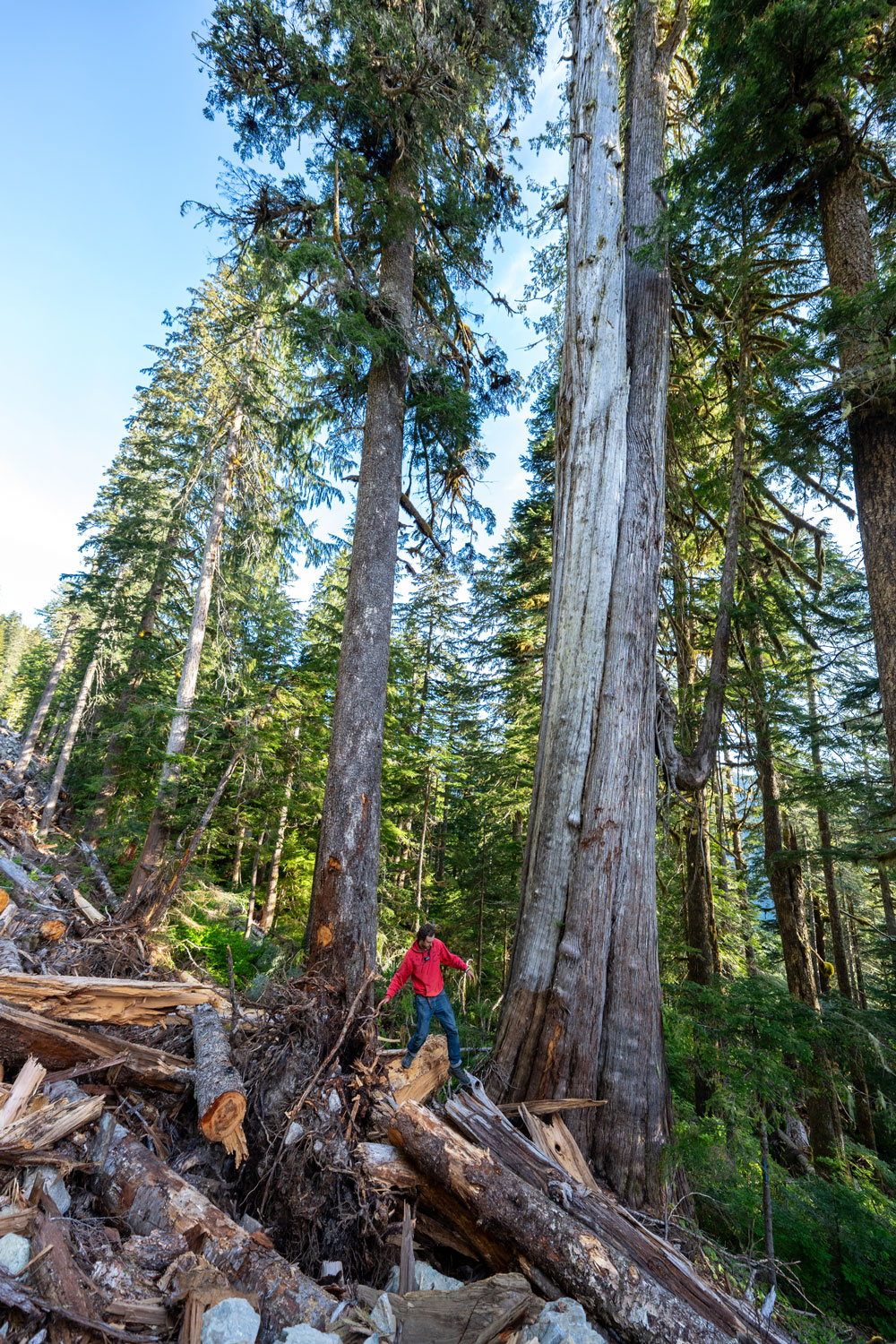
Local naturalist Soda Liptrott, 28, walks along fallen logs by the road in late May. ‘B.C.’s old-growth forests are precious refuges of biodiversity,’ Liptrott says. ‘To me, they inspire adventure, peaceful reflection and the promise of a livable future for humanity.’
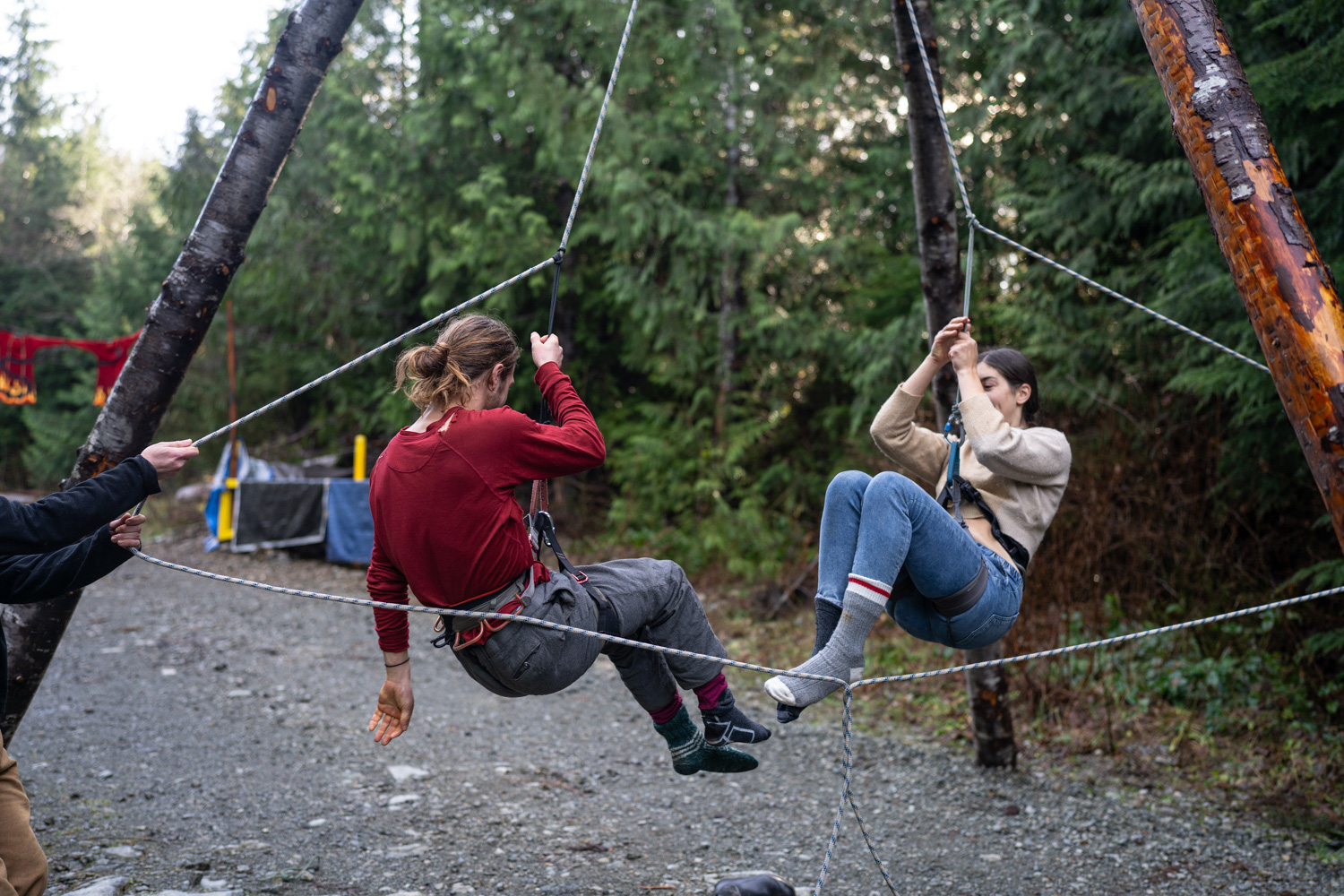
Land defenders hang from a three-legged wooden ‘tripod’ in late November, 2025. The large contraptions are used as a protest tactic to block roads, gates and industrial equipment by suspending a person high above the ground.
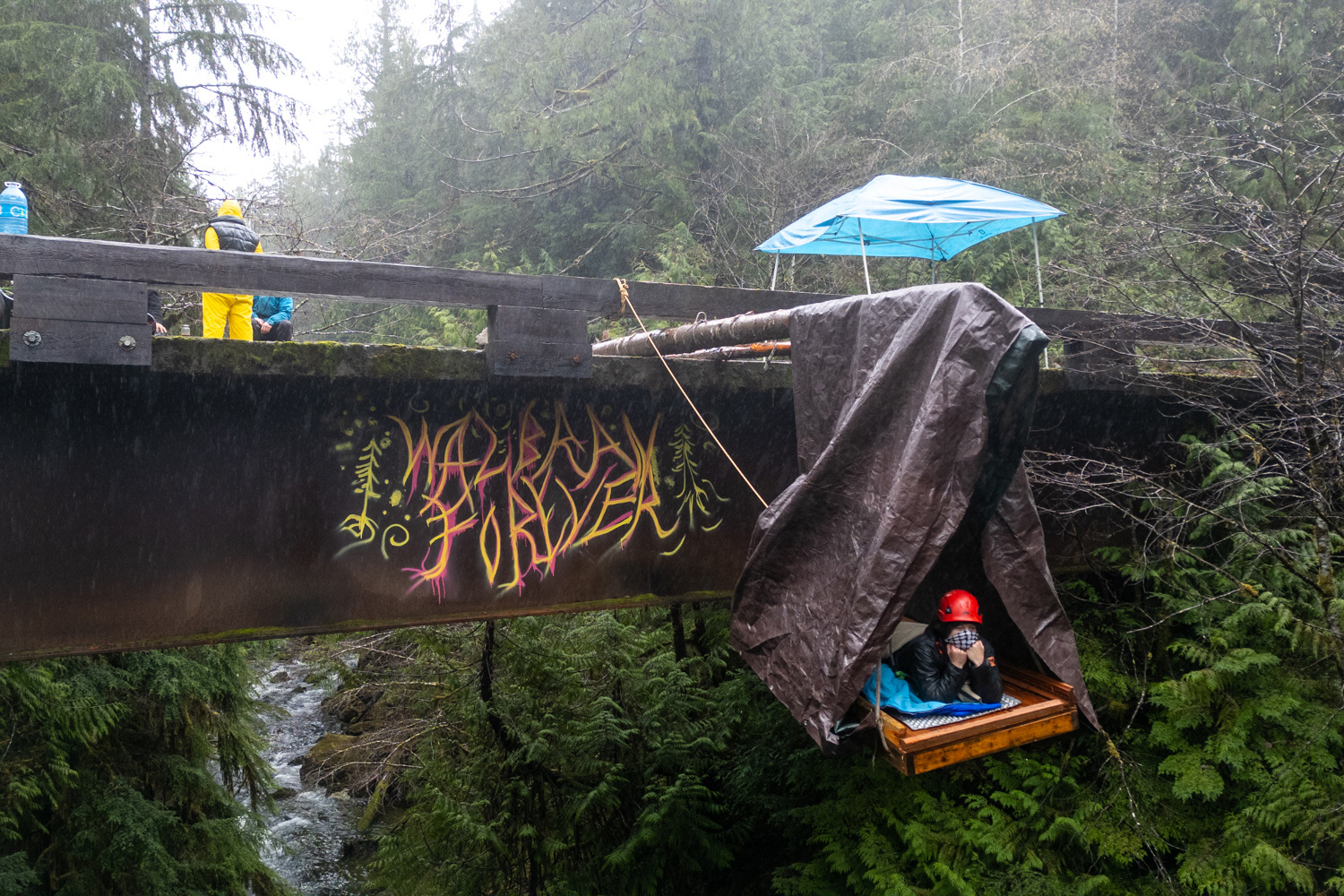
A forest defender hangs from a ‘cantilever’ in late November, 2025. The ‘flying dragon’ – as the structure is also known – is secured to a bridge that has been spray-painted with the words ‘Walbran Forever’.
In the years following, the movement has waxed and waned. Over the past five years, protesters have continued building trails, monitoring forests and organizing actions in the nearby Walbran Valley and cities alike.
Last year, a blockade known as “Cougar Camp” was established by many of the same protesters, although it was ultimately dismantled by the RCMP last November after an injunction order was granted.
Meanwhile, the British Columbia government had promised a broader transformation of old-growth management, with millions of hectares deferred. However, conservationists argue that meaningful action to limit logging in the rarest forests has fallen short, and independent analyses have raised concerns that at-risk ancient stands recommended for protection are logged at up to four times the rate of other old-growth areas.
The protesters’ dedication to standing for the forests despite the risk of arrests, long days and late nights and navigating remote logging roads, raises the question: Why do people return year after year to protect forests that are thousands of years old?
To better understand the continued commitment, my curiosity drew me to follow these pilgrimages to the forest for the past year, after the formation of Cougar Camp revived memories and dialogues of Fairy Creek – recollections that were wrapped in a language of mythology and lore.
The reasons that called each person to come were varied. Walking beneath old-growth canopies, they shared stories about commitments to the benefits of rare biodiversity, carbon storage, and vital watersheds. But underneath those arguments, there appeared to be a deeper and more personal layer that drew many to gather in what seemed to be a shared reverence for irreplaceable sacred spaces.
The ancient forests were depicted as teachers, sanctuaries and places of worship – spaces capable of transforming how a person understands their relationship with the living world, one another and themselves.
As the Fairy Creek temporary deferral is set to expire, decisions about old growth sit at an uneasy intersection of conservation, Indigenous sovereignty and a forest industry undergoing rapid change. With only 3 per cent of remaining old-growth forests in British Columbia being home to the largest ancient trees, the question is not necessarily about how many hectares will be logged or protected, but rather what the few surviving old-growth forests symbolize.
What kind of relationship will we collectively choose to have with forests that have witnessed multiple generations of history unfold, and have the power to remain standing long after we are gone?
These photographs follow the faces of the forest defenders who have chosen to stay, seeking to unpack the meaning of Fairy Creek, why people devote themselves to protecting old growth, and where the fate of these ancient giants may lie.
This story was made possible with support from the Sitka Foundation and Science Media Centre of Canada’s ‘Messengers of Biodiversity’ grant.