
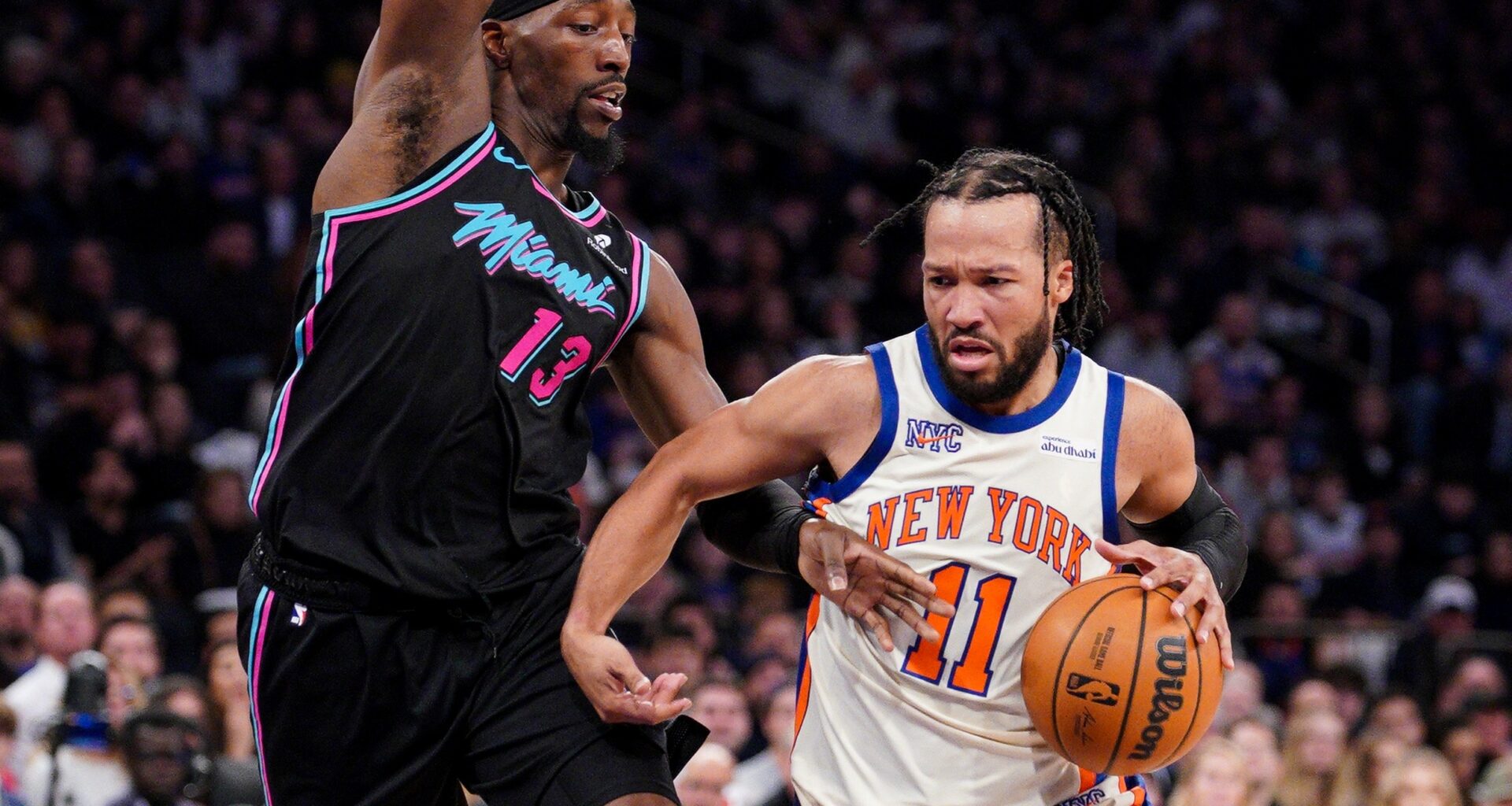
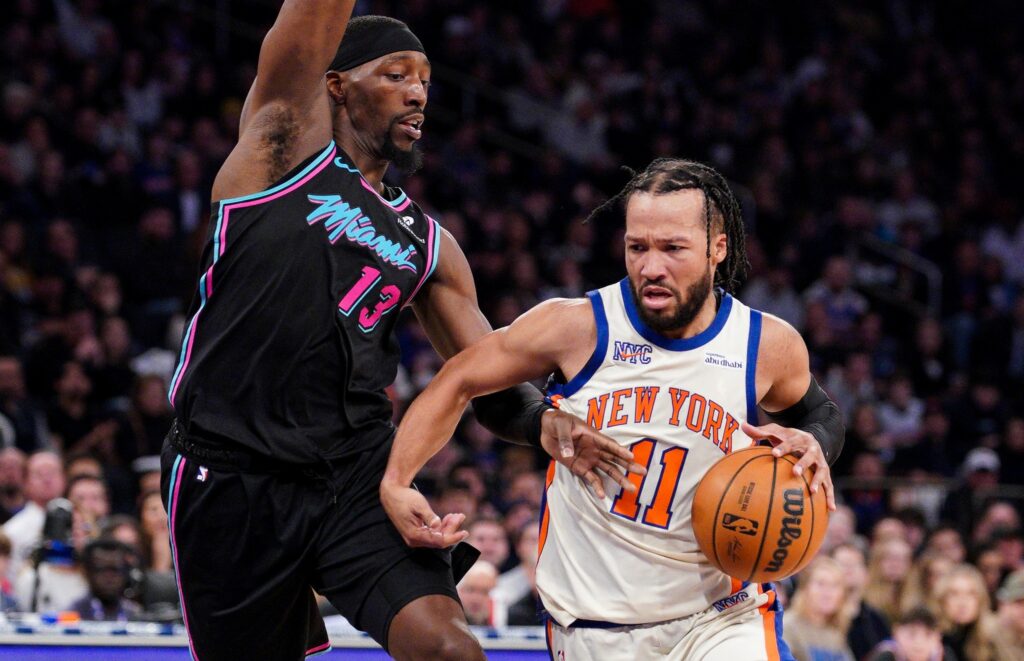
 (Photo by Evan Bernstein/Getty Images)
The Eastern Conference looked like it had a settled order heading into the offseason. The New York Knicks were the champions, and the question was simply how strong the field around them would be.
Then Pat Riley made the move that changed the entire calculation. Giannis Antetokounmpo is now a Miami Heat player, and the Eastern Conference has a different shape because of it.
This is not a manufactured rivalry built on proximity or schedule quirks. The Heat-Knicks rivalry has real history behind it, and both organizations enter this season with genuine championship ambitions, strong coaching, and rosters built to compete in the most demanding part of the conference bracket.
The Eastern Conference Has Two New Forces
Miami has a two-time MVP at the center of its operation. New York has the defending champion and a core that just won 15 of 16 postseason games. The games between these two teams in 2026-27 will carry real weight from the first tip-off, and the November 27 meeting at Madison Square Garden in the NBA Cup group stage is already circled on calendars across both fanbases.
Starting with the context: the Eastern Conference entering 2026-27 is genuinely loaded in a way it has not been for several years. The Knicks are defending champions. Boston finished last regular season at 56-26 while missing Jayson Tatum for most of it. Philadelphia added LeBron James and Jaylen Brown in the same offseason. And now Miami has Giannis Antetokounmpo alongside Bam Adebayo.
The Knicks bring continuity and proven championship chemistry. Jalen Brunson is back alongside Mikal Bridges, OG Anunoby, Karl-Anthony Towns, and Josh Hart.
Miami brings a different kind of credibility. Erik Spoelstra is one of the finest coaches this league has produced, and building a team around a talent like Antetokounmpo (in a system designed to maximize effort, physicality, and defensive intelligence) gives the Heat a blueprint that very few organizations could execute as effectively.
Pat Riley’s fingerprints are on every significant decision this franchise has made for three decades, and acquiring Giannis is the kind of swing he has built his legacy on making.
Both franchises will generate significant betting interest throughout the 2026-27 season. Championship futures, game-by-game moneylines, and player props on Brunson and Giannis in particular will attract significant market interest across licensed platforms. Knicks fans following how those markets develop throughout the season can compare the latest odds available through BetMGM in New York.
The New York Knicks: Defending a Championship With the Same Core
Retaining a championship roster intact is harder than it sounds. Players earn raises, teams target your depth, and the rest of the league spends an entire offseason designing specific answers to what beat them.
The fact that New York returns its five primary starters (Brunson, Bridges, Anunoby, Towns, and Hart) is a significant organizational accomplishment and a genuine competitive advantage.
Brunson’s Finals performance is the foundation on which everything else is built. He is not a product of a favorable matchup or an opponent’s injury. He produced at that level against the league’s best defensive player, in a hostile environment, in a clinching game. That kind of performance changes how the entire league approaches game-planning for a team.
Mike Brown’s system worked because it distributed offensive responsibility intelligently. Mikal Bridges handles perimeter defense at an elite level and scores without needing heavy creation responsibilities. OG Anunoby’s versatility allows the Knicks to switch nearly every screen without sacrificing defensive quality. Karl-Anthony Towns provides a genuine scoring threat at center, and Josh Hart functions as the connective tissue that makes every rotation cleaner.
The challenge for the Knicks in 2026-27 is managing expectations while competing in a conference that has gotten considerably tougher.
Opening night brings LeBron James and Jaylen Brown to Madison Square Garden in their Philadelphia debut on October 20, where the championship banner goes up before tip-off. Three days later, New York travels to Boston. And on November 27, Giannis and the Heat arrive at the Garden for an NBA Cup group stage game that is already one of the most anticipated matchups of the first two months of the season.
New York Knicks – starting lineup and key roles:
PlayerPositionPrimary ResponsibilityJalen BrunsonPGOffensive engine, primary creatorMikal BridgesSG/SFPerimeter defense, consistent scoringOG AnunobySFSwitchable defender, clutch performerKarl-Anthony TownsCStretch scoring, interior presenceJosh HartPFRebounding, energy, team cohesion
The Miami Heat: What Acquiring Giannis Actually Changes
The Giannis trade is the most significant roster move in the Eastern Conference this offseason, and arguably one of the most significant moves in Heat history.
The offensive questions are real and worth examining honestly. Giannis is not a shooting threat beyond the paint (his three-point percentage has never been a weapon), and Adebayo operates primarily in the mid-range and interior as well.
That creates a spacing challenge: two of the team’s top three or four usage options pull the defense toward the basket rather than stretch it toward the arc. Andrew Wiggins provides perimeter shooting and defensive versatility on the wing, and Tim Hardaway Jr. was brought in specifically to add three-point volume off the bench, but the starting lineup’s floor spacing will depend significantly on how effectively Davion Mitchell and Wiggins can operate as shooting threats around Giannis.
Mitchell as the primary ball-handler is another honest concern. He is reliable and professional, but he is not a player who creates genuine offensive advantages at the point of attack the way Brunson does for New York.
The Heat’s offense through Giannis will likely be heavy on drive-and-kick sequences and high-low action with Adebayo, which Spoelstra will design exceptionally well, but it does require perimeter shooting to function at its best.
Miami Heat – key players:
PlayerPositionRoleGiannis AntetokounmpoPFFranchise centerpiece, 2x MVPBam AdebayoCCo-star, elite two-way anchorAndrew WigginsSFStarting wing, perimeter shootingDavion MitchellPGStarting point guardTim Hardaway Jr.SGThree-point shooting off the benchNikola JovicPFReserve, young long-term piece
The November 27 Meeting: Heat at Knicks in the NBA Cup
The first head-to-head game on the 2026-27 calendar between these two franchises is on November 27 at Madison Square Garden. It falls within the Emirates NBA Cup’s East Group B.
The group context matters. Philadelphia (now with LeBron James and Jaylen Brown together) is a legitimate threat to win the group. Cleveland retained a loaded roster. Indiana gets Tyrese Haliburton back from injury. The Knicks and Heat are the two programs with the clearest championship ambitions in the group, which makes every game between them feel like more than just a Cup fixture.
For the Miam Heat specifically, a November 27 road game at Madison Square Garden (against the defending champions, in a building that will be energized all season) is exactly the kind of environment Spoelstra values as a measuring stick. He has said repeatedly that he welcomes the difficult process of building something new. This game is one of the first real answers to how far along that process is.
For the Knicks, it is a test of how they handle the specific problems Giannis creates. No one in the NBA is easy to guard, but Antetokounmpo in a Spoelstra system is a particular kind of challenge that requires specific defensive planning.
How Mike Brown and his staff design their approach to that matchup will be one of the more interesting strategic elements of the game.
The Key Individual Matchups to Watch
Giannis Antetokounmpo vs Karl-Anthony Towns: This is the headline matchup and one of the most fascinating individual battles in the Eastern Conference all season. Giannis is the more physically dominant defender; he can put Towns in difficult positions on the interior and contest his shooting range. Towns, however, provides spacing that Giannis is not ideally built to chase to the perimeter. If Towns is pulling Giannis away from the paint, the Knicks’ interior driving lanes open. If Giannis anchors inside and the Knicks still score, that means Brunson is making the right reads.
Jalen Brunson vs Davion Mitchell: The point guard matchup sets the tempo for everything else. Mitchell is a capable defender with good lateral quickness, but Brunson operating in pick-and-roll situations at the level he does in the halfcourt is a genuinely difficult assignment for most guards in the league. Miami will likely use different bodies on Brunson throughout possessions (including switching Giannis onto him in certain situations), which is one of the tactical advantages having a versatile superstar provides.
Bam Adebayo vs Josh Hart: This matchup will not generate the headline attention of the others, but it often determines games in a different way. Hart’s willingness to do the difficult physical work (boxing out, taking charges, maintaining defensive positioning) against a player as strong and skilled as Adebayo is a test of the Knicks’ overall defensive discipline. Adebayo scoring easily against Hart is a problem. Hart limiting Adebayo’s comfort level is a win for New York without showing up in the box score.
OG Anunoby vs Andrew Wiggins: Two two-way wings of similar profile: both capable defenders, both reliable scorers without heavy creation responsibilities. Anunoby has the edge in defensive versatility. Wiggins has slightly more shooting range. This wing matchup is where each team’s depth and rotation quality will be felt most directly.
Strengths, Weaknesses and Where Each Team Can Be Beaten
Understanding what each team does well (and where they can be exploited) is the foundation of any serious rivalry analysis.
New York Knicks:
Strengths:
Championship-tested core with shared trust across all five positions
Brunson as a fully proven number-one option under playoff pressure
Elite switchable defense; Anunoby and Bridges make traditional schemes difficult to execute
Mike Brown has a complete offensive and defensive system, not still building one
Collective resilience: no lead is considered safe against this group either way
Weaknesses:
The East is significantly harder in 2026-27 than it was last season
Depth beyond the starting five has not been consistently tested at championship level
The emotional weight of defending a title affects teams differently
Miami Heat:
Strengths:
Giannis and Adebayo as a defensive frontcourt pairing with no peer in the league
Spoelstra’s system maximizes collective effort and disciplined execution regardless of individual talent levels
Physical, hard-nosed style that wears opponents down over the course of a series
Pat Riley culture: players know exactly what they are signing up for
Weaknesses:
Davion Mitchell as the primary creator is a limitation against elite defensive teams
The hard cap restricts further roster improvement mid-season
Team chemistry and role clarity are still being developed; training camp has not happened yet
Eastern Conference Futures: Where Both Teams Fit
Neither the Heat nor the Knicks operate in isolation. The Eastern Conference in 2026-27 is as competitive as it has been since the late 2010s, which means both franchises are competing against significant opposition and each other.
Boston finished last season at 56-26 as the conference’s second seed, and Jayson Tatum, who missed most of that campaign, returns healthy. The Celtics remain a primary threat to both Miami and New York. Philadelphia, with LeBron James and Jaylen Brown in the same starting lineup, has legitimate conference title ambitions and plays in the same NBA Cup group as the Heat and Knicks. These are not background organizations filling out the bracket.
The Knicks’ path is clearer because the system and personnel are already established. They know how they play and why it works. The adjustment required is to manage a more hostile regular-season schedule in terms of both opponent quality and the emotional demands of playing as defending champions, while keeping the core healthy enough for a sustained playoff run.
Who Has the Edge?
The Knicks are the more complete team right now. That assessment is based on what has actually happened, not projections, and the fact that their system is proven, their roles are defined, and their best player has delivered at the highest level of the sport.
Brunson leading this group to a championship while facing Wembanyama’s defense in the Finals is a credential that cannot be dismissed or minimized.
The Heat have a higher potential ceiling if the offensive issues are resolved. Giannis, operating within a Spoelstra system (disciplined spacing, movement, intelligent shot selection), becomes very difficult to defend over the course of a seven-game series. Adebayo, as the secondary scorer and primary defensive anchor, adds a layer that most teams simply do not have. The defensive floor Miami can establish on any given night is extraordinary.
The most likely scenario is this: the Knicks are the Eastern Conference favorite entering the season, and the Heat are the team most likely to challenge them from the second-best position. Whether that challenge materializes in a playoff series or the conference finals depends on how quickly Giannis integrates into Spoelstra’s system and on whether the perimeter-shooting questions are resolved through additional signings.
What is certain is that the November 27 game at Madison Square Garden will tell us more about both franchises than any preview can.
***
To check out our other content, click here.
Follow Hot Hot Hoops on Twitter/X here!
Follow Hot Hot Hoops on Instagram here!
Check out Hot Hot Hoops on Facebook here!
Subscribe to our YouTube channel here!