
From light trains to systematic observational distortion
The threat extends to orbital telescopes
Over 14,000 operational satellites and exponential orbital filing plans
The prominent deployment of Starlink satellite terminals during high-level sessions of the United Nations (UN) General Assembly underlined the systemic reach of technologies pioneered by SpaceX.
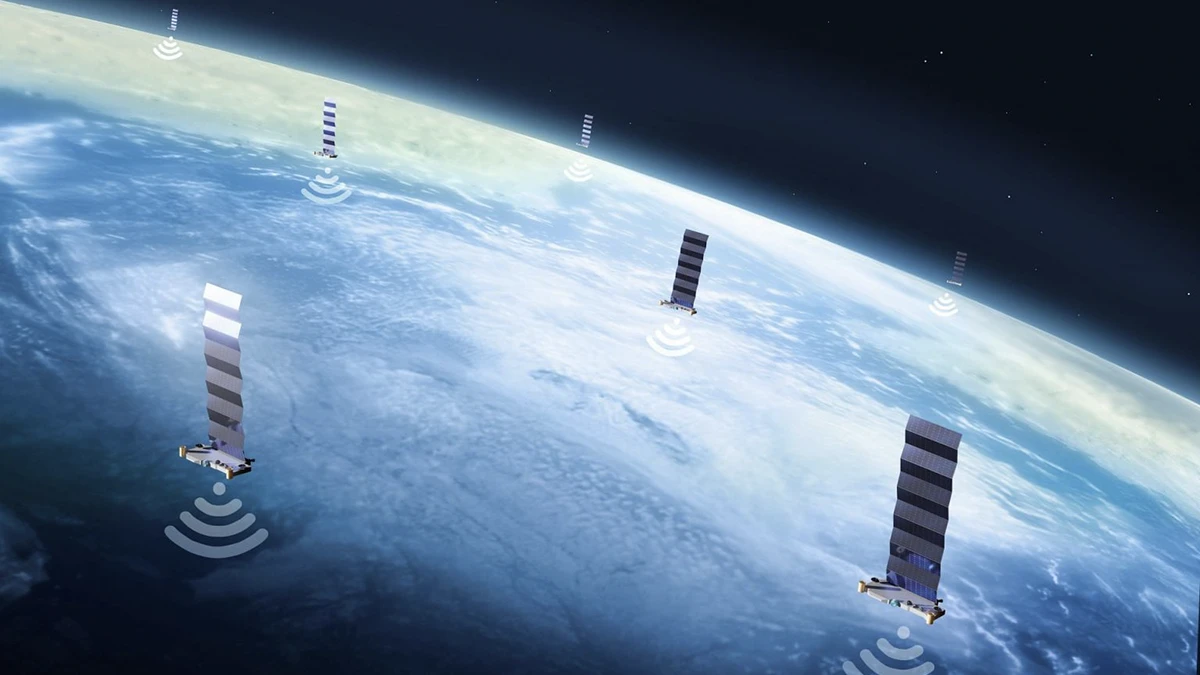
However, behind broadband satellite internet connectivity delivered to remote territories and geopolitical conflict zones, a silent and critical disruption is accelerating: the congestion of low Earth orbit (LEO) and the steady degradation of astronomical observation conditions worldwide.
What originated as a breakthrough commercial communications network has evolved into an uncontrolled commercial orbital race, where tens of thousands of metallic platforms compete directly with the natural light of the night sky.
Astronomers and research institutes worldwide report that the night sky has ceased to be an unpolluted window onto the cosmos, morphing instead into a congested corridor crossed by artificial streaks that compromise observational tracking of galaxies, stars, and distant astrophysical phenomena.
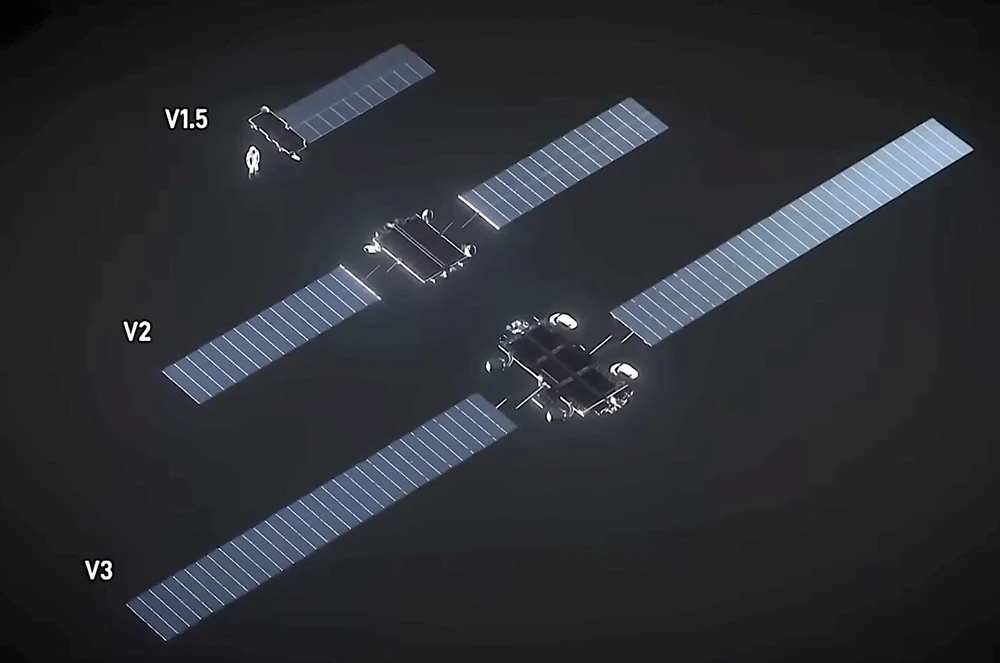
Starlink models have progressively increased in size and weight: from V1.5 platforms at 260 kg with a single solar array, to enhanced V2 Mini units with dual arrays weighing 730 kg, to be followed by substantially larger V3 platforms – PHOTO/SpaceX
From light trains to systematic observational distortion
The luminous satellite trains visible across the night sky immediately following SpaceX Falcon launches have become routine. Deployed at initial operational altitudes, these satellites reflect intense solar radiation during dawn and dusk twilight windows. The core crisis for observational science does not stem from naked-eye sightings, but from severe interference inflicted upon high-precision optical equipment.
When an active satellite traverses the narrow field of view of an optical telescope conducting long-exposure surveys of faint cosmic objects—whose photons have travelled millions of light-years to reach terrestrial sensors—it casts a hyper-luminous saturated streak across the sensor array. This flare saturates optical CCD and CMOS detectors, invalidating entire exposure frames and corrupting irreplaceable spectrographic measurements.
Unlike isolated orbital debris, the sheer scale of modern megaconstellations outstrips automated digital scrubbing algorithms. The International Astronomical Union (IAU) has repeatedly warned that software filtering cannot reconstruct astronomical data obscured when target pixels are blinded by satellite transit.

The planned constellation is slated to achieve operational capability by 2030, responding to market challenges posed across Europe by Starlink, Project Kuiper, and Chinese initiatives Qianfan and Guowang – PHOTO/OneWeb
The threat extends to orbital telescopes
For decades, deploying space telescopes above Earth’s atmosphere was regarded as the definitive solution to atmospheric turbulence and light pollution. Contemporary astrophysics refutes that premise. Peer-reviewed research published in Nature establishes that commercial satellite megaconstellations systematically corrupt photographic captures produced by orbital observatories, including the Hubble Space Telescope operated jointly by NASA and the European Space Agency (ESA).
This vulnerability is compounded by structural hardware shifts: next-generation commercial satellites designed for Direct-to-Cell mobile broadband incorporate phased-array antennas exceeding tens of square metres alongside expanded solar arrays, dramatically elevating their apparent visual magnitude.
Furthermore, disruptions increasingly compromise radio astronomy. Radiotelescopes detect faint electromagnetic emissions across internationally protected spectral windows administered by the International Telecommunication Union (ITU). Empirical investigations published in Nature Astronomy confirmed unintended electromagnetic radiation leaks emitted by thousands of commercial satellites within spectral bands reserved for probing cosmic microwave background radiation and the early universe, shattering essential radio quiet zones.
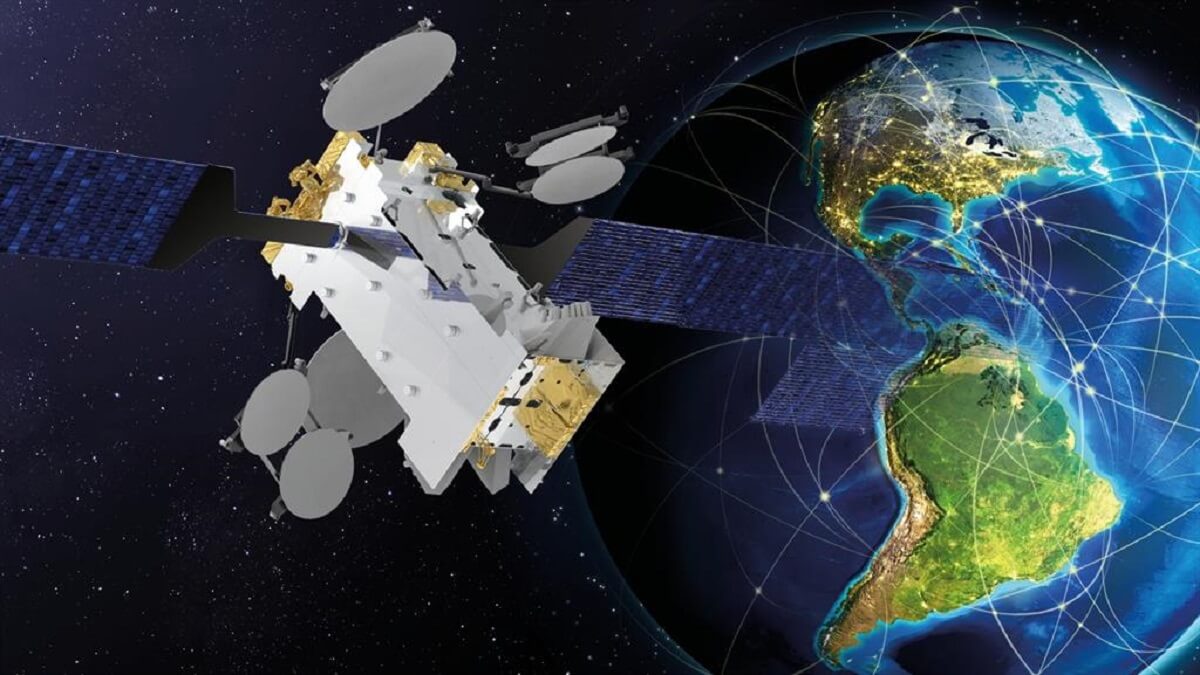
The Amazonas Nexus communications satellite, launched into orbit by Hispasat in 2023. The sector prepares for heightened competition between Jeff Bezos’s Project Kuiper and Elon Musk’s Starlink – PHOTO/Thales Alenia Space
Over 14,000 operational satellites and exponential orbital filing plans
The operational crisis reflects the sheer spatial density of orbiting platforms. According to technical reports released in mid-2026 by the European Southern Observatory (ESO), active satellites in low Earth orbit have now surpassed 14,000 units, with Starlink accounting for the absolute majority.
Regulatory spectrum filing projections tracked by telecommunications authorities suggest prospective registrations exceeding, in maximum scenarios, more than one million orbiting platforms planned by corporate entities across the United States, China, and the European Union (EU).
The international scientific community does not oppose global telecommunications infrastructure; rather, it demands binding international governance frameworks establishing dark and quiet skies as an inalienable scientific and natural heritage under the United Nations Office for Outer Space Affairs (UNOOSA).
Absent statutory international mandates enforcing non-reflective surface treatments, solar array orientation protocols, and stringent radiofrequency shielding, human technology risks blinding humanity’s own view of the deep universe.