
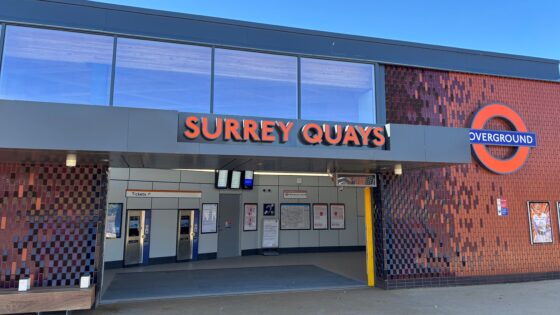
Two London railway stations – Surrey Quays and Northolt – now have step-free access, making journeys possible for wheelchair users and people with pushchairs or luggage.
Transport for London (TfL) told NCE about the civil engineering behind the projects.
A more accessible entrance and ticket hall have enabled step-free access at Surrey Quays on the London Overground, and the station now also has accessible toilet and baby changing facilities.
A new footbridge and staircase at Surrey Quays are reducing pressure on the station’s existing narrow staircases and both platforms are now accessible via two new lifts.
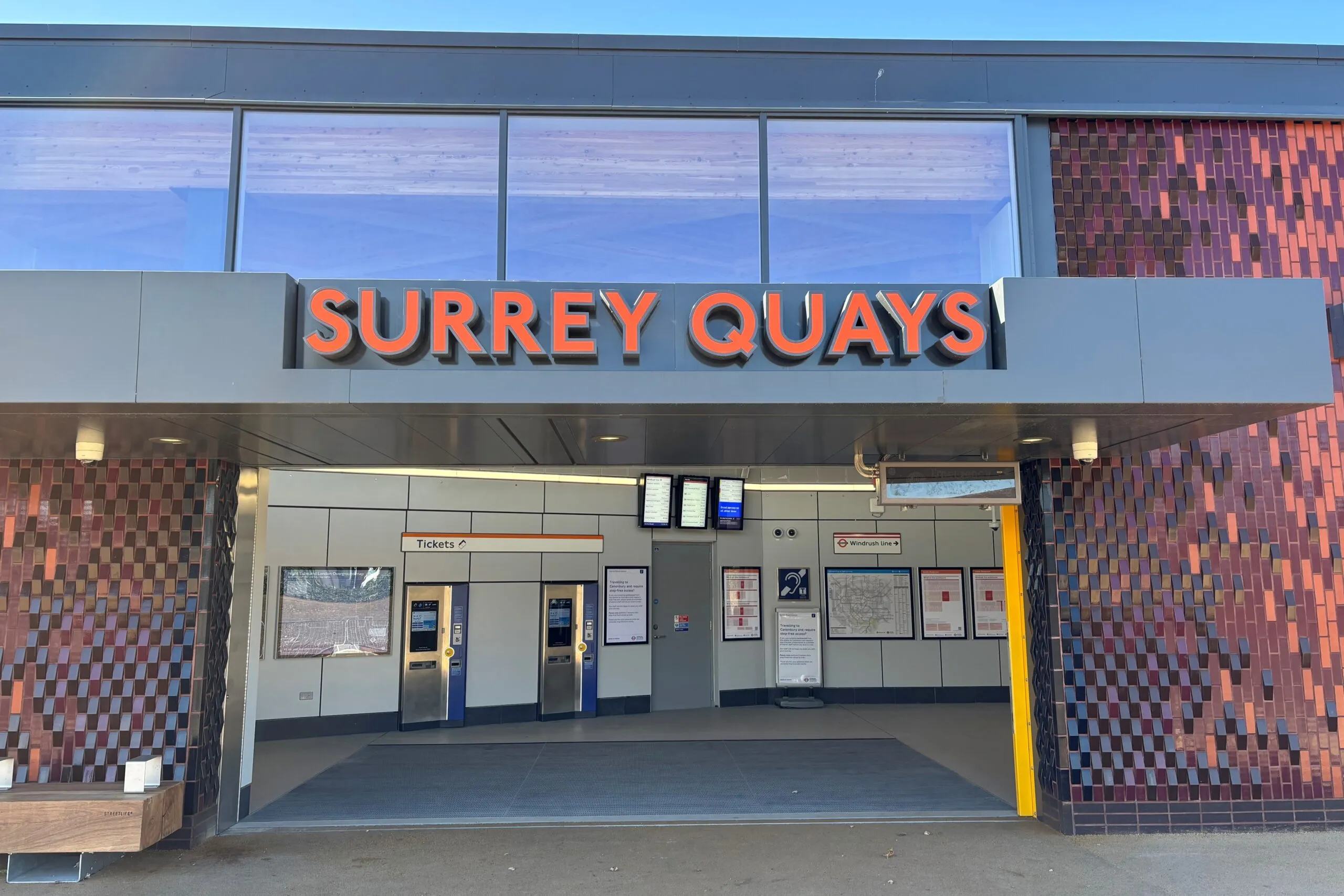
Surrey Quays entrance. Credit: TfL
“The new entrance at Surrey Quays will also provide quicker and more direct access to Canada Water, where British Land and AustralianSuper will deliver around 4,000 new homes, up to two million square feet of workspace, and around one million square feet of new leisure, retail and community amenities over the next decade,” Tfl said.
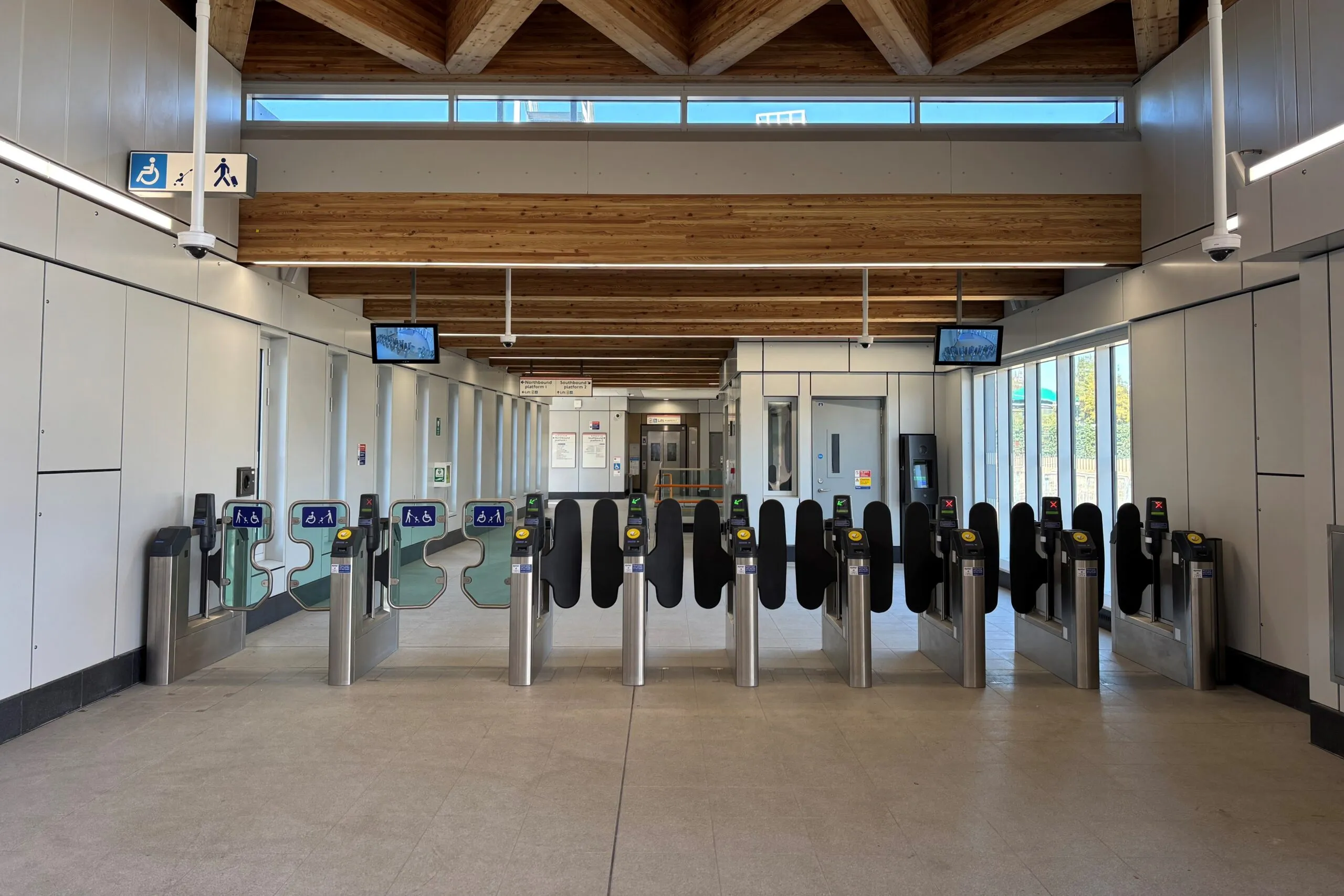
New Ticket hall at Surrey Quays. Credit: TfL
The improvements to Surrey Quays station were funded from a £80.8M funding package from the Ministry of Housing, Communities and Local Government through its Housing Infrastructure Fund programme, with a contribution from British Land. British Land is the developer of the Canada Water masterplan.
They form part of a wider programme of work along the London Overground Windrush line, including power and signalling upgrades and improvements to Canada Water bus station, with the intention of enabling the construction of approximately 14,000 new homes.
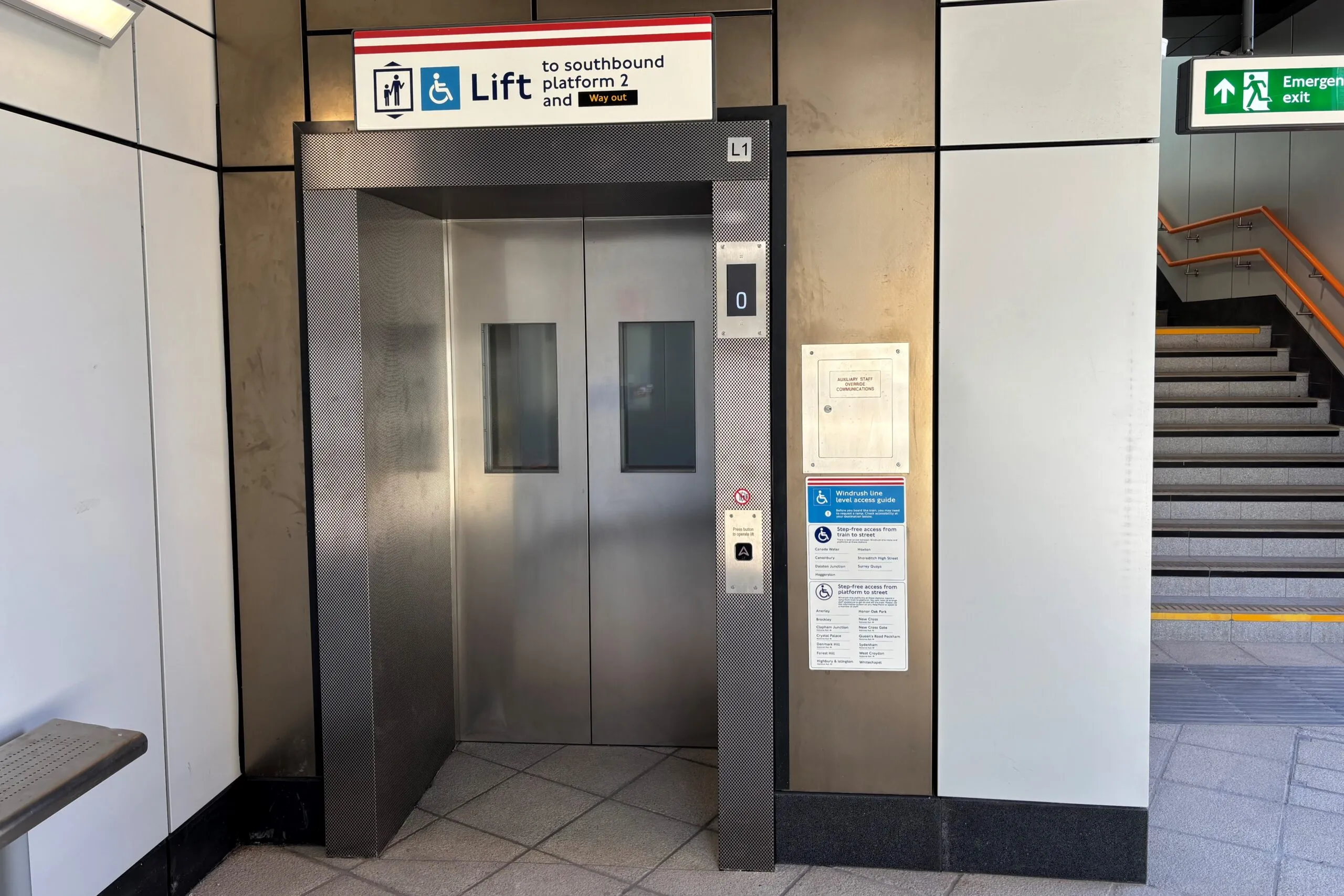
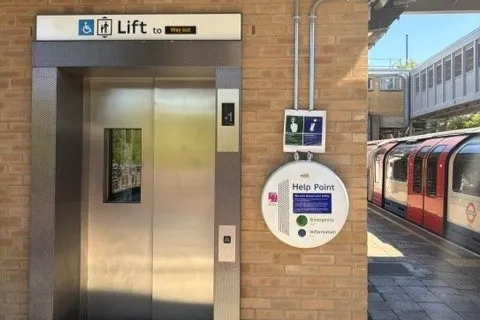
New lift at Surrey Quays. Credit: TfL
Lead designer AtkinsRéalis collaborated with contractor Morgan Sindall Infrastructure to ensure the development had a minimal carbon impact.
They worked to reduce “the volume of materials wherever possible, including efficient foundation arrangements to reduce excavation and concrete usage, reductions to secant wall soft pile lengths and the use of hollow core planks,” a TfL spokesperson told NCE.
“Low carbon material selection then became the focus; products included low carbon CEM 3 concrete and electric arc furnace steel, which uses 100% renewable energy and incorporates a percentage of recycled metal.”
This meant that the majority of the steel used in the project came from low carbon sources, as an alternative to traditional blast furnace supplied steel. The only exception was “certain footbridge steel plates due to size requirements”.
The spokesperson added: “The design also introduced the use of glue-laminated timber beams instead of steel throughout the new concourse roof structure.
“The carbon footprint target was set at the end of the design stage and then tracked through the construction stage, confirming the low carbon benefits.”
A green roof on the concourse building at Surrey Quays will support sustainable drainage and biodiversity, and 21.6m2 of solar panels have been installed, the TfL spokesperson said.
The project started in January 2023 and was completed in September 2026.
The TfL spokesperson explained what lifting equipment was used on the project and how it was used safely.
“The construction works utilised a Raptor tower crane with an articulated boom designed to work in close proximity to the railway thanks to its digital wall system and short collapse radius”, they told NCE.
“This allowed safe lifting of materials down into the 5m-deep rail corridor during rail operational hours, minimising the volume of nighttime work required while the railway [was] closed.”
They added: “The safe working arrangements, which were implemented using the tower crane, were fundamental in getting the necessary approvals to undertake the volume of works within operational railway hours, and provide meaningful cost and programme benefits for the project. This also reduced noise disruption to residents and workers’ fatigue
“The compound area had a direct power connection supplying the whole site and tower crane; no generator was used. A full electric forklift and the latest battery-powered tools were utilised.”
The spokesperson went on to explain how the construction project managed interactions with existing historic assets and the temporary works required.
“The station upgrade works directly intersect with retaining walls installed in the 19th century. This required in-depth assessment of the existing structure, including site investigation to verify the information derived from the original drawings produced in the 1860s and 70s,” they said.
“The temporary works to allow installation of 41 900mm diameter secant piles using an 18m-high 40t rig, positioned directly adjacent to one retaining wall, required extensive optioneering.”
The optioneering activity resulted in the decision to utilise “a piling platform created using 2m-deep lightweight dense foam blocks with a reinforced concrete slab spreading the loading and directing it vertically to the lower level adjacent ground and only the very bottom of the old existing wall.
The 4m wide 30t new footbridge was pre-assembled within the site compound area in late 2024 using the tower crane and then lifted into place during a weekend railway closure in early 2025 with a separate mobile crane due to weight considerations.
This minimised working at height and disruption to the railway associated with the footbridge construction and installation.
British Land head of Canada Water Gareth Roberts said: “Working alongside TfL, we’ve helped deliver a more accessible, higher-capacity station that benefits not only those coming to Canada Water, but also existing residents and the wider area.
“It’s a great example of how development can help fund infrastructure improvements that make a real difference to local people, while supporting new homes, jobs and opportunities for future generations.”
Meanwhile, Northolt station on the West Ruislip branch of the Central line had a new footbridge and lift installed to provide step-free access between the street and trains. It is the 95th station on the Tube network to offer step-free access.
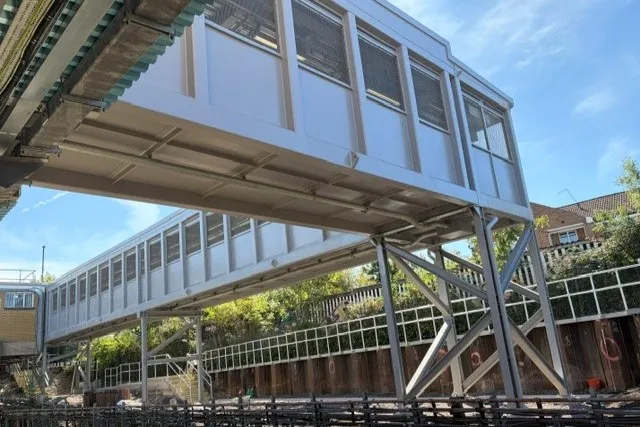
Bridge at Northolt Station. Credit: TfL
“Manual boarding ramps are also available, meaning step-free access from street to train. Two accessible toilets will also be provided as part of the improvements and will open shortly”, TfL said.
The station is served by TfL’s Superloop SL9 bus route which links Heathrow Airport and Harrow, and the new step-free facilities are creating new journey options for customers travelling to and from Heathrow using the bus service.
Bridge at Northolt. Credit: TfL
The works were funded by TfL and cost an estimated £15.3M, which covered design costs and TfL management and design assurance staff costs.
“The walkway and lift shaft are steel structures built on concrete piles. The lift shaft is clad in brickwork”, the TfL spokesperson told NCE.
Works started in February 2025 and were completed by September 2026.
“The walkway and tower came in sections and were lifted in by a 450t mobile crane, which was required to be set up and de-rigged overnight, between train service finishing and starting the next day. This took six nights,” the spokesperson said.
“A train-mounted 7.5t crane from our engineering train fleet was used to bring in materials and remove arisings to/from a local depot. This simplified the logistics and reduced carbon emissions.”
In addition to the work to improve accessibility at the station, engineers took the opportunity to “regrade the embankment as part of the reinstatement works, providing increased stability in years to come,” the spokesperson said.
“The embankment is being replanted with a specially selected grass mix and native trees and shrubs to achieve a biodiversity net gain.”
TfL chief capital officer Stuart Harvey said: “Two more step-free stations coming onto the transport network will make a real difference to the journeys of thousands of our customers, including disabled people, older residents, and parents and carers, who will now find it much easier to use the network.
“The new entrance at Surrey Quays will also increase capacity, reduce congestion and, through our collaboration with British Land and AustralianSuper, create better connections to the growing Canada Water area, supporting thousands of new homes, jobs and leisure opportunities.”
TfL added that work to provide step-free access at Leyton station on the Central line is due to be completed in summer 2027 and work to provide step-free access has started at Burnt Oak station on the Northern line.
“There are currently 45 Tube stations where step-free access feasibility or design work is already underway, including at Alperton and Eastcote, which are both progressing towards the end of the design stage,” it said.