

Listen to this article
Estimated 4 minutes
The audio version of this article is generated by AI-based technology. Mispronunciations can occur. We are working with our partners to continually review and improve the results.
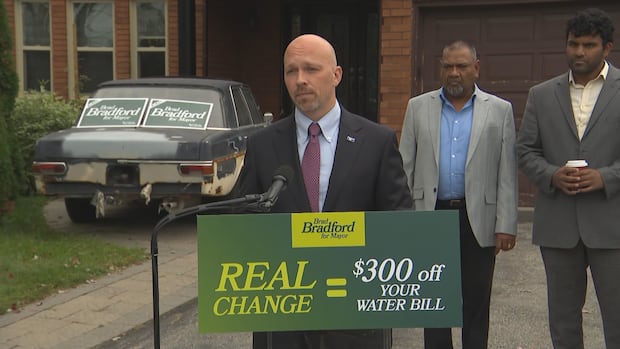
Mayoral hopeful Brad Bradford has promised to cut Torontonians’ water bills by 25 per cent in his latest campaign announcement.
The candidate also said he wants to make Toronto Water a public utility by banning private investment so it is owned by taxpayers.
Bradford said about two-thirds of Torontonian’s water bills are going toward a reserve fund that pays for future infrastructure projects and pipe maintenance.
“That’s your money,” Bradford said. “You’ve already paid it and city hall has been sitting on it.”
The average home will spend about $1,118 on water in 2026, according to Toronto Water’s operating budget — that’s about $93 a month on average. The reduction Bradford is promising would bring that down to just under $70 a month.
If he is elected mayor, the utility service would be run by an independent board that would set the prices, Bradford said. “The rates will be lower than today’s because we’re going to stop double billing you for the pipes that won’t be built until 2050,” he said.
In a statement following Bradford’s announcement, incumbent Olivia Chow’s campaign said, “Bradford will say anything to get elected.”
Chow’s team cited a 2025 provincial water law that allows the province to appoint a corporation to manage some municipalities’ water in place of a public provider, and gives the province the power to approve water rates.
“His water scheme will open the door to privatization and cost people a lot more in the long run,” the statement from Chow’s campaign reads.
Bradford says city will take on debt for water projects if he’s elected
This year, about 67 per cent of Toronto Water’s operating budget, $1.1 billion, went to a reserve funding its 10-year capital plan, according to the utility’s 2026 budget. The fund is used to pay for water infrastructure updates, including maintenance and climate change resiliency projects.
WATCH | How September’s destructive storm made climate resilience an election issue:
The latter includes funding stormwater management measures like a flooding protection program that provides subsidies for homeowners to install flood prevention measures. It also includes the Don River and Central Waterfront project implemented to protect the southeastern downtown area of the city against flooding.
Toronto Water is estimated to spend over $18 billion from 2026 to 2035 according to this year’s budget.
During his announcement on Monday, Bradford said making Toronto Water a public utility would allow the city to pay for projects by going into debt and paying it off over the years, similar to paying a mortgage.
He said, now, the city isn’t doing that.
“We’re collecting money in a bank account and effectively paying for all of these things up front with cash,” he said.
Chris Alexander, former MP and fellow contender in the mayoral race, said debt-financing Toronto Water projects similarly to Toronto Hydro would mean the city pays more for them later on, as with debt comes interest.
“That is interest charged on every dollar, every year, and you pay for that in your hydro bill,” said Alexander. “Do the same to our water and the pipes don’t get cheaper to fix.”
The topic of stormwater management got some attention in the city, after a “100-year-storm” brought about a month’s worth of rain in a matter of hours, flooding roadways and unearthing trees across the city. Experts warned the city should expect more like it in the future.
In the days following the storm, Bradford said he would work to secure funding from other levels of government to make “big ticket moves” on climate resilience, similar to the Don River project that began under mayor John Tory and was completed during Chow’s time as mayor.
Bradford has not said how he would balance the city’s budget while delivering on his campaign promises, which include adding 1,000 Toronto police officers and refunding TTC fares for rides over 15 minutes late while freezing property taxes for one year.