
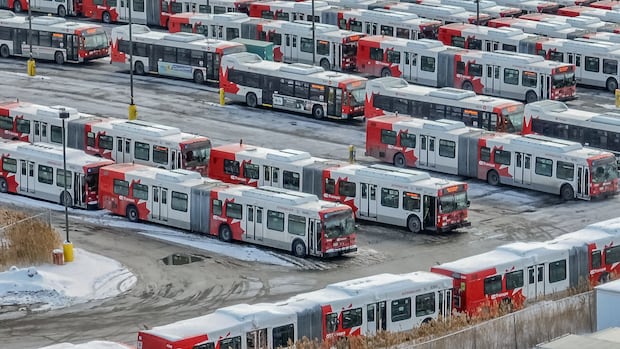
It’s a ritual for many OC Transpo riders: getting up early to rush to the stop and catch an earlier bus, out of fear the one they really want to take will be late or won’t show up at all.
The trust issues between riders and their transit system go back at least seven years. And the long list of problems that led OC Transpo to this point are complicated and hard to fix.
With Ottawans heading to the polls to choose a new city council on Oct. 26, CBC has been speaking with voters about the issues that matter most to them.
And the top thing we heard? Voters want a transit system that works, with buses that come on time and schedules that get them where they want to go quickly.
Four years after a public inquiry found “egregious violations of public trust” in the opening of Ottawa’s east-west light rail line, transit remains a sore spot.
Beyond the question of reliability, many tell CBC they worry their tax dollars are being wasted.
And the solution touted by many in Ottawa — getting the Ontario government to take financial responsibility for the LRT — remains far from the finish line.
In the latest installment of our election issue series, we explore how transit reached this point and what voters can expect this election.
The numbers
Complaining about the bus in Ottawa is nothing new, but issues reached crisis proportions on the first Monday of January when one in ten trips were cancelled.
Many more were late.
While the shortage of buses and drivers has begun to ease, other underlying issues remain.
At the September meeting of the transit committee, the last one before the upcoming election, OC Transpo general manager Rick Leary presented August statistics showing just 76 per cent of buses showed up on time.
Roughly five per cent of trips were missed.
One of the easiest explanations comes down to changing traffic patterns and, as David Cooper of transportation and planning consultancy Leading Mobility points out, the lack of “predictability” with the federal government’s return-to-office plans.
“When you have your factors that change, sometimes there’s a bit of lag,” he explained.
But that’s just the start.
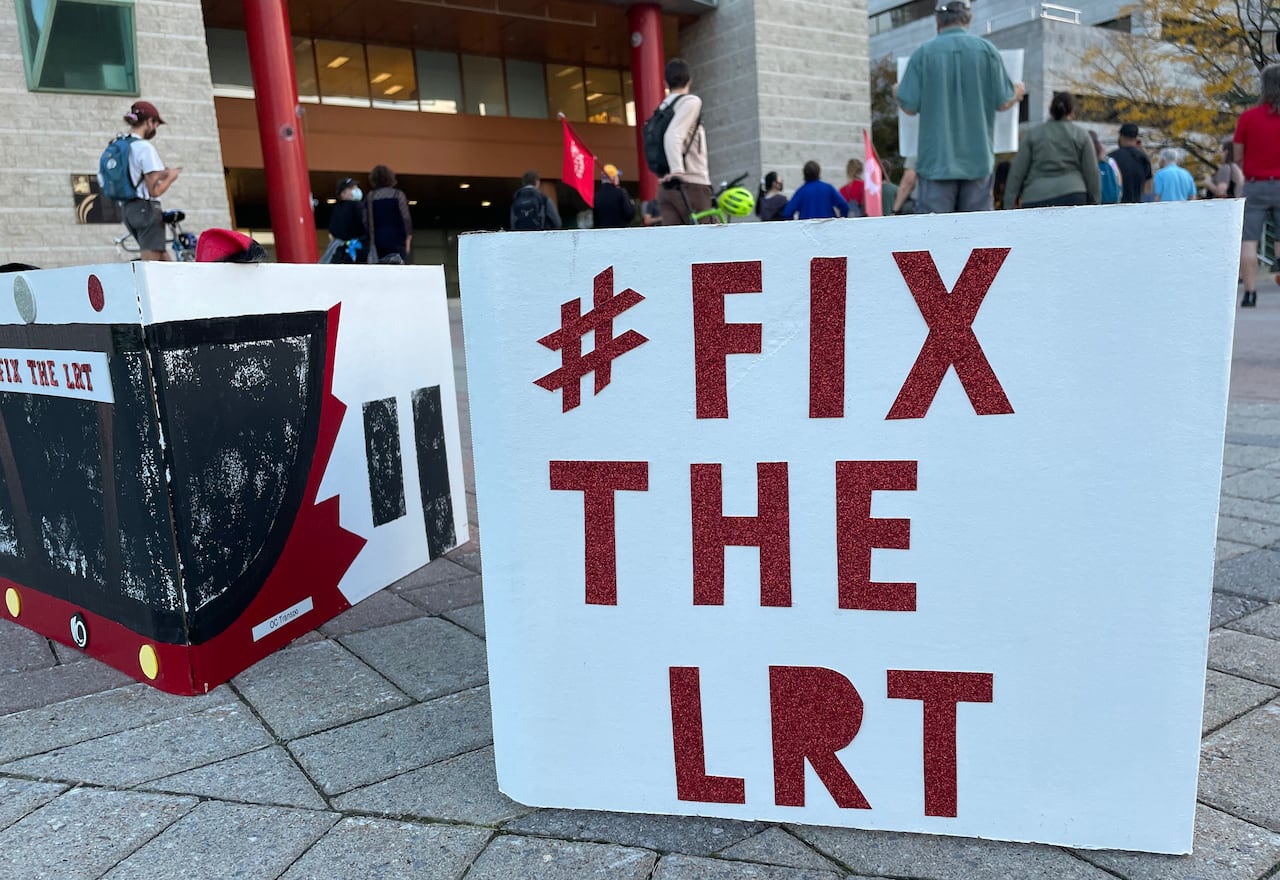 Dozens of people rally against the city’s decisions around its light rail system in 2019. (Nicole Williams/CBC)Solving the rail problem
Buses that used to be packed with public servants are now dealing with roads clogged by workers opting to drive instead.
Part of the problem goes back to 2019.
Patience and public trust took a major hit that year with the bungled opening of the first segment of east-west light rail.
The launch was rushed, with city officials changing testing criteria to accept a system that wasn’t fully proven.
What followed was a myriad of technical issues, including malfunctioning doors, frozen overhead wires, derailments and wheel bearing issues that still plague the system.
The situation became so bad, it sparked an unusual move: a public inquiry, with weeks of testimony and questioning of top LRT executives and city officials in front of a judge.
“There were persistent failures in leadership, partnership and communications in the construction and maintenance of the LRT,” Justice William Hourigan told media as he tabled his final report just days after the current city council was sworn in.
Premier Doug Ford had a more concise description of the new LRT system’s problems: “It was just absolutely in shambles, and it stunk to high heaven.”
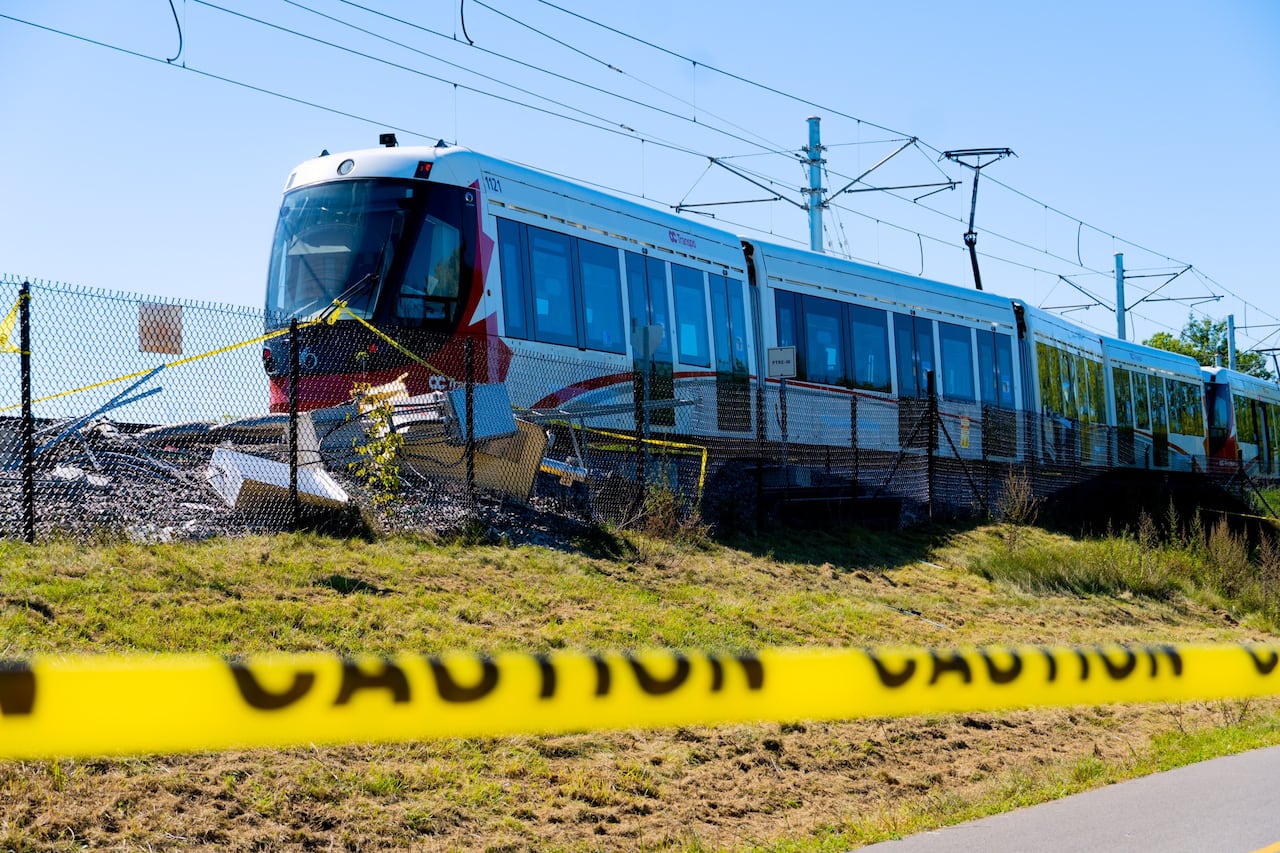 Caution tape is strung up next to the site of a train derailment on O-Train Line 1 in 2021. Derailments and other issues sparked a rare public inquiry into the city’s LRT network. (Nicholas Cleroux/Radio-Canada)
The trains were meant to provide a faster and easier ride, but they also complicated bus commutes into the city.
People used to getting from the suburbs to downtown in 25 minutes via the transitway now had to transfer between a bus and train — sometimes more than once.
Then those riders, still adjusting to their new commutes, all but disappeared.
Pandemic tanks ridership
When the COVID-19 pandemic hit in March 2020, transit systems couldn’t rely on their core customers — including commuters and newcomers to Canada — and politicians panicked, said Josipa Petrunic, president and CEO of the Canadian Urban Transit Research and Innovation Consortium.
“Most transit agencies and leaders know that it’s temporary. But then you go to city council and city councillors are spooked,” she said, reflecting on the mindset at the time.
“You cut the frequency and convenience. You kill off the riders who are the dedicated clients of the service. That is a knee-jerk reaction. It’s a problem, but it’s very hard for cities to maintain service when the buses are running around empty.”
Ridership numbers are now slowly ticking up, but OC Transpo says the network remains at 67 per cent of its pre-pandemic capacity.
As traffic patterns change, the system is forced to react.
Cooper said scaling up service takes time, explaining that agencies need a six-to-nine-month lead time for hiring operators and two and a half years for acquiring new buses.
That longer-than-normal delivery time from bus manufacturers is just one more holdover from pandemic upheaval.
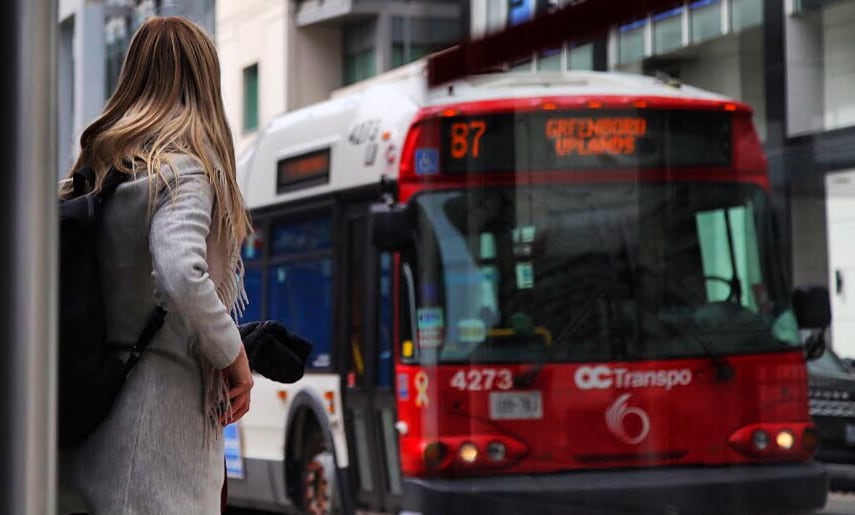 Like many public transit agencies across Canada, OC Transpo is still working to get back to ridership levels seen before the pandemic. (Stu Mills/CBC)Ottawa goes green — and so does everyone else
Look around Ottawa’s streets and you’ll see a mix of buses.
The most common are diesel — both 12-metre and 18-metre articulated models from manufacturer New Flyer — many of which are well beyond their scheduled end of life.
But the roads weren’t meant to look this way in 2026.
The city had planned to be well on its way to converting its full fleet to zero-emission vehicles, thanks to federal funding.
The flood of orders, however, created a strain on the budding industry, which has been stymied by bankruptcies, pandemic-era supply chain issues and now tariffs.
That means delayed deliveries and rising costs.
WATCH | Tour Ottawa’s electric bus-ready garage: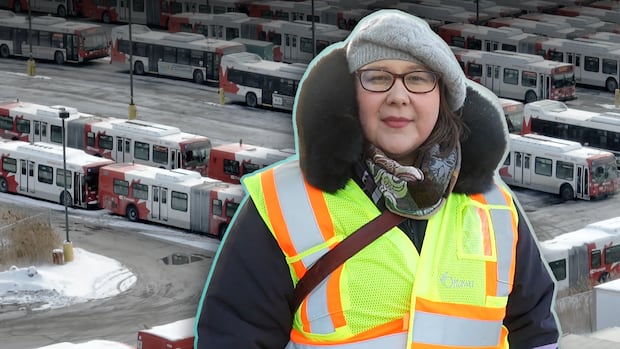
Tour OC Transpo’s electric bus-ready garage
OC Transpo wants to deliver a zero-emission bus service by 2036. CBC’s Elyse Skura got a look inside the garage at the centre of this billion-dollar revamp to the transit system.Pushing past retirement
Matti Siemiatycki, director of the Infrastructure Institute at the University of Toronto, said transit systems like Ottawa’s are used to relying on “heroic maintenance” to keep aging fleets on the road.
“A lot of our infrastructure was purchased or built years if not decades ago,” said Siemiatycki. “As it gets older and older, it has to be either fully overhauled or replaced.”
Anyone who’s driven an aging vehicle will be well aware of the strain it can place on their wallet.
Older vehicles are less fuel efficient and it becomes harder to source replacement parts.
The same is true of buses, resulting in what Petrunic calls a “Scotch taping” of vehicles and the need for creative solutions.
All these issues have led to ballooning budgets.
In 2026, it’s projected to cost OC Transpo $939 million to operate the system, and that’s just the latest year-over-year increase.
Compare that to the $738 million it needed four years ago.
OC Transpo is not the city’s single largest expense, but it is up there, only trailing social and family services.
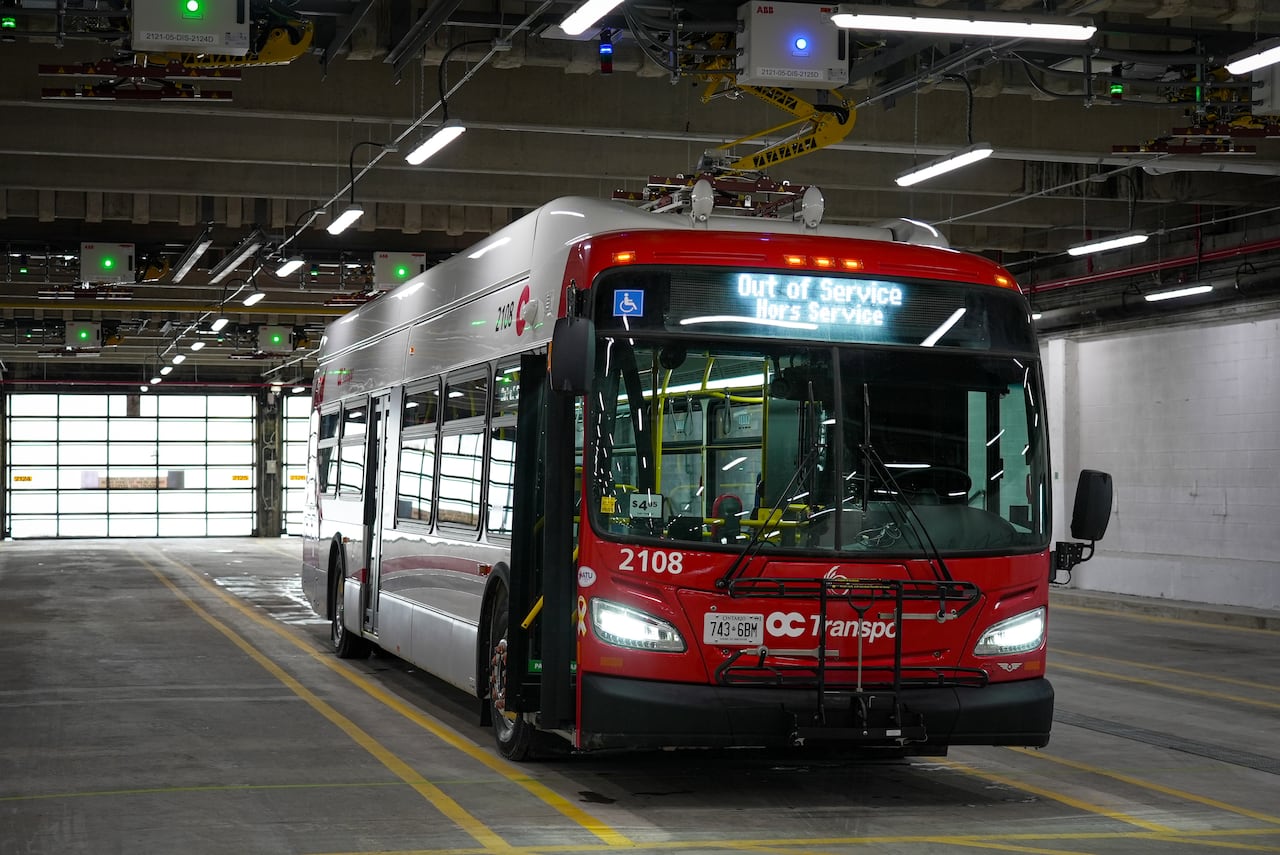 This electric bus is being charged by a pantograph at OC Transpo’s newly renovated depot. The city had planned to be well on its way to converting its full fleet to zero-emission vehicles, but that’s been delayed. (Mathieu Deroy/CBC)’The bill has come due’
What are the solutions, then, to fix OC Transpo and rebuild trust among riders?
Candidates are quick to make crowd-pleasing promises, including dramatically slashed fares and heavy discounts to monthly passes. But the experts point to ideas they say are longer lasting and decidedly less flashy.
That includes adding new maintenance and storage facilities.
“Those are very costly items that we need to have a functional transit system, and they are very hard to get funded because they’re not sexy,” said Cooper.
Having more places for buses to be fixed, fuelled or go to sleep at night allows sidelined buses to get back on the road faster.
The greatest impact could come from effectively lobbying higher levels of government.
It’s a strategy the city has tried, regularly adding a multi-million dollar line item to its budget which it eventually fills in some other way once the money fails to materialize.
Time and again, provincial and federal leaders step in for shiny new infrastructure projects, but transit advocates say it’s a different story for work that doesn’t come with a ribbon-cutting.
Making matters worse are municipal budgets that consistently fail to rise with inflation, said Siemiatycki.
“No one wants to stand out there right now and say, ‘I’m going to raise taxes in order to keep what you already have working at the mediocre level that it is today.’ That’s a really tough sell,” he explained.
“We paid for those tax freezes by delaying and deferring maintenance. And now the bill has come due.”
 OC Transpo’s administration building on St. Laurent Boulevard is seen in February 2025. (Michel Aspirot/CBC)Is uploading the answer?
There is a bright spot on the horizon, which local politicians have been quick to latch onto: the potential shifting of responsibility for running the LRT to the provincial agency Metrolinx.
In April, the city and the province signed a memorandum of understanding on an upload, but not a binding agreement.
City manager Wendy Stephanson told CBC in a statement that the two sides are still discussing the details of how this would work, with no estimation of how long negotiations may take.
If an upload deal is finalized, the latest figures provided by the two parties suggest the city would be in line to receive $85 million dollars annually for the operational, maintenance and capital costs of the system.
The city wouldn’t say if it’s using this estimate to help map out the long-term financial feasibility of OC Transpo.
An audit released in June quoted the 2026 operating costs of running the rail system at $200 million dollars, meaning the city will continue to pay a portion of the costs needed to run the LRT.
The budget for bus services is more than double that.
If the upload goes through, wiping millions of dollars from the ledger should allow OC Transpo to reinvest in the bus system, Cooper said.
But it will likely take time.
Ontario first announced plans to upload Toronto’s Don Valley Parkway in 2023. The upfront fanfare then shifted to hard work behind the scenes, with the official takeover set to be finalized next year.
“There could be financial benefits,” said Siemiatycki. “How long it takes and what people do with the money is really what will determine whether it’s a success.”
Pulling out of a death spiral
The experts caution against the urge to simplify the problem.
“Let’s be honest with taxpayers and riders,” said Petrunic. “Transit is never really going to get cheaper.”
For years, there has been talk of public transit sinking into a “death spiral.”
WATCH | How to avoid a public transit death spiral:
How to avoid a public transit ‘death spiral’
Ottawa’s OC Transpo has painted a grim long-term financial picture. It’s been a million dollars short of revenue projections every month this year. CBC Ottawa’s municipal affairs reporter Elyse Skura breaks down the options for cash-strapped transit agencies.
Some candidates argue the solution is wooing riders back with steep discounts to create a catalyst for positive change — sparking an inverse phenomenon known as a “virtuous cycle.”
More people ride, the idea goes, creating more revenue. That money is then invested in better service, thus attracting even more riders.
While a simple concept, experts agree that most riders don’t decide on a mode of transit based on cost, but rather whether it’s convenient and reliable.
That’s why Siemiatycki encourages voters to look out for anyone promising dedicated bus lanes and new rapid transit corridors.
“They don’t necessarily make the ride faster, but they do have an impact on making it more reliable,” he said. “And that is something that’s fully within the municipal control.”
For his part, Cooper cautions people to question anyone who says they’ll make transit both better and cheaper — especially without a coinciding hike to property taxes.
“The money’s gotta come from somewhere,” he said. “You don’t get better service by spending less. It’s just not feasible.”
Click here to catch up on the latest election news from CBC Ottawa