
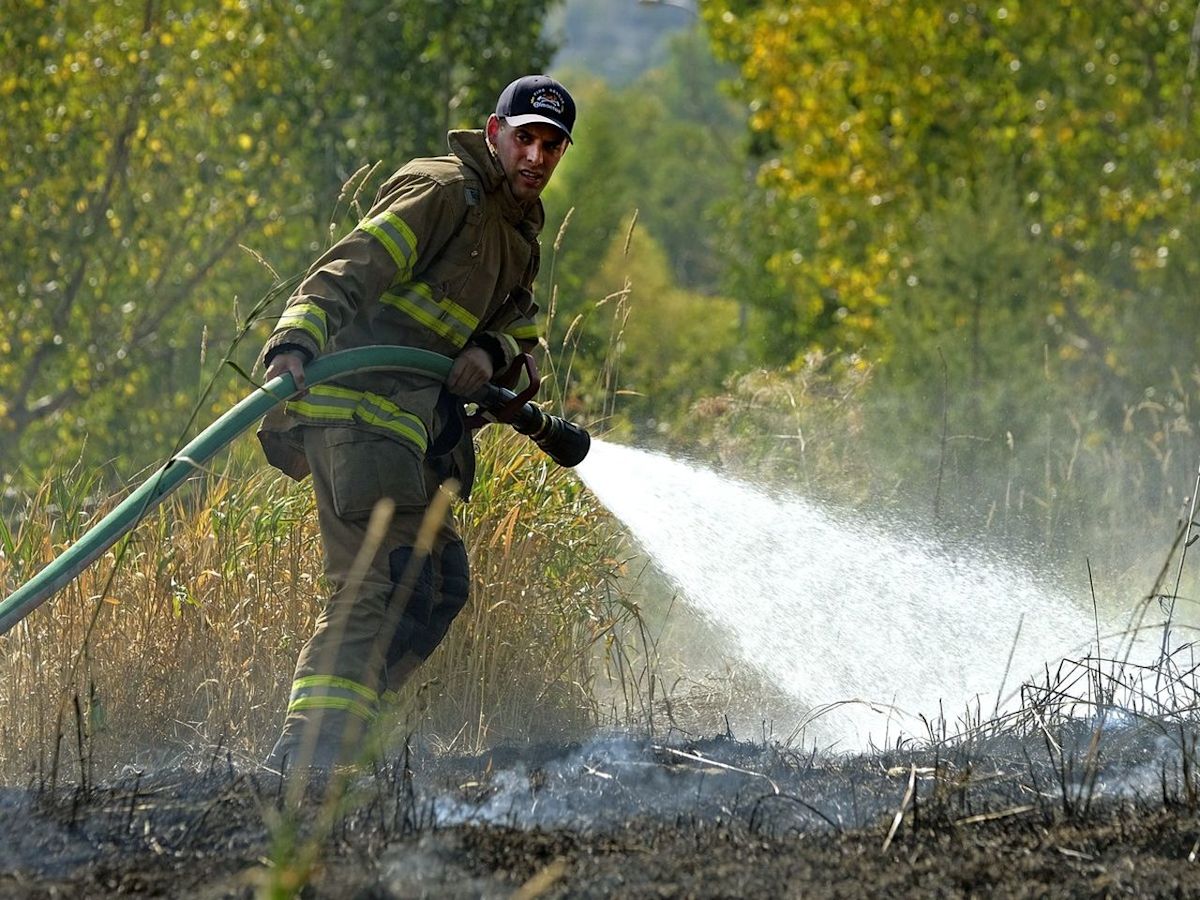
The City of Edmonton’s use of prevention and technology for tackling wildland-urban fires has attracted nationwide recognition.
Edmonton was recently singled out by the Canadian Association of Fire Chiefs (CAFC) for best practices in the wildland-urban interface for the city’s collaborative approach to protecting communities from wildfire risk
The city was one of the first major municipalities to implement the wildland-urban interface wildfire risk strategy, which sees the city reducing and managing the risk of wildfires in areas such as the North Saskatchewan River valley and ravines. With more than 7,400 hectares of wildland-urban interface, the river valley is Edmonton’s primary wildfire corridor.
“Protecting Edmonton’s river valley is a responsibility no single department can carry alone,” said Deputy Fire Chief Megan Rogers in a Monday news release. “This award recognizes what we can accomplish when we bring our expertise together, identify risks before emergencies happen and work toward a shared goal of protecting our communities.”
Included in the strategy is a fleet of semi-autonomous thermal drones that protect the river valley during wildland fire season by being able to spot smoke not visible from roads or buildings. In addition, the city utilizes a 55-node environmental sensor grid that detects flames within 15 minutes. As well, the city is using an AI forecasting tool, EmberWise, which allows officials to make decisions on fire restrictions or bans based on local weather conditions.
Teams from multiple city departments are also brought together for emergency response, environmental planning, parks management and technology to protect areas from wildfire. Officials also remove problem vegetation and use prescribed burns to reduce fuel loads. The news release boasted of “more than 900 city employees” having received emergency social services training to support residents during emergencies and large-scale evacuations.
The city also offers free FireSmart programs to help residents reduce wildfire hazards around their homes.
Since 2020, the city has dealt with more than 2,000 grass fires, often sparked by discarded cigarettes, ATVs, fireworks, improperly kept fire pits, or people ignoring fire bans. Humans are responsible for more than 60 per cent of wildfires in Alberta.
– With files from Eric Bowling
Related
Bookmark our website and support our journalism: Don’t miss the news you need to know — add EdmontonJournal.com and EdmontonSun.com to your bookmarks and sign up for our newsletters here.
You can also support our journalism by becoming a digital subscriber. Subscribers gain unlimited access to The Edmonton Journal, Edmonton Sun, National Post and 13 other Canadian news sites. Support us by subscribing today: The Edmonton Journal | The Edmonton Sun.