

Listen to this article
Estimated 5 minutes
The audio version of this article is generated by AI-based technology. Mispronunciations can occur. We are working with our partners to continually review and improve the results.
As proposals for new artificial intelligence (AI) data centres pop up across Canada, the Newfoundland and Labrador government could be looking to get in on the action.
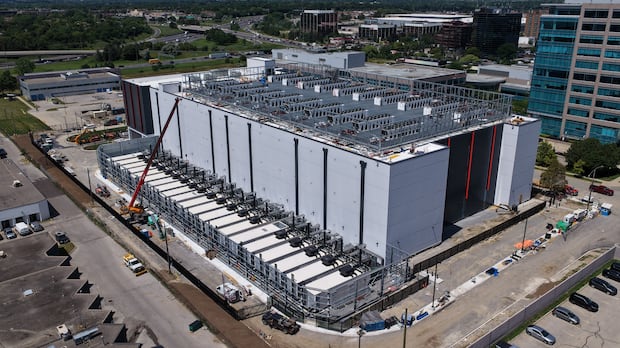
A data centre is a facility that houses and powers computer servers, networking equipment and other technology needed for computing and storing data.
During the special session on the new Churchill Falls agreement in the House of Assembly in mid-September, Energy and Mines Minister Lloyd Parrott said the provincial government could consider selling excess Churchill Falls power to a data centre company.
“We said our door is open for business and we’re looking forward to doing business with the world,” Parrott said at the time.
During the four-day debate, Premier Tony Wakeham and Barry Perry, the lead negotiator for the Churchill Falls deal, also floated data centres as a potential use for Churchill Falls power.
CBC News asked for an interview with Parrott to ask about data centres in the province. Instead, department spokesperson Brodie Thomas sent a statement via email, confirming the provincial government has been approached by companies regarding the potential development of data centres in Newfoundland and Labrador.
“As with any commercially sensitive discussions, we are not at liberty to comment on specific proponents or potential projects,” said the statement.
“Data centres may be considered as part of the province’s broader economic development objectives where proposals align with government policy objectives, including environmental requirements, and deliver clear benefits to Newfoundlanders and Labradorians.”
WATCH | ‘We’ve got a lot of electricity [in Labrador], the space, but that doesn’t necessarily mean we should do it,’ says tech rep: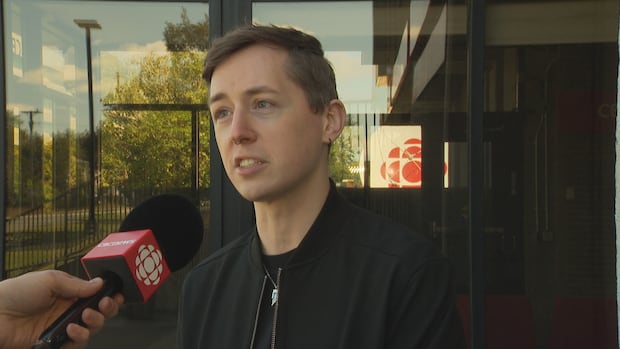
N.L. government opens door to AI data centres
Data centres are being proposed for construction throughout North America, with demand in required computing power, growing in part with use of artificial intelligence. The Government of Newfoundland and Labrador has indicated it remains open to proposals. The CBC’s Darrell Roberts looks at the latest and offers an update on an existing project.Big investment — and big pushback
Data centres have existed for years, but demand has spiked as the AI industry has accelerated.
“These are products that are really computationally intensive. And, of course, what the tech companies found is that they needed a lot more computation in order to power them,” said Paris Marx, a tech journalist and author of Hyperscale, a book about the rise in data centres.
This year, tech companies like Meta and Bell have announced billions of dollars for investments in massive data centres in provinces like Alberta, Ontario and Saskatchewan.
At the same time, some communities are pushing back over the data centre boom, citing concerns about water use, electricity use, health effects and environmental impacts.
Marx said some companies have found ways to mitigate impacts, such as through use of a “closed loop” cooling system that recirculates water. Still, he questioned the long-term value of a potential data centre project.
“Does it make sense to be giving that electricity over to data centres when there might be better ways that it can be used?” he said.
 Paris Marx is a technology journalist and author of Hyperscale, a book about the data centre boom. (Darrell Roberts/CBC)
TechNL CEO Andrea King said Labrador, in particular, appears to meet criteria that data centre proponents are looking for: low-carbon hydro electricity, cold weather and a lot of land. However, she said that doesn’t necessarily mean an AI data centre project is a good idea.
“It’s not just ‘does this make sense?’ by itself. You have to look at economic costs and opportunity costs of what else you could do with that electricity,” she said.
The federal government has welcomed data centre development as part of its AI strategy, and recently introduced a framework for responsible AI data centre development.
Across the country, there is movement on data centres.
For example, Nova Scotia Premier Tim Houston has outlined five starting conditions he says any proponent has to meet in order for consideration to build a data centre. EverWind Fuels has expressed an interest in building a data centre in that province.
In Alberta, however, the issue has generated a lot of divide. The Meta Data Centre planned for Sturgeon County, Alta. is expected to cost $13 billion and come online in two to three years. While the provincial government and Meta say it will not lead to an increase in power bills for residents, other experts say it will.
As for this province, King is happy nothing is off the table.
“It’s good to hear that [the provincial government is] open to considering it and to look at them with that strategic vision in mind,” King said.
Last year, Block Lab, a company behind two cryptocurrency mining data centres in Labrador, and the Innu Development Limited Partnership announced a proposal to build a new AI data centre in Labrador.
However, in an email, the partnership’s business development officer, Guylaine Joncas, said they are revising their position on the project and wouldn’t be commenting further.
Download our free CBC News app to sign up for push alerts for CBC Newfoundland and Labrador. Sign up for our daily headlines newsletter here. Click here to visit our landing page.