

In the nearly three decades that Paul Brunet has served as a patient-rights advocate — continuing the legacy of his late brother Claude, who was disabled — he’s grown fed up with all the promises that political parties tend to make around election time to fix Quebec’s broken health-care system.
“Whoever has governed Quebec in the past — whether it’s the Liberals, the PQ or the CAQ — they never solved the problem of access to primary care. I’m sorry,” Brunet said.
He is especially skeptical of Quebec Liberal Party Leader Charles Milliard’s pledge to create a no-appointment telemedicine platform, available seven days a week, to relieve pressure on overcrowded emergency rooms.
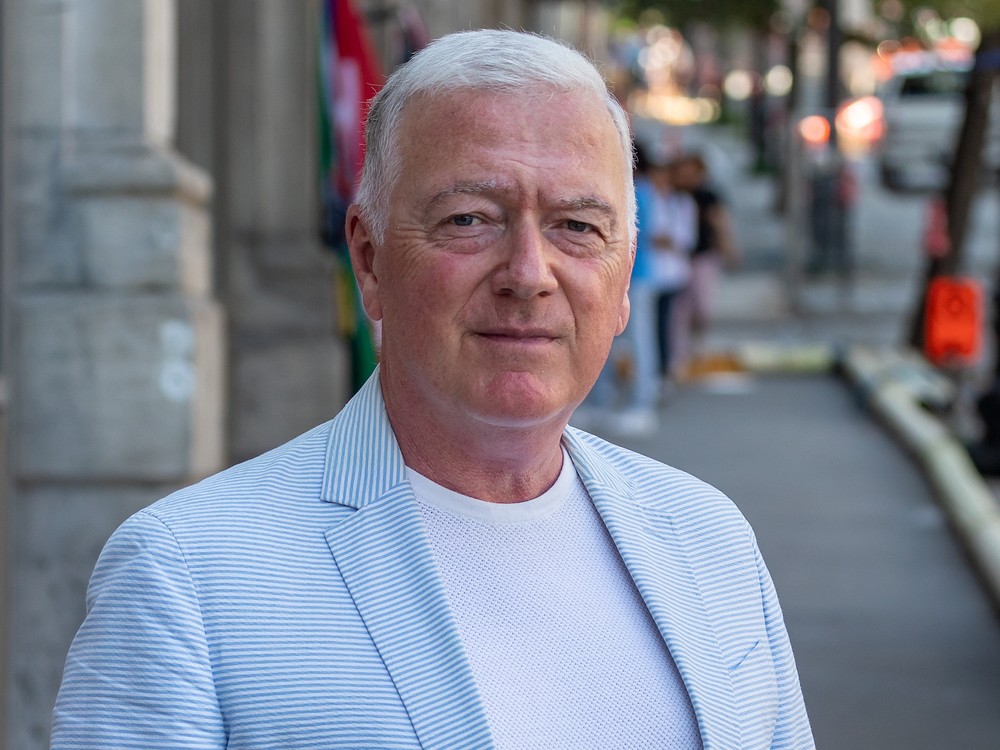 Patient-rights advocate Paul Brunet in 2022. Dave Sidaway / Montreal Gazette files
“Mr. Milliard wants to implement virtual consultations. That is a very old idea,” explained Brunet, executive director of the Conseil pour la protection des malades.
“This is already a service that employers can purchase for their employees.”
What’s more, the Réseau québécois de la télésanté already exists, and in 2022, the Jewish General Hospital (now a university health centre) launched a virtual care ward for patients in a pilot project; in June, it started offering urgent-care telemedicine consultations to some patients.
Yet today, despite the fact that telemedicine exists and that 1.7 million Quebecers are registered with family medicine groups, many are actually not being followed by an individual doctor and are often bounced around the health system, seeing professionals who have no knowledge of their medical history.
In this election, all five of the main political parties — the Liberals, Parti Québécois, incumbent Coalition Avenir Québec, the Conservative Party of Quebec and Québec solidaire — have unveiled detailed platforms to improve access to care in the province’s health and social services system, which will cost taxpayers $68.7 billion this year.
But the PQ is arguably recommending the boldest measure. It’s vowing to abolish Santé Québec, a state corporation created by the CAQ nearly two years ago and which has come under intense scrutiny by physicians and other health professionals for what they’ve denounced as a highly centralized and often bureaucratic management style.
Although one health-care manager is wary of PQ Leader Paul St-Pierre Plamondon’s promise to hold an independence referendum after U.S. President Donald Trump leaves office on Jan. 20, 2029, he still believes the sovereignist party has the best electoral platform because it’s the first party to have shown the courage to dismantle Santé Québec.
What Quebec can learn from New Zealand and Alberta
“The best example of why this should happen is in New Zealand,” added the manager, who agreed to an interview on condition that their name not be published so they could speak candidly about the issue during the election campaign.
“New Zealand went through exactly what we’re going through right now in 2022, where they did the same stupidity of centralizing everything up the wazoo and now they’re unfolding the entire thing.”
Like Quebec, New Zealand has a public health-care network. In 2022, the nation of just under 5.4 million (Quebec’s population is nine million) merged 20 district health boards into one central agency called Te Whatu Ora to boost efficiency, the same goal as Santé Québec.
Four years later, New Zealand has decided to return budget and decision-making to the regional and district levels following criticism of overspending and bureaucratic delays by the central agency. However, the agency will maintain control over national strategy and standards.
In Quebec, the provincial Health Ministry retained the responsibilities of strategy and standards when it ceded the day-to-day control to Santé Québec on Dec. 1, 2024. But in doing so, the CAQ government effectively created a two-headed bureaucratic structure: the Health Ministry and Santé Québec.
“The experience in New Zealand was a complete mess and a disaster, and they’re going back to more or less the equivalent of what we previously had in Quebec,” the manager added, alluding to regional health authorities known under the French abbreviation of CIUSSS.
Closer to home, Alberta has also abandoned the centralizing management approach to health care.
In 2023, Premier Danielle Smith announced she would dismantle Alberta Health Services 15 years after it was created. Two years later, the government completed the final legal step in the process, relegating Alberta Health Services to the much smaller role of hospital service provider. At the same time, the government established four new agencies for hospital care, continuing care, mental health and addiction, as well as primary health.
The restructuring in Alberta, however, has come at a cost of $85 million and has not led to administrative savings.
The PQ has asserted that getting rid of Santé Québec will lead to savings of at least $40 million a year because the government will pay for the salaries of fewer bureaucrats. However, a fact check by The Gazette has found this claim to be unverifiable.
The PQ has also affirmed that bureaucracy in the system has jumped by 70 per cent since Santé Québec was formed — a claim that the fact check found was misleading. Still, The Gazette has calculated a net increase of 490 employees in the health bureaucracy.
Santé Québec releases a study defending its record
In an unorthodox move in the midst of the election campaign, Santé Québec made public a study that its board of directors commissioned by Deloitte, which concluded the state corporation saved $1.9 billion in 2025-26. The Deloitte study would appear to contradict the PQ’s claims that Santé Québec is wasting tax dollars with its massive bureaucracy.
However, the health-care manager questioned both the timing of the release of the Deloitte study and its conclusions, noting the accounting firm had previously advised Santé Québec in a $132,000 contract on best management practices internationally.
Whether eliminating Santé Québec will result in administrative savings remains to be seen.
Aside from its financial record, critics have accused the state corporation of a lack of transparency, with some cardiac surgeons even going so far as to suggest Santé Québec is gaslighting the public on heart surgery stats to make its management of wait lists look better.
Liberal leader Milliard, whose party has polled in second place behind the front-running PQ, has stopped short of calling for the abolition of Santé Québec. But he has said decision-making needs to be decentralized and that Santé Québec must be truly accountable for its results.
St-Pierre Plamondon, for his part, has appeared to soften his position on Santé Québec, clarifying during the leaders’ debates that a PQ government would be willing to keep any good practices or improvements by the state corporation even after eliminating it.
I’ve never seen a political party showing the actual strength to abolish and reduce what was not efficient.
Paul Brunet
Executive director of the Conseil pour la protection des malades
In an interview with La Presse on Monday, St-Pierre Plamondon reiterated his Santé Québec pledge but floated the idea of a task force or new agency under the Health Ministry that would have the mandate of slashing bureaucracy and decentralizing decision-making following the adoption of a new law. Addressing reporters on Tuesday, St-Pierre Plamondon conceded that replacing Santé Québec with an “agency” was a poor choice of words and he really meant a task force or division of the Health Ministry.
He also slammed Santé Québec for playing politics in the election campaign as it fights for its very survival.
Patient-rights advocate Brunet declined to endorse any of the health plans by the five political parties, as have independent policy experts The Gazette has consulted. However, he did raise doubts as to whether the PQ will follow through on its central health promise if elected.
“I’ve never seen a political party showing the actual strength to abolish and reduce what was not efficient,” Brunet said.
Editor’s Picks
Health promises by Quebec’s five main political parties
Quebec Liberal Party
The centrepiece of the Liberal plan is a telehealth platform under the public system that would be available seven days a week. Milliard has announced an eight-person team composed of physicians, nurses and health experts to ensure the telehealth platform would deliver on its potential.
The Liberals have also vowed to reinforce the province’s network of CLSC clinics with a $200-million investment. What’s more, a Liberal government would inject an additional $700 million in home care for Quebec’s elders and expand Cité-de-la-Santé hospital in Laval.
Coalition Avenir Québec
In a reversal in policy for the CAQ, incumbent premier Christine Fréchette has proposed allowing doctors to run private clinics while still working in the public system. A re-elected CAQ government would therefore pay for more private-sector surgeries, picking up the bill for patients who wait more than nine months for an operation on the public side.
Outdoing the Liberal pledge on home care, the CAQ would pump in an additional $1 billion to provide such services to seniors. Like the Liberals, the CAQ has promised to expand a hospital, in this case Hôpital Charles-Le Moyne on the South Shore.
Conservative Party of Quebec
Leader Éric Duhaime has repeatedly called for a greater role for the delivery of private health care. In a 30-page plan, however, the Conservatives have refrained from endorsing a fully private system. Like the CAQ, the Conservatives have proposed more private-sector surgeries — as well as private diagnostic imaging — all of this under the public system so that patients don’t have to pay with their credit cards.
Following on the heels of the PQ’s Santé Québec announcement at the end of August, Duhaime came out a month later in favour of the agency’s abolition. The Conservatives are also eager to decentralize decision-making. Of note is the pledge to gradually hike the number of admissions in Quebec’s four medical schools to respond to the needs of an aging population. In addition, more nurse practitioners would be deployed and paramedics would be more involved in the system.
Québec solidaire
The left-wing sovereignist party has focused on reforming Quebec’s CLSC network of clinics, creating 400 points of service inspired by the public CLSC model.
Québec solidaire would crack down on private health care, investing instead in the public system. To that end, the party would provide truly universal dental and eye care to Quebecers under the age of 18. In addition, it would reduce the cost of prescription medications with the establishment of a new agency, Pharma-Québec.
Québec solidaire is also unwilling to demolish Santé Québec, with co-spokesperson Ruba Ghazal opting for a restructuring that would lead to more decentralization.
Parti Québécois
Aside from seeking to get rid of Santé Québec, the PQ favours making CLSC clinics the main point of entry in the health system, with an investment of $150 million over four years. Health prevention is also key for the PQ, as it proposes $550 million geared toward more screening initiatives, including intervening earlier in the lives of children on the autism spectrum and those with other mental health issues.
Finally, an elected PQ government would increase the existing budget for home care by 50 per cent.