
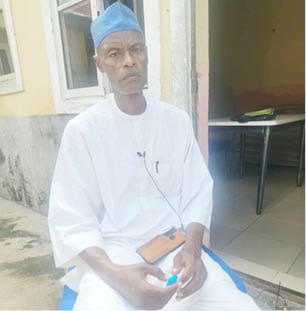
In a world where it is often easier to look away from the suffering of others, Salihu Yuguda Zaheed has chosen to stop, care and make a difference.
A civil servant with the Kaduna State Government, Zaheed is also the Coordinator of Hope for the Mentally Ill Persons, an initiative through which he has, for several years, devoted his time, resources and energy to caring for people living with mental illness who are found on the streets of Kaduna.
His journey of service was not born out of convenience or personal gain. It was shaped by a childhood in which his parents taught him the values of empathy, compassion and concern for others.
Those values have become the foundation of his work.
For years, Zaheed and the young people who work with him have gone into different parts of Kaduna to identify people living on the streets who need care. They provide basic but deeply meaningful assistance: bathing them, giving them clean clothes, shaving their hair, providing food and attending to their immediate hygiene needs.
The story of his partnership with youths at Kawo and other locations is itself a testimony to the power of example. Young men who wash cars for a living began contributing small amounts from their earnings to purchase blades and other materials for caring for people living on the streets. Zaheed joined them, expanded the range of items they provided to dental materials, masks, hand gloves and other things, and encouraged others to witness the work and become part of it.
“I met some boys who washed cars for a fee at Kawo Central Garage. When there were no cars to wash, they would move to the streets. Instead of being idle, they would go to the streets, pick up a mentally ill person and bring them to the washing point. They would contribute N20 or N50 each to buy blades and other materials for the exercise. When I saw what they were doing, I asked to join them.”
What makes his story particularly remarkable is that he does not wait for an organisation or government agency to provide all the resources needed before he acts. He regularly commits part of his salary to the work, while encouraging friends, well-wishers and young people to contribute whatever they can.
“As a civil servant and Assistant Director at the Pension and Welfare at Sabon Gari Local Government, whenever I receive my salary, I contribute a part to the exercise, and also give youths who assist us a small token for their upkeep.
His service goes beyond providing food and personal hygiene. He has encountered people whose stories suggest that they may need medical treatment, as well as others who have lost contact with their families and could potentially be reunited with relatives in different parts of the country.
“Some of them tell us their stories, and from those stories, we realise that they can recover with proper treatment. But the cost of treatment is beyond what I can afford. Most times, it’s five or even ten times more than my salary. So, we can’t afford to take them to the mental health facility. This is why individuals and the government need to come in and support their medication and treatment,” he said.
Zaheed noted that he had come across some whose families were traced to Akwa Ibom, Oyo and Gombe states.
“As an NGO, we can’t repatriate them because we don’t have the authority or resources to carry out such. That is something only the government can do.”
Yet, despite the limitations of his resources and the enormous cost of medical treatment and repatriation, he continues.
For Zaheed, service is not a project that ends with a funding cycle. It has become a way of life.
He describes his motivation simply: “I like helping people because that is how I was brought up.”
His vision, however, extends beyond his own lifetime. He is already encouraging young people to join the work and learn from it, believing that the greatest legacy is one that continues after its founder is gone.
His philosophy of service was reinforced by a lesson from one of his university lecturers: “Whatever you become in life, pay back to the community.”
Zaheed has taken those words to heart.
He has not waited to become a wealthy man, a senior government official or the head of a large organisation before giving back. He has simply used what he has—his salary, time, relationships, compassion and influence—to help people who are often forgotten.
His work also carries a strong appeal for collective responsibility. He calls on the government to provide appropriate support and facilities for the care, treatment and reintegration of people living with mental illness. He urges families not to abandon relatives who develop mental health conditions, stressing that they too deserve dignity, care and compassion.
He said he was currently training some youths in Kano and Saminaka and had received an invitation to establish a similar organization in Lagos but had told them he lacked the resources to do that.
“There is one woman who has been staying in the same place for more than 15 years, as far as I know. She stays along the NNPC area. She has been there for a very long time, and nobody is taking care of her. I wonder why the government has not done anything about her.
“With government support, we can go around and pick these people, take care of them, take those who need medical attention to the hospital, and repatriate others to their hometowns. It’s possible their relatives are looking for them.
“You cannot run away from sickness and death. Families should take responsibility and care for their relatives who are suffering from mental illness.”
Perhaps the most remarkable thing about Salihu Yuguda Zaheed is that he does not see himself as extraordinary. He simply sees people in need and chooses to help.
Having authored seven books which deal with culture, tradition and people, Zaheed believes that changing a life does not always require great wealth or public office. “Sometimes, it begins with the simple decision to care.”
UPDATE NEWS:
Nigerians can now invest ₦2.5 million on premium domains and profit about ₦17-₦25 million. All earnings paid in US Dollars. Rather than wonder,
click here to find out how it works.