
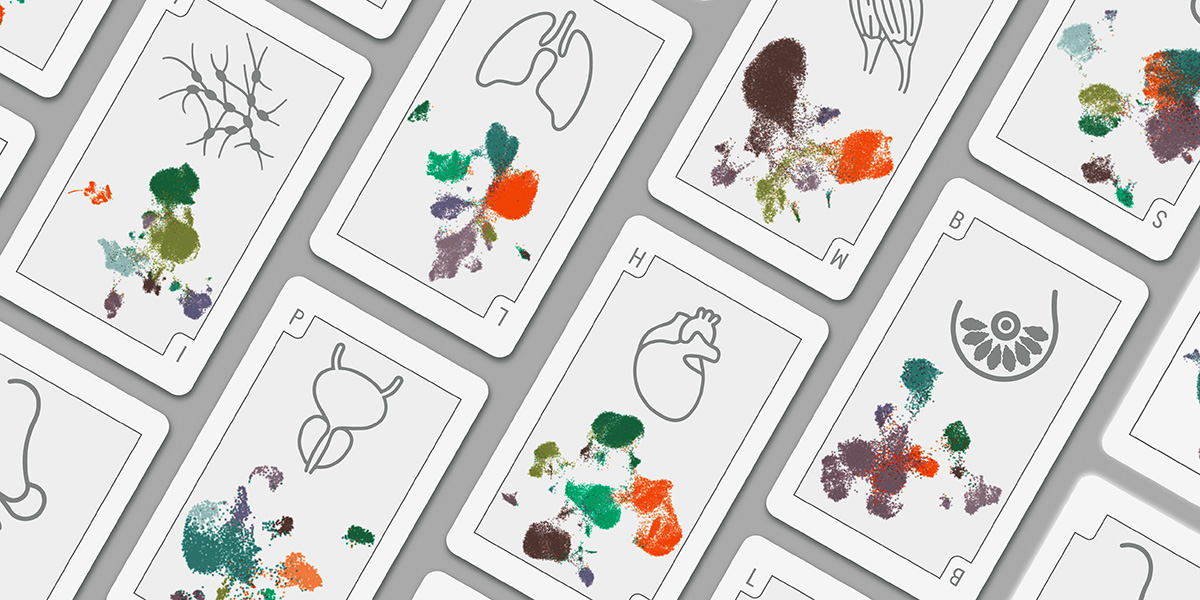
More than 4,000 scientists from over 100 countries have spent years working toward a single goal.
The Human Cell Atlas, or HCA, founded by scientists Aviv Regev and Sarah Teichmann, aims to catalog every cell type in the human body, where it is found, how it functions and how it changes in disease. After about a decade of work, the first draft will be released in 2027.
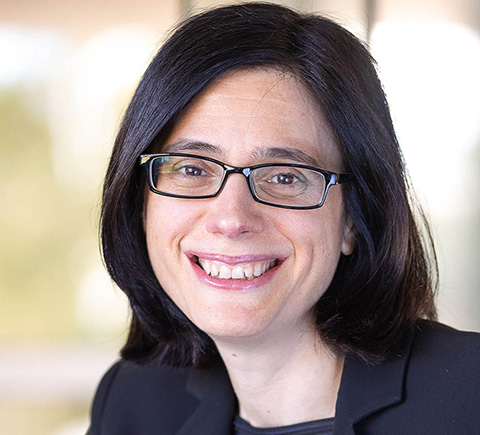
Aviv Regev
“With 37 trillion cells in the human body, no single researcher, lab or country could complete this work alone,” Teichmann, now the institute chair in stem cell medicine at the University of Cambridge, said. “(It) makes a global, multidisciplinary approach not just helpful but essential, bringing together biologists, computational scientists and technology developers from around the world.”
As remarkable as the content in the atlas is turning out to be, equally remarkable is the decade-long coordination of thousands of researchers across disciplines, technologies and time zones around a shared scientific goal.
A map of every human cell
Credit: Diana Orefice
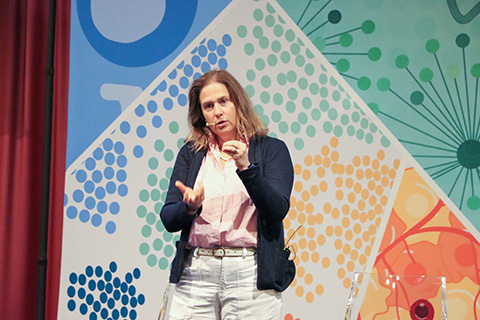
Sarah Teichmann
About 11 years ago, advances in single-cell sequencing convinced scientists Regev and Teichmann that a comprehensive human cell atlas had become possible.
In an early presentation at the National Human Genome Research Institute, Regev, now head and executive vice president of Genentech research and early development, described how little scientists knew about cell types, states and locations:
“Our knowledge of it is limited, and very rarely informed by genomic information.” She described how the available non-genomic data we did have was also in some cases decades or even centuries old.
Teichmann reached the same conclusion, and the two soon connected. Instead of building competing atlases, they joined forces, founded the global HCA project in 2016 and began a meticulous planning and implementation process.
To guide the effort, Regev, Teichmann and an already-forming team wrote a white paper outlining the atlas’s goals and how they would be achieved. At 109 pages, this is a deeply detailed view of the project.
Publishing the white paper was the first step toward making the atlas a reality and building the global community needed to create it.
Answering the call
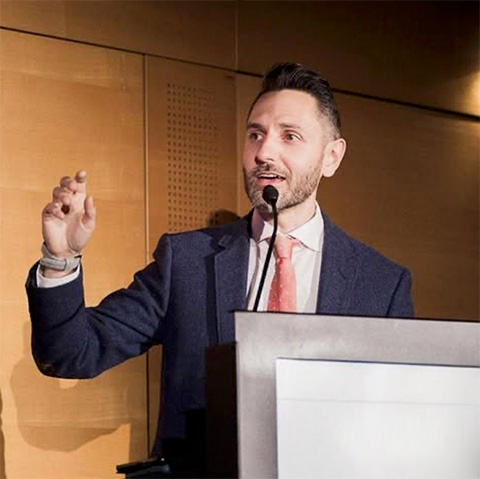
Kevin Matthew Byrd
Kevin Matthew Byrd, a clinician–scientist and Stratica Biosciences CEO and co-founder, came across the white paper while he was in graduate school and remembers saying, “That’s what I want to do.” He founded and became the coordinator of the craniofacial atlas, one of the 18 tissue- or system-focused atlases.
Each sub-atlas is led by its own team of researchers from around the world, each bringing different expertise and motivations.
Byrd found the white paper while in graduate school and training to be an oral surgeon. He dove into the work on the atlas to try to get advances back into the clinic in his field of oral diseases as fast as possible.
Planning at unprecedented scale
How do you build a project on the scale of the HCA? The 109-page white paper established the rules, values and organizational structure needed to coordinate 4,000 scientists around a shared goal.
The document defined common standards for collecting, analyzing and sharing data while creating the governance structure needed to coordinate contributors across biological specialties, technologies, quality control and data management.
It also committed the project to open data, diverse and representative sampling and rigorous quality standards.
The planning paid off: under the leadership and vision of Teichmann and Regev, the 4,000-plus scientists are about to achieve their shared goal with the release of the first draft in spring 2027.
“Everything in the white paper was accomplished, and more. It’s been pretty amazing,” Byrd said.
Building the network
Credit: Donnelly Centre University of Toronto
Gary Bader
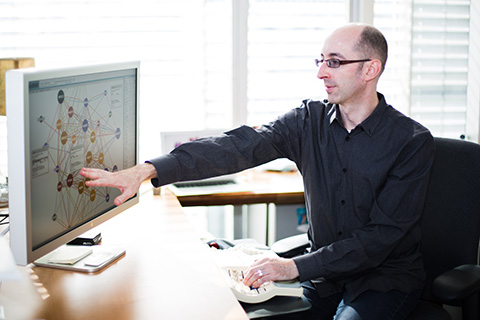
Gary Bader, a computational researcher at the University of Toronto, and Alan Mullen, a liver researcher at the University of Massachusetts, are organizing the liver atlas. The two have complementary skills. Mullen sees liver patients and runs a wet lab, while Bader uses supercomputers to synthesize and derive disease-relevant meaning from large biological datasets.
The partnership reflects the HCA itself: researchers with different expertise working together toward a common goal.
In addition to contributing scientifically to the liver atlas, Bader and Mullen manage and grow its network of contributors. The liver team published a “roadmap” paper about their plans and progress, and that publication has inspired researchers to reach out to them and join the project.
However, Bader and Mullen also reach out proactively to researchers who haven’t volunteered yet. “If someone publishes a paper, we might email them,” Bader said.
For a project as ambitious as the HCA, continually building the network, one email at a time, is essential.
Keeping 4,000 scientists connected
Credit: Kyle Klein
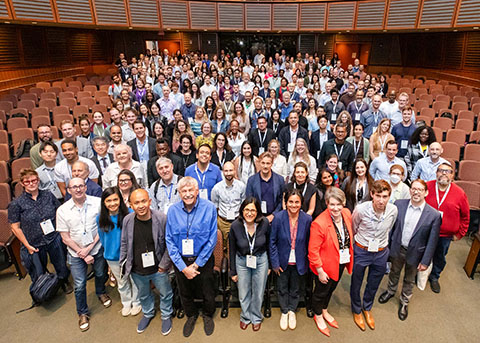
Human Cell Atlas General Meeting 2026
“The community of people and the process of building the atlas are inseparable,” Teichmann said. “I am deeply proud of the community itself — the culture of collaboration over competition that the HCA has fostered.”
Scientists are notoriously independent and opinionated people. Even with the white paper guiding the vision, 4,000 scientists is the size of a small town, and a town in which people are in every time zone on Earth and working on many projects simultaneously. How do you keep a collaboration this big from turning into a cat-herding situation?
By communicating clearly and often and keeping the goals clearly in view.
The HCA holds annual in-person meetings and online town halls open to all participants. Most of the talks and discussions are also posted online for anyone to view on YouTube or Bilibili for participants in China.
These meetings are a way to keep everyone on top of what is happening. Progress is shared. As individual atlases are completed, the results are celebrated. New data-analysis and visualization tools are also shared with the broader community.
In addition to the atlas-wide meetings, the sub-atlases also meet regularly. For example, Bader and Mullen have organized monthly meetings for the liver group. The meetings combine scientific seminars with planning sessions.
“Each person kind of has their own interests,” Bader said, so regular meetings keep progress moving.
Creating a coherent atlas
One way to build an atlas would be to simply collect all the individual atlas-like papers scientists publish regularly and link to all the data. And the scientists contributing to the atlas do publish their work as they build the atlas, often in coordinated packages with publishers like Nature, where, in 2024, more than 50 atlas papers were published.
But integrating the data into a coherent whole creates a resource far more useful than a collection of separate datasets.
Byrd explained what makes the atlas unique: “There’s inherent value in each individual paper, but what the HCA is doing is pulling together all of the data from around the world and then developing harmonized ways that we present and integrate that data.”
One part of the integration is standardized annotation across groups. The more scientists communicate while building the atlas, the more useful the final product becomes.
“We could arguably just annotate the cells however we want,” Byrd said. “But there are immune cells in our atlas that are also in the other atlases, and the names we give our cells will actually affect whether or not that we eventually can understand the cells of the human body as a whole.”
Harmonization requires researchers from different teams to decide whether cells identified in separate atlases represent the same cell type or state and, if so, to talk with each other and agree on a common name. Contributors also harmonize clinical terms like diseases and other health variables. A dedicated quality control committee helps ensure that data and annotations meet shared HCA standards.
From atlas to impact
When the lung atlas was published in 2018, for example, it identified ionocytes, cells not previously identified in the lung. It was the only cell in the lung that expressed high levels of CFTR, the gene known to be responsible for cystic fibrosis.
“The cystic fibrosis gene had been linked to cystic fibrosis for decades, it’s one of the first genetically mapped disease genes,” Bader said. “And what was amazing is that nobody knew that it was expressed in this cell type and nobody even knew that that cell type existed.” There have been dozens of papers published pursuing this avenue of research for the disease.
The atlas has dramatically expanded our understanding of the human body. In the eye alone, the atlas has identified more than 120 cell types, an increase of 50% from what was previously known to be there.
The data are helping researchers answer fundamental questions, including these: What cells are affected by disease-causing mutations? What cells are lost or changed as diseases progress? How can you tell if a drug is working? Are there clear biomarkers to diagnose various conditions? How can you tell what side effects or toxicities a drug causes?
Even though the full atlas itself has not yet been released, data from individual atlas papers are already making waves.
“The Human Cell Atlas led to the discovery of numerous cell types and cell states, and it uncovered how tissue is organized in cellular and molecular terms,” Regev said at last year’s HCA General Meeting. She continued, “Scientists now routinely map genetic variants of disease risk to the cell in which they act. And they do that through the Human Cell Atlas. It wasn’t actually doable before.”
The 455-plus papers published by HCA researchers have been cited over 78,000 times so far.
Data from the atlases are also already being used to train foundation models to do things people can’t do by hand, including helping with cell annotation and providing researchers with a way to search for similar cell states across the body. Atlas researchers have also built AI agents that can do data analysis on demand, like comparing expression between cell types. These tools are ensuring the HCA data are accessible and usable to as many researchers as possible, even those who are not experts in handling large computational datasets.
There are already plans for the next 10 years. Once the first draft atlas is out, the group will be on to an even more comprehensive second draft.
“These atlases are already becoming foundational resources in both academia and industry,” Teichmann said. “They are not only revealing how cells in our bodies function but are actively being used to design drugs and inform clinical trials. That translation from fundamental science to medical impact is incredibly exciting.”