
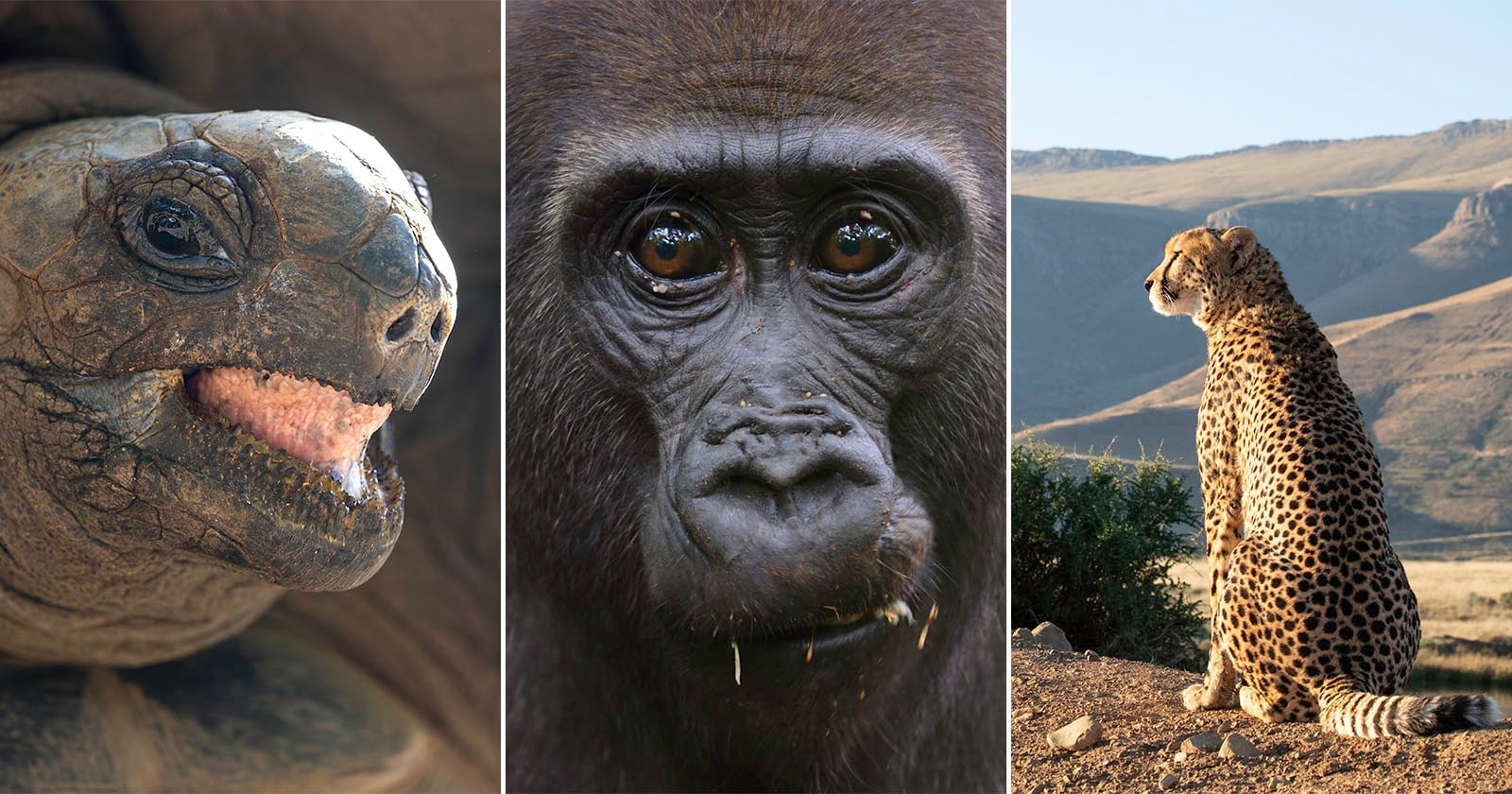
National Geographic’s newest documentary series, Africa: Earth’s Wild Home, is among its most ambitious to date. The seven-part series is the first in a new multiyear natural history franchise for National Geographic, and features cutting-edge camera technology across the board. PetaPixel spoke to showrunner Gavin Boyland about the incredible diversity of place, subject, and cameras in the new series.
With so many different cinematographers working across Africa for literal years, using so many different types of cameras, from remote rigs to drones, from macro setups to super-telephoto lenses, military-grade night-vision cameras, and everything in between, Boyland had a monumental task on his plate. How do you deliver a cohesive, visually coherent story when it’s being shot by so many different people using such varied equipment?
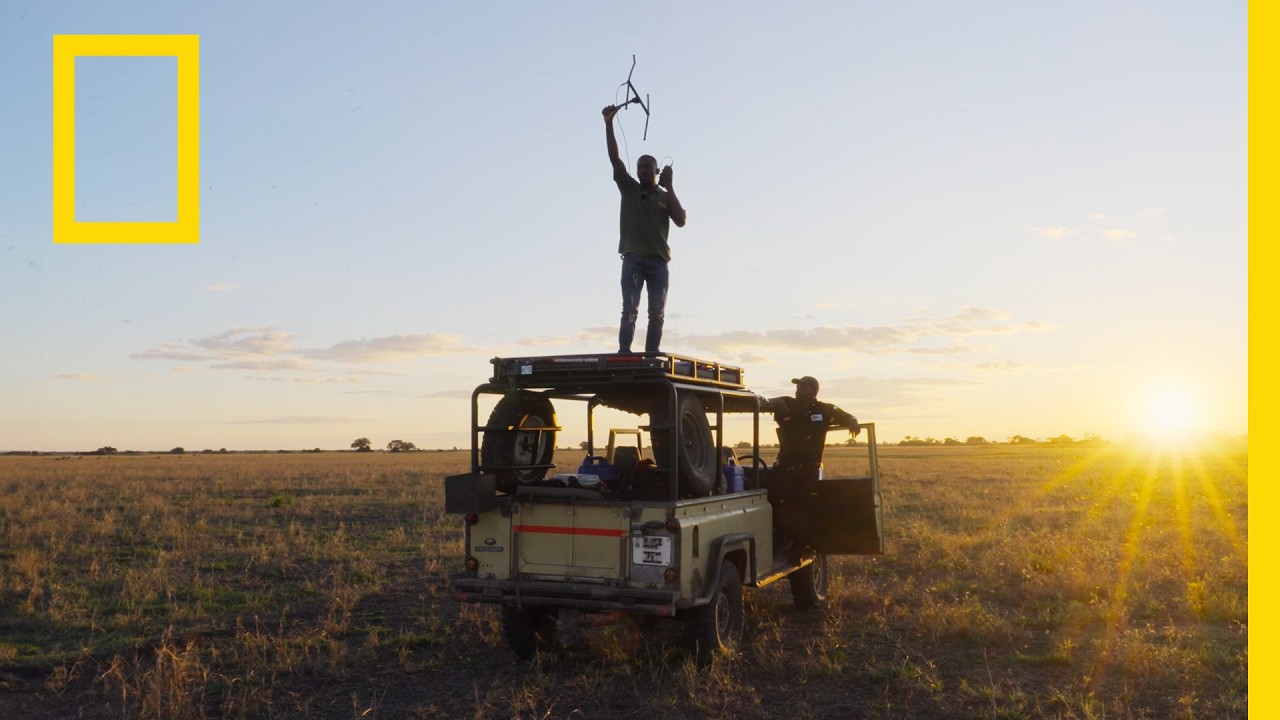
“I think often, with wildlife, we find a behavior story we want to tell, and then we think, ‘Right, what’s the best way to capture it?’ That often dictates the technology and filming approach we take,” Boyland tells PetaPixel.
“But also when we set out to start the series, we talked across the team, the directors and camera teams, about a visual style. A lot of that was about character, getting into the mind of the animals and getting into their world.”
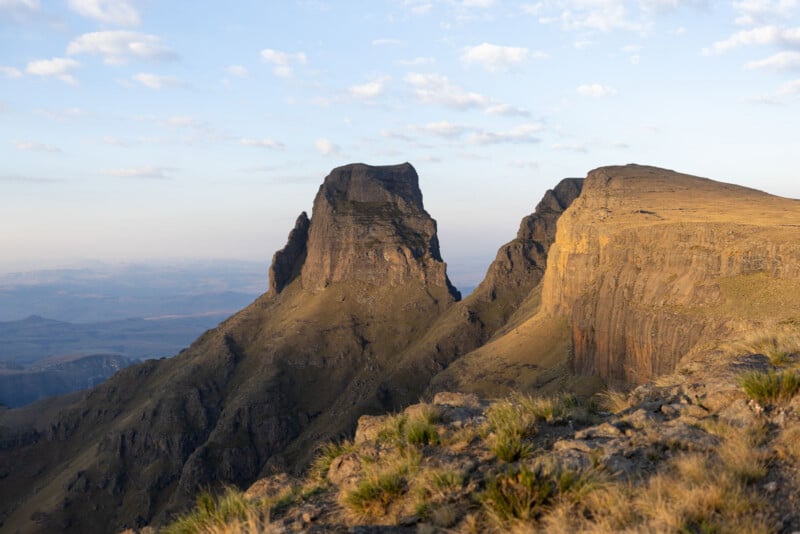 The Drakensberg Mountains, South Africa at sunset. (National Geographic/Mario Brioschi)
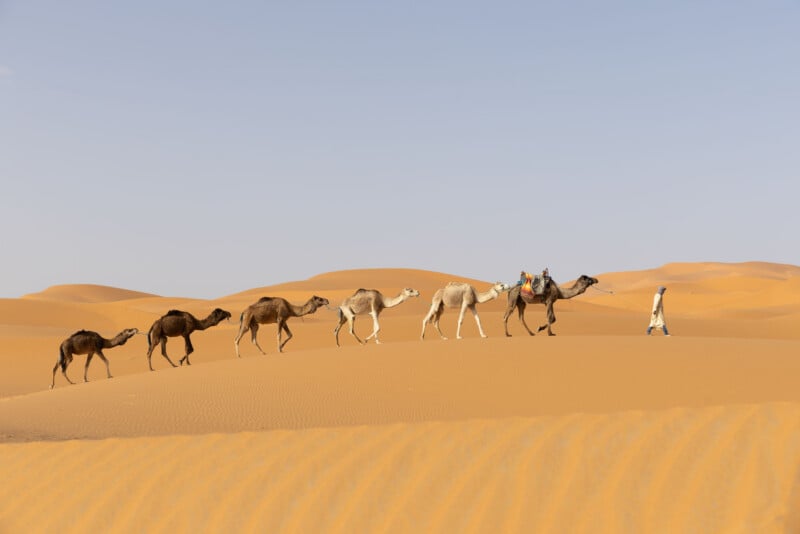 A camel herder with six camels in the dunes of Erg Chebbi, Morocco. (National Geographic/Alice Clarke)
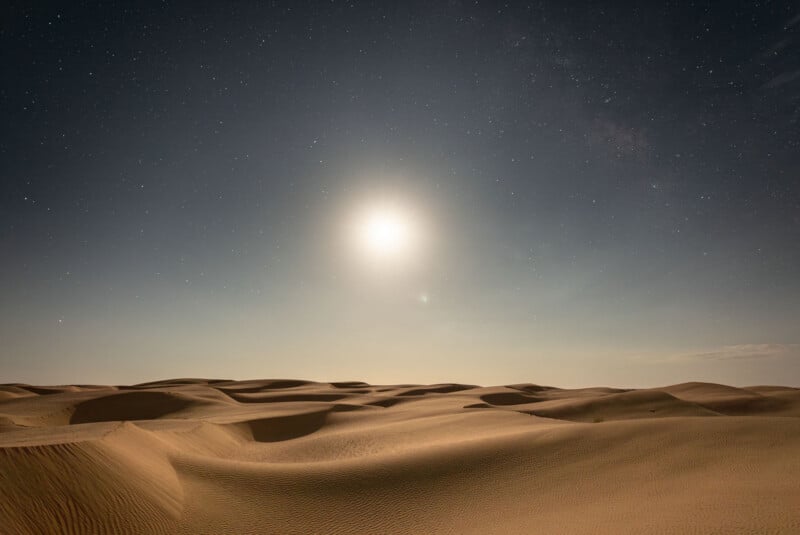 Stars and a full moon over sand dunes in Tunisia. (National Geographic/Bruno D’Amicis)
A big part of getting into the “mind of the animals” and their world relied on making intelligent, creative choices about cameras and lenses. For example, macro probe lenses on remote-controlled cameras enabled incredible close-up shots of insects and small mammals; ultra-sensitive low-light pan/tilt cameras let cinematographers capture the world’s first shots of dwarf crocodiles hunting bats inside a cave; and self-leveling, underwater, hippo-proof cameras captured stunning footage of one of Africa’s deadliest mammals.
“We always wanted to feel like we’re in an animal’s home, in their environment,” Boyland continues.
In some cases, humans are a big part of an animal’s story, and Boyland and the team handled it very well. He calls it a “Tom and Jerry approach,” meaning people were most often seen from the waist down or looking at them.
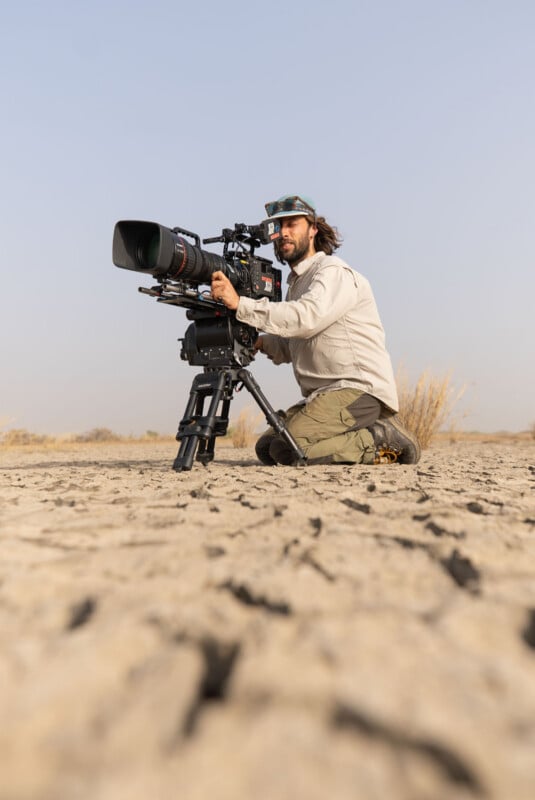 Cameraman Luke Nelson films African golden wolves on a dried up lake in Senegal. (National Geographic/Hedvika Michnova)
“We didn’t want to feel like we were in a human world,” Boyland says. “I think that kind of visual style of being in the home of the animals was what drew together a lot of the filming styles.”
One of the most powerful sequences in the series shows sea turtles struggling to reach the ocean, effectively dying out on a rocky beach. I’ve seen enough natural history and wildlife documentaries to know that a happy ending is far from guaranteed. Nature can be brutal and devastating.
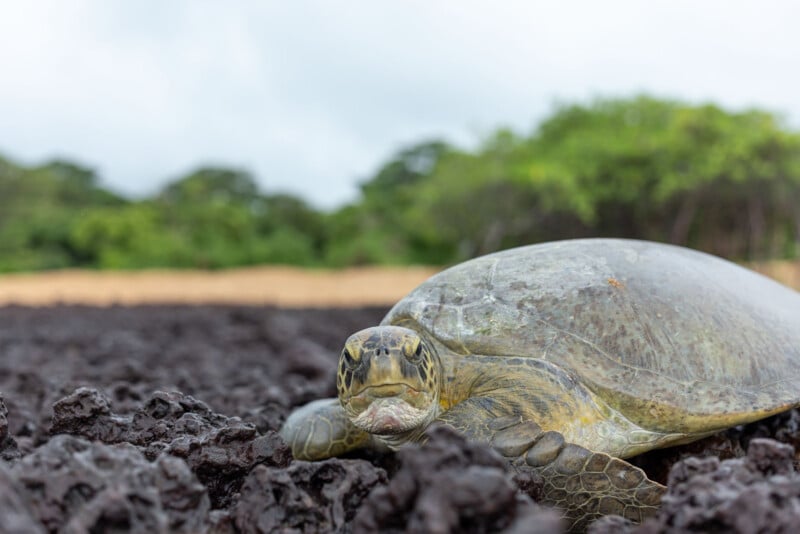 A green turtle trapped on an exposed coral at low tide. (National Geographic/Sacha Thorpe)
But then a person’s legs approach in the background, blurred as the camera is close-up on a sea turtle desperately trying to survive. It’s a tragic story with a positive outcome: people are dedicated to helping sea turtles cross the final threshold and reach the ocean, but only when there is no alternative.
“That was a really interesting story to tell, actually,” Boyland says.
“We found that location and we were really keen to get to this very remote island, so it took a lot of organizing to get there. And then when we were there on the ground, we had two endings in mind. I think our dream scenario when we were filming was that a turtle would make the crossing, get to water, and survive. But we knew we were working with the local conservationists that rescued the turtles. Now they’ll only do that as a last measure.
“If they decide, okay, this turtle is not going to make it, that’s when they intervene. Wherever possible, they’ll try and let the turtle make it themselves. So we actually filmed the two endings for that one turtle that actually got to the ocean, and then we filmed that second turtle later that didn’t — was clearly not going to make it and was rescued.”
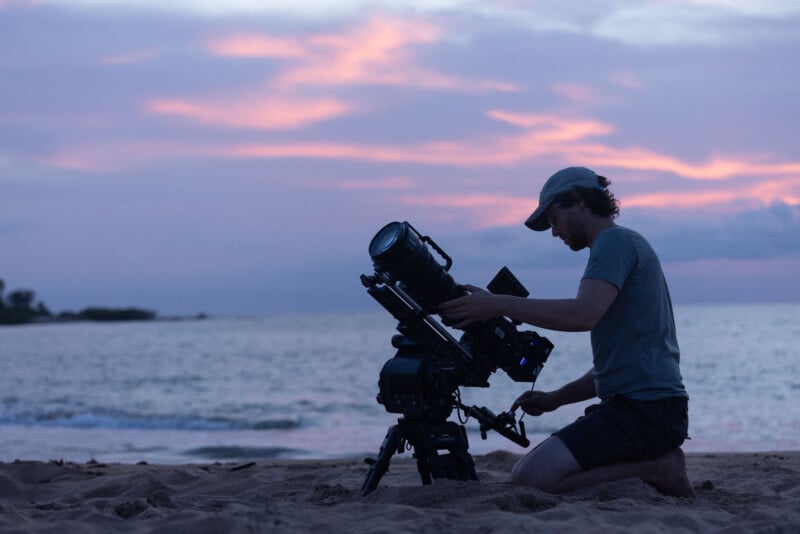 Cameraman Benjamin Sadd setting up a camera to film green turtles coming to nest at night. (National Geographic/Sacha Thorpe)
Once the team was in the edit, they realized how powerful a story they had. The way it’s told keeps viewers on the edge of their seats. I sure was.
“I’ve seen that sequence 20 times, and I still think it’s not going to make it,” Boyland says.
For Boyland, the human element of the sequence is part of what makes it so powerful and inspiring. While people directly cause so many devastating environmental outcomes worldwide, they can also be a harbinger of meaningful, positive change.
“I think that there’s other ways you could have talked about these people that kind of patrol that beach and rescue turtles as much as possible. But to tell it almost from the perspective of the turtle makes it even more powerful as well.”
“I really, really hope it will inspire people.”
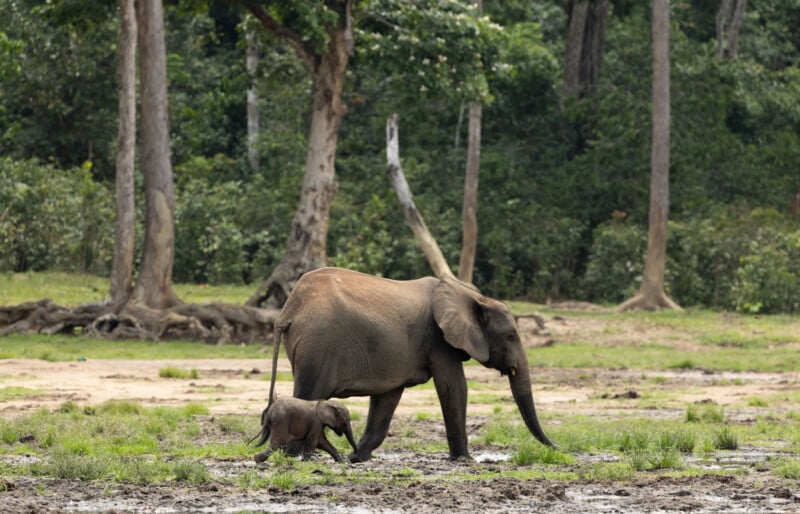 An adult forest elephant and calf walking in Dzanga Bai. (National Geographic/Kate Laurie)
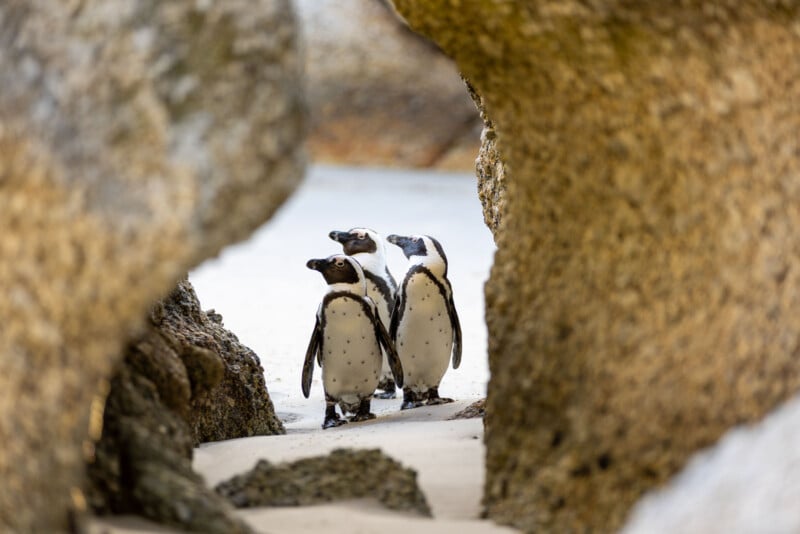 Three African penguins walking between rocks on Boulders Beach, South Africa. (National Geographic/Virginia Quinn)
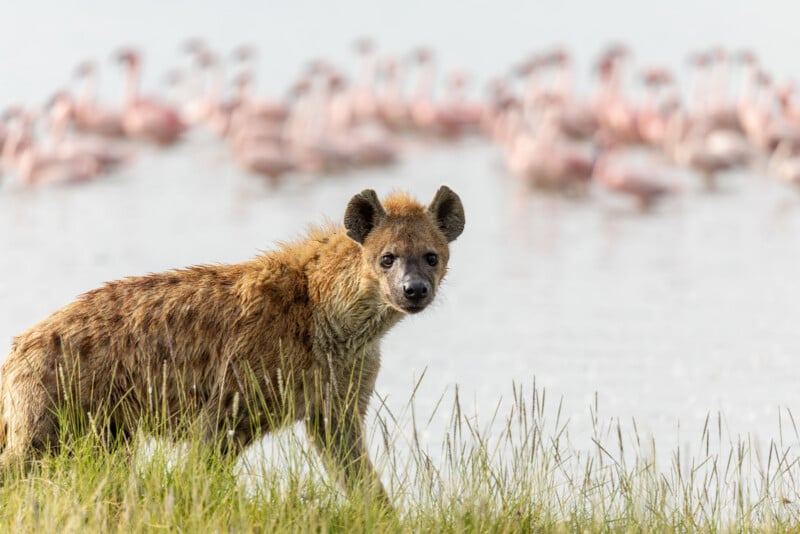 A spotted hyena walking along the shore of Lake Elmenteita with flocks of flamingoes in the background. (National Geographic/Alicia Russo)
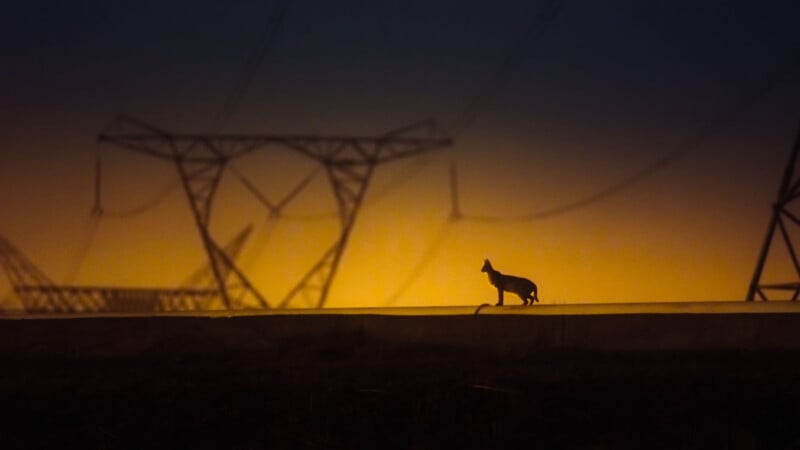 A serval lives in the industrial complex of Secunda Power Plant. (National Geographic)
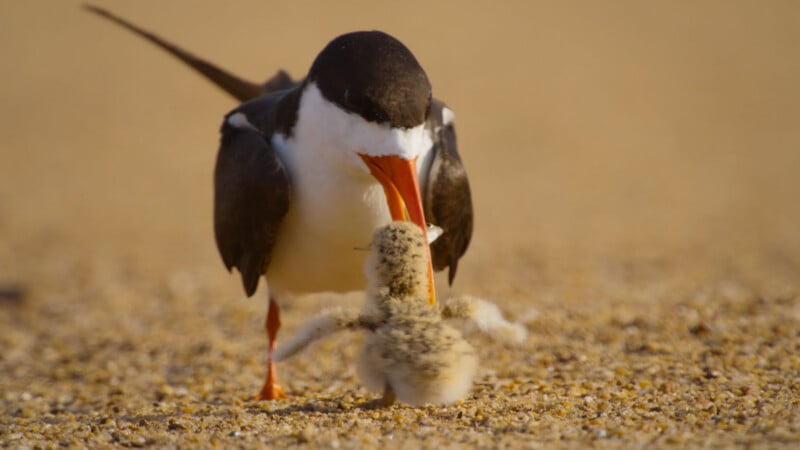
Other parts of Africa: Earth’s Wild Home tell similarly inspiring messages about conservation. A massive groundswell of local communities across Africa and the rest of the world is working hard to improve lives for wildlife. Conservation is shifting from a macro to a more micro approach, and evidence is growing that grassroots efforts can be remarkably impactful.
So Many World’s Firsts
Africa: Earth’s Wild Home features six world’s firsts, and each is spectacular on its own.
“That was always our hope, to try and find new stories that surprise people,” Boyland says. “We definitely took the approach that Africa as a continent is quite familiar from a wildlife perspective, and we wanted to go off the beaten track and show another side to it.”
The team definitely did that. The series shows the world’s smallest crocodile hunting bats in pitch-black caves, delivers the television debut of what may be the world’s cutest and grumpiest frog, the black rain frog, a flying saucer beetle that digs trenches to collect water from fog, the world’s only meat-eating tortoises hunting birds, golden wolves hunting pelicans three times their size, and fossa fighting to find mates. While not the world’s first, the series also shows chimpanzees using sticks to fish algae from ponds, which has rarely been observed. It’s an incredible variety of achievements, all enabled by cutting-edge camera technology.
“The black rain frog is an incredible little character and he’s going to shut down the internet with his popularity,” Boyland laughs.
But another world-first stands out even more for Boyland.
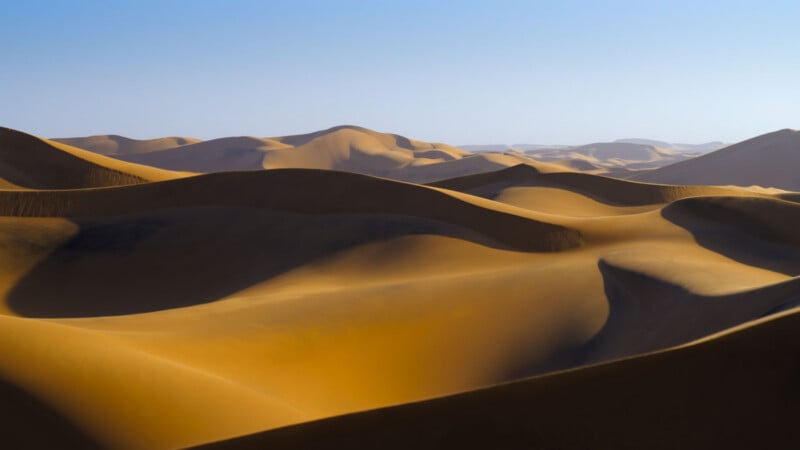 Dunes of the Namib Desert, the oldest desert in the world. (National Geographic)
“In the final episode, the ‘Extremes’ episode, there’s this tiny little beetle that lives in Namibia. And it was a story that one of our researchers first found. When they found it, I couldn’t quite get my head around it. It was this beetle that lives in a desert, yet it digs these trenches, these like tiny little trenches in the sand and creates little mounds of sand. And then, this is a coastal desert, so it gets mist coming in in the morning. And the mist is the only source of moisture. And the mist just catches on the edges of these trenches and condenses into droplets of water. And then the beetle goes up and down and drinks the water.”
“I’ve never heard of that before. I’ve never heard of a beetle farming moisture in the middle of a desert,” Boyland continues.
“It’s really exciting for our jobs to be able to think that there are still these things out there that haven’t been filmed before, that haven’t even really been studied before. I mean, scientists knew about that beetle, but they didn’t really understand how it did it. It was only by kind of focusing on the filming did we really appreciate what it was doing.
“The really fascinating thing about it, right? So the mist that comes in, it doesn’t happen every day. It depends on the climatic conditions, whether the mist comes or not. Even scientists and weather people find it hard to predict. The film crew would go out at night, and sometimes the beetles would do their thing, and sometimes they wouldn’t. Sometimes they’d go out, and the beetles just wouldn’t do anything. They wouldn’t even show up.
“Next day, the beetles would come in and they’d go up and down, up and down digging the trenches. It was only when the beetles were busy that the mist came the next day. If the beetles didn’t do anything, there was no mist. It’s like the beetles were able to predict the mist, even if the humans couldn’t. It’s amazing.”
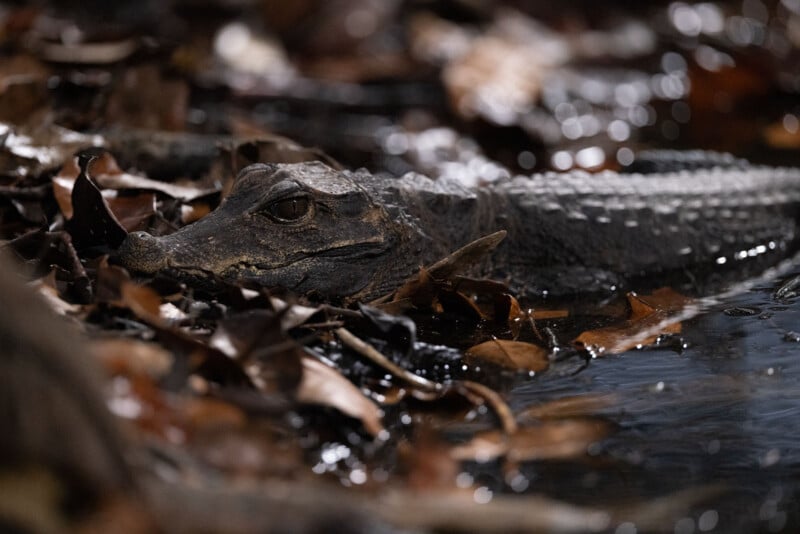 A dwarf crocodile emerges from the swamp forests of Gabon. (National Geographic/Clement Kiragu)
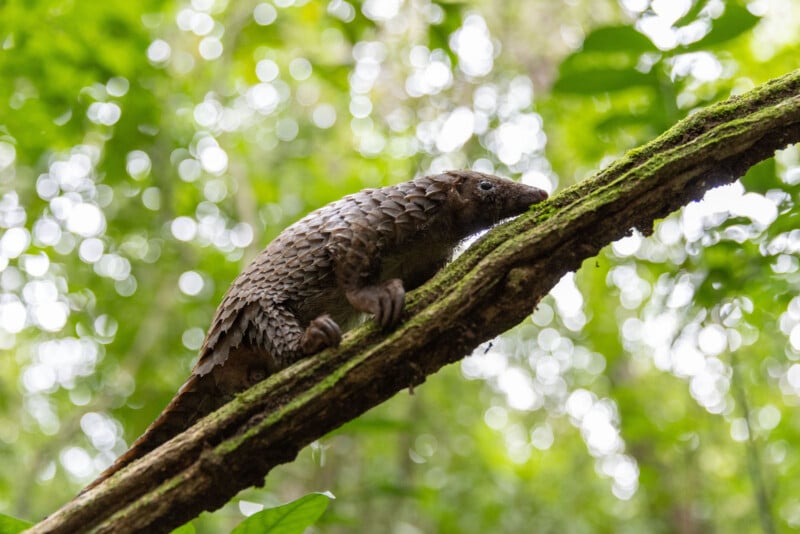 A white-bellied pangolin climbs a tree at a wildlife sanctuary in Liberia. (National Geographic/George Woodcock)
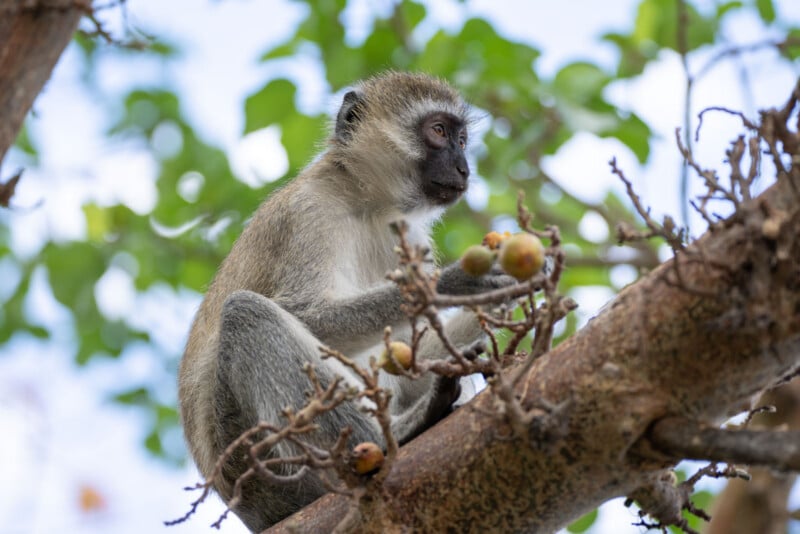 A vervet monkey munching on fruits. (National Geographic/Clare Kingston)
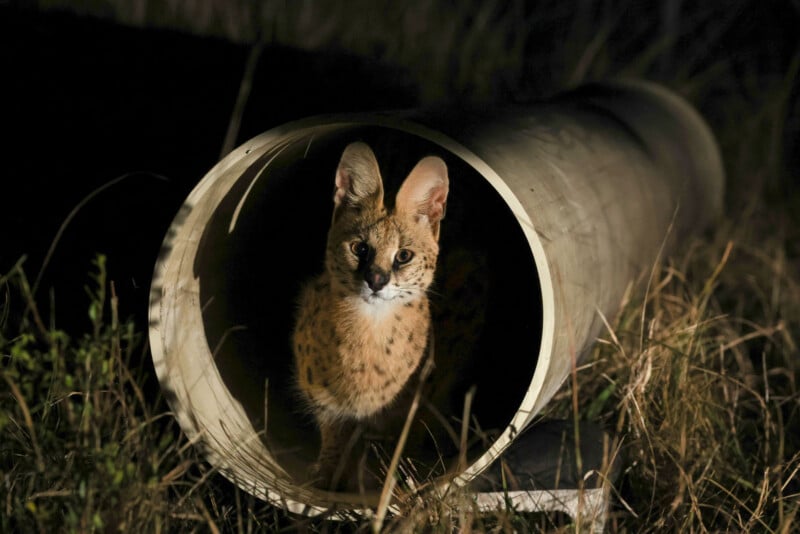 A serval stands inside of a pipe at Secunda Power Plant, South Africa. (National Geographic/Ellie Ryder)
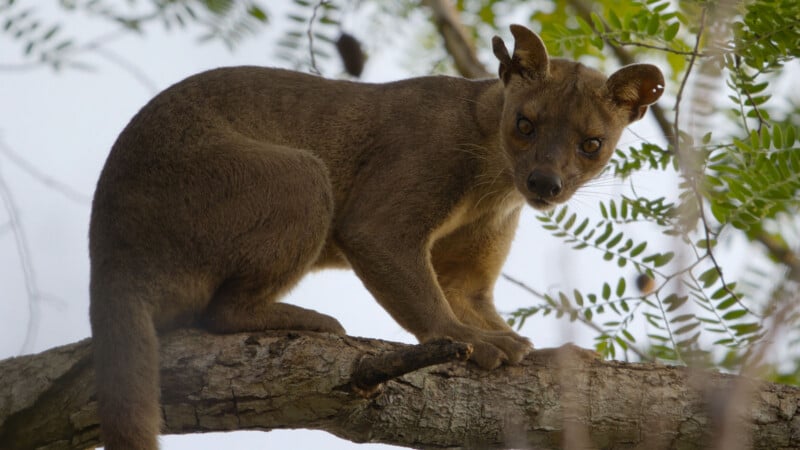 A female fossa on top of her chosen mating tree. (National Geographic)
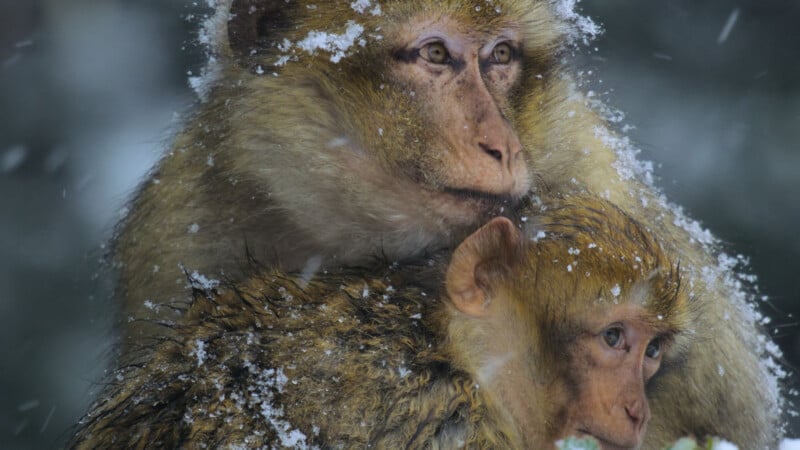 A Barbary macaque adult and a baby huddle to keep warm. (BBC Studios Distribution Ltd)
Although not a world’s first, another moment from the series stands out for Boyland.
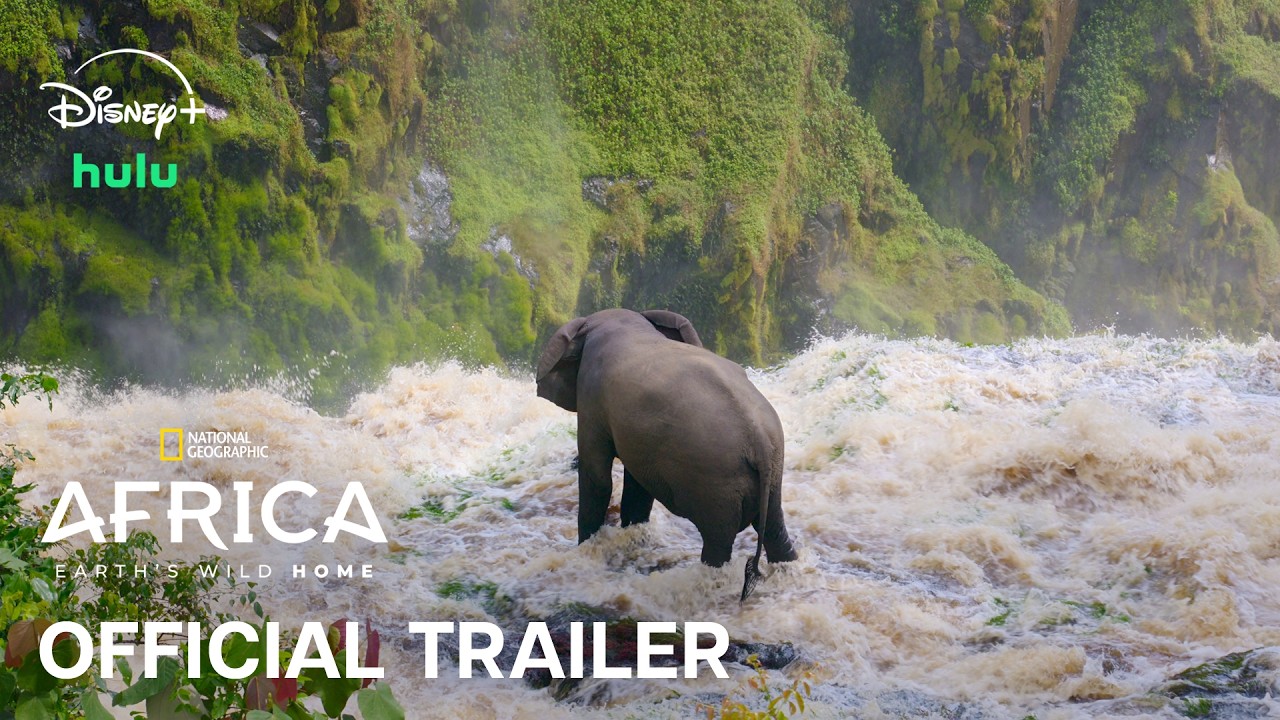
“In Gabon, in central Africa, we’d heard a report — and we had seen one photograph — of a bull elephant people had seen going down a river near a waterfall, Congu Falls. It’s quite a remote place,” Boyland explains. ”And there’s this one sort of grainy photograph taken from a helicopter once of the bull right on the edge of the falls. And we spoke to them and they were like, ‘Well, we suspect he’s going to the waterfalls, but no one knows because no one’s seen it.’ So we sent a drone crew out there to see what happened.”
The drone followed the elephant down to the falls, and it turned out the elephant was going right to the edge, to the very precipice.
“Some of the shots, they just look incredible. We took a risk,” Boyland says. The risk paid off.
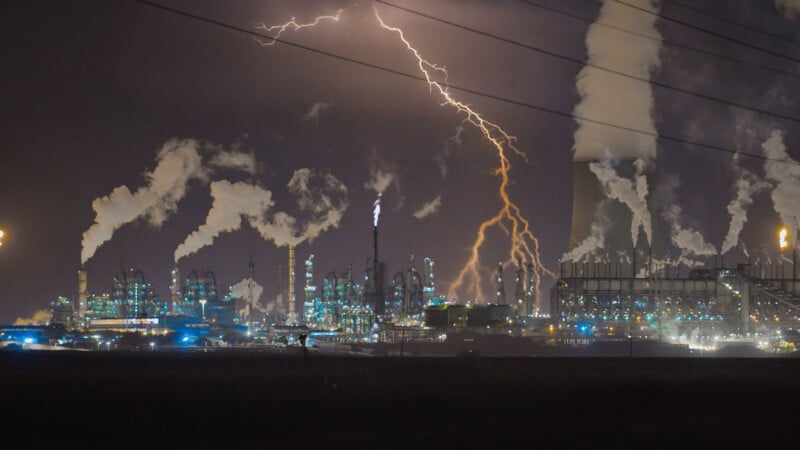 Secunda Power Plant in South Africa during a thunderstorm. (National Geographic)
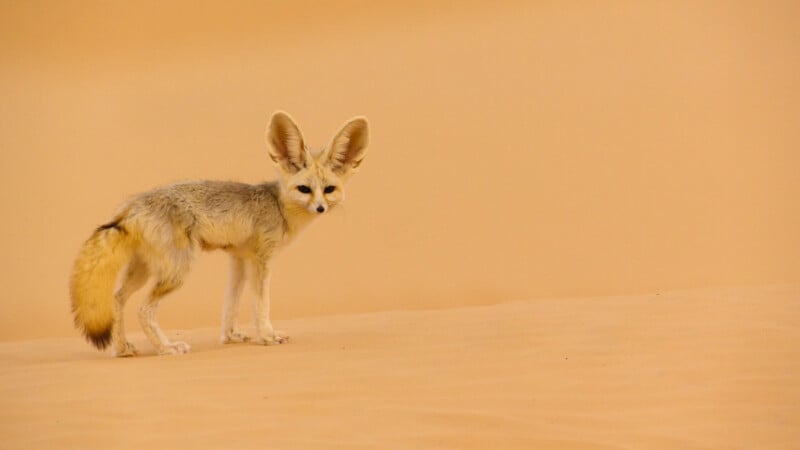 A fennec fox in the sand dunes of the Sahara desert. (National Geographic)
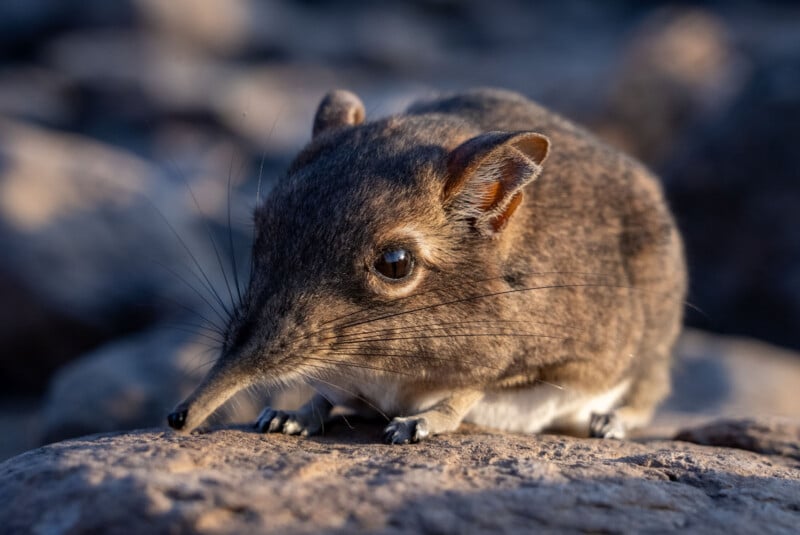 A Somali sengi in the lava fields of Djibouti. (National Geographic/Robin Cox)
‘Africa: Earth’s Wild Home’ Premieres on October 2
That’s just one of the many incredible stories and visual sequences in Africa: Earth’s Wild Home. It is an incredible series and a real treat to watch.
It required a huge team of cinematographers, audio engineers, directors, and more, going on over 100 expeditions in 33 countries and filming in the field for over 300 days. The series relies on a huge array of specialized camera operators and so many talented people behind the scenes.
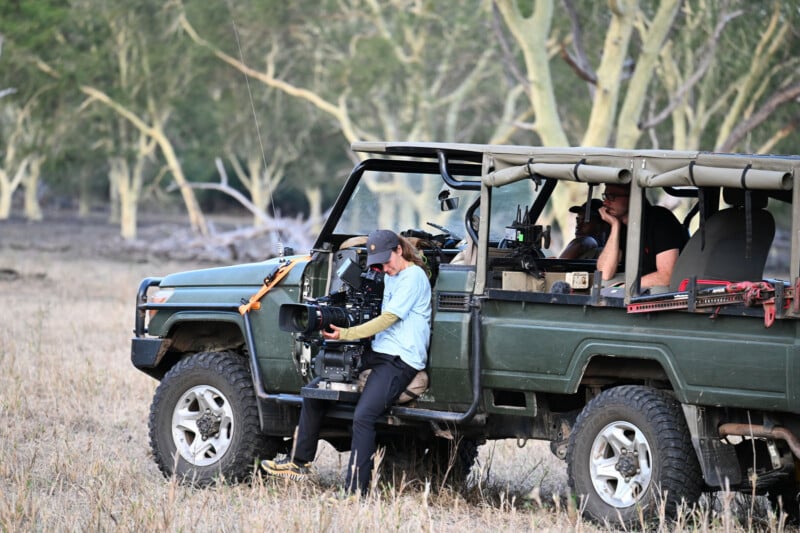 Sue Gibson films from a car on a RED with a long lens. Director Matthew Underwood watches from the car. (National Geographic/Virginia Quinn)
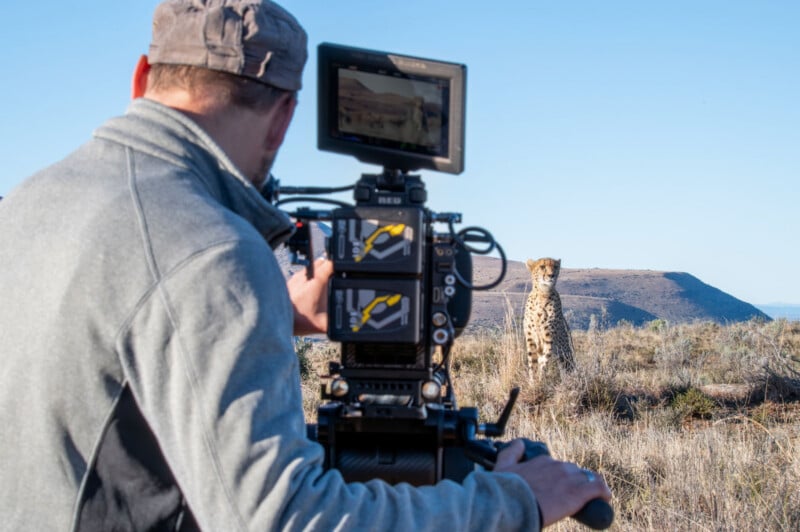 Camera operator Dominic Hamilton films a cheetah in the Sneeuberg Mountains. (National Geographic/Virginia Quinn)
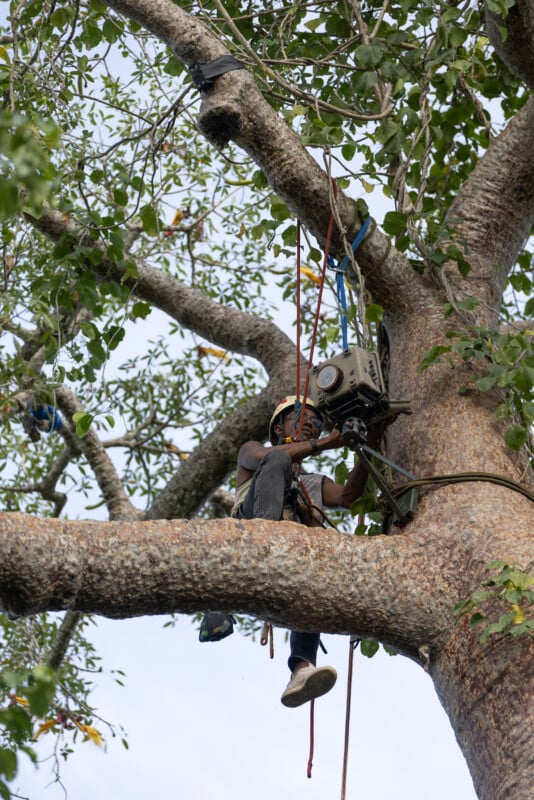 Johnny Razafinarivo setting up a camera trap on a tree in Madagascar. (National Geographic/Alice Marlow)
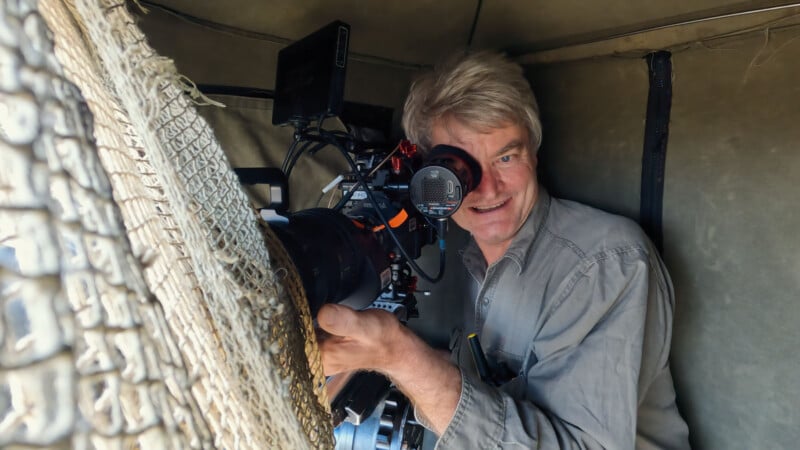 Cinematographer John Aitchison films from a hide. (National Geographic)
“We always say, ‘Nature writes the script.’ You never know what’s going to happen,” Boyland concludes.
Africa: Earth’s Wild Home premieres tomorrow, October 2, on National Geographic. It premieres the following day on Disney+ and Hulu.
Image creditsNational Geographic