
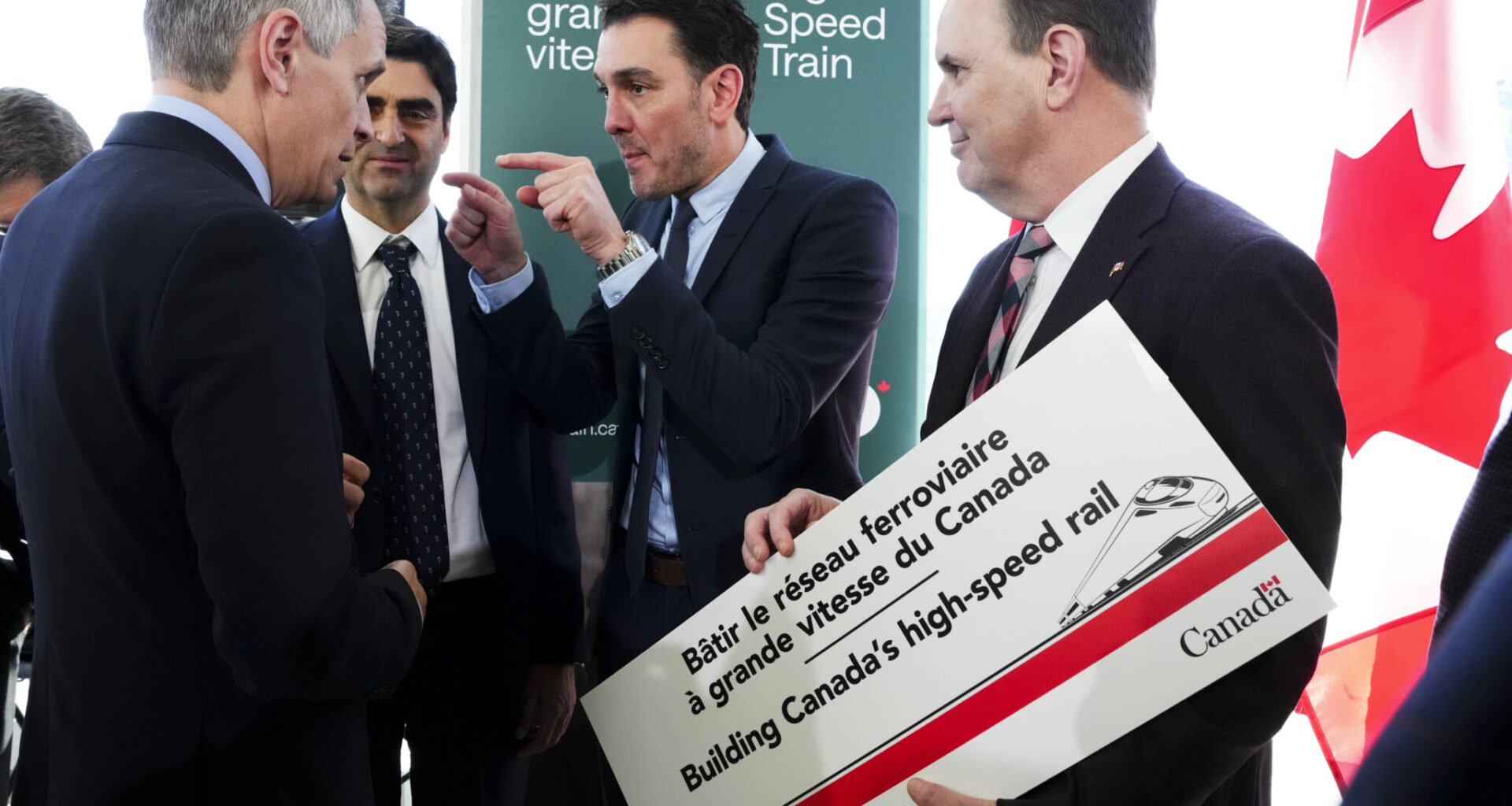
The Parliamentary Budget Officer warned in a report released Thursday that building the Alto high-speed rail line between Toronto and Quebec City could cost $75 billion to $113 billion—up to $23 billion more than the $60-billion-to-$90-billion range cited by Ottawa and the Crown corporation leading the project. The government has billed the roughly 1,000-kilometre line as a nation-building investment—but critics say the ballooning estimates, which still exclude the cost of actually running the trains, show taxpayers are being asked to back a project whose true price tag nobody can yet pin down.
The report, prepared under Parliamentary Budget Officer Annette Ryan, drew on a review of 94 high-speed rail projects around the world and applied their per-kilometre construction costs to the Canadian corridor. Alto, the Crown corporation leading the project, has described its own figure as preliminary and has said a refined estimate will come next year. Both ranges cover construction alone.
The watchdog singled out a proposed 15-kilometre tunnel into Montreal as one of the largest cost risks, estimating its cost at roughly $169 million per kilometre and flagging the potential for construction delays. Each year of slippage would add about $1.5 billion to the bill, the report found, and difficult terrain through the Canadian Shield between Ottawa and Peterborough poses a further challenge. The analysis also does not look the added cost of adding Kingston as a stop, which the Carney government announced it is looking into.
Why the watchdog expects overruns
Ryan’s report grouped Canada with the U.K. and U.S., where high-speed rail has generally cost more than in continental Europe and has frequently exceeded its budget. “Given the institutional similarities between the U.K., U.S. and Canada, an HSR project in Canada may be at risk of similar cost escalation pressures,” the report states. “Construction costs for certain infrastructure projects in Canada have been observed to rise at a faster rate than in comparator countries.”
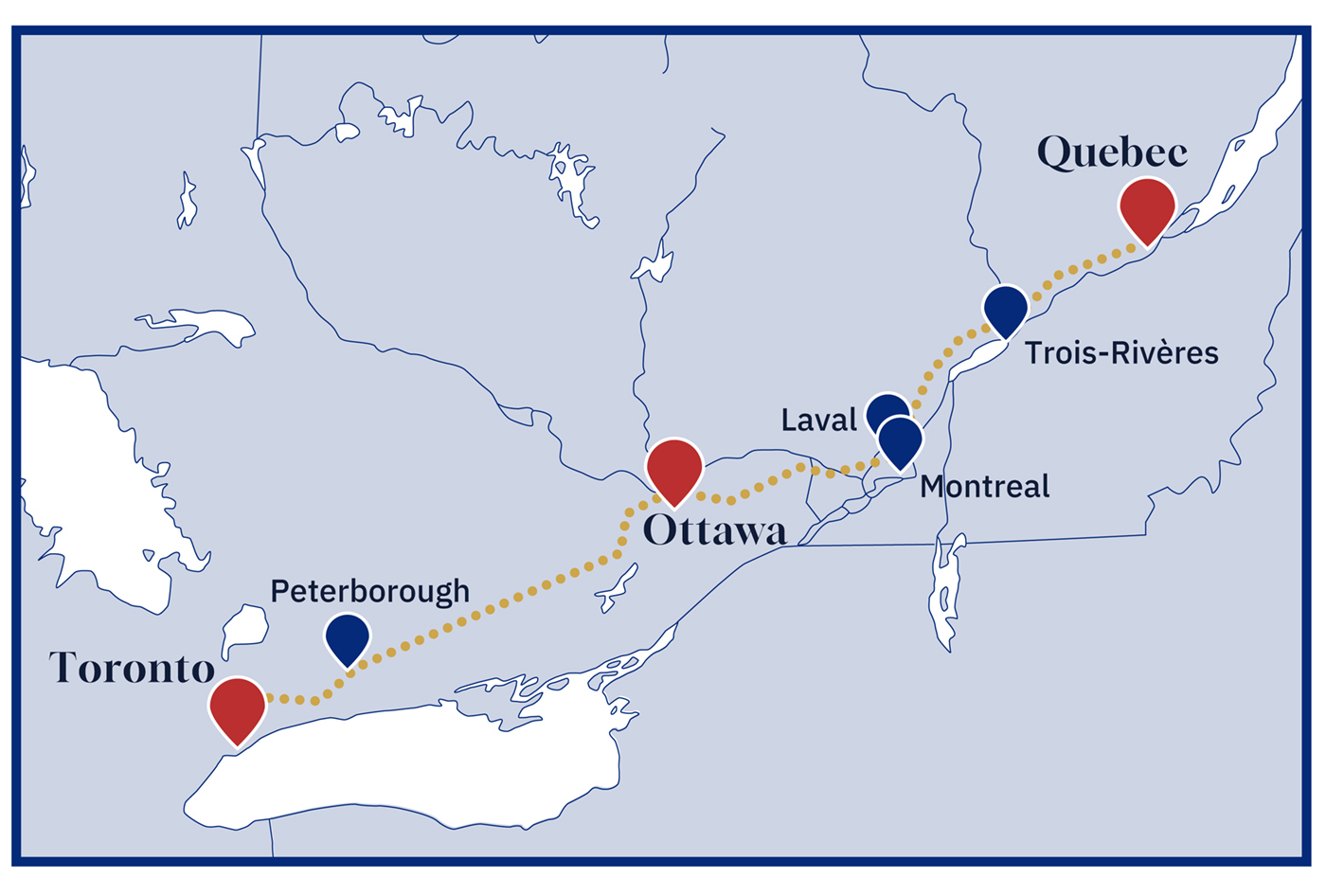
The project, unveiled by former prime minister Justin Trudeau in February 2025 shortly before he left office, was referred to Prime Minister Mark Carney’s Major Projects Office in September 2025. It would lay about 850 kilometres of electrified track linking seven cities in Ontario and Quebec, with trains running at up to 300 kilometres an hour. Construction is expected to start in 2029, with the federal government covering most of the cost.
Operating costs remain unaccounted for. An internal 2023 briefing document, first reported on by The Globe and Mail, put the cost of running and maintaining the line at $62.6 billion to $67 billion over 40 years, bringing the total, with rolling stock, to around $150 billion against projected revenue of $105 billion over the same period. The PBO said its next report will examine whether ridership revenue—Alto forecasts 24 million passengers a year by 2055—can cover operations. Supporters remain undeterred. Infrastructure and transit consultant Mark Salsberg said, “Now that we’re in a bit of a rail renaissance, it is the perfect time to invest in high speed rail.”
Critics say the fiscal case has collapsed
For Alto’s critics, the PBO’s numbers confirm doubts about whether Ottawa can hold the line on a project of this scale. Tim Sargent, a contributor to Project Ontario and the director of the Domestic Policy Program at the Macdonald-Laurier Institute, argued in a column late last year that the federal record on large infrastructure gives Canadians reason to doubt costs can be contained, noting that only 20 percent of the $3.8 billion approved for 181 transportation projects between 2017 and 2023 was actually spent. “It is therefore time to stop throwing good money after bad and to stop work on the current high-speed rail project,” Sargent wrote.
Warren Everson, writing in The Hub in February, looked at the European and Japanese systems proponents hold up as models. “But only a few HSRs pay for their annual operations, and none have recovered the cost of their construction,” Everson wrote.
Hub contributors argue the overrun exposes a federal government better at announcing nation-building projects than at pricing or delivering them. A taxpayer-backed line would draw most of its riders from airlines, using public money to push private carriers off the corridor while leaving VIA Rail, which earns about 81 percent of its revenue on the same route, with money-losing remnants and a continued presence on freight lines. Provincial buy-in, detailed planning and a coherent delivery strategy have yet to materialize. The columns also ask whether $100 billion would do more for Canadian competitiveness if spent on ports, freight rail or research than on a train that cannot outrun an aircraft.
The PBO’s $75-to-$113-billion range assumes European-style delivery. The watchdog’s report states that if C-5 and C-15 fail to contain process problems, as happened in the U.S. and U.K., costs could considerably exceed the PBO’s range. Its analysis puts a 1-in-40 probability on total cost reaching or exceeding $243 billion.
Alto pushed back on the suggestion that the report undercuts its numbers. Spokesperson Philippe Archambault said in a statement that the PBO’s analysis places construction costs in a range “similar to and consistent with Alto’s working estimate,” despite using different methodology. He argued that the independent report shows some of the gloomier scenarios floated in public debate aren’t backed by international experience, and said the ongoing development phase will confirm the route, refine cost estimates and produce a full business case before any final investment decision. Alto expects to release an initial version of that business case in the first half of 2027.
Opponents from the Kingston area and Quebec have already rallied on Parliament Hill against the line. The PBO’s analysis of ridership and operating costs is due in a future report, and Alto has said it will update its construction estimate next year—leaving the full price of a line slated to break ground in 2029 unresolved.
The Hub’s mission is to create and curate news, analysis, and insights about a dynamic and better future for Canada in a…
Read more